The brain needs omega-3s.
Higher EPA and DHA intake is often associated with better cognitive outcomes. And many people—myself included—take fish oil with the hope that it will help protect the aging brain.
A newer analysis potentially complicates that story. But it's not as straightforward as media headlines would like you to believe.
In older adults followed for about five years, omega-3 supplement use was associated with faster decline across multiple cognitive tests. Even more interesting, that decline did not appear to be explained by typical Alzheimer's biomarkers like amyloid, tau, or gray matter loss, but rather, declining glucose metabolism.
This sounds like the opposite of another (and much stronger) analysis from 2023, which found that long-term omega-3 supplement use was associated with a lower risk of developing Alzheimer’s disease. And a broader meta-analysis linked higher dietary DHA intake and higher red blood cell omega-3 status with lower risks of dementia or cognitive decline.
So are omega-3s protective, harmful, or is something fishy going on here?
|
|
|
Omega-3 intake and Alzheimer’s protection
The first study, published in The American Journal of Clinical Nutrition in 2023, paints the more familiar picture—omega-3 fatty acids may be protective against Alzheimer’s disease and cognitive decline.1
Researchers analyzed data from 1,135 participants in the Alzheimer’s Disease Neuroimaging Initiative, or ADNI. Participants were 55 to 90 years old, had an average age of about 73, and were followed for an average of roughly 3 years. Importantly, these were not all cognitively healthy adults. They were adults without dementia at baseline, but many already had signs of mild cognitive impairment (MCI), which makes this a prevention-focused study, but not a pure “healthy aging” cohort.
At baseline, participants reported whether they were taking omega-3 supplements, including fish oil, omega-3 fatty acids, PUFA, DHA, EPA, or ALA. The researchers then classified anyone who had used omega-3 supplements for more than one year as “exposed,” while everyone else was considered “nonexposed.” They further divided the supplement users into medium-term users (those who had taken omega-3s for 1 to 9 years), and long-term users (those who had taken them for 10 years or more).
The apparent benefit was not evenly distributed across all supplement users. It was concentrated in people with long-term exposure.
Overall, omega-3 supplement use was associated with a 27% lower risk of developing Alzheimer’s disease. Long-term users had a 64% lower risk of Alzheimer’s disease compared with nonusers. Medium-term users had only a nonsignificant 13% lower risk compared to nonusers.
This fits with how omega-3 biology is usually understood. DHA and EPA are not acute pharmacologic agents in the way other drugs might be. They are structural and signaling lipids that are incorporated into cell membranes over time. So if omega-3s are protective for brain aging, we might expect these benefits to emerge most clearly in people with sustained exposure, not people who recently started taking fish oil.
The researchers also stratified the results by APOE ε4 status, the strongest common genetic risk factor for late-onset Alzheimer’s disease. When they did this, the protective association was apparent only among APOE ε4 carriers.
What somewhat surprised me was that plasma omega-3s, DHA, and ALA were not significantly associated with Alzheimer’s risk, even though supplement use was associated with lower risk (we'll talk about the importance of where omega-3 levels are measured shortly).
But the paper did not stop with the Alzheimer's Neuroimaging cohort. The authors also conducted a meta-analysis of prospective studies examining omega-3 intake, blood omega-3 biomarkers, Alzheimer’s disease, dementia, and cognitive decline. This broader analysis included 31 studies totaling more than 100,000 participants. Most of those studies assessed dietary omega-3 intake, while others measured plasma or erythrocyte membrane omega-3 levels.
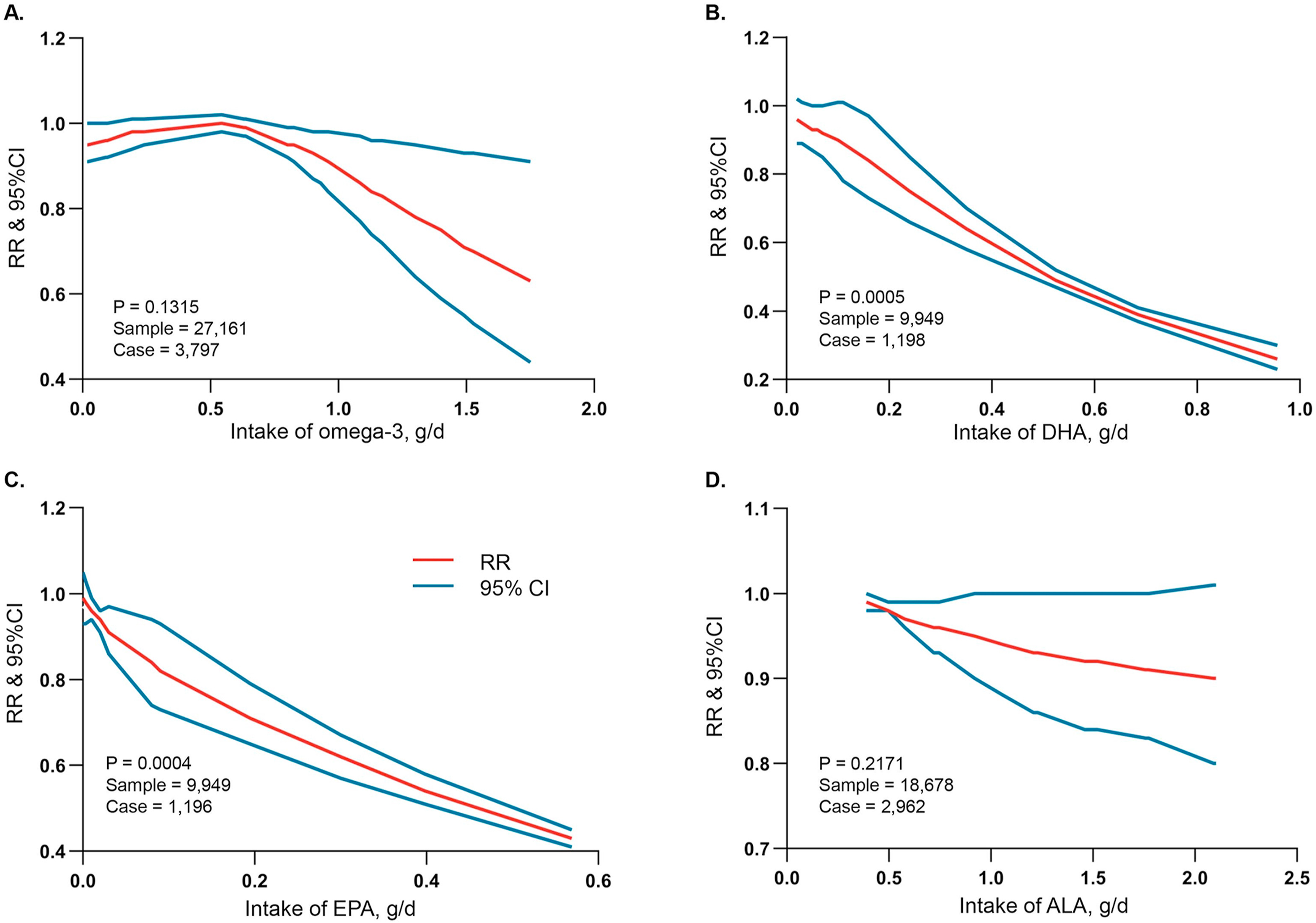
Higher dietary omega-3 intake was associated with a 9% lower risk of cognitive decline. The protective association became more apparent once intake exceeded about 1 gram per day, although the relationship was not linear, meaning that simply consuming more and more omega-3 did not continue to produce a steadily larger benefit. DHA appeared to be the standout fatty acid—dietary DHA intake was associated with a 27% lower risk of dementia and a 24% lower risk of Alzheimer’s disease. By contrast, dietary EPA and ALA were not associated with lower cognitive decline risk. Every 0.1 gram per day increase in DHA or EPA intake was associated with an 8% to nearly 10% lower risk of cognitive decline.
Blood levels tell a similar story
Looking at blood biomarker data, plasma EPA, but not plasma DHA or ALA, was associated with about a 12% lower risk of cognitive decline and a 16% lower risk of dementia. But the most credible biomarker signal came from red blood cell membranes. Higher erythrocyte membrane DHA and EPA levels were associated with 6% and 5% lower risks of cognitive decline, respectively.
The big picture from this study is not that "fish oil prevents Alzheimer’s." Rather, long-term omega-3 exposure, higher dietary DHA intake, and higher tissue-integrated omega-3 status— especially red blood cell DHA and EPA—were generally associated with a lower risk of Alzheimer’s disease, dementia, or cognitive decline.
But that is only one way to ask the omega-3 question. A newer analysis from the same Alzheimer's Neuroimaging cohort looked less at whether people eventually crossed the threshold into Alzheimer’s disease and more at how their cognition changed year after year… and the results pointed in the opposite direction.
|
|
| |
|
Dose–response relationships between dietary omega-3 and cognitive decline in the ADNI cohort from Wei et al. (2023). |
| |
You just missed this in your inbox
Every week, Dr. Rhonda Patrick and the FoundMyFitness team distill the latest research into clear, actionable insights on health, longevity, and performance, delivered free to your inbox.
Supplement users show faster cognitive decline
The second study, published in 2026 in The Journal of Prevention of Alzheimer’s Disease, asked whether omega-3 supplementation was associated with the rate of cognitive decline over time.2
After matching participants for age, sex, APOE ε4 status, and clinical diagnosis, the final sample included 819 older adults: 273 omega-3 supplement users and 546 non-users, who were followed for about 5 years.
The participants were not all cognitively healthy. The cohort included cognitively normal adults, people with significant memory concerns, people in various stages of MCI, and even people already diagnosed with dementia due to Alzheimer’s disease. That matters because—unlike the earlier study—this was capturing what happens in people already showing signs of cognitive vulnerability.
Omega-3 use was self-reported, and the exposure was defined as the first follow-up visit after a participant reported starting supplementation. Fish oil was the primary formulation, although some participants reported other omega-3 sources, including flaxseed oil and krill oil.
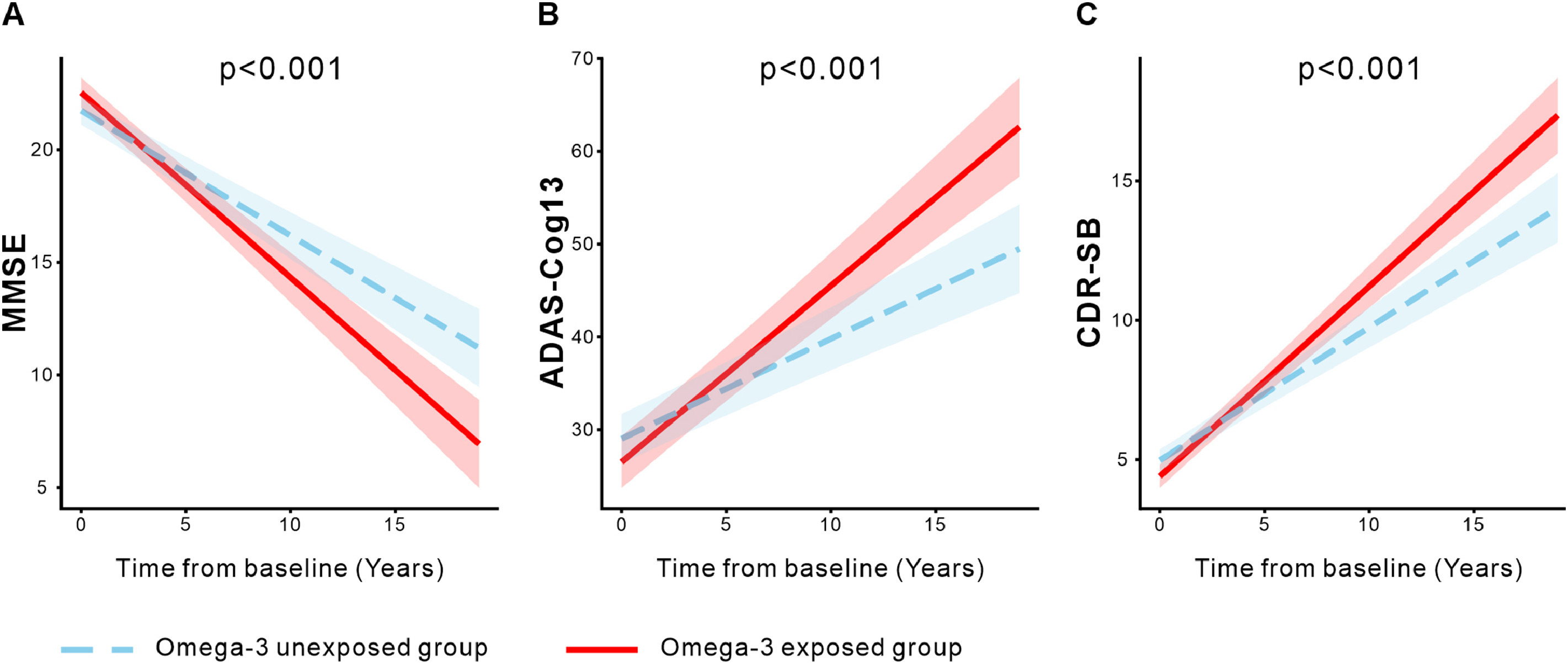
Omega-3 supplement users declined faster across all three cognitive measures used (the MMSE, ADAS-Cog13, and CDR-SB). The omega-3-associated decline corresponded to about 8% of the typical annual Alzheimer’s progression rate for MMSE, 15% for ADAS-Cog, and 11% for CDR-SB.
The next question was whether this decline tracked with the classic biological features of Alzheimer’s disease. And this is where the study gets even more interesting.
The faster cognitive decline was not explained by greater amyloid deposition, tau aggregation, or gray matter atrophy. Omega-3 supplement use was not associated with faster accumulation of the proteinopathies we usually think of as central to Alzheimer’s disease, nor was it associated with faster loss of gray matter volume.
Instead, omega-3 users showed a greater decline in regional cerebral glucose metabolism, which explained about 19–41% of the relationship between omega-3 supplementation and cognitive decline (depending on the cognitive test being looked at).
The problem of reverse causality
The obvious concern with this study is reverse causality: what if people started taking omega-3s because they, their family, or their clinicians noticed early memory problems or general health decline? The authors tried to address this by examining the pre-supplementation period. Future omega-3 users did not show faster cognitive decline or worse glucose metabolism trajectories before starting supplements compared with matched non-users, suggesting that the divergence emerged after supplementation began.
But that does not fully eliminate the concern. Subtle memory changes, family history, chronic pain, cardiovascular concerns, supplement-seeking behavior, or other unmeasured health factors could still influence who starts omega-3s and how they decline over time. The authors acknowledge this directly, noting that unmeasured factors could still have contributed to the association, and also that they lacked detailed information on dose, adherence, discontinuation, and specific supplement type.
Omega-3s have brain-protective mechanisms
So this study should not be read as definitive evidence that omega-3s cause cognitive decline.
It does not overturn the broader evidence that omega-3s are biologically important for the brain. And that evidence doesn't just come from observational studies. There are mechanisms to support it.
- Omega-3s (in particular DHA) are required for glucose transporters to function at neuron cell membranes, and deficiency impairs glucose uptake (findings in direct contrast with the results observed in this latest study).
- Furthermore, neuroinflammation is a major driver of Alzheimer's disease, and omega-3s are among the most powerful anti-inflammatory compounds.
- Last (but not least), DHA is highly enriched in neuronal cell membranes, where it helps maintain membrane fluidity. Multiple receptors, including those for serotonin and dopamine, depend on membrane fluidity to function properly and bind neurotransmitters.
(You can read more about the benefits of omega-3s on our Omega-3 Topic Page).
|
|
|
Cognitive trajectories associated with omega-3 supplementation in the ADNI cohort from Liao et al. (2026) |
| |
Final thoughts
I’ve been trying to wrap my head around these two studies for a few weeks, because on the surface, they seem almost impossible to reconcile.
One study suggests omega-3s are associated with a lower risk of Alzheimer’s disease. The other suggests omega-3 supplementation is associated with faster cognitive decline… in participants from the same cohort.
But after spending more time with the details, I’m not sure these studies carry equal weight. Here's why:
The first major distinction is that cognitive decline is not the same thing as Alzheimer’s disease.
The 2026 study asked whether omega-3 supplementation was associated with changes in cognitive test scores over time. And the answer, in that analysis, was yes. But the 2023 Alzheimer's Neuroimaging cohort analysis asked whether people developed Alzheimer’s disease during follow-up.
A person can decline faster on cognitive testing without crossing the diagnostic threshold for Alzheimer’s disease. Conversely, someone may be classified as not having Alzheimer’s while still showing subtle or measurable cognitive deterioration. These outcomes overlap, but they are not interchangeable.
This becomes even more important when you look at the biomarker results from the 2026 study. The association between omega-3 supplementation and faster cognitive decline was not mediated by amyloid deposition, tau pathology, or gray matter atrophy—the classic biological hallmarks we tend to associate with Alzheimer’s disease.
In other words, the harmful association in that study did not map neatly onto “more Alzheimer’s pathology.”
The second important point is that although both papers used Alzheimer's Neuroimaging cohort data, the most favorable cognitive-decline evidence in the 2023 paper did not come only from this cohort.
That paper also included a broader meta-analysis drawing from dietary intake studies, plasma biomarker studies, and erythrocyte membrane biomarker studies. And the protective signal here linked higher dietary DHA/EPA intake and higher blood omega-3 status with a lower risk of cognitive decline or dementia.
That brings up a crucial distinction: supplement use, dietary omega-3 intake, and blood omega-3 status are not the same exposure!
A person who has high omega-3 levels in red blood cell membranes is likely someone with a long-term pattern of higher omega-3 intake and successful incorporation of those fatty acids into tissues. Erythrocyte omega-3s are often treated as one of the more stable biological markers of omega-3 status because they reflect longer-term intake more than plasma does.
This is where the 2026 study becomes tricky. The exposure was defined around the first follow-up visit after a participant reported initiating supplementation. That is useful because it tries to anchor omega-3 exposure to what happens afterward. But it also introduces a different kind of bias, one that we discussed earlier: people may start taking omega-3s because they, their family, or their clinician notice something changing. Maybe it's memory concerns, maybe it's pain, or maybe it's general health decline or some vague sense that they need to “do something” for their brain.
The third major difference is the type of people being studied.
The 2023 Alzheimer's Neuroimaging cohort analysis excluded people with dementia at baseline. The 2026 study included a much broader spectrum: cognitively normal adults, people with significant memory concerns, various stages of mild cognitive impairment, and even people diagnosed with Alzheimer’s dementia. That means the 2026 study may be telling us something very different—not necessarily that omega-3s are broadly harmful to the aging brain, but that omega-3 supplementation may not halt (and could potentially track with faster decline) in people already showing signs of cognitive impairment or neurodegenerative vulnerability.
That interpretation fits with the broader randomized-trial literature, where omega-3 supplementation has generally been much less impressive once cognitive impairment or Alzheimer’s disease is already present. Prevention and treatment are not the same thing. Maintaining healthy omega-3 status across decades may not have the same effect as introducing a fish-oil supplement after cognitive symptoms or brain metabolic dysfunction have already begun.
And finally, we can't even be sure that the participants in this recent study kept taking omega-3s beyond their "date of initiation."
All we can conclude is that at some point, they reported that they started supplementing with omega-3s, not that they maintained diligent use over the next 5 years.
This may be the cleanest way to think about the discrepancy:
- The 2023 paper captures the reality of long-term omega-3 intake and stable biological omega-3 status, especially from diet and erythrocyte markers, in adults without dementia.
- The 2026 paper may capture another reality—the initiation of mostly commercial fish-oil supplementation in an older, more clinically vulnerable population, with unknown dose, unknown adherence, and a different underlying disease stage.
So where does this leave us?
For me, the takeaway is not to abandon omega-3s as a brain-health strategy.
Studies like the most recent 2026 Alzheimer's Neuroimaging cohort one are being presented in the media as a simple "fish oil may accelerate cognitive decline." That's an unfair conclusion that isn't supported by other rigorous research. It's why I chose to cover the topic this week.
Not because I wanted to dismiss the study's findings as outright false, but because there's much more complexity to this story that needs to be considered. The quality of this new analysis just isn't rigorous enough to warrant a sweeping change in recommendations.
That is especially true when it has the potential to change people's behaviors around a topic as sensitive and important as brain aging.
|
|
 |
| |
Go Deeper on Omega-3s
Today's newsletter focused on why two analyses of omega-3s can seem to point in opposite directions. That is exactly where the practical questions matter: DHA vs. EPA, dose, fish-oil quality, oxidation, AFib risk, and whether taking a supplement later in life is the same thing as maintaining healthy omega-3 status over decades.
I've answered these questions (and more) in several of my previous Q&A sessions.
|
|
Warm regards,
— Rhonda and the FoundMyFitness team
|
|
|
|
|
|
 Mitochondrial bioenergetics
Yamanaka factors
Exercise intensity
Cell reprogramming
Blood-brain barrier
Epigenetic age deceleration
Stress resistance
Cardiorespiratory fitness
Nutritional ketosis
Compression of morbidity
CpG Islands
Lactate shuttle
Whole-body hyperthermia
Psychology of grit
Telomerase reverse transcriptase (TRT)
Chronic inflammation
Disease prevention
Therapeutic hyperthermia
Pathogen-host defense theory
Cell signaling
Proteostasis
Cellular senescence
CRISPR-Cas9
Aging
PGC1α
Overcoming adversity
Increased healthspan
Gene–diet interaction
Biology of resilience
Immune-brain interaction
Neuroendocrine effects
Heat Shock Proteins (HSPs)
Oxidative stress
Vitamin D
Omega-3 fatty acids
β-Hydroxybutyrate (BHB)
GLUT4
Pregnancy optimization
Mitochondrial bioenergetics
Yamanaka factors
Exercise intensity
Cell reprogramming
Blood-brain barrier
Epigenetic age deceleration
Stress resistance
Cardiorespiratory fitness
Nutritional ketosis
Compression of morbidity
CpG Islands
Lactate shuttle
Whole-body hyperthermia
Psychology of grit
Telomerase reverse transcriptase (TRT)
Chronic inflammation
Disease prevention
Therapeutic hyperthermia
Pathogen-host defense theory
Cell signaling
Proteostasis
Cellular senescence
CRISPR-Cas9
Aging
PGC1α
Overcoming adversity
Increased healthspan
Gene–diet interaction
Biology of resilience
Immune-brain interaction
Neuroendocrine effects
Heat Shock Proteins (HSPs)
Oxidative stress
Vitamin D
Omega-3 fatty acids
β-Hydroxybutyrate (BHB)
GLUT4
Pregnancy optimization