Microplastics are silently invading our cells—but colorful compounds in berries and vegetables might help neutralize their impact.
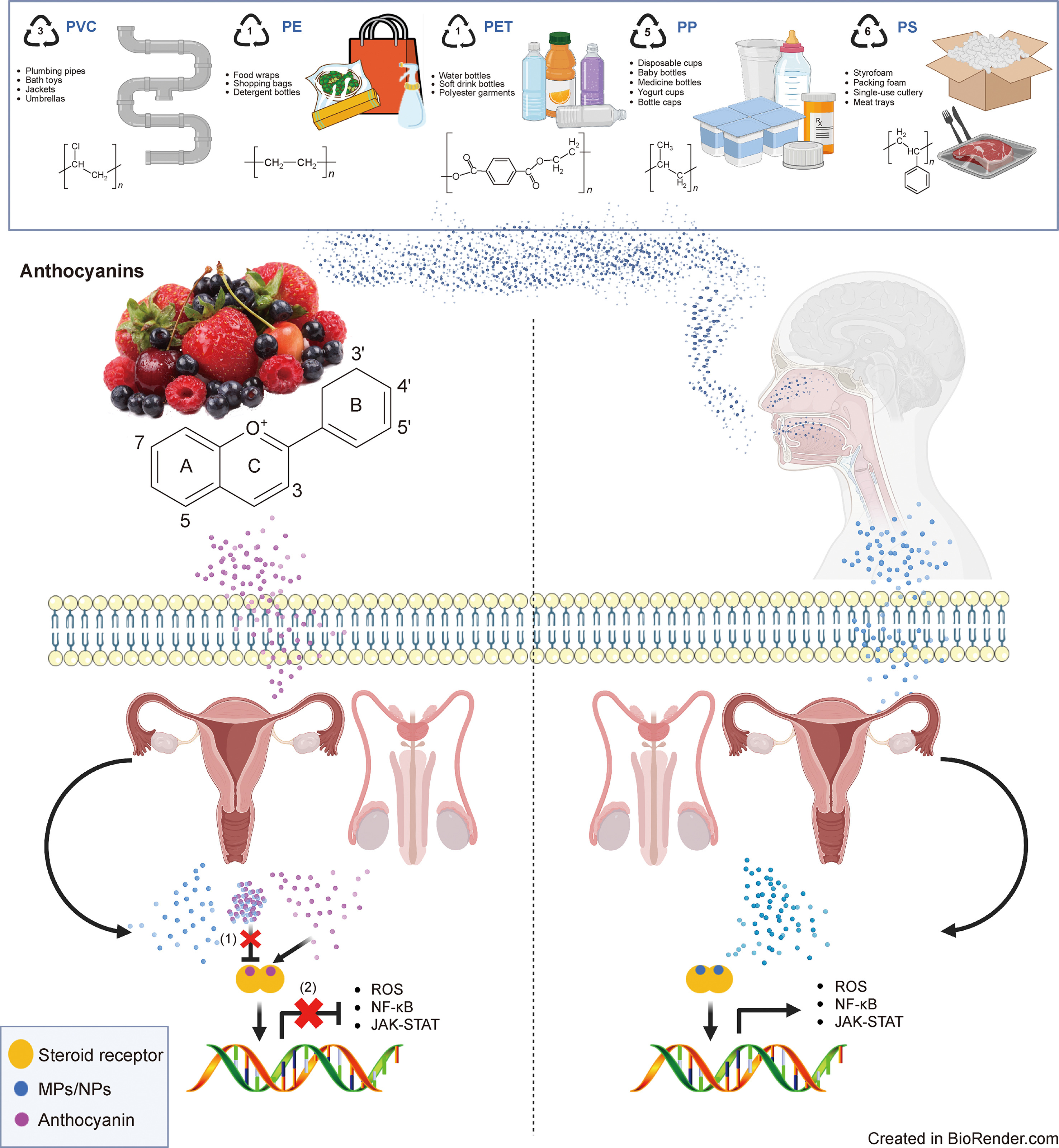
Emerging evidence indicates that anthocyanins—the vibrant pigments responsible for the rich hues of blueberries and purple cabbage—can bind to the same hormone receptors targeted by these endocrine-disrupting chemicals released from microplastics.
With their robust antioxidant and anti-inflammatory properties, anthocyanins may reduce oxidative stress and inflammation triggered by microplastic-associated contaminants.
This potential intervention is timely. Recent studies underscore the alarming scope of microplastic contamination.
In 2018 alone, an estimated 14% of cardiovascular-related deaths globally were linked to plastic exposure.
You just missed this in your inbox
Every week, Dr. Rhonda Patrick and the FoundMyFitness team distill the latest research into clear, actionable insights on health, longevity, and performance, delivered free to your inbox.
New findings confirm the presence of microplastics in human ovaries, raising serious concerns about reproductive toxicity and declining fertility rates.
The chemicals released by microplastics act as xenoestrogens—endocrine disruptors capable of profoundly altering hormonal balance and reproductive health.
While the implications of microplastic exposure are troubling, anthocyanin-rich foods offer a practical, science-backed strategy to bolster our defenses against this widespread environmental hazard.
How Plastics Cause Disease
Microplastics and their chemical additives cross critical biological barriers, entering the bloodstream, reproductive organs, and even the brain, impacting cognition, cardiovascular function, and hormonal balance via endocrine disruption. They aren't passive bystanders either—once inside our body, microplastics and their associated chemicals actively cause harm.
One notable and recent study suggests that in 2018 alone, an estimated 356,238 deaths globally were due to plastic exposure—representing nearly 14% of all cardiovascular disease-related deaths among adults aged 55–64. That's equivalent to a staggering 10.5 million years of life lost.
Another area of concern when it comes to microplastic exposure is hormonal and reproductive health. The endocrine system is interconnected with almost every bodily function, so disruptions can lead to a cascade of health problems for everyone—not just those concerned with reproduction.
BPA, BPS, and phthalates are endocrine-disrupting chemicals that mimic the body’s natural hormones, acting as xenoestrogens by binding to estrogen receptors. When they attach to these receptors, they can either activate or block normal estrogenic functions, leading to abnormal hormone signaling. DEHP, a type of phthalate, disrupts the body’s primary hormone regulation system known as the HPA axis and interferes with thyroid hormone receptors. This disruption lowers testosterone and estradiol levels, affecting reproductive health, muscle mass, bone density, and mood.
These endocrine-disrupting effects become particularly alarming when we consider that microplastics are making their way into reproductive organs. There's already evidence of microplastics in testicular tissue from men, with one study finding more than 12 types of plastic in nearly every sample that was investigated.
Just recently—for the first time ever—researchers identified microplastics in human ovaries. Nearly 78% of the women had microplastics in their ovarian fluid samples—with an average of more than 2,100 particles per mL of fluid and an average particle size of 4.5 micrometers (that's about half the diameter of a red blood cell!)
It seems nearly impossible to completely avoid microplastics, but we can take several steps to limit our exposure. We can also engage in activities and consume certain types of food that could help offset the damaging effects of microplastics. That's where anthocyanins come in.
 Mitochondrial bioenergetics
Yamanaka factors
Exercise intensity
Cell reprogramming
Blood-brain barrier
Epigenetic age deceleration
Stress resistance
Cardiorespiratory fitness
Nutritional ketosis
Compression of morbidity
CpG Islands
Lactate shuttle
Whole-body hyperthermia
Psychology of grit
Telomerase reverse transcriptase (TRT)
Chronic inflammation
Disease prevention
Therapeutic hyperthermia
Pathogen-host defense theory
Cell signaling
Proteostasis
Cellular senescence
CRISPR-Cas9
Aging
PGC1α
Overcoming adversity
Increased healthspan
Gene–diet interaction
Biology of resilience
Immune-brain interaction
Neuroendocrine effects
Heat Shock Proteins (HSPs)
Oxidative stress
Vitamin D
Omega-3 fatty acids
β-Hydroxybutyrate (BHB)
GLUT4
Pregnancy optimization
Mitochondrial bioenergetics
Yamanaka factors
Exercise intensity
Cell reprogramming
Blood-brain barrier
Epigenetic age deceleration
Stress resistance
Cardiorespiratory fitness
Nutritional ketosis
Compression of morbidity
CpG Islands
Lactate shuttle
Whole-body hyperthermia
Psychology of grit
Telomerase reverse transcriptase (TRT)
Chronic inflammation
Disease prevention
Therapeutic hyperthermia
Pathogen-host defense theory
Cell signaling
Proteostasis
Cellular senescence
CRISPR-Cas9
Aging
PGC1α
Overcoming adversity
Increased healthspan
Gene–diet interaction
Biology of resilience
Immune-brain interaction
Neuroendocrine effects
Heat Shock Proteins (HSPs)
Oxidative stress
Vitamin D
Omega-3 fatty acids
β-Hydroxybutyrate (BHB)
GLUT4
Pregnancy optimization