Living near a golf course may substantially elevate your risk of Parkinson’s disease, according to new research linking geographic proximity, pesticide exposure, and drinking-water contamination.
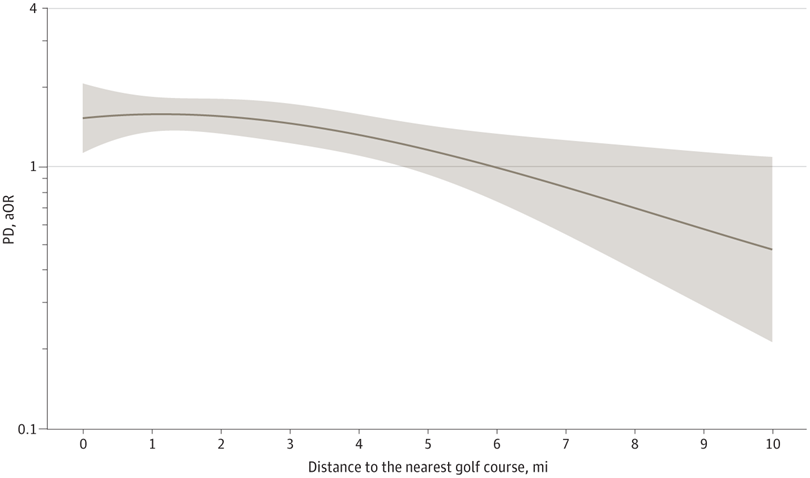
Living within 1 mile of a golf course increased Parkinson’s risk by 126% compared to living over 6 miles away, and the greatest risk (a 198% increase) was observed for those living 1–2 miles from a golf course.
People relying on groundwater near golf courses had nearly double the risk of Parkinson's compared to areas without golf courses. Putting aside proximity to golf courses, a similar 82–90% risk arises in areas with vulnerable groundwater (easier pesticide contamination).
This elevated risk likely arises from pesticides commonly applied on golf courses, notably paraquat and rotenone, which impair mitochondria and induce oxidative stress, selectively damaging dopamine-producing neurons—a hallmark of Parkinson’s pathology.
While the study’s observational nature prevents definitive conclusions about causation, the findings highlight environmental pesticide exposure as a significant and actionable modifiable risk factor for Parkinson’s disease.
You just missed this in your inbox
Every week, Dr. Rhonda Patrick and the FoundMyFitness team distill the latest research into clear, actionable insights on health, longevity, and performance, delivered free to your inbox.
In today's email, I'll discuss the implications of this new study and share my strategies for avoiding pesticide exposure through produce and other sources.
|
 |
|
|
| |
Pesticides and Parkinson's Disease (and Why You Should Go Organic)
Choosing organic foods is a popular decision among health-conscious individuals who are motivated by concerns about nutrition and safety.
In the U.S., "organic" refers specifically to crops grown without synthetic pesticides or fertilizers. While there aren't long-term randomized controlled trials definitively comparing organic versus conventional diets, observational studies—though inherently limited—have consistently linked organic food consumption with reduced risks of infertility, birth defects, allergies, metabolic syndrome, and certain cancers. One clear benefit identified in these studies is the notably lower levels of pesticide metabolites in the urine of individuals who consume primarily organic produce.
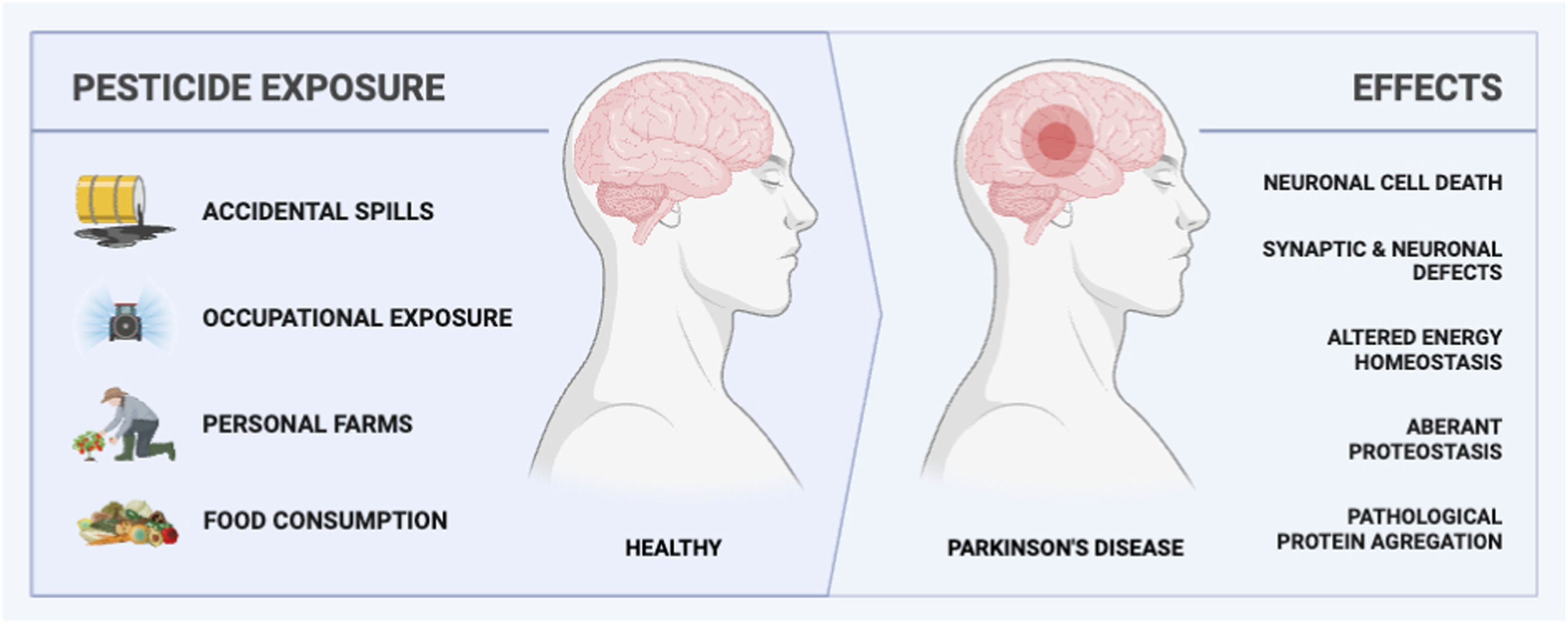
A major reason many people, including myself, advocate for organic foods is their potential link to a reduced risk of Parkinson's disease. Animal studies clearly demonstrate that pesticide exposure, including common agricultural chemicals, can degrade dopamine-producing neurons, a hallmark of Parkinson's pathology. Farmers and agricultural workers, who typically experience greater pesticide exposure, indeed show higher incidences of Parkinson’s disease.
Chemicals such as MPTP (a chemical used to induce Parkinson's disease in mice), which is widely recognized for its potent mitochondrial toxicity and neurotoxicity, are structurally similar to pesticides, insecticides, and certain aquatic toxins. Rotenone, commonly used in agriculture, and paraquat, banned in the EU but still limitedly permitted in the U.S., have been strongly linked to Parkinson’s. Paraquat, in particular, can readily cross the blood-brain barrier, doubling Parkinson's risk in exposed individuals.
It's important to remember, however, that pesticide intake through diet isn't the only route of concern—contamination through drinking water and airborne exposure are also substantial risk factors. And as it turns out, where you live matters a lot.
|
|
| |
 |
| |
|
The main pathways of exposure to pesticides and their effects on brain health. DOI: 10.1016/j.chemosphere.2025.144348 |
| |
Living Close to A Golf Course Increases Parkinson's Risk
Recently, a compelling new study grabbed some major attention on social media due to its surprising findings about Parkinson’s Disease risk related to environmental factors. Published as a large, population-based study conducted between 1991 and 2015, it explored the connection between living proximity to golf courses, drinking water sources, and the risk of developing Parkinson’s disease.
The research included 419 people diagnosed with Parkinson's disease and more than 5,100 control participants without the disease, matched by age and sex, all residing in Minnesota and Western Wisconsin. Researchers evaluated two critical environmental factors: how close each participant lived to a golf course and their drinking water source.
Why does this matter?
Golf courses typically apply large quantities of pesticides to maintain their aesthetic standards. These pesticides can seep into groundwater, potentially contaminating drinking water, particularly in areas classified as vulnerable due to geological conditions.
The findings were striking and strongly suggestive of an environmental link to Parkinson's risk. Living within 1 mile of a golf course increased Parkinson's disease risk by 126% compared to living over 6 miles away. Interestingly, the risk peaked at 1–2 miles away, with a 198% increased odds, and remained significantly elevated up to 3 miles. Beyond 3 miles, every additional mile further away decreased the risk by about 19%, highlighting distance as a critical protective factor beyond this radius.
Additionally, drinking water sources significantly influenced risk. Individuals whose drinking water came from areas containing golf courses had nearly double the odds of developing Parkinson's disease compared to areas without golf courses. This risk was notably higher in regions with those vulnerable groundwater conditions. People in these vulnerable regions experienced an 82% greater likelihood of developing Parkinson’s compared to those in nonvulnerable areas.
The potential culprit behind these associations appears to be pesticide exposure. Golf courses in the U.S. may apply pesticides at rates up to 15 times higher than those in Europe. Specific pesticides historically linked to Parkinson's disease, such as organophosphates, chlorpyrifos, maneb, and organochlorines, have been routinely used on golf courses.
Experimental evidence supports the neurodegenerative potential of pesticides like paraquat and rotenone, which induce Parkinson-like changes via oxidative stress and mitochondrial impairment.
There's also the speculation that airborne exposure may amplify the risks, particularly in urban areas. Dense city development around urban golf courses could enhance the potential for pesticide drift into surrounding communities, potentially contributing significantly to increased Parkinson's risk.
|
|
|
The risk of Parkinson's Disease in relation to the distance from the nearest golf course. |
Final thoughts
Is this study perfect? No. Does it mean that living near a golf course is going to give you Parkinson's disease? No. But it should raise some red flags.
These findings are observational and can't establish causation, but they underscore the critical need for enhanced safety practices and regulatory scrutiny around pesticide application, particularly near residential areas. Understanding and mitigating environmental exposures like these could be crucial steps toward reducing Parkinson’s disease incidence and safeguarding our health.
If you do live next to a golf course or in a residential area that sources groundwater from somewhere near a golf course, I'd highly recommend investing in a quality water filtration system for your home. I use a Berkey water filter but have decided to switch over to a reverse osmosis filtration system because of its ability to filter out microplastics—and potentially nanoplastics—from my water supply. This is a medium-cost but high-reward risk mitigation strategy.
Just like for microplastics, avoiding pesticides and other environmental chemicals entirely isn't realistic—that's why I use the strategy of imperfect avoidance: do what you can to limit your exposure.
In addition to their exposure via airborne contamination and water sources, many people also worry about their pesticide exposure through produce. If that's the case, you should become aware of the "Dirty Dozen" and "Clean Fifteen"—an annual list of fruits and vegetables with the highest and lowest amounts of pesticides, respectively. Here's the list from 2024:
The Dirty Dozen—fruits and vegetables with the highest amounts of pesticide residues. When shopping for these, be sure to choose organic!
- Strawberries
- Spinach
- Kale, collard, and mustard greens
- Grapes
- Peaches
- Pears
- Nectarines
- Apples
- Bell and hot peppers
- Cherries
- Blueberries
- Green beans
The Clean Fifteen—fruits and vegetables with the lowest amounts of pesticide residues:
- Avocados
- Sweetcorn
- Pineapple
- Onions
- Papaya
- Frozen sweet peas
- Asparagus
- Honeydew melon
- Kiwi
- Cabbage
- Mushrooms
- Mangoes
- Sweet potatoes
- Watermelon
- Carrots
|
Here are a few select timestamps from a Q&A episode where I talk about when you should buy organic produce:
-
4:14 - Is eating organic worth the extra cost?
-
6:04 - Can eating organic lower your risk of infertility, allergies, and metabolic syndrome?
-
8:59 - Which produce has the highest pesticide contamination?
-
10:07 - Which produce is safest to eat non-organic?
-
10:44 - Are organic foods lower in cadmium contamination?
-
11:15 - Does eating non-organic foods increase Parkinson’s risk?
-
15:01 - Are organic foods actually more nutritious?
-
17:14 - Does organic meat really contain more omega-3s?
-
17:45 - Are pasture-raised eggs richer in lutein?
-
18:17 - Is glyphosate (Roundup) actually safe for humans?
|
|
|
|
Warm regards—Rhonda and the FMF team |
|
|
|
|
|
 Mitochondrial bioenergetics
Yamanaka factors
Exercise intensity
Cell reprogramming
Blood-brain barrier
Epigenetic age deceleration
Stress resistance
Cardiorespiratory fitness
Nutritional ketosis
Compression of morbidity
CpG Islands
Lactate shuttle
Whole-body hyperthermia
Psychology of grit
Telomerase reverse transcriptase (TRT)
Chronic inflammation
Disease prevention
Therapeutic hyperthermia
Pathogen-host defense theory
Cell signaling
Proteostasis
Cellular senescence
CRISPR-Cas9
Aging
PGC1α
Overcoming adversity
Increased healthspan
Gene–diet interaction
Biology of resilience
Immune-brain interaction
Neuroendocrine effects
Heat Shock Proteins (HSPs)
Oxidative stress
Vitamin D
Omega-3 fatty acids
β-Hydroxybutyrate (BHB)
GLUT4
Pregnancy optimization
Mitochondrial bioenergetics
Yamanaka factors
Exercise intensity
Cell reprogramming
Blood-brain barrier
Epigenetic age deceleration
Stress resistance
Cardiorespiratory fitness
Nutritional ketosis
Compression of morbidity
CpG Islands
Lactate shuttle
Whole-body hyperthermia
Psychology of grit
Telomerase reverse transcriptase (TRT)
Chronic inflammation
Disease prevention
Therapeutic hyperthermia
Pathogen-host defense theory
Cell signaling
Proteostasis
Cellular senescence
CRISPR-Cas9
Aging
PGC1α
Overcoming adversity
Increased healthspan
Gene–diet interaction
Biology of resilience
Immune-brain interaction
Neuroendocrine effects
Heat Shock Proteins (HSPs)
Oxidative stress
Vitamin D
Omega-3 fatty acids
β-Hydroxybutyrate (BHB)
GLUT4
Pregnancy optimization