Happy New Year!
I'm a believer in whatever empowers us to believe in our ability for self-determination (and for many, New Year's is just such an opportunity).
This past year I had the privilege of learning from many world class experts through my conversations on the podcast. What better way to bring in the New Year than to share one or two incredibly novel and practical takeaways, all supported by the science.
If you're looking for fresh ideas to invigorate your wellness or fitness routine as you enter the new year, you've come to the right place.
This week’s newsletter is a roundup of the most impactful health habits I took from the podcast this year—paired with the research (and the episode) that made them stick. We've ensured there's a key takeaway from every major category: diet, sleep, supplements, exercise, and even everyone’s favorite beverage, coffee.
We hope you find this curated list beneficial and are excited to see what amazing health habits emerge in 2026!
You just missed this in your inbox
Every week, Dr. Rhonda Patrick and the FoundMyFitness team distill the latest research into clear, actionable insights on health, longevity, and performance, delivered free to your inbox.
Sprinkle more vigorous movement into your day
Many people—and even the exercise guidelines—assume that the health benefits of exercise are mostly about time. Get your steps in, accumulate your 150–300 minutes per week, and check the box.
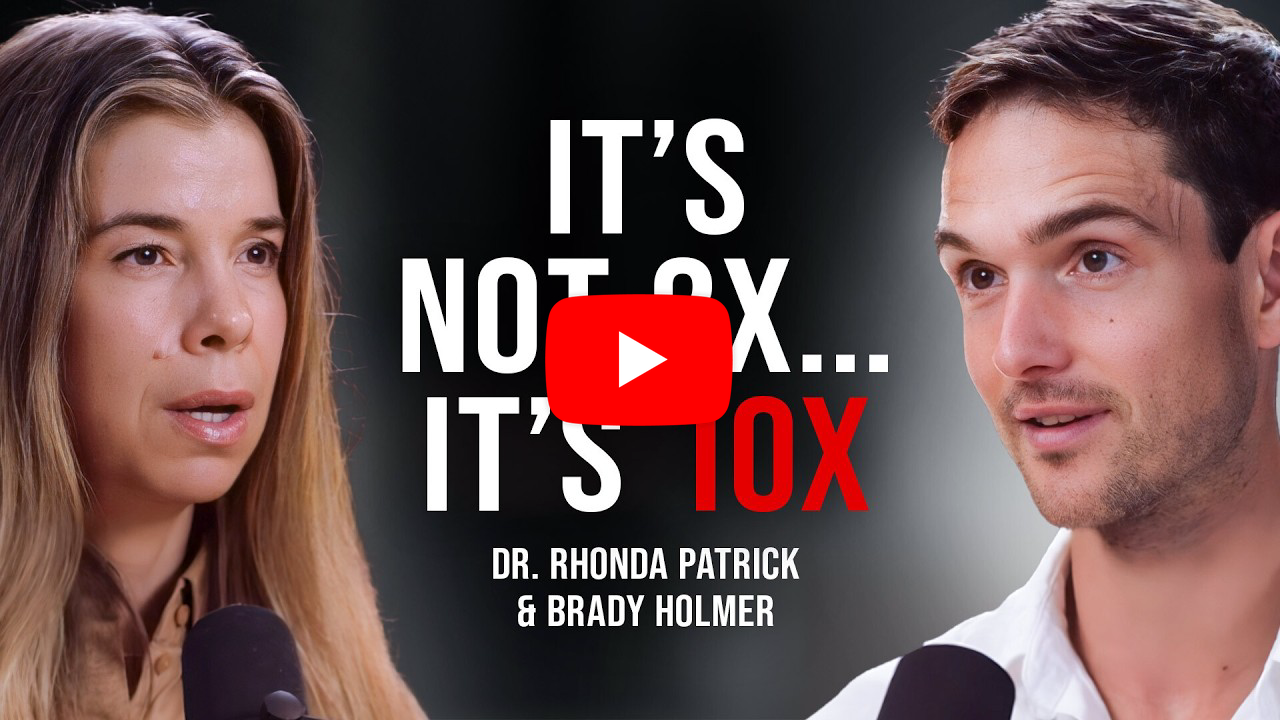
But one of the most eyebrow-raising studies we covered this year suggests that the intensity of movement massively changes the "health return" you get per minute of activity. In fact, I, along with guest Brady Holmer, did a journal club episode on the study (you can find the entire episode here).
In a large analysis of the UK Biobank (~73,000 adults and 8 years of follow-up), researchers modeled the "health equivalence" of light, moderate, and vigorous activity across major health outcomes including all-cause mortality, cardiovascular disease mortality, major adverse cardiovascular events, type 2 diabetes incidence, and physical activity-related cancer incidence and mortality.
The findings blew my mind: for a similar risk reduction range across all outcomes, 1 minute of vigorous activity was equivalent to about 4–9 minutes of moderate activity and 53–94 minutes of light activity. The dose-response curves for activity were also illuminating—vigorous activity, and to some extent moderate activity, looked close to linear. Small daily amounts of activity mattered, and more continued to help, with some outcomes showing very large associations up to 40–50 minutes per day. Light activity had a gentler slope and a lower ceiling for most outcomes.
The habit
All of us should be accumulating more vigorous movement into our day.
This doesn't mean daily high-intensity interval training… it means adding more "oomph," however briefly, as often as possible. That might mean taking the stairs like you mean it, briskly carrying the groceries or laundry like it's a farmer's carry, short uphill power walks whenever you come to an incline, or playing harder with your dog or kids in the backyard.
Importantly, every single bout matters no matter the length. Even 30 seconds to a minute of vigorous movement counts. It doesn't have to be structured and you don't even have to track it.
|
 |
Fix your sleep with predictability
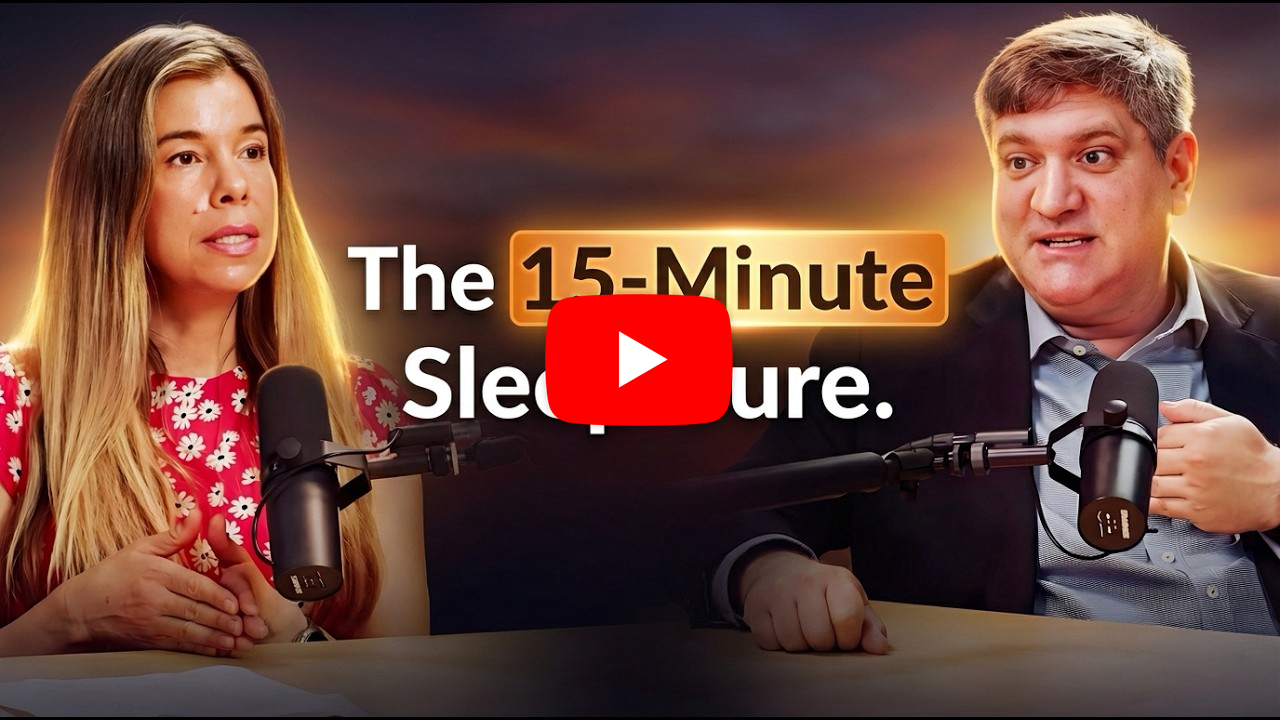
When sleep expert Dr. Michael Grandner came on the podcast (a must-watch episode for anyone struggling with or trying to improve their sleep), I loved that he didn't repeat the generic sleep hygiene list you can find anywhere. Instead, he gave a masterclass in what I'd call "advanced sleep hygiene"—small behavioral cues that push your brain to sleep more reliably.
The most powerful one? Build predictability, even if your schedule isn't consistent.
The habit
Your brain likes patterns, and sleep is highly trainable. If you can keep a consistent sleep and wake schedule, that's great. But if you can't, Dr. Grandner's workaround is to create predictability that's independent of clock time. This means having a nightly routine that happens in the same order and small, clear, and consistent cues. The same pillowcase (if traveling), the same toothbrush routine, and the same "wind-down" sequence teach your brain that, when this chain of events happens, sleep comes next.
Since that episode, I've taken this advice to heart. Nearly every single night, I'm using a warm bath as a cue to tell my body that it's time for sleep (there's also solid science behind "warming up to cool down" before bed, so I'm accomplishing two sleep-promoting tasks in one!)
|
 |
Smarter coffee timing and better brewing methods
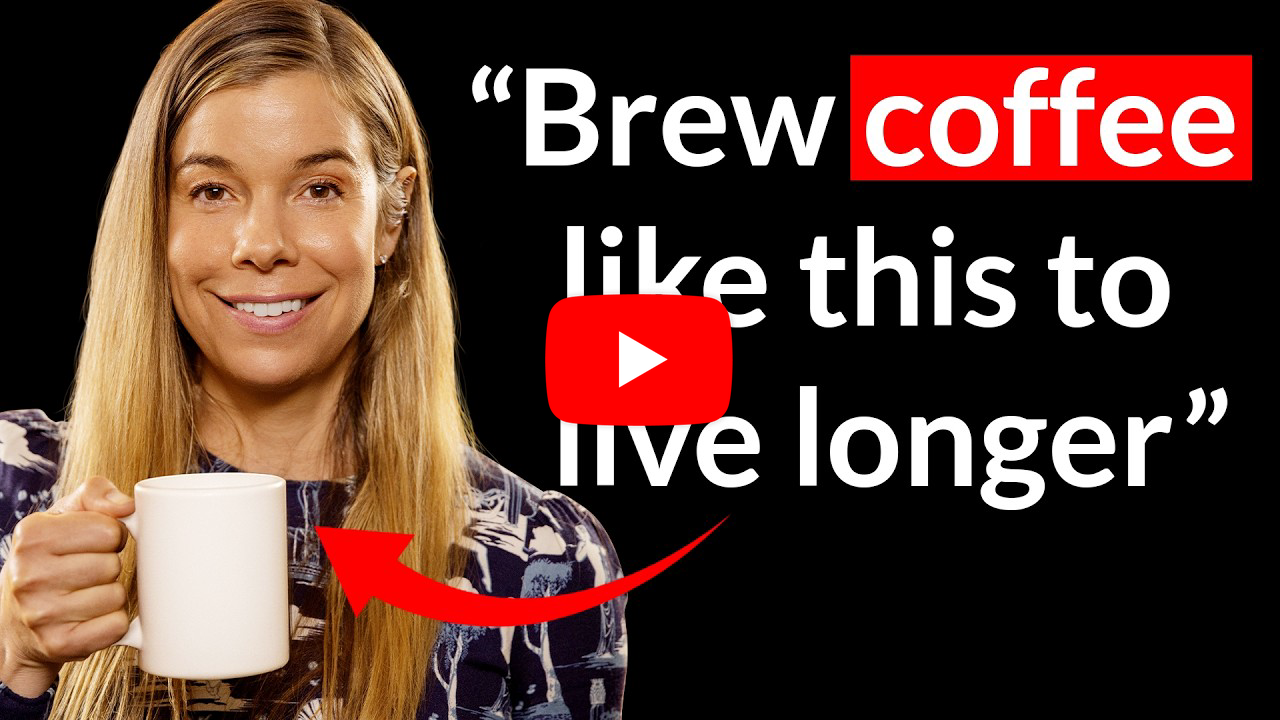
Coffee is one of the most consistently associated beverages with better long-term health outcomes. But this year, I went deeper on coffee for a solo episode, and in the process, discovered that how coffee is prepared, when it's consumed, and what it's consumed in can change what it's doing in the body.
Habit #1: Avoid "to-go" coffee cups and mugs
Most disposable paper cups contain plastic linings. When hot liquid contacts these linings, the plastic breaks down and microplastics and chemical contaminants leach into the beverage—sometimes within minutes.
The simplest solution is also the best one: bring your own reusable ceramic or stainless steel mug or thermos to your local coffee shop. Chances are they'll be happy to fill it for you, and some places even offer a small discount.
Habit #2: Drink coffee earlier in the day
A recent NHANES study (which I covered in the FoundMyFitness weekly newsletter and posted about on X) found that people who drank coffee only in the morning had a lower risk of all-cause mortality and cardiovascular mortality compared to non-coffee drinkers, while "all-day" coffee drinking was not associated with the same benefits.
This doesn't prove causality, but it does support a practical strategy: front load coffee early and avoid stretching it across the entire day. This also tends to protect sleep (and may be one of the reasons the all-day coffee drinkers were missing out on some of the well-known health benefits of coffee).
Habit #3: If LDL is a concern, choose filtered coffee
One of the more fascinating nuggets I uncovered when researching our deep dive episode on coffee was that certain filtering methods can alter the chemical composition of coffee. Unfiltered coffee methods (like French press, boiled coffee, and some espresso-style preparations depending on filtering) allow more fat-soluble compounds called diterpenes—mainly cafestol and kahweol—in the final brew.
These compounds can raise LDL cholesterol in a meaningful way. Paper filters, on the other hand, remove nearly all of these—drinking filtered coffee does not raise LDL cholesterol.
So, if you're optimizing for heart health or concerned about high LDL, consider switching to paper-filtered drip coffee.
|
 |
One breakfast switch for a better day
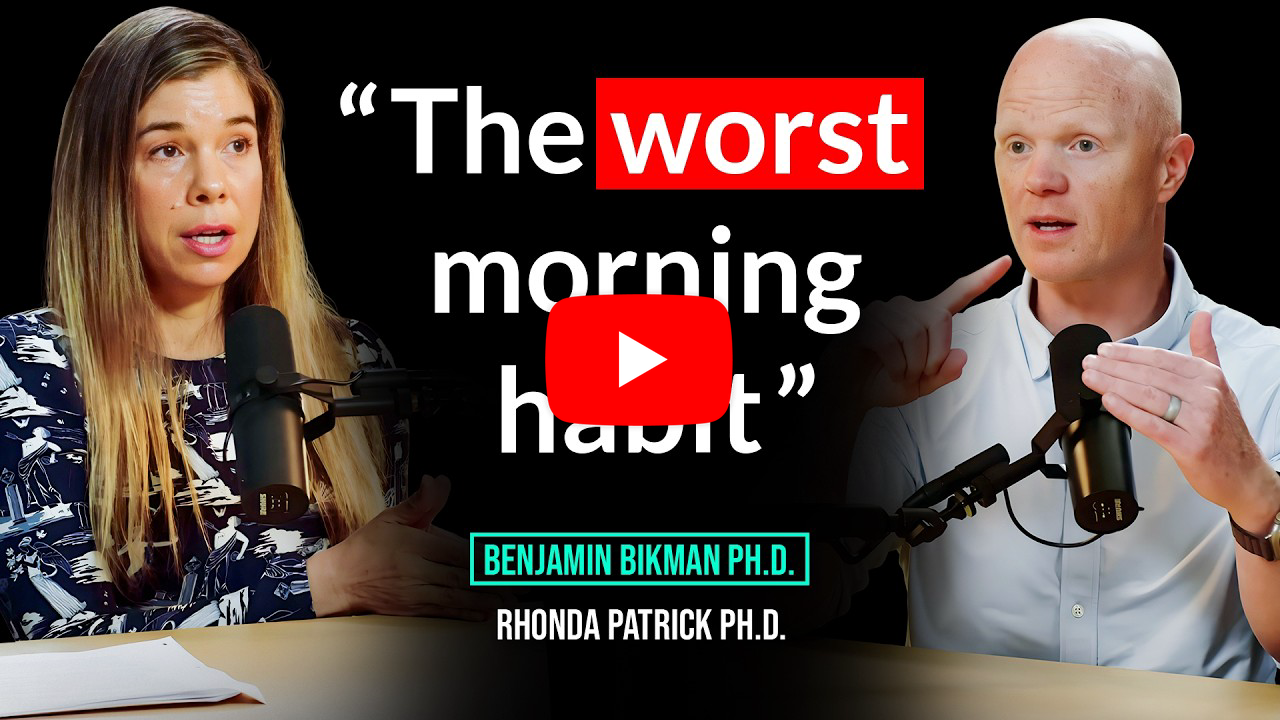
When I asked Dr. Ben Bikman for one practical lever to improve insulin resistance and metabolic health, he didn't give a complicated protocol.
He said: "change breakfast tomorrow."
After an overnight fast, insulin is relatively low and the body is primed for insulin sensitivity. Starting the day with a high-glycemic, high-starch meal can create a bigger glucose and insulin swing—and for many people that sets up a day of hunger rebounds and cravings.
The habit
Make your first meal of the day (or your "break-fast," whenever it occurs) high protein and high fiber. Some practical examples may be eggs with sautéed veggies and berries; greek yogurt with berries and nuts; or a protein-forward smoothie with fiber from chia or flax seeds.
If you prefer to delay your first meal, that can work too. The main point is to avoid beginning the day with a high-glycemic meal that starts a "metabolic roller coaster."
|
 |
Watch for these "breakout" supplements
This year had the usual steady stream of research on supplements that I consider to be fundamentals: omega-3s, vitamin D, and magnesium, just to name a few. But a few supplement categories felt like they had momentum, either from better mechanistic clarity or strong and exciting human trials.
High-dose creatine for cognitive resilience
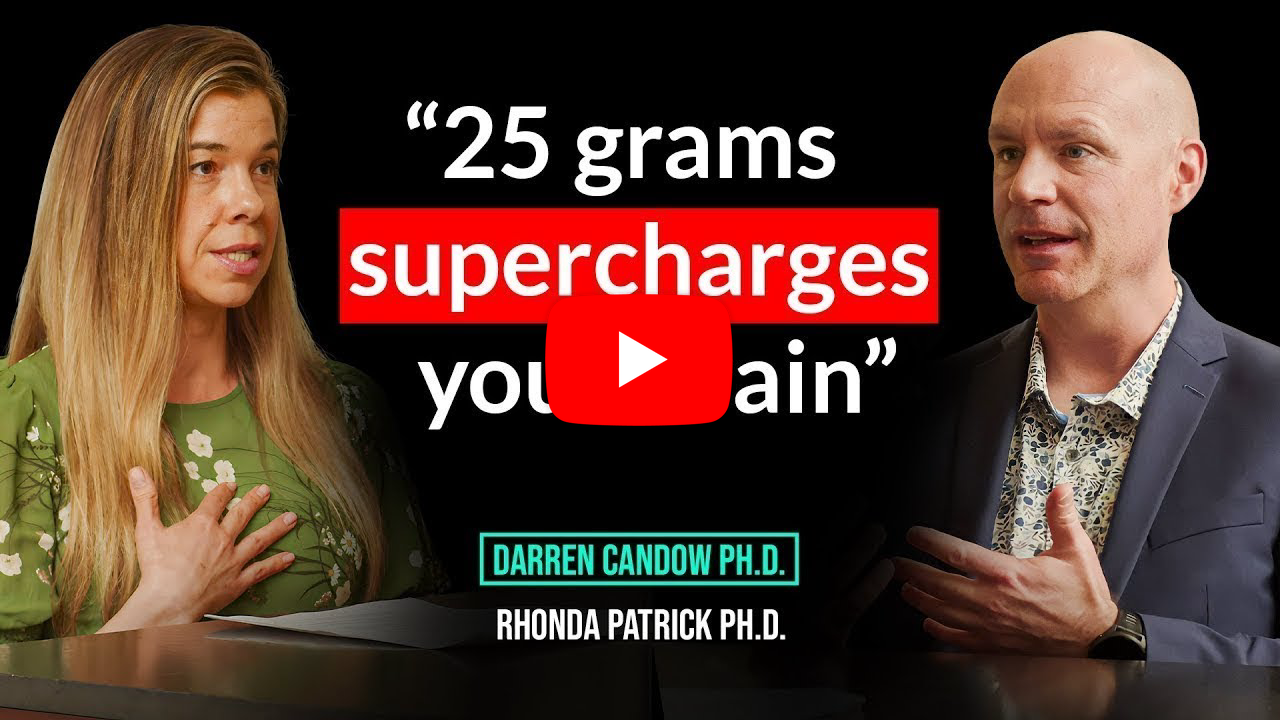
In 2025, we learned that creatine is so much more than a muscle supplement, and Dr. Darren Candow was pivotal in bringing much of this information to light when I sat down with him to talk about creatine on the podcast.
He noted that, like the muscles, the brain uses phosphocreatine as an energy buffer too. But to meaningfully raise brain creatine stores, a dose higher than the typical 5 grams per day is needed—10–15 grams or more seems to be the sweet spot. At this dose, the muscles can fully saturate their creatine stores, and the "surplus" creatine can cross the blood brain barrier to increase brain creatine levels.
Increasing brain creatine levels likely has many benefits, including resilience against sleep deprivation and other cognitive stressors and—based on some preliminary evidence published this year—improve cognitive function in Alzheimer's disease.
I've been taking 10 grams of creatine ever since my interview with Dr. Candow (and up to 20 grams if I'm jet-lagged or sleep-deprived), and it's something I recommend to anyone using creatine as a supplement.
Maybe 2026 is the year that 10–15 grams becomes the normal daily dose for creatine.
Sulforaphane supports detoxing with real-world human data
“Detox” is an abused word online, but sulforaphane does have a well-characterized mechanism: it activates Nrf2, which upregulates phase II detoxification and antioxidant enzymes.
And importantly, there are human intervention trials showing increased excretion of certain airborne pollutants. In a randomized trial using a broccoli sprout beverage, urinary excretion of metabolites of benzene increased ~61% and acrolein ~23% compared to placebo. That’s a pretty measurable modulation of how the body processes specific exposures.
Given the abundance of (alarming) data on human microplastic exposure that surfaced in 2025, not to mention events like the wildfires in California, I think taking sulforaphane as a safeguard against toxic exposures is a smart strategy.
Urolithin A for mitochondria and the aging immune system
Urolithin A had a legitimately interesting year. A 2025 randomized, double-blind, placebo-controlled trial in Nature Aging investigated urolithin A’s effects on age-related immune decline and immune cell mitochondrial activity, showing some promising effects. And in a double-blind placebo-controlled trial in highly trained male distance runners during a 4-week altitude camp, urolithin A supplementation was associated with improved recovery signals (e.g., lower indirect muscle damage markers after a 3000m time trial) and a larger within-group VO₂max increase, but no clear performance improvement vs placebo in the time trial.
This is the kind of “athlete supplement” story that makes me excited. It's not overhyped and doesn't accompany any miracle claims—just measurable physiological shifts that might matter depending on your context.
I started taking urolithin A this year. It's not a cheap supplement, but it's something I wanted to try for a few months. If supplementing isn't your thing, then pomegranates might be an alternative option—they're high in ellagitannins that our gut microbes convert into urolithin A… as long as your "metabotype" allows you to produce urolithin A from these precursors (not everyone can).
|
 |
Final thoughts
If there’s a theme across all of these, it’s this: you don’t need more complexity—you need higher leverage.
A minute of harder movement. A predictable wind-down routine. A paper filter for your coffee. Moving your coffee earlier. A protein-forward first meal.
These are all “biology alignment” habits—small inputs that push on big systems like circadian rhythms, metabolism, cardiovascular risk, mitochondrial health, and the stress resilience of both brain and immune function.
And the best part is that most of them work fast. Not in the sense that they magically fix everything overnight—but in the sense that you often feel the difference quickly enough to stick with them.
Don't forget the basics, but don't be afraid to experiment with newer health habits this year (I'm certainly not).
|
Warm regards
— Rhonda and the FoundMyFitness team
|
|
|
|
|
 Mitochondrial bioenergetics
Yamanaka factors
Exercise intensity
Cell reprogramming
Blood-brain barrier
Epigenetic age deceleration
Stress resistance
Cardiorespiratory fitness
Nutritional ketosis
Compression of morbidity
CpG Islands
Lactate shuttle
Whole-body hyperthermia
Psychology of grit
Telomerase reverse transcriptase (TRT)
Chronic inflammation
Disease prevention
Therapeutic hyperthermia
Pathogen-host defense theory
Cell signaling
Proteostasis
Cellular senescence
CRISPR-Cas9
Aging
PGC1α
Overcoming adversity
Increased healthspan
Gene–diet interaction
Biology of resilience
Immune-brain interaction
Neuroendocrine effects
Heat Shock Proteins (HSPs)
Oxidative stress
Vitamin D
Omega-3 fatty acids
β-Hydroxybutyrate (BHB)
GLUT4
Pregnancy optimization
Mitochondrial bioenergetics
Yamanaka factors
Exercise intensity
Cell reprogramming
Blood-brain barrier
Epigenetic age deceleration
Stress resistance
Cardiorespiratory fitness
Nutritional ketosis
Compression of morbidity
CpG Islands
Lactate shuttle
Whole-body hyperthermia
Psychology of grit
Telomerase reverse transcriptase (TRT)
Chronic inflammation
Disease prevention
Therapeutic hyperthermia
Pathogen-host defense theory
Cell signaling
Proteostasis
Cellular senescence
CRISPR-Cas9
Aging
PGC1α
Overcoming adversity
Increased healthspan
Gene–diet interaction
Biology of resilience
Immune-brain interaction
Neuroendocrine effects
Heat Shock Proteins (HSPs)
Oxidative stress
Vitamin D
Omega-3 fatty acids
β-Hydroxybutyrate (BHB)
GLUT4
Pregnancy optimization