Eating oats can lower cholesterol. Researchers reported this more than 60 years ago, but we’re still learning how this familiar food produces that effect.
Beta-glucan is a soluble fiber in oats that forms a viscous gel in the gut and helps reduce bile-acid reabsorption. The liver uses cholesterol to replace those lost bile acids, helping lower LDL cholesterol in the blood. As a bonus, beta-glucan may also aid in the excretion of PFAS ("forever chemicals") through this same mechanism.
But a study published earlier this year points to another potential contributor: our gut microbes, which transform plant compounds in oats into metabolites that may influence cholesterol metabolism.
After just two days of an oat-heavy diet, LDL cholesterol fell about 10% from baseline, and the reduction was associated with changes in gut-derived compounds from digested oats.
This was a substantial dietary intervention. The participants were eating 300 grams of dry oats each day—well beyond an ordinary bowl of oatmeal. And in a separate six-week experiment, replacing one daily meal with 80 grams of oats did not significantly lower LDL.
Today, we’ll unpack both experiments, connect them to the evidence on beta-glucan, and consider what they mean for your everyday bowl of oats. I'll also address audience concerns related to glyphosate exposure, questions about blood sugar spikes, and where oats fit into my diet.
|
| |
These weekly science deep dives are made possible by FoundMyFitness Premium Members like you. At the end of this email, I share some extra resources on fiber supplements, cholesterol reduction, and the emerging evidence on beta-glucan and PFAS excretion. |
| |
|
You just missed this in your inbox
Every week, Dr. Rhonda Patrick and the FoundMyFitness team distill the latest research into clear, actionable insights on health, longevity, and performance, delivered free to your inbox.
Two oat diets with different results
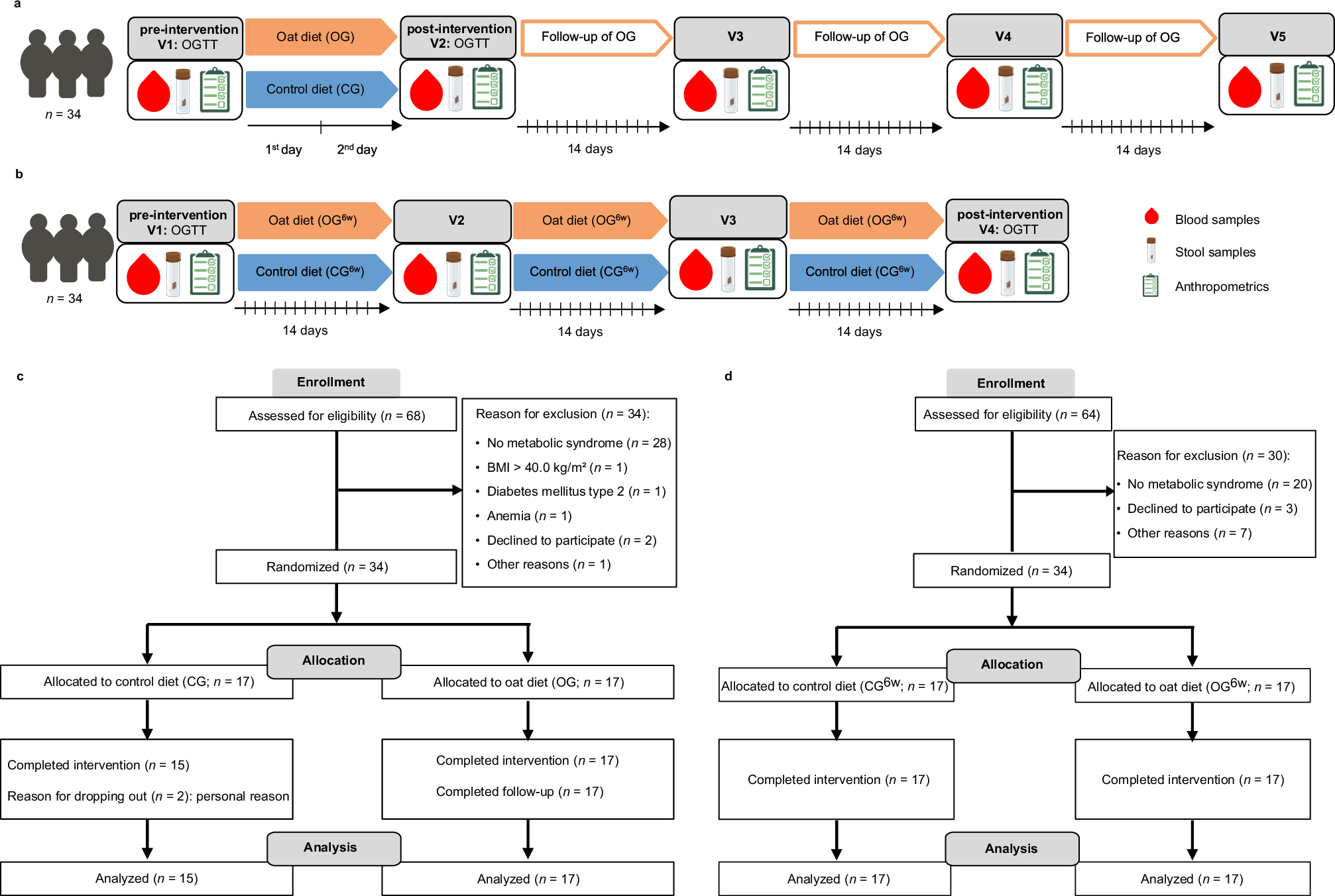
Researchers conducted two separate randomized trials in adults ages 45–70 who had metabolic syndrome. The two experiments changed participants’ diets in quite different ways.
In the two-day trial, the oat group replaced their usual meals with three daily servings of porridge, each made from 100 grams of dry rolled oats boiled in water. That supplied approximately 13.5 grams of beta-glucan per day. Small amounts of fruit and vegetables were allowed, but their diet was restricted to approximately 1,100–1,200 calories per day. The control group followed an oat-free diet with similar calories and proportions of carbohydrates, fat, and protein. Their diet was also high in fiber. In the six-week trial, participants replaced just one of their usual meals with 80 grams of oats, giving them approximately 3.5 grams of beta-glucan daily. They otherwise continued their usual diet, with the intention of keeping calorie intake constant. The control group continued eating their usual diet without oats.
|
|
|
|
| |
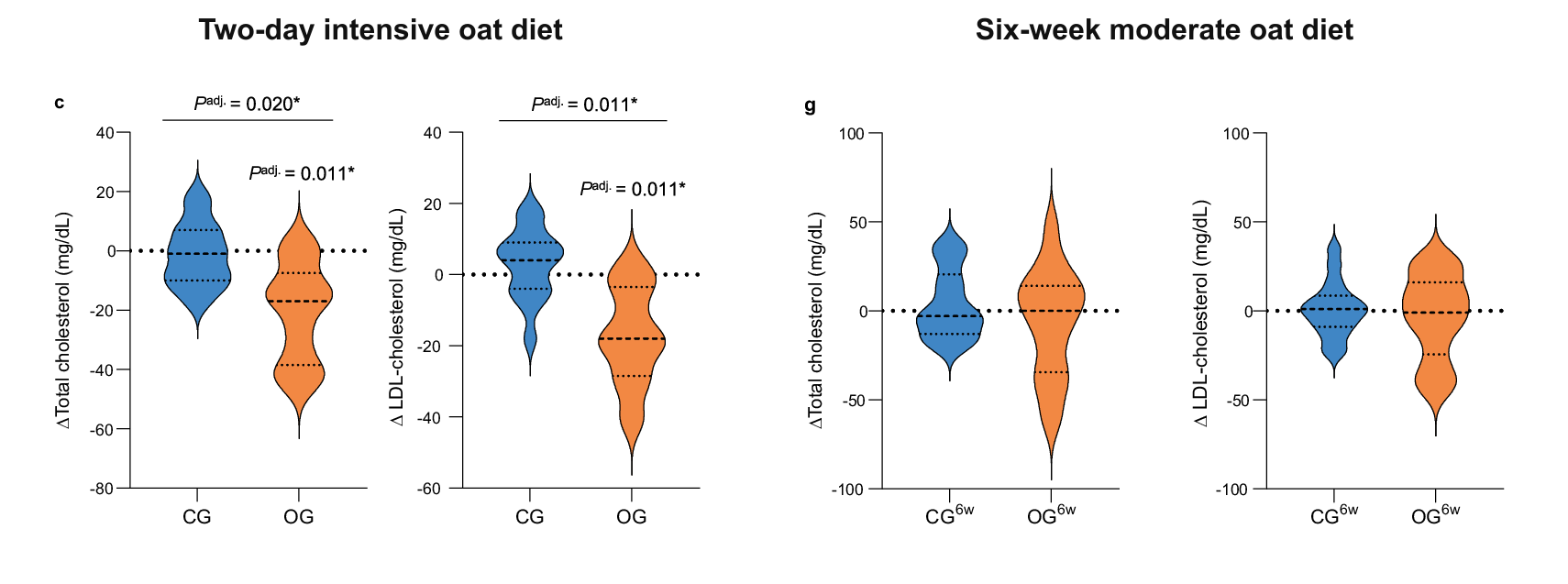
After two days of the oat-heavy diet, average LDL fell by 17.4 mg/dL—about 10.3% from baseline—in the oat group. The difference versus the control group was 16.3 mg/dL. Six weeks after the end of the intervention, LDL levels were still reduced below baseline, even though the participants hadn't consumed any oats during that time frame.
The six-week experiment produced a less conclusive result—a non-significant 5.2 mg/dL reduction in LDL on average.
The two-day oat diet also reduced fasting glucose, total glucose exposure during an oral glucose tolerance test by about 10% compared to baseline, lowered fasting insulin and HOMA-IR (an estimate of insulin resistance), and reduced blood pressure from 139/94 to 127/86. However, participants eating the oat-free, calorie-restricted diet also experienced a drop in their fasting glucose, a reduction in blood pressure, and an improvement in fasting insulin and insulin resistance. In other words, there was no advantage for oats over the control group for these other outcomes.
That makes the interpretation different from the LDL finding. While improvements occurred during the high-dose oat diet, we can't confidently attribute them to oats. Calorie restriction and other changes to the overall diet may have contributed. In the six-week experiment, eating 80 g of oats daily also did not produce significant improvements in fasting glucose, glucose tolerance, or blood pressure compared to the control group.
The strongest evidence here concerns cholesterol.
|
|
|
| |
The change in total cholesterol and LDL-cholesterol after the two-day oat-heavy diet and the six-week moderate-oat diet. |
|
| |
Beyond beta-glucan
Beta-glucan offers one established explanation for oats’ cholesterol effects. Its viscosity can reduce bile-acid reabsorption, increasing the amount of cholesterol the liver uses to replenish those bile acids. I’ll return to that mechanism and the broader research shortly…
This paper asks what other components of oats might contribute.
Oats contain phenolic compounds, including ferulic acid. Gut microbes can transform these compounds into different molecules that can enter circulation. One example is dihydroferulic acid, or DHFA, a microbial metabolite of ferulic acid and one of the primary outcomes the researchers chose to study.
-
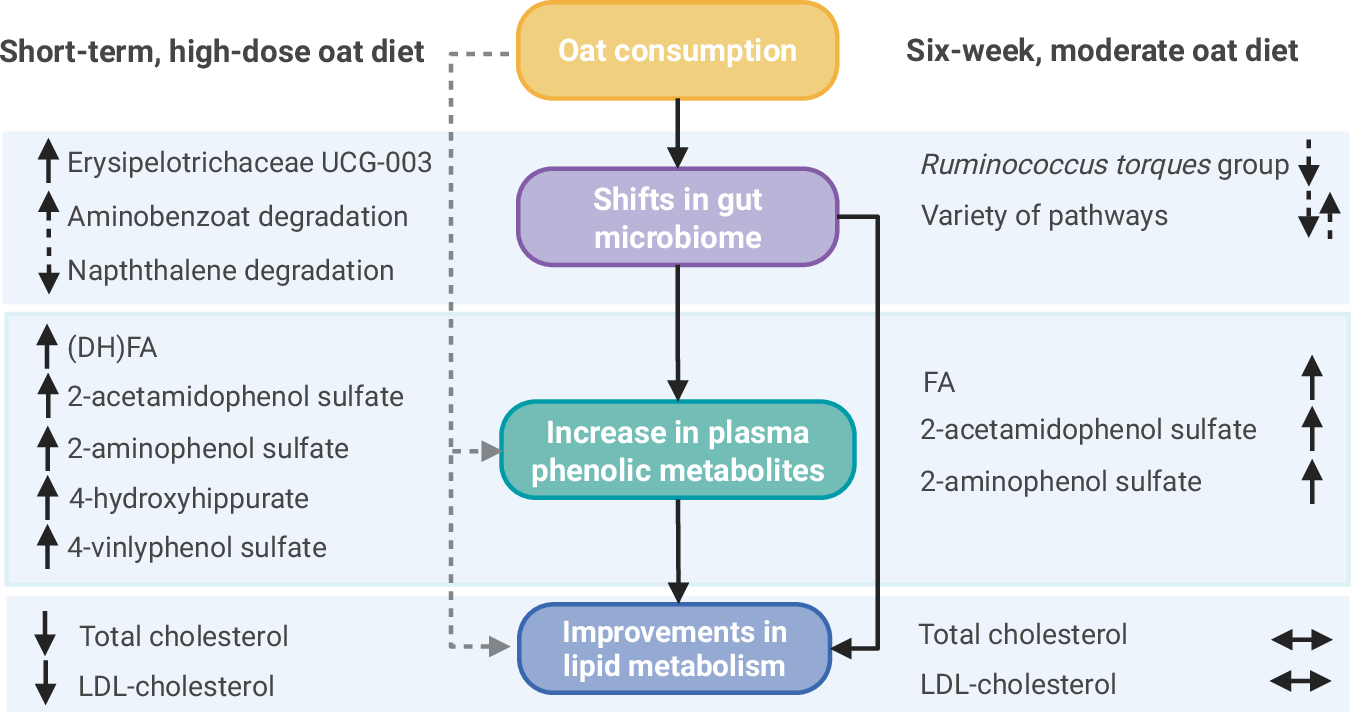
Both oat diets increased circulating ferulic acid, but only the intensive two-day intervention significantly increased DHFA. In that trial, increases in several phenolic metabolites were directly associated with decreases in cholesterol.
- In laboratory experiments, microbes from human stool fermented the digested oat material and produced metabolites, including DHFA. This supports the idea that gut microbes can generate these compounds from oats.
- In human immune cells, DHFA reduced the proportion of cholesterol in cells, and experiments in liver cells also suggested changes in cholesterol handling.
Together, these results make a microbial contribution biologically plausible. Oats supply phenolic compounds, microbes modify them, and the resulting metabolites may influence cholesterol metabolism.
|
|
|
| |
Why beta-glucan still deserves attention
If a daily bowl of oats didn’t significantly lower LDL in the six-week experiment, how does that fit with everything we’ve heard about oats and cholesterol?
Your liver makes bile acids from cholesterol. During digestion, those bile acids enter the intestine to help you absorb fats. Most are then recovered and returned to the liver for reuse. Viscous beta-glucan makes that recycling less efficient, allowing more bile acids to leave in stool. To replenish them, the liver uses some of its cholesterol supply, which can prompt it to take up more LDL from the blood. That’s the bridge between the gel-forming fiber in your digestive tract and a lower LDL measurement.
How much of a difference can it make?
A 2014 meta-analysis of 28 randomized trials found that consuming at least 3 grams of oat beta-glucan daily lowered LDL by about 10 mg/dL compared with control.1 A broader review of 58 trials involving nearly 4,000 participants also found modest reductions in LDL (a 7.3 mg/dL reduction, on average), non-HDL, and apoB.2
What about PFAS?
Certain PFAS enter the intestine through bile and then get reabsorbed. Could gel-forming fiber interrupt that recycling and help more leave the body?
I've frequently referenced a mouse study that tested this idea. Male mice received PFAS-contaminated drinking water for six weeks while eating diets containing either oat beta-glucan or inulin—a soluble fiber that doesn’t form a gel. The beta-glucan mice drank more water, so they received more PFAS, but relative to estimated exposure, their blood concentrations of three PFAS tended to be lower.3
The human evidence is preliminary, too. A 2025 exploratory analysis of 72 men examined blood samples from a trial comparing 3 grams of oat beta-glucan daily with rice powder for four weeks. In that study, a selected group of long-chain PFAS declined within the beta-glucan group.4
Right now, I think the mechanism makes this worth studying and perhaps trying for yourself. But the evidence for lowering LDL is much stronger than the evidence for clearing PFAS. And PFAS chemicals are different from microplastic particles. These studies don’t demonstrate that eating oats removes microplastics from the body.
Next, I'm going to answer three common audience questions about oats and fiber supplements.
|
|
 |
| |
Should I be worried about glyphosate?
If oats are something you eat regularly, I’d choose certified organic when it fits your budget. Some surveys suggest that up to 75% of oat-based products contain detectable levels of glyphosate. This is a practical way to reduce avoidable exposure while keeping a food with well-established benefits in your diet.
In Q&A #82, I discussed research showing how quickly dietary changes can affect pesticide exposure. In one small study involving 16 people from four families, switching from conventional foods to an organic diet reduced average urinary glyphosate levels by about 71% within six days. That’s a substantial change, although the researchers changed the whole diet, so we can’t attribute it specifically to organic oats.
USDA organic standards prohibit glyphosate use, although organic certification doesn’t guarantee the absence of every trace residue. If a company provides independent testing, look for recent results that identify glyphosate, the product tested, and ideally the batch. I wouldn’t rely on soaking or rinsing as a proven way to remove it, either.
What if oats spike my blood sugar?
I’d start by looking at the portion, the type of oats, and what else is in the meal. Oats contain starch, so some rise in blood glucose is expected. Their cholesterol benefits don’t mean that every preparation or serving size will work equally well for you.
Processing does seem to make a difference. Steel-cut oats produce a lower peak glucose response than instant oatmeal and a ready-to-eat oat cereal. That supports choosing a less processed option if glucose spikes are a concern.
For an everyday breakfast, I’d try plain steel-cut oats, pay attention to the dry portion size, and account for added sugar, sweetened milk, and other carbohydrates in the meal. Including a protein source, such as plain Greek yogurt or eggs on the side, can also help slow the glucose rise. These are adjustments to try and assess.
Is beta-glucan powder a good substitute for oats—and how does it compare with psyllium?
For lowering LDL, a well-formulated oat beta-glucan supplement can be a reasonable alternative to getting that fiber from oatmeal. You don’t have to eat oats every day to benefit from their beta-glucan. But replacing the fiber doesn’t necessarily replace everything the food provides.
In Q&A #81, I discussed a trial in which adults with elevated cholesterol consumed a beverage providing 1 gram of high-molecular-weight oat beta-glucan three times daily. After four weeks, LDL was about 6% lower. That’s useful for someone who doesn’t enjoy oatmeal or finds it difficult to get enough beta-glucan from food. A concentrated preparation can lower LDL without requiring a bowl of oats.
There's one thing to keep in mind: Beta-glucan’s ability to form a viscous gel is part of how it works, and only higher- and medium-molecular-weight preparations appear to effectively lower LDL. Low-molecular-weight versions aren't as effective—even at 4 grams per day, so I wouldn't assume that every powder labeled "beta-glucan" will reproduce the cholesterol-lowering results.5
If you enjoy oats and they work well for you, I’d still keep them in your diet. They provide other fiber, vitamins, minerals, and phenolic compounds alongside beta-glucan. And they’re a meal that can replace something else in the diet, whereas adding a fiber supplement leaves the rest of that meal unchanged, for better or for worse.
It's also worth noting that an isolated beta-glucan powder won't necessarily supply the same compounds—in this case oat phenolics that gut microbes can convert into metabolites that may contribute to the cholesterol-lowering effect of oats.
My practical preference would be to use oats when they fit your meals, and consider a supplement when it makes getting an evidence-based amount of beta-glucan more manageable. You can also combine the two. There’s no requirement to choose one exclusively!
Where does psyllium fit? It’s another well-supported option. About 10 grams of psyllium daily (not grams of soluble fiber), taken for at least eight weeks alongside a low-fat diet, can lower LDL by about 7% compared with placebo.6
If psyllium agrees with you and is helping lower your LDL, I don’t see a compelling reason to switch solely because beta-glucan is getting attention.
|
|
 |
| |
Final thoughts
I've spent a lot of time talking about the beta-glucan in oats. Now we can also consider what our gut microbes do with the phenolics that come along with it. It's yet another example of the "food matrix" in action.
This isn’t a reason to prescribe yourself two days of a calorie-restricted oatmeal diet every six weeks. For ordinary oat eating, the stronger foundation is the broader research on beta-glucan, your overall diet, and how your cholesterol responds.
My own interest in oats has definitely influenced my breakfast choices. In January of last year, I mentioned that I’d become a little obsessed with overnight oats and was eating them almost every morning because of the animal research on beta-glucan and PFAS alongside separate human research using a bile-acid-binding drug which had gotten my attention.
My most recent routine includes both oats—in the form of overnight oats with chia, which I eat about 2–4 times per week—and supplemental beta-glucan—from a barley-derived supplement that gives me 3 grams of active beta-glucan daily. My interest in taking it was the potential effect on PFAS—not a personal cholesterol-lowering result that I can point to. For me, the practical appeal of a concentrate is getting the intended fiber dose without needing a large serving of grains every single day.
The oats themselves can stay simple. Here's my recipe for overnight oats, which I shared in Q&A #70:
¼ cup dry old-fashioned organic rolled or steel-cut oats 1 teaspoon organic chia seeds About ½ cup unsweetened sprouted almond milk
Put the lid on and shake to distribute the oats and chia, then add about two heaping tablespoons of berries—blueberries, raspberries, or sliced strawberries.
That serving isn’t equivalent to the 300 grams of dry oats per day used in today's study, and I wouldn’t count it as supplying the clinical 3-gram beta-glucan target. It’s just one way to fit oats into a broader eating pattern.
That’s what I’d encourage you to think about, too: a preparation you enjoy and a routine you can repeat.
Enjoy your breakfast.
|
|
| |
Go deeper on oats, fiber, and cholesterol
I’ve explored questions related to choosing a fiber supplement, how much you need, and whether you should be worried about contaminants in the following member-only episodes.
And for the original discussion of my overnight-oat preparation, you’ll find it in Q&A #70 at 1:29:54.
|
|
Warm regards,
— Rhonda and the FoundMyFitness team
|
|
|
|
|
|
 Mitochondrial bioenergetics
Yamanaka factors
Exercise intensity
Cell reprogramming
Blood-brain barrier
Epigenetic age deceleration
Stress resistance
Cardiorespiratory fitness
Nutritional ketosis
Compression of morbidity
CpG Islands
Lactate shuttle
Whole-body hyperthermia
Psychology of grit
Telomerase reverse transcriptase (TRT)
Chronic inflammation
Disease prevention
Therapeutic hyperthermia
Pathogen-host defense theory
Cell signaling
Proteostasis
Cellular senescence
CRISPR-Cas9
Aging
PGC1α
Overcoming adversity
Increased healthspan
Gene–diet interaction
Biology of resilience
Immune-brain interaction
Neuroendocrine effects
Heat Shock Proteins (HSPs)
Oxidative stress
Vitamin D
Omega-3 fatty acids
β-Hydroxybutyrate (BHB)
GLUT4
Pregnancy optimization