Q&A #83: Does Glucosamine Worsen Alzheimer’s Disease?
Get these episodes in a convenient podcast format.
These live recorded Q&A episodes make great companion listening for a long drive. You can find these Q&A episodes alongside great interview aliquots and other special members-only episodes on The Aliquot, our official premium FoundMyFitness podcast.
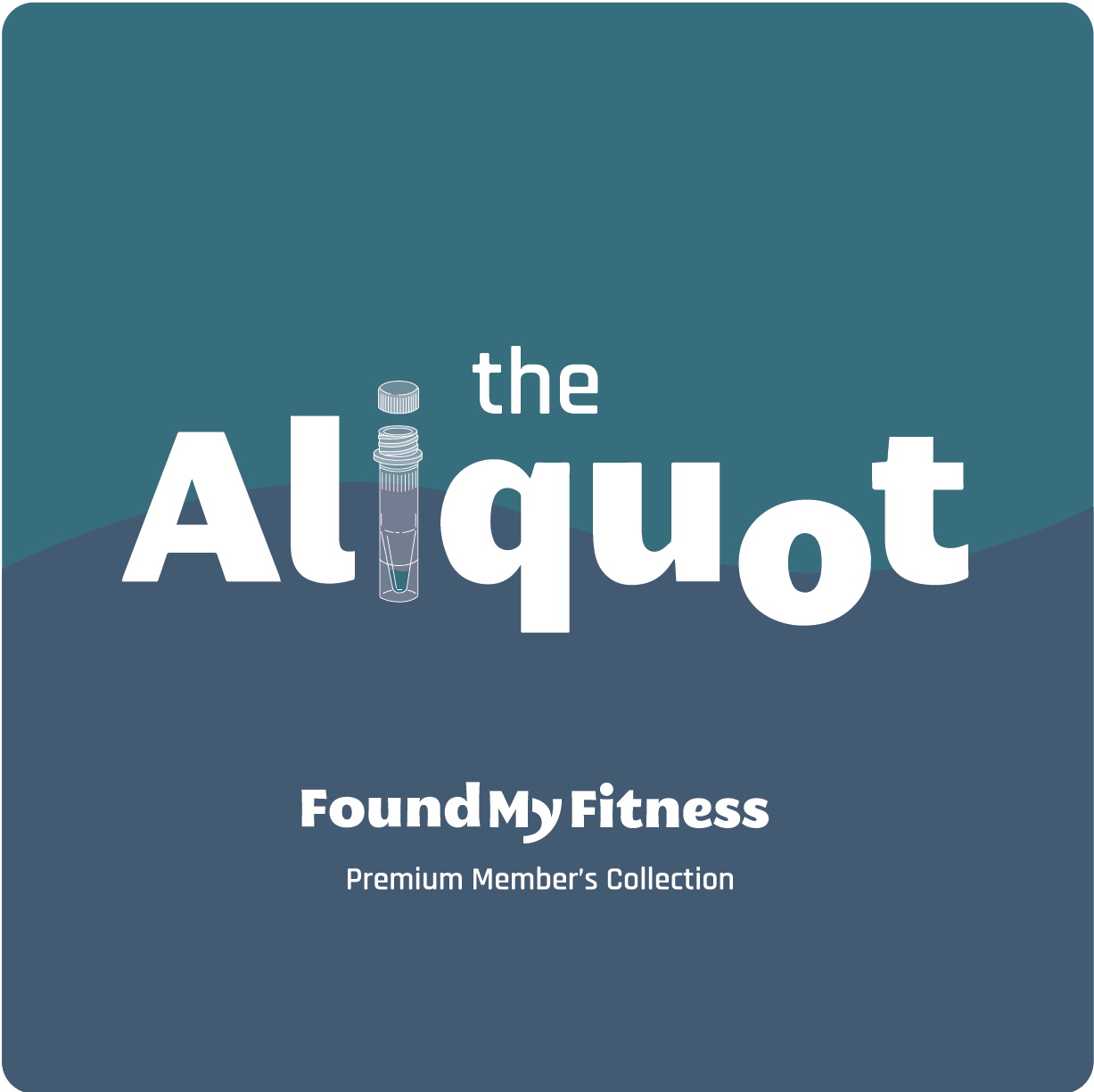
In this Q&A, Dr. Rhonda Patrick discusses blood flow restriction training, the safety of glucosamine for the aging brain, fiber's effects on nutrient absorption, vagus nerve stimulation, whether vitamin C supplementation is necessary when taking collagen, and the evidence for astaxanthin as a longevity supplement.
Timestamps include:
-
Q: What do you think about blood flow restriction bands for simple exercises?
-
Q: How does glucosamine affect people with Alzheimer's disease?
-
Q: Do collagen supplements work for skin and joints?
-
Q: Can you clarify the correct dosage of beta-glucan?
-
Q: Does fiber interfere with the absorption of supplements or nutrients?
-
Q: What is your opinion on vagus nerve stimulators?
-
Q: Do you need vitamin C with collagen?
-
Q: How effective is astaxanthin as a longevity supplement?
Can glucosamine increase the risk of Alzheimer's disease or worsen existing disease? What a new study actually shows
Glucosamine is one of the most popular supplements for joint pain. A new study in Nature Metabolism has prompted headlines linking glucosamine use to a higher risk of Alzheimer's disease.[1] This possibility deserves attention, but the findings need careful interpretation.
What is glucosamine, and what is it used for?
Glucosamine is an amino sugar that the body produces naturally. Cells use it as one of the raw materials for larger molecules called glycosaminoglycans and proteoglycans, which are components of cartilage and synovial fluid—the lubricating fluid inside joints. Supplemental glucosamine is mainly marketed for osteoarthritis, a common "wear-and-tear" joint condition in which cartilage gradually deteriorates alongside changes in the underlying bone and joint lining, often causing stiffness and pain.


In a healthy knee, smooth cartilage covers the ends of the thighbone and shinbone, while synovial fluid lubricates the joint and nourishes the cartilage. The joint is enclosed by a capsule with a tough outer layer and an inner lining that produces the synovial fluid. In osteoarthritis, cartilage breaks down, the underlying bone can become damaged or develop cysts, and the joint lining may become inflamed while the surrounding capsule becomes thickened or scarred. Aging, injury, excess weight, inflammation, and repeated mechanical stress can contribute to these changes. Licensed under CC BY 4.0 via Wikimedia Commons; author: Damerau A et al. (2024); file: Synovial_joint_architecture_and_stressors_contributing_to_osteoarthritis
- ^ Hawkinson TR; Liu Z; Ribas RA; Medina T; Nielsen RS; Clarke HA, et al. (2026). Hyperglycosylation is a metabolic driver of Alzheimer's disease. Nature Metabolism 8, 6.
-
Beginning of Q&A
-
-
-
Q: Do collagen supplements work for skin and joints? 1
-
Q: How do you accomplish 10 minutes of breathless exercise? 1
-
-
-
Q: What is your current multivitamin?
-
Q: How much magnesium do you get from food vs. supplements? 1
-
-
-
Q: What are your thoughts on creatine safety, purity, and brands? 1
-
-
-
-
-
Q: Where should sauna temperature be measured? 1
-
Q: Why did you stop taking Sparkle Wellness?
-
-
-
-
Q: How much protein do children need? 1
-
Q: What is your preferred collagen brand?
-
Q: What do you think about NAD supplements? 1
-
Q: Do collagen peptides adversely affect the gut microbiome?
-
Q: Should you take creatine immediately before exercise? 1
-
-
-
Every month, Rhonda hosts a live chat with FoundMyFitness Premium Members.
Don't miss the next one.
Watch previously recorded Q&As with Dr. Rhonda Patrick
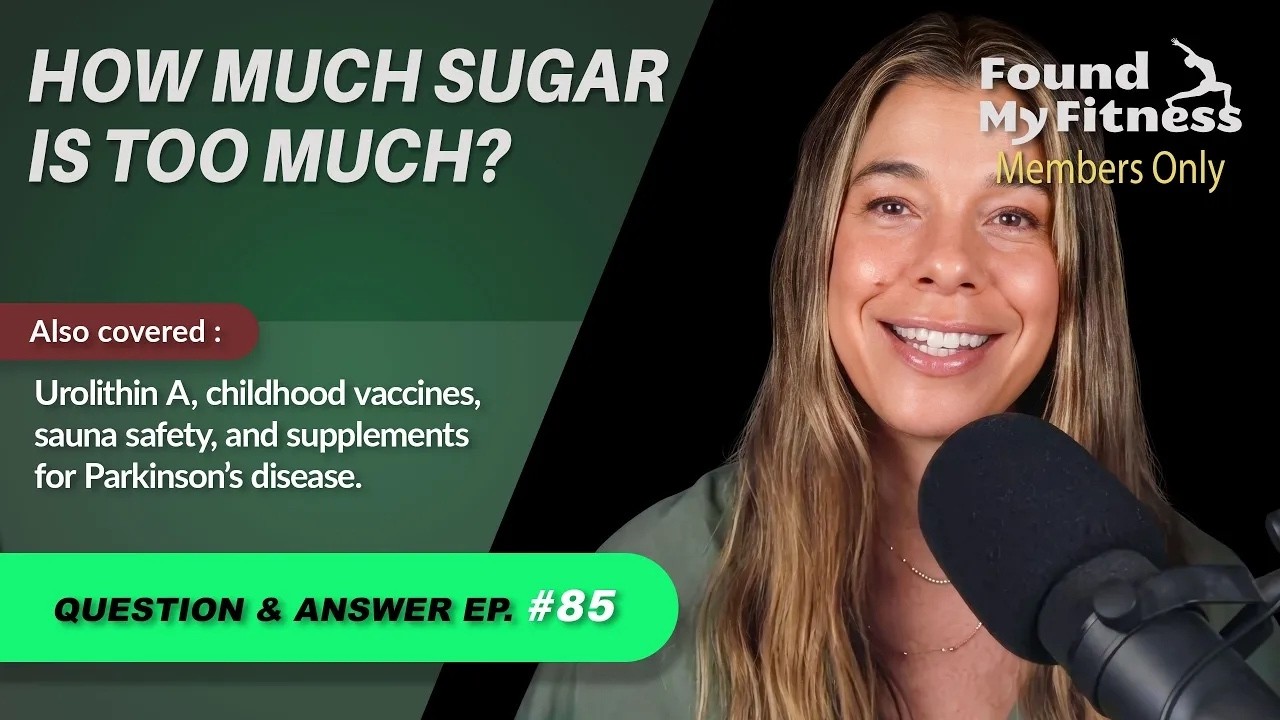
Q&A #85: How Much Sugar Is Too Much—and Can Supplements Help Parkinson's?
Dr. Rhonda Patrick discusses urolithin A, postmenopausal protein, microplastics, high-temperature saunas, sugar intake, and supplements for Parkinson's disease.
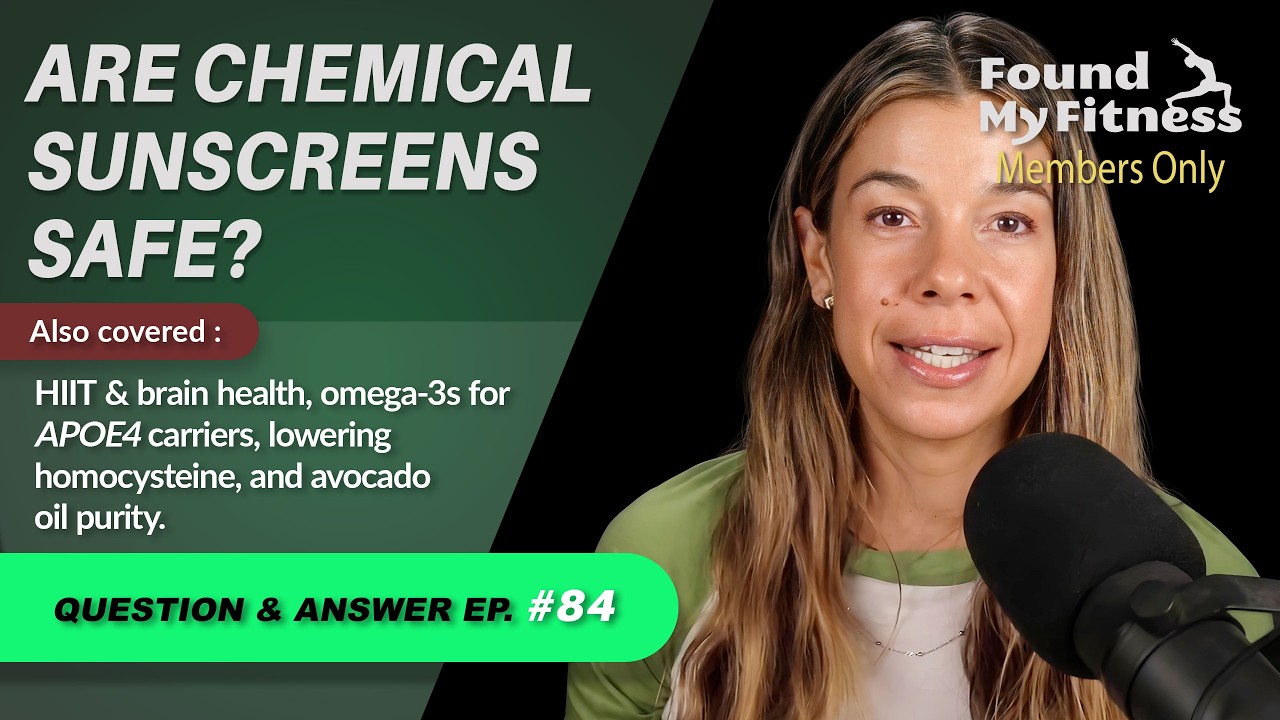
Q&A #84: Chemical Sunscreen Safety—Plus What Rhonda Eats
Dr. Rhonda Patrick discusses sunscreen safety, HIIT & brain health, diet, omega-3s, urolithin A, sulforaphane, homocysteine, peptides, and CoQ10.
Q&A #82: Organic Food, Pesticides & Glyphosate—What Actually Lowers Exposure?
Dr. Rhonda Patrick discusses organic produce, fasting-mimicking diets, sleep, sauna, sunscreens, red light therapy, reverse osmosis water, and fiber.
Q&A #81: Beta-Glucan vs. Psyllium—LDL Reduction, PFAS, & Gluten
Beta-glucan versus psyllium for lowering LDL, PFAS reduction, creatine and caffeine, urolithin A, exogenous ketones, IVF, Botox, and sauna.
Q&A #80: Does Nattokinase Protect Your Heart?—What the Evidence Shows
Dr. Rhonda Patrick reviews the evidence for nattokinase, how oat beta-glucans may aid with PFAS excretion, and HRT for APOE4 carriers.