How to Meet Magnesium Needs Through Food and Supplements
The BDNF Protocol Guide
An essential checklist for cognitive longevity — filled with specific exercise, heat stress, and omega-3 protocols for boosting BDNF. Enter your email, and we'll deliver it straight to your inbox.
You'll also receive updates from Rhonda & FoundMyFitness
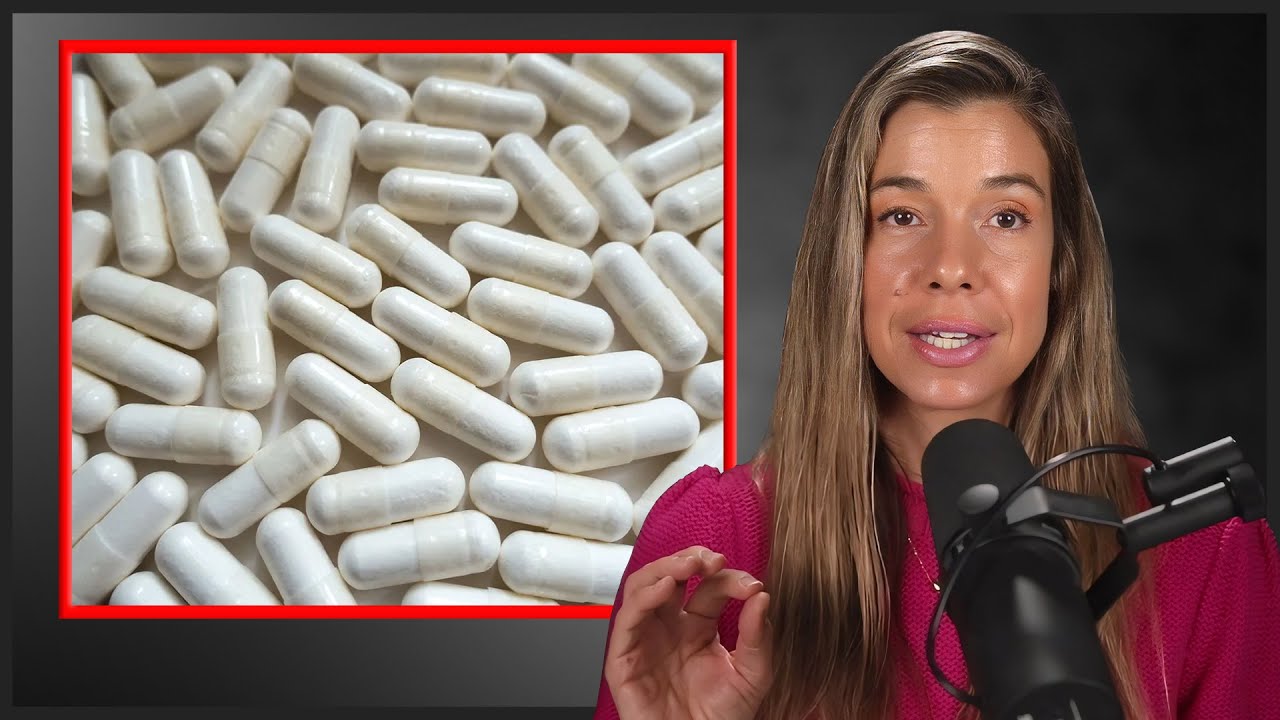
In this Institute for Functional Medicine excerpt, Dr. Rhonda Patrick says about half of U.S. adults do not meet adequate magnesium intake and gives an average adult RDA near 400 milligrams per day, with sex-specific variation. She also states that frequent exercise or sauna can raise needs by roughly 10–20% through sweat loss.
Magnesium is a cofactor for hundreds of enzymes, including DNA-repair systems. [1] Dr. Patrick reports observational estimates of roughly 40% lower all-cause mortality and 50% lower cancer mortality at the highest versus lowest magnesium levels. Observational studies cannot establish that magnesium caused those differences. [2] She also describes an association between each 100-milligram decrement in intake and 24% higher pancreatic-cancer incidence; this remains an association subject to confounding. [3]
Food comes first: dark leafy greens, legumes, almonds, and oats can contribute magnesium. Dr. Patrick personally takes about 125 milligrams of magnesium glycinate. She names glycinate, malate, and citrate as more bioavailable options and oxide as less bioavailable; a small human comparison directly supports citrate over oxide under the tested conditions, not every form ranking. [4]
Supplemental magnesium can cause diarrhea and other gastrointestinal effects. Reduced kidney function can impair magnesium clearance, so dose and form require clinical guidance in kidney disease. Dr. Patrick’s personal dose and preferred form are examples, not universal recommendations.
This clip is excerpted, with permission, from Increasing Healthspan: From Micronutrients to Hormetic Stressors. Thank you to the Institute for Functional Medicine for allowing us to share it.
- ^ 11295157
- ^ 16570028
- ^ Dibaba, Daniel; Xun, Pengcheng; He, Ka; Yokota, Kuninobu; White, Emily (2015). Magnesium Intake And Incidence Of Pancreatic Cancer: The VITamins And Lifestyle Study British Journal Of Cancer 113, 11.
- ^ Lindberg JS; Zobitz MM; Poindexter JR; Pak CY (1990). Magnesium bioavailability from magnesium citrate and magnesium oxide. J Am Coll Nutr 9, 1.
Another one that’s pretty common, I think, in the United States, at least, is magnesium. Magnesium is an essential mineral. About 50% of the U.S. population does not get an adequate intake of magnesium. The RDA was set at around—I would say, on average, because it’s a little different for males and females—about 400 milligrams per day for an adult.
If you are a physically active adult—let’s say you exercise frequently or maybe use the sauna—you can excrete magnesium through sweat. Physically active adults actually require anywhere from 10% to 20% more than the RDA. So you can imagine, if people are already not even getting the RDA, physically active people are in even worse shape in some respects.
Magnesium is an essential cofactor. It is important for the function of more than 300 different enzymes in our body, including enzymes that repair damage to our DNA. DNA damage happens every day. It’s happening right now as we’re having this conversation. It’s not something you can look in the mirror and see, but it is insidious in the respect that it causes low-level damage that accumulates over time. As we age, it can lead to dysfunctional cells and potentially to what are called oncogenic mutations, which can lead to cancer. Repair enzymes do not function properly without magnesium.
Magnesium is also important for DNA synthesis. We’re making new cells, new blood cells, new immune cells, and new skin cells. Every time we make a new cell, we have to replicate all the DNA inside that cell. That requires enzymes called DNA polymerases. You need magnesium for those to function properly. Again, it’s very important for our DNA, for repairing DNA, and for making sure it doesn’t get mutations from the get-go during DNA replication.
That is probably why a variety of studies have found associations with magnesium. These are observational studies, of course, with all the caveats that come with observational studies, such as potentially other confounding factors. With that in mind, people with the highest magnesium levels have a 40% lower all-cause mortality and a 50% lower cancer mortality compared with people with the lowest magnesium levels.
Another study, which I think was specific to pancreatic cancer, found that for every 100-milligram decrease in magnesium intake, there was a 24% increase in pancreatic-cancer incidence. Again, that highlights the important role magnesium plays, particularly with our DNA and with ensuring the integrity and genomic stability of our DNA. That is very important for preventing cancer, which is an age-related disease. Of course, some things are outside our control. However, some things are in our control, and I think an easy one would be magnesium.
Why is widespread deficiency common? Magnesium is found at the center of a chlorophyll molecule. Chlorophyll is the molecule that gives plants their green color, so magnesium is high in dark leafy greens. Most people are not eating multiple servings of dark leafy greens daily. It is also fairly high in legumes. Almonds are another great source of magnesium. Oats are a great source. The bottom line is that people aren’t eating enough leafy greens.
Supplemental magnesium is another possibility, but the dose needs to be considered because magnesium at higher doses can cause adverse effects such as gastrointestinal problems. What I like to do is try to get my magnesium from dietary sources. This morning, I had a smoothie with cooked kale, chard, a couple of frozen strawberries, blueberries, and avocado. I was getting a magnesium dose with my breakfast, which was scrambled eggs.
Try to find any way you can to get multiple servings of greens, almonds, or oats, which are another great dietary source. I also take a supplement of about 125 milligrams of magnesium, and I use magnesium glycinate. Most magnesium supplements are—with respect to bioavailability—I would say the one that is not very bioavailable is magnesium oxide. Magnesium glycinate has very good bioavailability. So do magnesium malate and magnesium citrate.
Supplementing with magnesium can be a way to at least get closer to an RDA-adequate level. Also, when I use the sauna or I’m physically active, I drink electrolytes afterward. An electrolyte drink can replace some of the lost sodium, magnesium, and potassium, for example. That is another option when you’re physically active.
Attend Monthly Q&As with Rhonda
Support our work

The FoundMyFitness Q&A happens monthly for premium members. Attend live or listen in our exclusive member-only podcast The Aliquot.