How to Reduce Alcohol’s Short-Term Harms
Get the full length version of this episode as a podcast.
This episode will make a great companion for a long drive.
The Omega-3 Supplementation Guide
A blueprint for choosing the right fish oil supplement — filled with specific recommendations, guidelines for interpreting testing data, and dosage protocols.
You'll also receive updates from Rhonda & FoundMyFitness
In this closing excerpt from the FoundMyFitness alcohol episode, Dr. Rhonda Patrick gives a clear starting point: the health-minimizing dose is zero, but people who choose to drink can still reduce risk. She recommends keeping total intake low and avoiding binge episodes, because a low weekly average does not cancel the acute burden of several drinks at once. A large global analysis found that total alcohol-attributable harm rose with consumption when cancer, injury, and other outcomes were considered together. [1]
Timing and context can reduce immediate disruption. Dr. Patrick recommends eating before or during alcohol use, hydrating with water and electrolytes, choosing a smaller dose, and stopping several hours before bed. Alcohol can fragment sleep even when it initially makes falling asleep easier; a controlled challenge found lower sleep efficiency, less REM sleep, and worse next-day attention and speed. [2]
Dr. Patrick specifically cautions against taking NSAIDs such as ibuprofen, or acetaminophen, to reduce hangover symptoms, especially while alcohol is still being consumed. She says these combinations may slow alcohol metabolism or increase liver toxicity. The mechanisms and risks differ across NSAIDs, acetaminophen, doses, and individual patients.
She separately warns against mixing melatonin with alcohol to improve sleep because the combination can increase drowsiness and may be unsafe. Exercise, nutrition, hydration, and recovery support general resilience but do not neutralize a high alcohol dose. People with substance-use problems or a family history of substance-use disorders may need to avoid alcohol entirely.
- ^ Griswold, Max G; Fullman, Nancy; Hawley, Caitlin; Arian, Nicholas; Zimsen, Stephanie R M; Tymeson, Hayley D, et al. (2018). Alcohol Use And Burden For 195 Countries And Territories, 1990–2016: A Systematic Analysis For The Global Burden Of Disease Study 2016 The Lancet 392, 10152.
- ^ Rohsenow, Damaris J.; Howland, Jonathan; Arnedt, J. Todd; Almeida, Alissa B.; Greece, Jacey; Minsky, Sara, et al. (2010). Intoxication With Bourbon Versus Vodka: Effects On Hangover, Sleep, And Next-Day Neurocognitive Performance In Young Adults Perspectives In Psychiatric Care 34, 3.
Okay, friends, we have covered a lot of information and I want to end this episode with a section I think you've all been waiting for, and that is some practical advice and tactics for damage control. I'm including this discussion because if we're being realistic, there are people who enjoy consuming alcohol on occasion, and I'm not going to tell you whether you should or shouldn't drink. Alcohol is a part of many social occasions and knowing that people will consume alcohol from time to time, it makes sense to think about the lowest-risk ways to have alcohol and strategies to reduce some of the adverse effects of consuming it. We just talked about exercise being one potential way.
Many of these we've already discussed throughout this podcast, so I'll summarize those now and I'll introduce a few of the key damage control strategies that I think are going to be the most impactful. First, I think an important note, it's abundantly clear that the number of alcoholic drinks per week that will be associated with optimal health is zero. I know that throughout this episode, I've cited studies showing that low and even moderate levels of alcohol consumption are associated with lower risk of certain diseases, but none of this evidence suggests that someone who doesn't consume alcohol should start to consume alcohol to obtain that health benefit.
Rather, they suggest that if your current drinking habits reflect low to moderate alcohol consumption, you may have— you may be within a safe range. And if you're consuming more than this amount, reducing your intake should provide a health benefit. But of course, your baseline health status and predisposition to diseases like cancer should play a role in your decision to drink or not. So if you are going to drink, what is the safest level of alcohol consumption? From a disease reduction standpoint, the literature suggests 1 to 2 drinks per week. This recommendation is largely driven by the evidence on cancer, which has a very low risk threshold for drinking.
Even though 1 to 2 drinks per day seems to lower the risk for cardiovascular diseases and diabetes, this amount seems to elevate the risk of dementia and cancer and reduce life expectancy. And I don't think that the cardioprotective or glucose-lowering effects of alcohol outweigh the greater risk for cancer or cognitive decline. Also, it's clear that you should avoid consuming 4 to 5 drinks on any single occasion or binge drinking because binge drinking is associated with adverse health effects even when your weekly alcohol consumption falls within the low-risk or even cardioprotective range. There is admittedly a very poor quality literature about things that may or may not mitigate these adverse effects of alcohol.
Regarding sleep, the dose and timing are probably the 2 most important factors. If you have your last drink 4 hours or more before going to sleep, this seems to drastically reduce the impact on sleep quality and sleep architecture. Consuming a meal before having any alcoholic drinks at night, and even adding some fruit to this meal, and ensuring that you're staying hydrated with electrolytes and water may also minimize alcohol's effects on sleep. But there really isn't much evidence to support this, just anecdotes. Lastly, because magnesium glycinate has been suggested to help with sleep in general, I think that taking this before sleep on a night when you were drinking may be worth trying, especially because, as we've discussed, alcohol increases magnesium excretion.
These same tactics for sleep also apply for reducing the severity of hangovers. Eating a heavy meal, supplementing with electrolytes, and hydrating only seem to help mildly with hangover symptoms. While speculative, supplementing with N-acetylcysteine and liposomal glutathione, both of which are intended to increase glutathione levels in the body and brain, may reduce some of alcohol's damaging effects and aid in detoxification processes in the liver. Because sulforaphane has also been shown to increase glutathione plasma levels and brain levels in humans, this represents another supplement option that could reduce alcohol's negative effects.
A low-cost and risk-free strategy would be to supplement with a micronutrient-rich multivitamin to replenish your body's micronutrient stores, which may become depleted after a day or night of consuming alcohol. Remember that some vitamins like vitamin B3 and zinc actually are crucial for helping convert alcohol into less harmful metabolites before they leave the body. In this case, you should also ensure that your micronutrient levels are adequate in general in order to make sure your body has the enzymatic machinery necessary to metabolize alcohol. But of course, micronutrients are important even if you don't consume alcohol.
Lastly, I would advise against taking NSAIDs like ibuprofen, or acetaminophen, to reduce hangover symptoms, and you should especially avoid taking them with alcohol as they could slow down alcohol metabolism or increase the liver toxicity of alcohol. The same goes with mixing melatonin with alcohol in an attempt to sleep better. This will lead to increased drowsiness and may not be safe. Briefly, let's recap the list of supplements that may work for mitigating some of the adverse effects of alcohol. Remember that most of these things on this list are speculative. Liposomal glutathione, N-acetylcysteine, and sulforaphane to increase glutathione levels and help with liver detoxification processes. Zinc, magnesium, and B vitamins to aid in the metabolism of alcohol.
Electrolytes, sodium, magnesium, potassium, because alcohol may increase the loss of them in urine. How to track, assess the effects of alcohol on health. One of the biggest issues surrounding low and moderate alcohol consumption is that for some people, the effects on health aren't readily apparent. It's really hard to assess whether drinking one to a few drinks per week is affecting your overall chronic disease risk. But nearly everyone these days owns some sort of wearable fitness and sleep tracking device. If this is true for you, then you have a very valuable tool literally at your fingertips to measure the effects of alcohol on your sleep.
Although this data may not be as useful as laboratory biomarkers, I think that it could still be useful in helping you make decisions about alcohol consumption. Take a look at your sleep metrics, your resting heart rate after a regular night and a night of drinking, and you may realize something very interesting. Lastly, I think that overall, the number one thing that you can do if you want to consume alcohol occasionally without experiencing an increase in your risk for disease is to live an overall physically active lifestyle. In fact, engaging in regular exercise lessens the all-cause mortality risk associated with drinking and almost completely nullifies the association between cancer mortality and drinking.
I am not saying that you can justify an extra drink or 2 because you worked out, but I am saying that you can probably worry a bit less about 1 or 2 social drinking occasions each week if you regularly exercise. That brings us to the end of this episode. I sincerely hope you enjoyed and at least learned a few new things about alcohol and took away some actionable advice that you can use in your everyday life. When it comes down to it, we're all adults who can make decisions for ourselves. If you struggle with substance use or have a family history of substance abuse disorders, then maybe completely avoiding alcohol is the best decision for you. But if you are someone who enjoys an occasional drink, I think that all of the evidence discussed today suggests that you can make it a part of an otherwise healthy lifestyle if you engage in low-risk drinking behaviors, you exercise routinely, and you might use some of the other tools I've discussed at length.
Get email updates with the latest curated healthspan research
Support our work
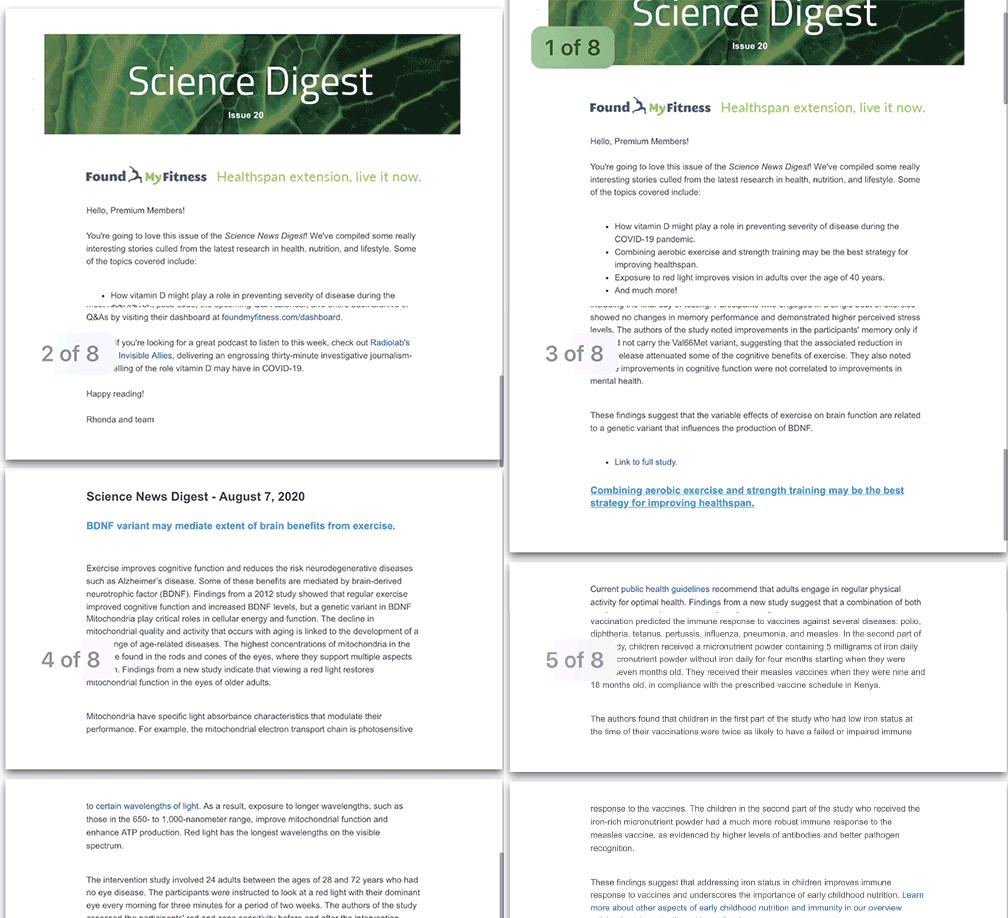
Every other week premium members receive a special edition newsletter that summarizes all of the latest healthspan research.
Alcohol News
- Alcohol & tobacco synergistically damage the brain. Cancer may be decades away but brain damage happens right now.
- Low medication use may promote longevity, according to a study in centenarians.
- Researchers found there was up to 90 percent less neuroinflammation and neuronal death in the brain cells exposed to alcohol plus DHA .
- Older women and those with obesity clear alcohol from their systems 52 percent faster, according to new research.
- One in eight deaths in Americans ages 20 to 64 resulted from drinking too much alcohol, according to a U.S. population-based study.