What the Carnivore Diet Leaves Out About Fiber
Get the full length version of this episode as a podcast.
This episode will make a great companion for a long drive.

The Omega-3 Supplementation Guide
A blueprint for choosing the right fish oil supplement — filled with specific recommendations, guidelines for interpreting testing data, and dosage protocols.
You'll also receive updates from Rhonda & FoundMyFitness
In this FoundMyFitness interview clip, Dr. Rhonda Patrick asks Dr. Layne Norton why some people report feeling better after adopting a carnivore diet. Dr. Norton explains that removing many foods can temporarily reduce symptoms in people with unrecognized gastrointestinal triggers. A randomized crossover trial found that a low-FODMAP diet reduced symptoms in people with irritable bowel syndrome, supporting targeted elimination and reintroduction rather than a universal conclusion that plant foods are harmful. [1]
Dr. Norton recommends adding foods back one at a time to identify what is tolerated. He distinguishes digestive discomfort from systemic inflammation and explains that soluble fermentable fiber feeds gut microbes, while insoluble fiber supports stool bulk and transit. Dr. Patrick adds that plant foods also provide vitamins, minerals, and phytochemicals within a food matrix.
Long-term evidence consistently relates higher-quality carbohydrate and fiber intake to better health outcomes. A large series of systematic reviews and meta-analyses found dose-response associations between dietary fiber and lower cardiovascular disease, type 2 diabetes, colorectal cancer, and mortality, with randomized trials also supporting favorable effects on weight, cholesterol, and blood pressure. Dr. Norton uses this totality of evidence to favor an individualized, fiber-containing diet over permanent plant exclusion. [2]
- ^ Halmos EP; Power VA; Shepherd SJ; Gibson PR; Muir JG (2014). A diet low in FODMAPs reduces symptoms of irritable bowel syndrome. Gastroenterology 146, 1.
- ^ Reynolds A; Mann J; Cummings J; Winter N; Mete E; Te Morenga L (2019). Carbohydrate quality and human health: a series of systematic reviews and meta-analyses. Lancet 393, 10170.
Dr. Rhonda Patrick: The carnivore diet. I definitely want to talk to you about that. You talked about it a little bit. You know, it's kind of like the seed oil thing, you know, where it's like you've taken it head on. And I like talking about it. I really want to talk about it with you because I don't think people can accuse you as the anti-meat guy, clearly.
Dr. Layne Norton: I get accused of it. I get it from both sides. Vegans and carnivores hate me. Not all vegans.
Dr. Rhonda Patrick: Well, that's ridiculous.
Dr. Layne Norton: Rational vegans like me.
Dr. Rhonda Patrick: There's clearly a lot of people that experience benefits from going on a carnivore diet, an all-meat diet. I also hear them say things like plants are bad for you. You mentioned that fiber is bad for you, toilet paper.
Interesting, I'm trying to figure out where that's coming from, but what's your take on it in terms of why are they experiencing the benefits? You kind of talked a little bit about it, why they're experiencing some of these benefits, like autoimmune disease is a big one, right? Their autoimmune issues kind of resolved. But long-term—
Dr. Layne Norton: For some people.
Dr. Rhonda Patrick: For some people, yeah. But long-term, you know, like we don't have— do we even have data on this?
Dr. Layne Norton: No, there's no data.
Dr. Rhonda Patrick: So there's a lot of belief in this based on how you feel, I guess, or perhaps some biomarkers. But plants are bad for you, fiber's bad for you. What's your take? Clearly there's something going on. People are experiencing things that are real.
Dr. Layne Norton: So I'm big on symmetrical application of logic.
If you were going to use a certain line of logic, you have to apply it symmetrically. You can't just apply it asymmetrically, but asymmetrical application is usually what people do. What I mean by that is, let's take the plants are toxic thing, right? There are people out there who will say, well, broccoli has this compound in it, which is a carcinogen. I think I saw some physician, doctor saying there's 76 known carcinogens in plants. And I'm like, if you extracted like the chemical composition out and like overfed them in high doses, maybe. Okay. But what actually happens when people eat plants? Like, if plants are trying to kill us, they're doing a really crappy job. Like, they are failing miserably because people who eat more plants tend to live longer.
And so, okay, why are we not applying that towards compounds in meat? Heterocyclic amines, heme iron, polycyclic aromatic hydrocarbons, Neu5Gc. And when you bring that up, the carnivore I was debating said, well, that's just hormesis. I'm like, well, how convenient that the compounds that might be carcinogenic are hormetic for the stuff you like, but the stuff you don't like to eat is toxic. I'm like, but this is like the Olympic-level mental gymnastics they have to do to convince themselves, because again, they believe that they're actually doing something healthy for themselves. Now, I want to be very clear. Some people do carnivore, and they get healthier. I'm not saying that can't happen.
I am simply saying you would be even more healthy if you also included fiber in that, if you also included fruits and vegetables. Now, I think a lot of these people are people with undiagnosed IBS, people with gut issues, digestive issues, and what is carnivore? It is an elimination diet. And so what happens when people who have gut and autoimmune disorders go on elimination diets? A lot of times, they feel better. Okay, but an elimination diet is meant so that you can then add back things and see what you tolerate versus not tolerate. Many people, I mean, FODMAP sensitivities, many people have FODMAP sensitivities, aren't even aware of it. So they cut out fruits and vegetables, which can be high in FODMAPs, and they feel better.
Okay, so then start adding them in one by one and see what you tolerate. And I think the other thing to point out is there is a lot of selection bias that goes on here, which is if you look at these carnivore groups, because I've been in them, because I, I watch, um, they're only really people who are getting positive benefits are the ones that are the loudest. And the people who don't, they get like gaslit, bullied, they get accused of like sneaking in carbohydrates or plants. And the res— the response is, oh, we'll just add more Add more fats, add more animal fats, if they're having problems with constipation or whatever it is.
And it's funny, I was on a debate with Paul Saladino on Mark Bell's podcast years ago, and I think I actually came across poorly on that podcast because one, I wasn't super familiar with his entire position, and I was so flabbergasted by it, it took me like an hour to just recover and get my wits back about me. And he pulled up this, his postulation at the time was fiber is toilet paper. Your body doesn't digest it, like why would you put that in you? Well, fiber isn't just like toilet paper, like there's this thing called soluble fermentable fiber that actually is the main fuel for the gut microbiome, and of all the things we know that actually help with the gut microbiome, that's like the biggest lever is fermentable soluble fiber.
And that produces things like butyrate, propionate, which have positive metabolic health benefits in many randomized controlled trials. So that's one. But he pulls out this study that I'd never heard of before. And it was a study where people who had constipation eliminated fiber and a lot of them reported improvement in their symptoms. So it's self-reported and there's no control group. I'm like, okay, but the meta-analyses show overall that fiber helps with like going to the bathroom, with pooping, like it helps. Okay, maybe some people feel better by eliminating it, right? Okay, I can, I can see a place for that. But again, it's not that carnivore has this magic. It's that you're taking things out of your diet that were probably aggravating you.
They were aggravating your digestion, producing excess gas. You're having pain, bloating. And again, this is another one where people go, I was very inflamed. I'm like, yeah, what was your CRP? What was it? What's that? I'm like, well, that's what you use to measure inflammation. Well, my gut hurt. I was bloated. No, no, that is localized inflammation in response to something going on there. That is not the same thing as the inflammation that raises the risk of heart disease and cancer and that sort of thing. So what I would say to people is, hey, if you want to eat like a meat-based diet, I still don't think it's a great idea, but like you don't have to have like 4 ribeyes a day. You can choose leaner cuts of meat.
You can have fish, you know, and why not work in some fruits and vegetables? And if you have digestive problems with those, add them in one at a time and see which one doesn't give you digestive distress. And I think, unfortunately, this becomes so much like a religion for people because they just— I think a lot of them don't like eating vegetables. And so it becomes an excuse to not eat vegetables. We believe what we want to believe. And again, the asymmetrical application of logic is very interesting to me. So there's, there's a lot of carnivore advocates out there that say epidemiology is garbage. In fact, Paul Saladino had a video titled Epidemiology Is Garbage. Like, okay. And then when he was on another podcast, he was citing epidemiology.
And I'm like, whoa, whoa, whoa, whoa, whoa, wait, wait, wait, wait, wait, wait, wait, wait. So epidemiology is garbage unless it's epidemiology that you agree with. But he's not alone in that. There's a lot of people who did that. And then here comes this internet survey that was published by Harvard about people— I think it was in Harvard, but it was like a self-reported internet survey of people reporting certain things improving on carnivore diet. I'm like, wait, so 20-year cohort studies with appropriate covariates are garbage, but a self-reported internet survey— That's high-quality evidence. Okay. I mean, again, it's like if you're going to apply a certain type of logic, you have to be consistent with that.
And again, what I'll say is, hey, I just laid out how I don't think red meat is an independent risk factor for cancer. I'm not convinced about that, very unconvinced about that. But if red meat had the data that dietary fiber had about reducing the risk of cancer, heart disease, and mortality, you carnivores would lose your absolute minds if anybody dared suggest that it wasn't good for you. And so it just very clearly points out the asymmetrical application of logic. And getting more into dietary fiber, it fulfills almost every single aspect of what we— what I need to be considered strong evidence, which is we know the mechanisms, you know, in terms of insoluble fiber decreases gut transit time, decreases the risk of diverticulitis, which probably is a risk factor for developing colon cancer at some point.
There's some idea that by having less gut transit time, that the toxins that are in our digesta that wind up in stool, that they have less time to interact with those intestinal cells. And so by getting rid of it faster, that reduces your risk of colorectal cancer. Soluble fiber, the effects on the gut microbiome, the production of short-chain fatty acids, and also the lowering of LDL cholesterol. So we have an improvement in glucose metabolism and insulin sensitivity. We have those mechanisms.
Dr. Rhonda Patrick: Not to mention the micronutrients, vitamins, and minerals that are co-ingested along with that. Phytochemicals in those plants and fruits.
Dr. Layne Norton: Yeah, in the food matrix.
And actually what's interesting is one of the first seminars I went to as a graduate student. There was a professor there talking about lycopene in tomatoes and all this kind of stuff. And at the end, we're asking questions, and he goes, you know what? You have a really hard time beating Mother Nature's kitchen. And I really like what he said, which is, you know, whenever we try to extract these individual compounds out of food, we never, not never, rarely do we see the same beneficial effects as consuming the whole food itself. To your point about the food matrix, right? So yeah, there's a pathway there, there's biochemical pathways there.
We may not ever be able to really pick them out in terms of priority of what it— but the thing to remember, and I tell this to people, every food you eat probably activates something positive and negative. The question is not whether there are things in it that will activate positive and negative pathways. And even that I get the heebie-jeebies about because, you know, a pathway is probably only negative if it's dysregulated because your body evolved to keep you alive, but it can activate good and bad things. The question is, what is the overall outcome of that, right? Like we said, Tylenol— or sorry, aspirin activates procoagulant, anticoagulant pathways, but the overall effect is anticoagulation. Plants, fruits and vegetables.
So both— any food may activate positive and negative pathways, but the question is like, what's the overall effect, right? Because if we try to tease apart every individual biochemical pathway, it's gonna be really hard to wrap that back together. And again, with fiber, there's also a dose response. We see a dose response in these cohort studies. And again, if we do a forest plot of studies showing benefit or showing harm, literally every single study is on the side of benefit. So I just don't know how much more data you need. Just because fiber might— some sources of fiber might make your tummy hurt doesn't mean fiber is bad for you. I don't know how much more else I can lay that out, you know?
Dr. Rhonda Patrick: I 100% agree that there's just an overwhelming amount of evidence that fiber is beneficial.
Plants, vegetables, fruits, beneficial. There's randomized controlled trials, there's the observational data. I mean, you just can't ignore that evidence.
Dr. Layne Norton: I don't even like eating vegetables either. I just do it because I know it's good for me.
Get email updates with the latest curated healthspan research
Support our work
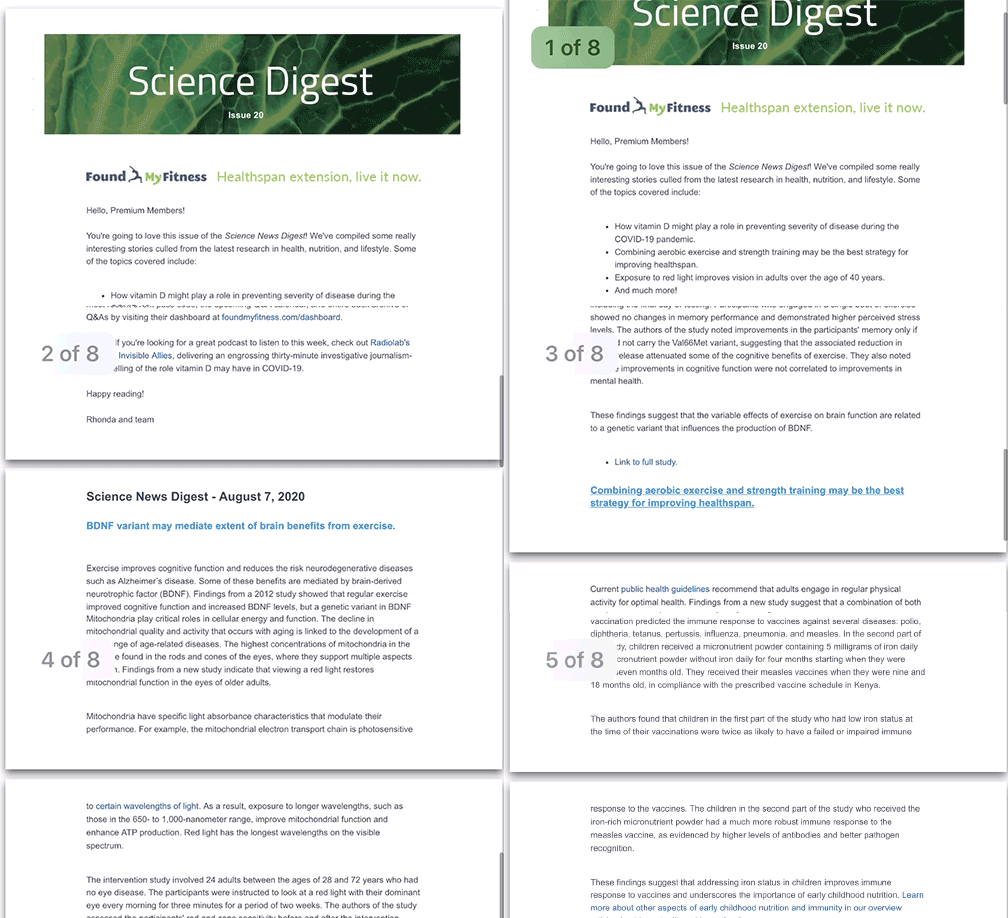
Every other week premium members receive a special edition newsletter that summarizes all of the latest healthspan research.
Diet News
- Tyrosine, found in things like fruit, spinach, and eggs improves mental speed in a "stopping" task
- Dietary AGEs linked to overeating and 30 percent shorter lifespan in worms.
- Animals fed meat from old animals had a 10% shorter lifespan compared to animals fed meat from young animals.
- Low medication use may promote longevity, according to a study in centenarians.