What BPA and Microplastics May Mean for Fertility
Get the full length version of this episode as a podcast.
This episode will make a great companion for a long drive.

The Omega-3 Supplementation Guide
A blueprint for choosing the right fish oil supplement — filled with specific recommendations, guidelines for interpreting testing data, and dosage protocols.
You'll also receive updates from Rhonda & FoundMyFitness
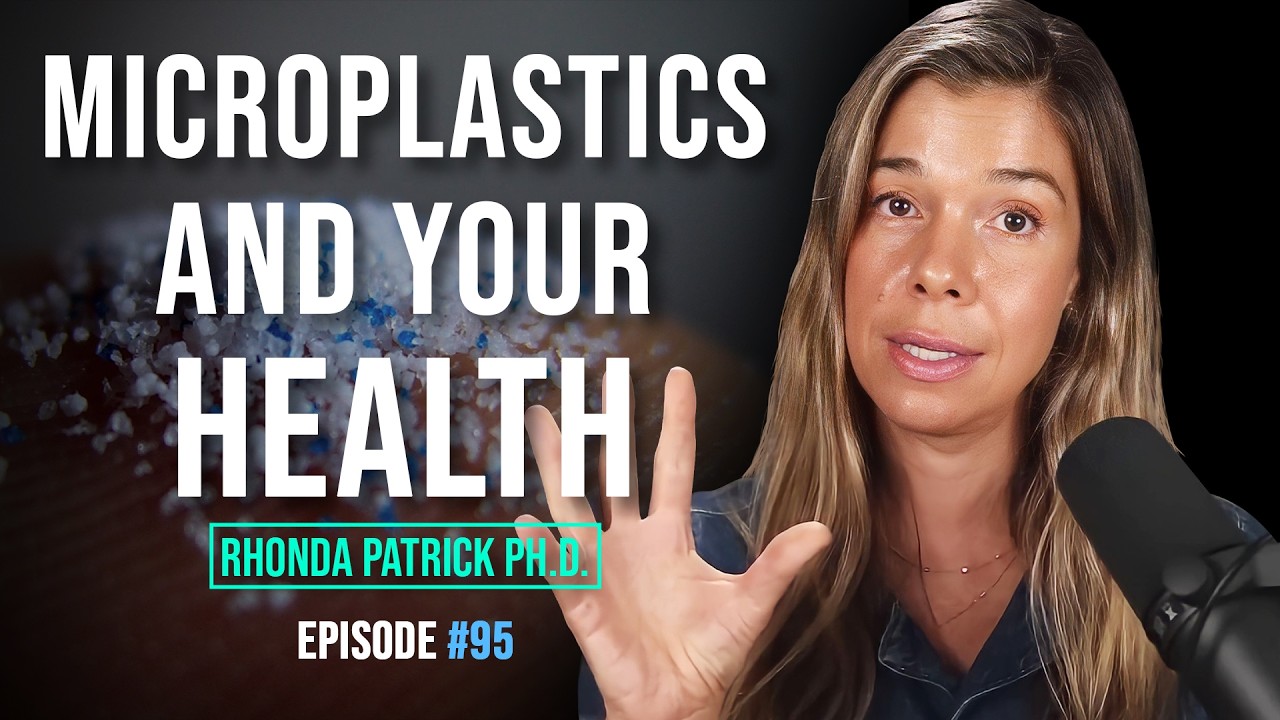
In this FoundMyFitness deep-dive clip, Dr. Rhonda Patrick reviews human evidence on BPA, microplastics, and reproductive health. She explains how BPA can interact with endocrine signaling and why fertility studies examine mature oocytes, implantation, testosterone, sperm count, motility, and morphology.
In a cohort of 450 women undergoing 674 IVF cycles, higher urinary BPA was associated with fewer mature oocytes and lower implantation, although several other outcomes did not differ. A separate study in fertile men linked urinary BPA with selected semen measures. Together, these studies identify exposure signals worth reducing and studying further. [1] [2]
Dr. Patrick also describes a study of semen from 40 men in which microplastics appeared in every sample. Particle counts and sizes varied, and samples containing PVC showed lower progressive motility than samples containing polystyrene. The finding adds direct human exposure evidence while keeping the focus on association, product sources, and practical exposure reduction. [3]
Human evidence on BPA and pubertal timing is mixed. One prospective cohort associated prenatal BPA exposure with later, not earlier, timing of some pubertal milestones in girls, while a systematic review found no strong, consistent correlation between BPA exposure and pubertal timing. [4] [5] These observational findings do not establish causality, and milestone-specific results must not be generalized to all aspects of puberty.
- ^ Radwan P; Wielgomas B; Radwan M; Krasiński R; Klimowska A; Kaleta D, et al. (2020). Urinary bisphenol A concentrations and in vitro fertilization outcomes among women from a fertility clinic. Reprod Toxicol 96, .
- ^ Ji, Honglei; Miao, Maohua; Liang, Hong; Shi, Huijuan; Ruan, Dasheng; Li, Yongbo, et al. (2018). Exposure Of Environmental Bisphenol A In Relation To Routine Sperm Parameters And Sperm Movement Characteristics Among Fertile Men Scientific Reports 8, 1.
- ^ Li N; Yang H; Dong Y; Wei B; Liang L; Yun X, et al. (2024). Prevalence and implications of microplastic contaminants in general human seminal fluid: A Raman spectroscopic study. Sci Total Environ 937, .
- ^ Berger, Kimberly; Eskenazi, Brenda; Kogut, Katherine; Parra, Kimberly; Lustig, Robert H.; Greenspan, Louise C., et al. (2018). Association Of Prenatal Urinary Concentrations Of Phthalates And Bisphenol A And Pubertal Timing In Boys And Girls Environmental Health Perspectives 126, 9.
- ^ Meng H; Zhou Y; Jiang Y (2020). Association of bisphenol A with puberty timing: a meta-analysis. Rev Environ Health aheadofprint, aheadofprint.
Let's shift gears and talk about fertility. BPA is something I really want to emphasize here because its impact on fertility is pretty alarming. There's a lot of research out there that shows just how much BPA exposure can interfere with women's reproductive health. Let's start with egg quality. So there's a study that looked at women going through IVF, and what was found was kind of shocking. Women with higher levels of BPA in their urine had half as many viable eggs as women with lower BPA levels. And that's huge. Imagine your chances of a successful pregnancy being cut in half just because of your exposure to a chemical found in everyday plastics. But it doesn't stop there. BPA also messes with ovarian function by disrupting the hormonal balance that's crucial for regular ovulation.
It interferes with estrogen and progesterone, which are basically the key players in regulating our menstrual cycle. This means even if you're not trying to conceive right now, BPA could be impacting your ability to ovulate consistently and prepare your body for pregnancy when you're ready. And then there's implantation. This is the process where the fertilized egg attaches to the uterine wall. Even if everything else is in order, BPA can affect the uterine lining and make it harder for a fertilized egg to implant. One study showed that women with higher BPA levels had lower implantation success during IVF, which makes it clear that this isn't just a hypothetical concern. BPA is affecting the body's natural ability to support early pregnancy.
And BPA may also play a role in puberty as well because of its ability to mimic estrogen. So studies have shown that exposure to BPA at critical stages of development, such as early fetal life, infancy, or even early childhood, is linked to early onset of puberty in girls. A study published in 2016 found that girls with higher prenatal BPA exposure had earlier breast development and menarche, which is the first menstrual period, which can have long-term health consequences, including increased risk for breast cancer later in life, earlier menopause later in life, et cetera. And for men, BPA exposure is also a concern when it comes to fertility.
Now, we've known for a while, again, BPA can act like estrogen in the body, which can disrupt hormone balance, but its effects on sperm are really alarming. So a study published in 2020 found that men with higher levels of BPA in their systems had lower testosterone levels, and unsurprisingly, their sperm quality was also significantly reduced. So think about this. They had lower sperm count, reduced motility, and even structural abnormalities that were found in their sperm. And these are men who otherwise would seem healthy. Testosterone, as we know, is crucial not just for reproductive health, but for overall health. And when BPA gets into the body, it can start to mess around with the endocrine system in ways that affect all these areas of male fertility.
What was also interesting about this study is that researchers found that this decline in sperm quality was found at relatively moderate levels of BPA exposure, which really highlights again how pervasive this issue is. BPA is everywhere— plastics, food containers, canned goods, receipts. So this exposure adds up quickly, and this is where we start to see these systemic effects that have very real consequences on health and fertility. But honestly, BPA is just the tip of the iceberg when it comes to what's going on here. Microplastics are also playing a pretty significant role, and this is where it can get even more concerning. There was a study that looked at semen samples from 40 healthy young men, men who should be in their prime reproductive years.
And get this, every single sample had microplastics in it. On average, there were two particles per sample, and these weren't just harmless specks. We're talking about plastic particles ranging in size from 0.7 micrometers to 7 micrometers. So they're small, but they're definitely there. And the most common type that was found was polystyrene. This is the stuff that's found in packaging. It's in containers that made up around 31% of the total. But what's really troubling is that what is this doing to sperm? These microplastics were linked to abnormal sperm shape and impaired motility, meaning their sperm couldn't move as efficiently. And one of the worst culprits was PVC. This is the same plastic used in things like water pipes. This is where our tap water is coming from.
So small particles from PVC can break down and leach into our water supply over time. So tap water is a huge source of microplastics. So here we are. Microplastics aren't just an environmental issue. They are a human health issue. We've got them inside our bodies, even affecting fertility, which is something that feels so fundamental. And it raises the question, if microplastics are doing this to healthy young men, what else are they doing to our overall health? It's something we really need to pay attention to.
Member only extras:

Learn more about the advantages of a premium membership by clicking below.
Get email updates with the latest curated healthspan research
Support our work

Every other week premium members receive a special edition newsletter that summarizes all of the latest healthspan research.
Reproductive health News
- Ultra-processed foods impaired metabolism and reproductive health in men, even without excess calories.
- Microplastics found in ovarian follicular fluid of nearly 80% of women undergoing fertility treatment, potentially disrupting hormone regulation, impairing egg maturation, and altering embryo development.
- High levels of "forever chemicals" linked with cancer and reproductive problems found in seafood.
- Common flavonoid chemically related to quercetin increases sperm quality in pigs.
- Coenzyme Q10 may counteract testosterone reduction induced by chemical reproductive toxicants, rodent studies suggest. (2018)