Bisphenol A
Episodes
Dr. Rhonda Patrick and Jack Neel discuss plastic exposure from hot drinks, food packaging, bottled water, and everyday habits.

Dr. Rhonda Patrick and Jack Neel discuss how chemical exposures, sleep, heat, and steroid use affect male reproductive health.
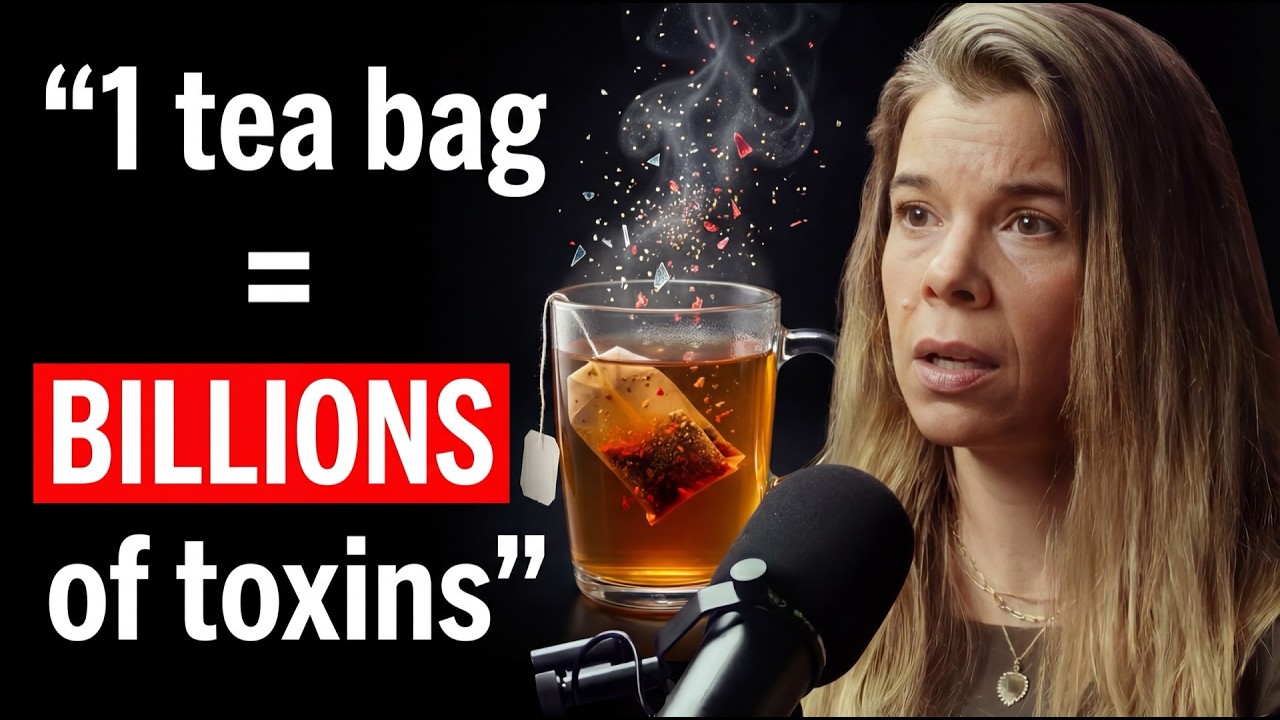
Dr. Rhonda Patrick and Chris Williamson discuss plastic exposure from water, food packaging, tea bags, black utensils, and receipts.
-
Dr. Rhonda Patrick and Jack Neel discuss plastic exposure from hot drinks, food packaging, bottled water, and everyday habits.
-
Dr. Rhonda Patrick and Jack Neel discuss how chemical exposures, sleep, heat, and steroid use affect male reproductive health.
-
Dr. Rhonda Patrick and Chris Williamson discuss plastic exposure from water, food packaging, tea bags, black utensils, and receipts.
-
Dr. Rhonda Patrick explains how hot paper cups, tea bags, bottle caps, and can linings can add microplastics and plastic chemicals.
-
Dr. Rhonda Patrick explains how glucose temporarily affects testosterone testing and reviews human research on BPA and phthalates.
-
Dr. Rhonda Patrick explains how kitchen materials, heat, abrasion, cookware, receipts, and water filters shape everyday chemical exposure.
-
Dr. Rhonda Patrick explains how water filtration, safer food contact, and indoor air control can reduce microplastic exposure.
-
Pollution Alzheimer's Estrogen Fiber Vegetarian Bisphenol A Supplements Cardiovascular Rhonda Microplastics Pfas Micronutrients Eyes ZincDr. Rhonda Patrick reviews the evidence for nattokinase, how oat beta-glucans may aid with PFAS excretion, and HRT for APOE4 carriers.
-
Dr. Rhonda Patrick and Tim Ferriss discuss practical ways to reduce microplastic exposure from water, tea bags, cups, bottles, and gum.
-
In this Aliquot, I briefly describe the science and concerns surrounding microplastics and identify ways to lessen...
-
Dr. Rhonda Patrick reviews human evidence linking BPA and microplastic exposure with selected reproductive and semen outcomes.
-
Dr. Rhonda Patrick explains practical ways to reduce particles and plastic-associated chemicals in water, food, clothing, and cookware.
-
Dr. Rhonda Patrick separates microplastic particles from plastic-associated chemicals and explains practical exposure-reduction steps.
-
Dr. Rhonda Patrick separates preclinical BPA mechanisms, prenatal associations, and human microplastic detection from causal claims.
-
Dr. Rhonda Patrick outlines practical ways to reduce microplastic, BPA, phthalate, and PFAS exposure in daily life.
-
Rhonda Diet Inflammation Immune System Pregnancy Vaccine Fat Autism Bisphenol A Polyphenol MicroplasticsDr. Rhonda Patrick discusses silicone safety, grounding, pentadecanoic acid, and the potential benefits of olive leaf extract and peptides.
-
Rhonda Caffeine Bisphenol A Pollution Bone Sulforaphane Sauna Salt COVID-19 Autoimmunity Microplastics PfasDr. Rhonda Patrick discusses her supplement stack, avoiding microplastics, creatine for brain health, and mRNA vaccine autoimmunity risks.
-
Dr. Rhonda Patrick examines food-additive oversight, packaging chemicals, and how ultra-processed diets can increase calorie intake.
-
Dr. Rhonda Patrick shares practical ways she limits plastic contact with food and water, especially during heating and storage.
-
Pollution Microplastics Brain Pregnancy Bisphenol A Environment Neurodegeneration Reproductive Health PfasMicroplastics are ubiquitous in everyday life. This episode details how they impact our health and ways that we can limit our exposure.
Topic Pages
-
Sauna
A sauna exposes the body to ambient temperatures ≈70–100 °C, promoting thermoregulatory vasodilation, perspiration, and transient cardiovascular load.
News & Publications
-
Plastic-associated chemicals are widespread in food packaging, kitchenware, and personal-care products, but it is difficult to know which everyday changes meaningfully reduce exposure. Researchers tested whether changing diet, food-contact materials, and personal-care products could alter urinary markers of phthalates and bisphenols, two major classes of plastic-associated chemicals that have been linked to several health problems.
The study combined an observational cohort with a small randomized trial. In the cohort, 211 healthy adults in Australia completed detailed diet and lifestyle assessments and provided three urine samples per day on two non-consecutive days to measure plastic-associated chemicals. In the 7-day trial, 60 of these participants were randomized to one of five groups: personal-care products selected to reduce plastic-chemical exposure, food with minimized plastic contact, food with minimized plastic contact plus kitchenware and preparation changes, all three combined, or a control group with no intervention. Urine was collected three times daily on four separate days during the trial.
- In the cohort, all 211 participants had at least six detectable plastic-related chemicals in their urine. Some were linked to packaged, processed, and canned foods, while personal-care products were mainly linked to phthalates.
- In the randomized trial, the clearest reductions compared to controls appeared in the groups that received food with minimized plastic contact. Food with minimized plastic contact alone lowered two phthalate markers by about 32% and 47%, and total bisphenols by 59%. Food with minimized plastic contact plus low-plastic kitchenware and food-preparation changes lowered two phthalate markers by about 38% and 54%, and BPA by 60%. The group that received food with minimized plastic contact, kitchenware and preparation changes, and low-plastic personal-care products showed reductions of about 44% in one phthalate marker and 51% in total bisphenols.
- Personal-care product swaps alone had a more limited effect. They reduced one phthalate marker by about 35%, but did not reduce bisphenols.
- The interventions did not lower every plastic-chemical marker measured. DEHP-related phthalate markers did not decrease in any group.
Phthalates and bisphenols can migrate from plastics into foods, beverages, and personal-care products, then enter the body through ingestion, skin contact, or inhalation. The study results suggest that reducing plastic contact in everyday products, especially food, can lower exposure to some of these chemicals. As endocrine disruptors, they can mimic, block, or alter normal hormone signals, raising concerns not only about cardiometabolic health but also about fertility and reproduction.
This was a small, short, exploratory trial that measured urinary exposure markers, without directly assessing chemical levels in foods or personal-care products. However, the observed changes suggest that reducing plastic contact in everyday routines can substantially lower exposure to several of these chemicals. In this clip, I share practical tips for reducing everyday exposure to microplastics and plastic-related chemicals.
-
Despite the perceived safety of the U.S. food supply, many chemicals used in food packaging and storage may be hazardous. In fact, food scientists have found that more than 1,800 food-contact chemicals migrate into foods—many of which have never undergone toxicity testing. New research demonstrates that more than 3,600 of these toxic compounds have been detected in humans.
Researchers compared a list of more than 14,000 known food-contact chemicals to five major biomonitoring programs and several databases that track chemicals in the human body. They then prioritized chemicals frequently found in food packaging and examined evidence for their presence in humans.
They found that 3,601 of these chemicals have been detected in humans. Of these, 194 were identified in biomonitoring programs, 80 of which carry a high toxicity risk. They also confirmed that 63 of 175 chemicals of concern were present in the human body, and most lacked safety data.
These findings suggest that human exposure to food-contact chemicals is widespread, highlighting the need for stricter safety regulations. Many food-contact chemicals include bisphenol A, phthalates, and other toxic substances that promote cancer, impair fertility, and disrupt hormone signaling. Although many of these compounds accumulate in the body over time, some are preferentially excreted in sweat. Learn how sauna use promotes sweating, helping the body rid itself of some toxic substances.
-
Microplastic accumulation in arterial plaques increases the risk for cardiovascular disease-related events nearly fivefold. www.nbcnews.com
Tiny plastic particles, often called microplastics – ranging between 5 millimeters and 100 nanometers – are ubiquitous environmental pollutants. Scientists have identified microplastics in food (especially seafood), soil, drinking water, fresh- and saltwater bodies, and air. A recent study found that microplastics accumulate in human arterial plaques, increasing the risk for cardiovascular disease-related events, such as heart attack or stroke, nearly fivefold.
The study involved 257 patients undergoing carotid endarterectomy, a procedure in which a surgeon removes plaques from the heart’s arteries. Researchers analyzed the plaque for the presence of microplastics, measured the patients' inflammatory biomarkers, and tracked their health for about three years.
They found that more than half of the patients (58.4 percent) had microplastics in their arterial plaques, appearing as jagged-edged foreign particles. Those with microplastics in their plaques were 4.53 times more likely to experience a cardiovascular disease-related event during the three-year follow-up than those without microplastics. They were also more likely to be male, younger, and have diabetes, cardiovascular disease, abnormal blood lipids, and higher inflammatory markers.
These findings suggest that microplastics, a ubiquitous environmental pollutant, accumulate in arterial plaques, markedly increasing the risk of cardiovascular disease-related events. Evidence indicates that microplastic exposure is associated with many other adverse health outcomes. For example, a comprehensive review of the effects of microplastics revealed that microplastics induce oxidative stress and increase the risk for metabolic dysfunction, neurotoxicity, and some cancers. Some of these effects may be due to compounds commonly associated with plastic manufacturing, such as bisphenol A, or BPA, phthalates, and heavy metals that are present in and on microplastics.
-
Bisphenol A (BPA) is a chemical used during the production of polycarbonate plastics and epoxy resins. BPA is classified as an endocrine disruptor because it can mimic naturally-occurring hormones in the body such as estrogens, androgens, and thyroid hormones, potentially altering normal hormonal signals. Several chronic diseases are associated with BPA exposure, including hypertension, central obesity, hyperlipidemia, and cancer. Findings from a new study indicate that the FDA’s current methods for gauging BPA exposure levels in humans may be inadequate.
Following oral ingestion of BPA, the body breaks down the chemical into several metabolites, which are then excreted in the urine. Current methods for measuring urinary BPA, which rely on indirect measures, may not accurately estimate human exposure, however. The authors of this study developed a technique that relied on direct measures of BPA and its metabolites in human urine. They found that the indirect assay grossly underestimated actual human levels of BPA exposure. In pregnant women, in particular, urinary BPA levels were 44 times higher than indirect measures reflected.
BPA exposure is widespread due to extensive use of plastics and other BPA-containing products, with an estimated 9 million tons of the chemical produced every year. Food and water, which are commonly packaged in plastic, are common vehicles for BPA exposure. Previous research suggests that the tolerable daily intake of BPA established by the FDA is as much as 20,000 times higher than the levels at which adverse effects have been observed. The findings from this study highlight the need for more accurate measures of human BPA exposure and more research to determine safe levels of exposure.