How Endocrine-Disrupting Chemicals May Affect Testosterone
The BDNF Protocol Guide
An essential checklist for cognitive longevity — filled with specific exercise, heat stress, and omega-3 protocols for boosting BDNF. Enter your email, and we'll deliver it straight to your inbox.
You'll also receive updates from Rhonda & FoundMyFitness
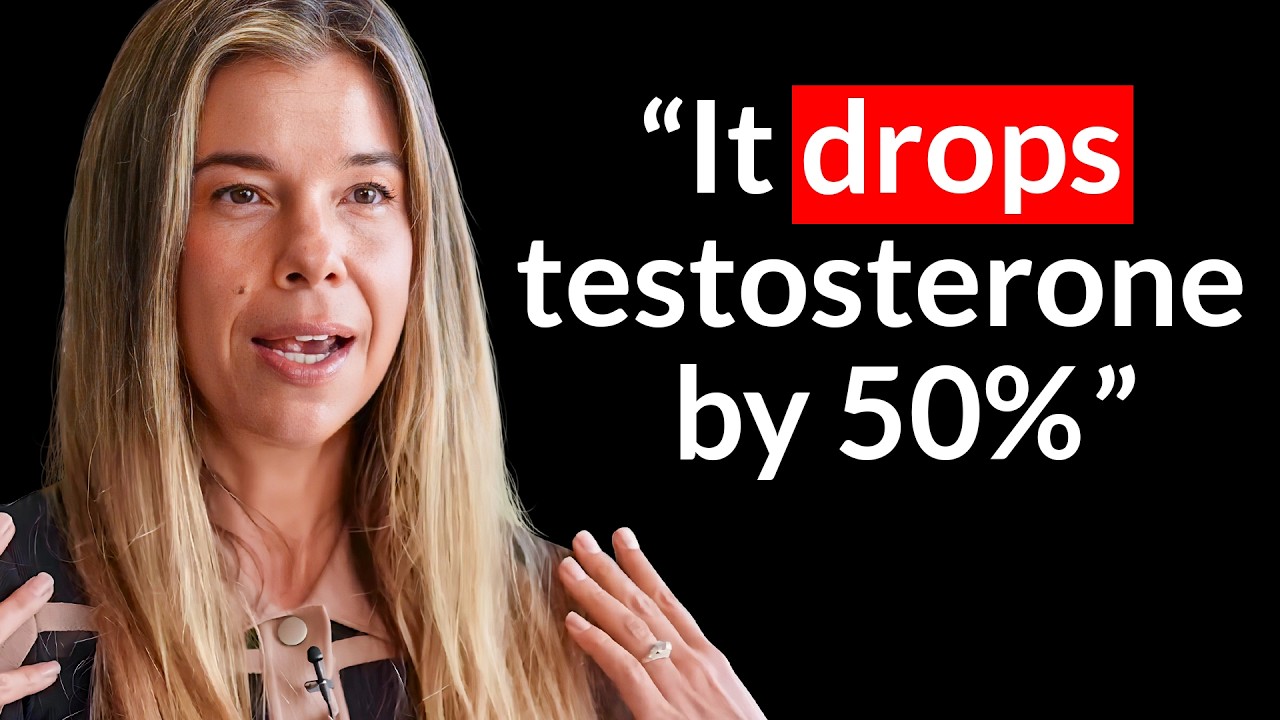
In this clip from Dr. Rhonda Patrick's appearance on The Diary Of A CEO, she discusses how sleep, nutrition, body composition, and exposure to endocrine-disrupting chemicals may affect testosterone. Long-term population research has identified age-independent declines in testosterone in some male cohorts, supporting the view that changes in men's hormonal health can involve more than aging alone. [1]
BPA and phthalates can interact with hormone-related biological pathways. Human studies have associated higher urinary BPA with lower testosterone in male adolescents, while a broader meta-analysis linked selected phthalate biomarkers with changes in male reproductive hormones. These findings add human evidence to concerns about frequent exposure through food packaging, plastics, and personal-care products. [2] [3]
Practical exposure reduction can lower the amount of some of these chemicals measured in the body. In a randomized crossover study, eating canned soup for five days increased urinary BPA by 1,221 percent compared with fresh soup. A short intervention that reduced plastic contact also lowered several urinary BPA and phthalate biomarkers. Choosing fresh food when practical, using reusable drink containers, and reducing routine contact between food and plastic can help reduce avoidable exposure. [4] [5]
This clip is excerpted, with permission, from Dr. Rhonda Patrick's appearance on The Diary Of A CEO. Thank you to The Diary Of A CEO for allowing us to share it.
- ^ Travison TG; Araujo AB; O'Donnell AB; Kupelian V; McKinlay JB (2007). A population-level decline in serum testosterone levels in American men. J Clin Endocrinol Metab 92, 1.
- ^ Scinicariello, Franco; Buser, M. C. (2016). Serum Testosterone Concentrations And Urinary Bisphenol A, Benzophenone-3, Triclosan, And Paraben Levels In Male And Female Children And Adolescents: NHANES 2011–2012 Environmental Health Perspectives 124, 12.
- ^ Li, Xuanxuan; Xiao, Changchun; Liu, Jintao; Wei, Ning; Song, Jian; Yuan, Jiajun, et al. (2024). Association Of Di(2-ethylhexyl) Phthalate Exposure With Reproductive Hormones In The General Population And The Susceptible Population: A Systematic Review And Meta-Analysis Environment & Health 2, 11.
- ^ Carwile, Jenny L. (2011). Canned Soup Consumption And Urinary Bisphenol A: A Randomized Crossover Trial Jama 306, 20.
- ^ Harray AJ; Lucas AD; Herrmann SE; Vlaskovsky PS; Elagali A; Seewoo BJ, et al. (2026). Low-plastic diet and urinary levels of plastic-associated phthalates and bisphenols: the randomized controlled PERTH Trial. Nat Med 32, 5.
Steven Bartlett: On this point of testosterone, why is it the case that testosterone seems to be dropping among men? I wrote it down. Testosterone levels in men have dropped by up to 20 percent over the last two decades, which is quite terrifying.
Dr. Rhonda Patrick: It is. There are a lot of factors that can affect testosterone. I mentioned dietary factors and refined sugar. Sleep is a big one. People are not getting enough sleep, and lack of sleep drops testosterone. Micronutrients are another factor. Zinc is very important for testosterone synthesis, as is magnesium. There are important nutrient components, but I think the big player here is environmental.
I think we are being bombarded with what are called endocrine-disrupting chemicals. These are human-made chemicals. Many are part of plastic. They are used to help plastic be more durable or robust, or they are found in things designed to be water-, oil-, fire-, or flame-resistant.
There are probably three main endocrine-disrupting chemical groups in our environment: BPA, or bisphenol A; phthalates; and PFAS, which are the forever chemicals. These are three main players in disrupting endocrine function. The endocrine system includes hormones such as testosterone and estrogen, but also thyroid hormone, which is very important for regulating metabolism. I think these chemicals are causing a problem.
Steven Bartlett: Absolutely. I am looking at the picture you have there of PFAS, and it has a coat and shoes on it. Are you telling me that the clothes I wear are having an impact on my hormones?
Dr. Rhonda Patrick: They can, but I think it is less of a direct effect and more downstream. PFAS chemicals, or forever chemicals, are used to make things oil-, stain-, and water-resistant. Teflon pans are one of the biggest examples. Do you remember nonstick pans that have Teflon? Teflon has PFAS on it.
Steven Bartlett: We are going to go into my kitchen in a second. I will take all the viewers into my kitchen, and you can tell me if there is something there.
Dr. Rhonda Patrick: I hope you do not have Teflon. My mom used it when I was growing up. I remember the nonstick pans. That material can come off into food, so people can ingest PFAS.
Steven Bartlett: How do we know they are dangerous?
Dr. Rhonda Patrick: I will tell you how we know. PFAS chemicals affect the thyroid and appear to affect ovarian aging. They seem to target the ovaries and accelerate the age at menopause. People with high levels of these forever chemicals may reach menopause one to two years earlier.
There have also been many studies of BPA, or bisphenol A. You see a lot of marketing around BPA-free plastic water bottles. They may be BPA-free, but they can contain another chemical called BPS, which is very similar to BPA and may be as harmful or worse.
BPA is found in many plastic products. Plastic also lines paper to-go coffee cups to protect them from liquid.
BPA has been linked to many diseases, but it is especially important as an endocrine disruptor. BPA can act as an estrogen mimic. It can bind to the receptors that estrogen uses. Depending on the dose and concentration, it can either make it seem as if estrogen is present or block estrogen from working. It also binds to androgen receptors that interact with testosterone.
Studies have found that men with high BPA levels also have low testosterone levels. There was also a study of adolescent boys, when sexual development is occurring and testosterone is very important. The boys with the highest BPA levels had 50 percent lower testosterone than those with the lowest levels.
Phthalates may have an even larger effect on testosterone. Phthalates are present in PVC piping, food packaging, plastic wraps around meat and poultry, hair products, cosmetics, and creams. They make plastic more flexible. They are also very lipid-soluble, so when plastic is around fatty foods such as cheese or meat, phthalates can migrate into the food.
Phthalates disrupt hormones in ways similar to BPA. They bind to the androgen receptor, but they also enter the testes and disrupt testosterone synthesis. A study found that men with the highest phthalate levels had 20 percent lower testosterone compared with men with lower levels.
These chemicals affect not only testosterone but also sperm quality. They can affect sperm shape, count, and motility. High phthalate exposure during pregnancy may also affect sexual development in a male fetus. Some boys develop hypospadias, in which the opening of the urethra is displaced, or undescended testicles. These conditions are associated with infertility and testicular cancer. This is happening at an alarming rate. Something like 20 percent of boys now have an undescended testicle.
Steven Bartlett: Because their mothers had high phthalate levels?
Dr. Rhonda Patrick: Phthalates are known environmental contributors. I do not know whether they are the only cause, but in my opinion, they are a very concerning cause that is not discussed enough and should be addressed.
Phthalates are in many plastic wrappers around food. Even when people choose foods such as meat, those foods may be wrapped in plastic, and phthalates can migrate into them. These chemicals get into our bodies and can disrupt hormones, sexual development, ovarian aging, the age at menopause, and thyroid hormones.
There are even studies in which pregnant women with high BPA levels were six times more likely to have a child with autism spectrum disorder than women with low BPA levels. BPA disrupts the estrogen and androgen receptors. It also disrupts aromatase, the enzyme involved in converting testosterone into estrogen.
When a boy develops in the womb, estrogen plays an important role in brain development and in masculinizing parts of the male brain. That may sound contradictory because people might expect testosterone to do that, but estrogen is important in that process. Bisphenol A can inhibit aromatase, and this endocrine disruptor is ubiquitous.
Steven Bartlett: It is found in plastic bottles.
Dr. Rhonda Patrick: Yes, it is found everywhere.
Steven Bartlett: What do you recommend?
Dr. Rhonda Patrick: First, avoid drinking from plastic bottles as much as possible. If you want coffee to go, either drink it there in a mug or bring your own reusable mug. I bring a Yeti-style coffee mug into a coffee shop and have them fill it.
Canned soups are often lined with plastic, and soup usually goes into the can hot as part of the sterile process. Multiple studies have shown that canned soup can increase BPA levels by about 1,000 percent. Avoid making canned soup a habit when possible. This is about repeated habits, not a single exposure. Try to avoid making cans, including soda and sparkling-water cans, a daily habit because they are lined with plastic and can be a source of BPA.
There are ways to excrete BPA. The main route is through urine, but BPA first has to become water-soluble because it is a fat-soluble compound. Compounds in broccoli and especially broccoli sprouts can increase that excretion. Sulforaphane activates a pathway involving enzymes that help make BPA water-soluble so it can leave through urine.
Steven Bartlett: So broccoli is like a cleanser.
Dr. Rhonda Patrick: It is like a cleanser. We have what are called phase II detoxification enzymes. Our bodies can detoxify many compounds, but we have to give the body the right input to activate those pathways.
I personally take a sulforaphane supplement because I want a concentrated amount. I used to grow broccoli sprouts. Broccoli sprouts have 100 times more sulforaphane than mature broccoli. However, you have to sprout them, and there can be contamination issues. Some people do it successfully. I no longer grow them and use a supplement instead.
Steven Bartlett: What is that supplement called?
Dr. Rhonda Patrick: The supplement I take is called Avmacol, by Nutramax. I am not affiliated with the company. I like the supplement because it has 12 published studies using it, including clinical studies of children and adolescents with autism that reported improved symptoms after sulforaphane supplementation.
Interestingly, people with autism are about 30 times less likely to excrete BPA. There is a strange relationship in which BPA exposure is associated with autism spectrum disorder, while children who have it may also be less able to detoxify BPA.
Attend Monthly Q&As with Rhonda
Support our work

The FoundMyFitness Q&A happens monthly for premium members. Attend live or listen in our exclusive member-only podcast The Aliquot.
Testosterone News
- Adiposity may account for much of the testosterone decline commonly attributed to aging.
- Testosterone therapy without clear evidence of symptomatic deficiency may be linked to higher long-term cardiovascular risk.
- Testosterone signaling slowed brain tumor growth in male mice and was linked to longer survival in older men.
- Creatine supplementation does not influence hair growth or hormone levels even after three months of usage, undermining theories of its potential link to hair loss.
- Men with low testosterone are five to six times more likely to develop dementia.