How Exercise and Sleep Affect Visceral Fat
The Omega-3 Supplementation Guide
A blueprint for choosing the right fish oil supplement — filled with specific recommendations, guidelines for interpreting testing data, and dosage protocols.
You'll also receive updates from Rhonda & FoundMyFitness
Visceral fat is stored deep in the abdomen around internal organs. Unlike the subcutaneous fat beneath the skin, it is metabolically active and closely linked to inflammatory and metabolic signals. Studies using CT imaging associate higher visceral fat with insulin resistance and increased risks of cardiovascular disease, cancer, and mortality. [1] [2] [3]
Visceral fat can respond to changes in energy balance and physical activity. A meta-analysis of 40 randomized trials and 2,190 adults with overweight or obesity found that both exercise and calorie restriction reduced CT- or MRI-measured visceral fat. Aerobic exercise and high-intensity interval training have the most consistent direct evidence, while resistance training supports muscle and metabolic health. A separate five-day overfeeding study in healthy young men also showed that visceral fat can increase before the scale records a significant change in body weight. [4] [5] [6]
Sleep may also affect fat distribution. In a small randomized crossover study, 12 healthy adults received four-hour or nine-hour sleep opportunities for two weeks while food was freely available. Sleep restriction increased calorie intake and visceral fat by about 11 percent. Because the experiment was small and severe, its result is most useful as evidence that sleep, appetite, and fat distribution can interact. A practical approach combines a sustainable diet, regular aerobic and resistance exercise, adequate sleep, and gradual progression. [7]
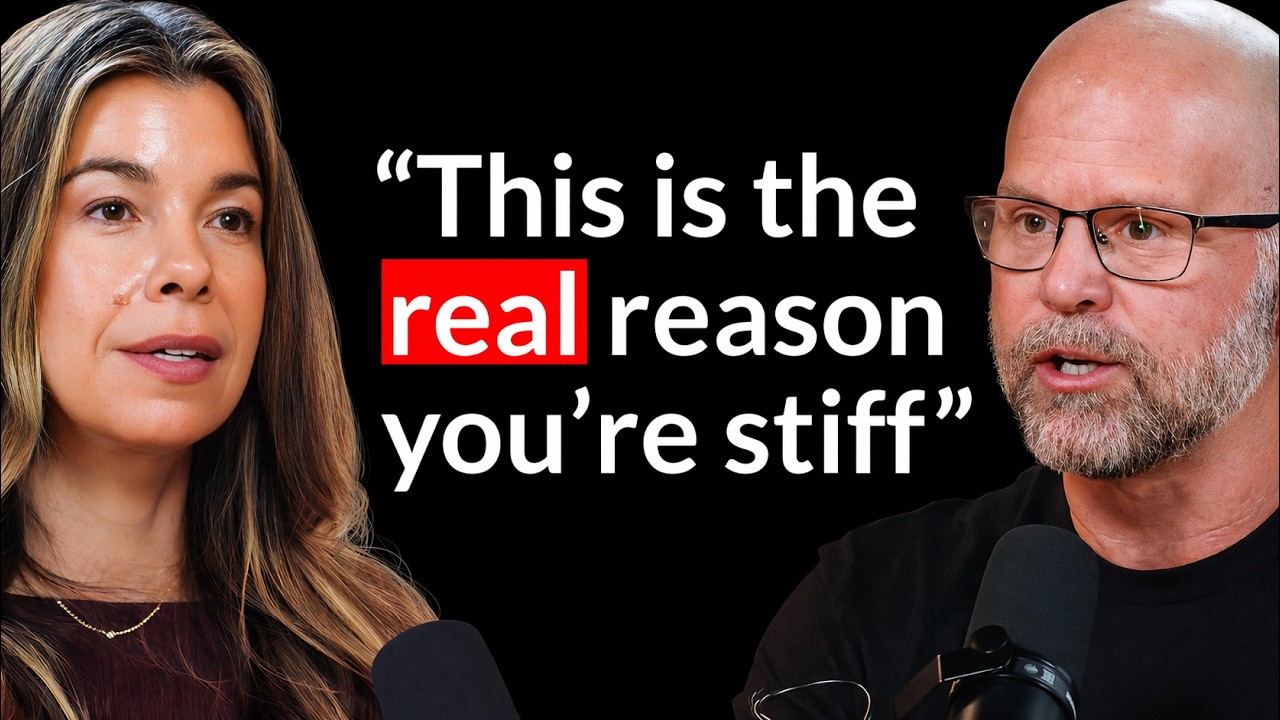
This clip is excerpted, with permission, from Dr. Rhonda Patrick's appearance on The Mel Robbins Podcast. Thank you to The Mel Robbins Podcast for allowing us to share it.
- ^ Katzmarzyk PT; Mire E; Bouchard C (2012). Abdominal obesity and mortality: The Pennington Center Longitudinal Study. Nutr Diabetes 2, 8.
- ^ Britton KA; Massaro JM; Murabito JM; Kreger BE; Hoffmann U; Fox CS (2013). Body fat distribution, incident cardiovascular disease, cancer, and all-cause mortality. J Am Coll Cardiol 62, 10.
- ^ Shah RV; Allison MA; Lima JA; Abbasi SA; Eisman A; Lai C, et al. (2016). Abdominal fat radiodensity, quantity and cardiometabolic risk: The Multi-Ethnic Study of Atherosclerosis. Nutr Metab Cardiovasc Dis 26, 2.
- ^ Recchia F; Leung CK; Yu AP; Leung W; Yu DJ; Fong DY, et al. (2023). Dose-response effects of exercise and caloric restriction on visceral adiposity in overweight and obese adults: a systematic review and meta-analysis of randomised controlled trials. Br J Sports Med 57, 16.
- ^ Chang YH; Yang HY; Shun SC (2021). Effect of exercise intervention dosage on reducing visceral adipose tissue: a systematic review and network meta-analysis of randomized controlled trials. Int J Obes (Lond) 45, 5.
- ^ Morrison DJ; Kowalski GM; Bruce CR; Wadley GD (2019). Modest changes to glycemic regulation are sufficient to maintain glucose fluxes in healthy young men following overfeeding with a habitual macronutrient composition. Am J Physiol Endocrinol Metab 316, 6.
- ^ Covassin N; Singh P; McCrady-Spitzer SK; St Louis EK; Calvin AD; Levine JA, et al. (2022). Effects of Experimental Sleep Restriction on Energy Intake, Energy Expenditure, and Visceral Obesity. J Am Coll Cardiol 79, 13.
Mel Robbins: One topic that many people discuss is visceral fat. What is it, and how is it different from the fat that we can pinch?
Dr. Rhonda Patrick: The fat that you can pinch is subcutaneous fat. It is stored under the skin. Visceral fat is stored deeper in the abdomen, around internal organs. It is much more metabolically active than subcutaneous fat.
Visceral fat releases inflammatory molecules and free fatty acids. Higher amounts are associated with insulin resistance, type 2 diabetes, cardiovascular disease, some cancers, and a higher mortality risk.
Waist circumference is an indirect way to estimate risk. Common U.S. cutoffs are more than 35 inches for women and more than 40 inches for men. Those measurements do not directly measure visceral fat, but they can identify higher cardiometabolic risk.
Visceral fat can contribute to chronic inflammation. It can also disrupt normal glucose and insulin regulation. After a meal, the body may need to release more insulin to control glucose. A later glucose drop can contribute to low energy and cravings. However, fatigue has many possible causes and cannot diagnose visceral fat.
Mel Robbins: It helps to understand that subcutaneous fat and visceral fat are different. Visceral fat surrounds the organs and can create a harmful metabolic environment. If someone has it, what does the research say that they should do?
Dr. Rhonda Patrick: The good news is that visceral fat can respond to weight loss. It is often reduced early during a weight-loss program.
It can also accumulate quickly during excess calorie intake. In a study of healthy young men, five days of substantial overfeeding increased visceral fat even when scale weight changed little. This is why scale weight does not show the full picture.
A sustainable calorie deficit can reduce visceral fat. Aerobic exercise and high-intensity interval training can also reduce it, sometimes without a large change on the scale. A person can combine vigorous activity with moderate exercise and brisk walking.
Sleep is also important. In a small controlled study, healthy adults had either nine-hour or four-hour sleep opportunities for two weeks while food was freely available. Short sleep increased calorie intake and visceral fat by about 11 percent. That result came from a small, severe sleep-restriction experiment and does not predict the response of every person.
Managing chronic stress can help support healthy behavior and metabolic health. Exercise can improve how the body responds to stress.
Resistance training is also an important part of an exercise program. It supports muscle mass and metabolic health. Its direct effect on visceral fat is less consistent than the effect of aerobic exercise or high-intensity intervals, but it remains valuable.
The main approach is to combine a sustainable diet, regular aerobic activity, resistance training, adequate sleep, and stress management. Visceral fat cannot be spot-reduced, and no single routine guarantees fast loss.
Get email updates with the latest curated healthspan research
Support our work

Every other week premium members receive a special edition newsletter that summarizes all of the latest healthspan research.