How to Protect Joint Health With Age
The BDNF Protocol Guide
An essential checklist for cognitive longevity — filled with specific exercise, heat stress, and omega-3 protocols for boosting BDNF. Enter your email, and we'll deliver it straight to your inbox.
You'll also receive updates from Rhonda & FoundMyFitness
In this clip from Q&A #75, Dr. Rhonda Patrick explains how body weight can affect knee osteoarthritis through both mechanical loading and inflammatory signaling. In the Framingham Study, women who lost about 5.1 kilograms over ten years had more than 50 percent lower odds of developing symptomatic knee osteoarthritis. The finding was observational, but it supports maintaining a healthy body weight as one practical way to reduce joint stress. [1]
Regular movement also supports joint function, muscle strength, and the exchange of nutrients and waste products within cartilage. A 2025 network meta-analysis of 217 randomized trials and 15,684 people with knee osteoarthritis found that aerobic exercise was likely the most beneficial exercise category for pain, function, gait, and quality of life. Strength, mixed, flexibility, and mind-body exercise also improved selected outcomes, giving people several ways to build a sustainable program. [2]
Diet and selected supplements can complement weight management and exercise. A randomized feeding trial found that a Mediterranean diet improved pain, stiffness, and physical function more than a low-fat diet in people with knee osteoarthritis. A separate meta-analysis of nine randomized trials found small improvements in pain and physical function with omega-3 supplementation. Evidence for glucosamine, chondroitin, curcumin, collagen, and Boswellia varies by formulation and outcome, so these options are best treated as supportive tools rather than replacements for movement and weight management. [3] [4]
- ^ Felson DT; Zhang Y; Anthony JM; Naimark A; Anderson JJ (1992). Weight loss reduces the risk for symptomatic knee osteoarthritis in women. The Framingham Study. Ann Intern Med 116, 7.
- ^ Yan, Lei; Li, Dijun; Xing, Dan; Fan, Zijuan; Du, Guangyuan; Jiu, Jingwei, et al. (2025). Comparative Efficacy And Safety Of Exercise Modalities In Knee Osteoarthritis: Systematic Review And Network Meta-Analysis British Medical Journal (Clinical Research Ed.) 391, .
- ^ Sadeghi, Alireza; Zarrinjooiee, Gholamreza; Mousavi, Seyedeh Neda; Abdollahi Sabet, Somayae; Jalili, Nooshin (2022). Effects Of A Mediterranean Diet Compared With The Low-Fat Diet On Patients With Knee Osteoarthritis: A Randomized Feeding Trial International Journal Of Clinical Practice 2022, .
- ^ Deng, Wen; Lu, Rui; Yi, Zhiqian; Yin, Enzhi; You, Hongbo; Yuan, Xuefeng (2023). Effect Of Omega-3 Polyunsaturated Fatty Acids Supplementation For Patients With Osteoarthritis: A Meta-Analysis Journal Of Orthopaedic Surgery And Research 18, 1.
Okay, next deep dive question was submitted by Cynthia. She says, "As we age, joint issues become more prevalent. Would you consider a deep dive into the evidence concerning osteoarthritis? Can we do anything to avoid it?" Okay, I am going to cover some of the highest-impact lifestyle factors that may help delay or prevent joint issues including osteoarthritis.
Starting with one of the most overlooked factors in joint health and osteoarthritis which is body weight. Every extra kilogram of body weight translates to roughly four kilograms of extra force on the knee joints while just walking. So even just a small amount of weight gain actually sort of magnifies this pressure that the cartilage has to absorb while walking. Higher-impact exercise places even more force on the joints. Fat tissue also secretes pro-inflammatory cytokines, including TNF-alpha, leptin, and IL-6. Over time, this chronic, low-grade inflammatory milieu can promote cartilage degradation. The Framingham Study is a landmark longitudinal study. It actually found that losing just 5 kg of body weight reduced the risk of developing knee osteoarthritis in women with a BMI of 25 or greater by more than 50%. It is worth repeating: Just losing 5 kilograms of body weight in women with a BMI of 25 or greater reduced the risk of developing knee osteoarthritis by more than 50%. That's huge, you guys. Really big. Other studies estimate that people in the highest quintile of body weight have up to 10 times the risk of knee osteoarthritis as those in the lowest quintile. In people who already have osteoarthritis, clinical studies show that losing around 10% of the body weight can produce massive improvements in pain and function. These benefits compound. As pain decreases, people become more physically active, which helps maintain muscle strength and improves circulation and nutrient delivery to the joint. So, I can't overemphasize the importance of maintaining a healthy body weight and particularly weight loss if you are at an unhealthy body weight. This is important for preventing knee osteoarthritis.
Okay, let's talk about some other factors. You probably know what I'm going to talk about next, and that's exercise. It's especially important because cartilage doesn't have a direct blood supply like most tissues do. So cartilage relies on the diffusion of nutrients through joint fluid. So every time you move your joints, every time you compress them slightly and then you release, you're pushing nutrients into the cartilage and waste products out, similar to squeezing water from a sponge. And so in a sense this movement, it's like feeding your cartilage beneficial nutrients and getting rid of the bad stuff. And so this regular mechanical stimulation of your joints is important because cartilage can thin and deteriorate without it. That deterioration can lead to a joint replacement, such as a knee or hip replacement. Regular mechanical stimulation helps prevent or slow the thinning and deterioration that occur with age. Most of the occurrence of it with age is due to physical inactivity. So again much like why do we lose muscle mass and strength with age? Well, it's mostly because we're physically inactive. Why do we become less responsive to proteins and amino acids as we age? Well, it's because we're physically inactive. Almost everything comes down to being physically inactive. So let's talk about what kind of exercise we're talking about here. A 2025 meta-analysis that included more than 200 randomized controlled trials found that aerobic exercise produced the greatest improvements in pain and function in people with knee osteoarthritis. And these benefits were consistent across the short term. They were consistent across long-term follow-ups. And that same meta-analysis also showed there was no increase in adverse events in the exercise groups compared to controls. And remarkably, the pain reductions seen with the structured aerobic exercise programs were often comparable to what people get when they're taking NSAIDs, nonsteroidal anti-inflammatory drugs that have cardiovascular and gastrointestinal side effects, including increased stroke risk as well. Very important, right? Strength training also does play an important role. So when you strengthen the muscles around the joint, you're offloading the joint itself. So your quadriceps, for example, act like shock absorbers for the knee. So if they're weak, every step sends more force directly through the cartilage. So strong muscles really dissipate that force and stabilize the joint during movement. So strength training is also very important in addition to aerobic exercise. Flexibility and mind-body training, including yoga, Pilates, and tai chi, may also help with gait performance and joint function in osteoarthritis. It can lower the risk of falls and injuries and things like that which trigger osteoarthritis later on in life as well. Many people worry about wearing out their joints with exercise, but the concern is more relevant to years of repetitive, high-impact, elite-level running than to typical recreational activity. Elite-level running is an extreme outlier. Most people aren't doing that. Most people are the opposite end where they're not getting enough exercise.
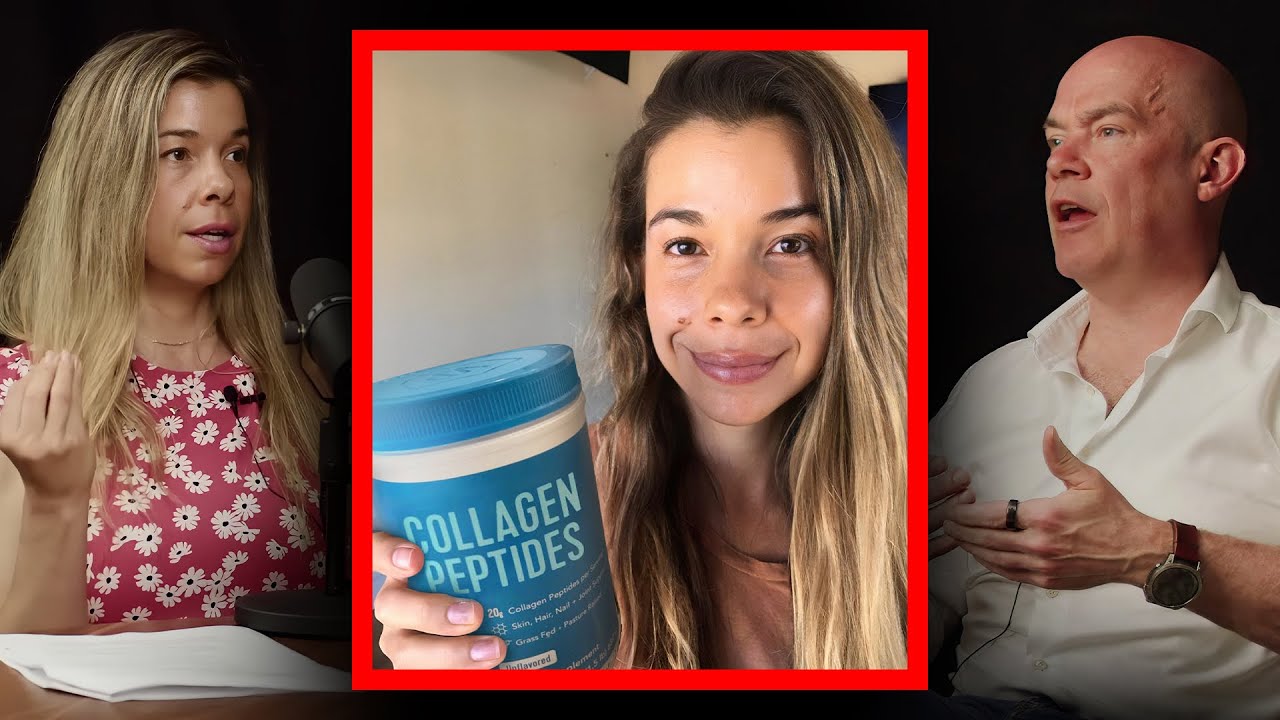
Okay, let's talk about diet. Diet plays an important role in almost everything. It never gets enough attention, particularly if we're talking about something like osteoarthritis. But inflammation is at the core of everything, including osteoarthritis. There are multiple observational studies showing that people following a Mediterranean-style diet, they have a lower risk of osteoarthritis. They have lower risk of osteoarthritis progression. They have less knee pain. They have better physical function. And it's not just a correlation. There are also randomized controlled trials in people with knee osteoarthritis that compared a Mediterranean-style diet to a low-fat diet and a control diet over 16 weeks. The Mediterranean group experienced significantly greater reductions in knee pain. They had better mobility even though they didn't lose much weight. The quality of the diet itself is more anti-inflammatory, more antioxidant, and that does seem to directly impact the physiology of our joints as well. Kind of makes sense. Mediterranean diets are rich in polyphenols. They're rich in omega-3 fatty acids, monounsaturated fats. These are all suppressing the inflammatory pathways. They're dampening the inflammatory pathways. They're providing a lot of antioxidants to help neutralize oxidative stress. That's a key driver of cartilage degradation. On the flip side, a heavily processed diet that is high in refined sugar, processed oils, and saturated fat increases oxidative stress. It also upregulates inflammatory cytokines that contribute to wear on the joints. Like that oxidation does play a role in degrading cartilage. And then there's the gut microbiome which adds another layer to this whole story, right? So that's a very important modulator of immune activity in the joints. So, for example, higher fiber diets promote short-chain fatty acid production like butyrate. Butyrate has anti-inflammatory effects that also could extend to the joints. There's certain probiotics that have been shown to play a role in lowering systemic inflammation and reducing knee pain in people with osteoarthritis as well. I would say that field is in its very early stages. I just wanted to mention it to you, but it reinforces this point of lowering systemic inflammation. This includes inflammation at the level of the gut, your overall inflammatory status, excess body fat, too little omega-3, too much omega-6, and too much refined sugar. Lastly, on this osteoarthritis topic, I want to talk about supplements. I know that's another interesting point for many people. I want to start with an important micronutrient you might not expect: vitamin K. This is actually very interesting. Vitamin K is required to activate a protein called matrix Gla protein. This is a protein that's important for preventing unwanted calcification of the cartilage. Matrix Gla protein prevents unwanted calcification in arteries and cartilage. Low vitamin K intake, especially low intake from leafy greens, which are among the best dietary sources of vitamin K, has been linked to a higher risk of osteoarthritis. It's linked to a faster progression on x-rays. People who take long-term warfarin, which blocks vitamin K, have significantly higher incidence and progression of osteoarthritis. Omega-3 is another option. There was a 2023 meta-analysis of randomized controlled trials that found omega-3 fatty acid supplementation produced small but statistically significant improvements in both pain and physical function in people with osteoarthritis. Not surprising there. Another interesting one is combining omega-3s with other joint supporting supplements like glucosamine. And we'll get into glucosamine and chondroitin sulfate as well. They can actually have synergistic effects. There was one study that found glucosamine plus omega-3 combined achieved greater effects in pain reduction than glucosamine alone. So glucosamine is a naturally occurring amino sugar and your body actually uses it as a building block for glycosaminoglycans. These are very important structural components of cartilage and joint fluid. Glucosamine is often combined with chondroitin sulfate which is another molecule that gives cartilage its resilience. It's able to resist compression. So in theory supplementing with glucosamine and chondroitin seem logical. You're providing your body with the raw materials for your joints to maintain or repair cartilage. And there's also some evidence that glucosamine and chondroitin can reduce the expression of inflammatory mediators that do break down cartilage. When you look at the evidence of these trials of glucosamine and chondroitin supplementation it's a little more murky and that honestly comes down to the fact that there are many low-quality glucosamine and chondroitin supplements out there. In fact, one study examined all these glucosamine and chondroitin supplements and a large percentage of them did not contain the active ingredient or contained very low amounts of the active ingredient. So if you look at trials that actually have pharmaceutical grade glucosamine sulfate, they definitely are effective in reducing the narrowing of joint space over 3 years compared to a placebo. And that's definitely something that is meaningful. Pain and physical function also improved, but I think it all comes down to the formulations used. So you'll see sometimes glucosamine sulfate or glucosamine hydrochloride. Sulfate is better than hydrochloride and again you have to even find the right supplement because there's a lot of bogus supplements out there and I think that's a really important point here. There was a 2015 Cochrane review that found chondroitin alone or in combination with glucosamine was better than placebo in improving pain in patients with osteoarthritis in the short term. And there was a 2023 meta-analysis that did support the potential benefits of combining glucosamine with chondroitin as well. If you decide to supplement, I'm personally not supplementing it with this but my husband is. He is taking glucosamine and chondroitin, and the best supplement I found is by Nutramax, the same company that makes Avmacol. They make a glucosamine and chondroitin supplement. In fact, their founder, Dr. Bob Henderson, first developed the glucosamine and chondroitin combination. And their company makes a high-quality supplement called Cosamin. C O S A M I N. And that's what I'm giving my husband. It seems to be helping him. Many studies use daily doses of 800 to 1,500 milligrams for a few months. So, that would be something to experiment with. There are many other things that we can mention that are kind of lower, I think, bang for your buck. Collagen peptides and vitamin C may also play a role, although likely much less than the other factors I mentioned.
Another popular supplement is curcumin. There's some mechanistic evidence that it helps inhibit some of the matrix metalloproteinase enzymes that are breaking down cartilage there. There were multiple meta-analyses of randomized controlled trials showing that participants that took turmeric extracts, particularly at a high dose, experienced pain reduction levels that were comparable to an NSAID such as ibuprofen and so that's pretty significant as well. If you are taking a curcumin, you want to make sure you're getting a phytosomal form that's more bioavailable as well. I like Meriva. And then there's some interesting evidence on Boswellia serrata, which is also known as Indian frankincense. This has come up on my radar multiple times. There are multiple randomized controlled trials showing that it can significantly reduce pain and improve joint function. I would rank it below the options I've already mentioned, but it is also interesting.
So I think those are the main heavy hitters there. You want to keep moving. Make sure you're doing aerobic exercise and strength training and eating a good anti-inflammatory, antioxidant-rich diet. That means a diet high in plants, fish, olive oil, and fiber. You want to get these polyphenols and antioxidants. Maintaining a healthy body weight is very important if you want to prevent osteoarthritis. Evidence-based supplements include vitamin K, omega-3s, collagen peptides, glucosamine, chondroitin, and curcumin. These can serve as supportive tools alongside the other lifestyle factors.
Hear new content from Rhonda on The Aliquot, our member's only podcast

Listen in on our regularly curated interview segments called "Aliquots" released every week on our premium podcast The Aliquot. Aliquots come in two flavors: features and mashups.
- Hours of deep dive on topics like fasting, sauna, child development surfaced from our enormous collection of members-only Q&A episodes.
- Important conversational highlights from our interviews with extra commentary and value. Short but salient.
Arthritis News
- A prebiotic fiber altered pain sensitivity and reduced knee pain in osteoarthritis patients.
- Omega-3 fatty acids reduce inflammation and disease activity in rheumatoid arthritis and lupus—according to an umbrella review of 21 analyses.
- Resistance exercise ameliorates pain and improves function by 25% to 30% among people with knee arthritis—according to a recent meta-analysis of 250 studies.
- Low testosterone levels may herald rheumatoid arthritis in men. (2013)
- Low testosterone levels may be associated with chronic disease, even in men 40 years of age and younger. (2018)