How Vigorous Exercise Compares With Daily Steps
The Omega-3 Supplementation Guide
A blueprint for choosing the right fish oil supplement — filled with specific recommendations, guidelines for interpreting testing data, and dosage protocols.
You'll also receive updates from Rhonda & FoundMyFitness
The 10,000-step target began as a memorable way to market a Japanese pedometer, not as a biological threshold. Walking still matters because replacing sedentary time with movement supports health, and large cohort studies associate more daily steps with lower mortality. The point at which benefits begin to level off varies by age, with meaningful associations appearing below 10,000 steps per day. [1]
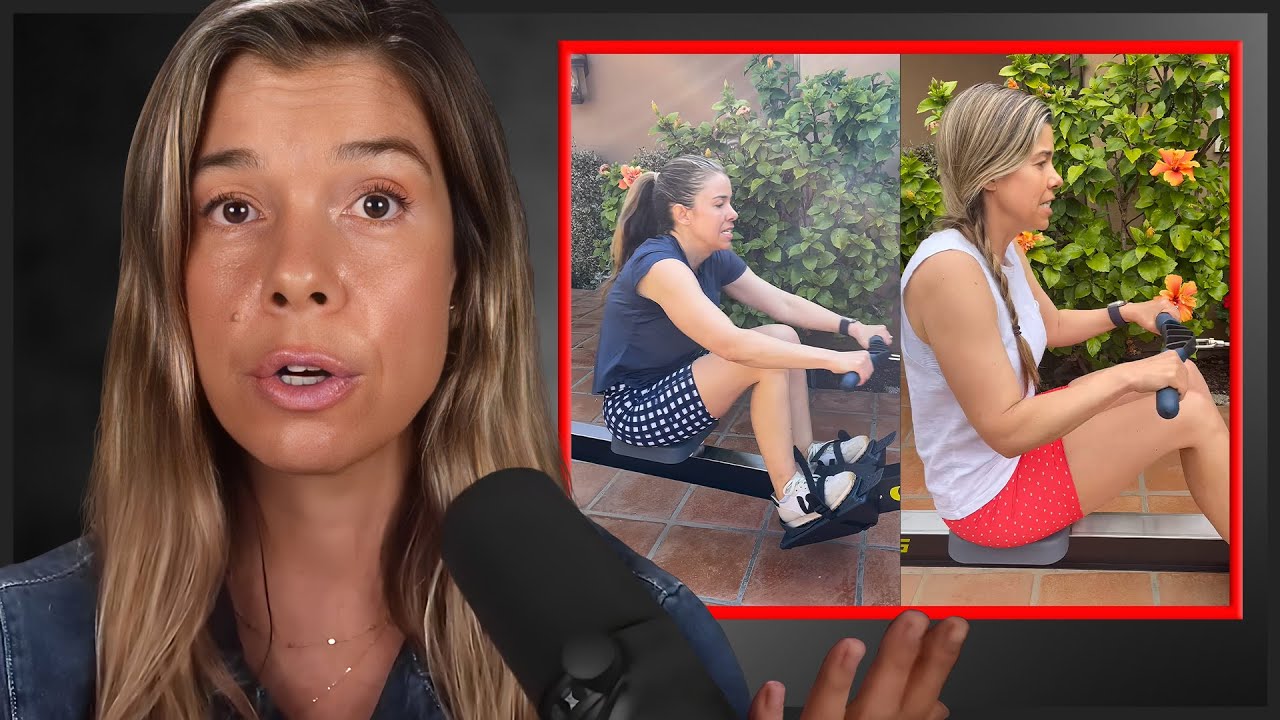
In this clip from Dr. Rhonda Patrick's appearance on The Mel Robbins Podcast, she explains why exercise intensity can make movement more time-efficient. A prospective study followed 73,485 adults with wrist accelerometers for about eight years. Its fitted models associated one minute of vigorous activity with risk reductions similar to about four minutes of moderate activity or 53 minutes of light activity for all-cause mortality. For cardiovascular mortality, the modeled comparisons were about eight moderate minutes or 73 light minutes. [2]
The talk test turns these intensity categories into practical cues. Light activity allows easy conversation and singing. Moderate activity makes speech breathier and singing difficult. Vigorous activity permits only a few words before another breath. An uphill walk may therefore be vigorous for one person and moderate for another. Brief breathless bouts can complement walking and longer workouts when people build toward them gradually.
This clip is excerpted, with permission, from Dr. Rhonda Patrick's appearance on The Mel Robbins Podcast. Thank you to The Mel Robbins Podcast for allowing us to share it.
- ^ Paluch AE; Bajpai S; Bassett DR; Carnethon MR; Ekelund U; Evenson KR, et al. (2022). Daily steps and all-cause mortality: a meta-analysis of 15 international cohorts. Lancet Public Health 7, 3.
- ^ Biswas, Raaj Kishore; Ahmadi, Matthew; Bauman, Adrian; Milton, Karen; Koemel, Nicholas A.; Stamatakis, Emmanuel (2025). Wearable Device-Based Health Equivalence Of Different Physical Activity Intensities Against Mortality, Cardiometabolic Disease, And Cancer Nature Communications 16, 1.
Mel Robbins: We have all heard the focus on getting 10,000 steps every day. Is that a useful goal? What does the research say, Dr. Patrick?
Dr. Rhonda Patrick: I think we need to replace 10,000 steps a day with 10 breathless minutes a day.
Mel Robbins: Breathless?
Dr. Rhonda Patrick: Breathless. I mean 10 minutes of vigorous-intensity exercise. I do not want to throw walking out, because walking is better than sitting. It depends on what you compare it with. Walking is better than being sedentary.
The 10,000-step target originated in Japan in the 1960s. A Japanese company was trying to sell pedometers. It did not come from medical research. It was catchy. Since then, much research has shown health benefits from walking, moving, and not being sedentary.
Why do I say “breathless”? It depends on your starting point. If you already exercise and are very fit, breathless might mean sprinting or running. If you do not exercise much, it might mean walking uphill or climbing stairs.
I prefer that description to a heart-rate number because people can relate to it. You can say only a few words before taking a breath. You cannot carry on a conversation, and you certainly cannot sing. You are working hard.
A recent large study used wrist accelerometers to measure movement intensity. It found much steeper health associations for vigorous movement than for moderate or light movement.
Moderate activity is where you can talk, although you sound breathy, but you cannot sing. Brisk walking can be moderate activity. Light activity is casual movement, such as walking around the house.
In the study's statistical model, one minute of vigorous activity was associated with a similar reduction in all-cause mortality risk as about four minutes of moderate activity or 53 minutes of light activity.
Mel Robbins: I want to make sure I understand. I like the idea of replacing 10,000 steps because walking five miles might take an hour and a half. That goal can feel difficult for someone with work, caregiving, and a busy life.
Can you explain the talk test so we understand what you mean by breathless?
Dr. Rhonda Patrick: If I am talking normally and could sing, that is light effort. During moderate-intensity exercise, I can talk, but I sound breathy and cannot sing. Brisk walking can produce that effort.
During vigorous-intensity exercise, I can say only a few words before taking several breaths. Jogging or running might produce it, depending on the person.
Mel Robbins: There is a four-mile walking loop near my house. I walk most of it with friends while we talk. One section is a hill, and everyone becomes silent because no one can talk while going up it. Is that the vigorous part?
Dr. Rhonda Patrick: Exactly. That hill is the breathless moment. It might last one, two, three, or four minutes, depending on how long it takes you to reach the top.
Mel Robbins: Would moderate activity be a long, hard walk where I am sweating and exerting myself but can still carry on a conversation?
Dr. Rhonda Patrick: Correct. You can continue the conversation, but someone listening could hear that you are walking.
Mel Robbins: Then is the one breathless minute on the hill equivalent to the other 53 minutes of my walking loop?
Dr. Rhonda Patrick: No. The rest of that loop is probably moderate activity. The 53-minute comparison refers to light movement, such as walking casually around the house or office.
For cardiovascular mortality, the model found that one minute of vigorous activity was associated with a similar risk reduction as about eight minutes of moderate activity or roughly 73 minutes of light activity.
Mel Robbins: One of my biggest excuses for not exercising is that I do not have time. You are saying that I do.
Dr. Rhonda Patrick: Yes. The time efficiency makes vigorous activity feel possible.
Cancer mortality was another outcome. In the model, one minute of vigorous activity was associated with a similar risk reduction as roughly two and a half hours of light activity.
Mel Robbins: So there may be something powerful about that breathless minute and how the body responds over time.
Dr. Rhonda Patrick: Exactly. Intensity matters. The body responds and adapts more strongly to a larger exercise stress. The heart, cardiovascular system, lungs, immune system, and brain all adapt.
The point is to understand how powerful a more intense exercise stimulus can be. Someone who has never done it can build toward it gradually.
Supporting our work
If you enjoy the fruits of
 , you can participate in helping us to keep improving it. Creating a premium subscription does just that! Plus, we throw in occasional member perks and, more importantly, churn out the best possible content without concerning ourselves with the wishes of any dark overlords.