How Dr. Rhonda Patrick Reduces Microplastic Exposure
The Omega-3 Supplementation Guide
A blueprint for choosing the right fish oil supplement — filled with specific recommendations, guidelines for interpreting testing data, and dosage protocols.
You'll also receive updates from Rhonda & FoundMyFitness
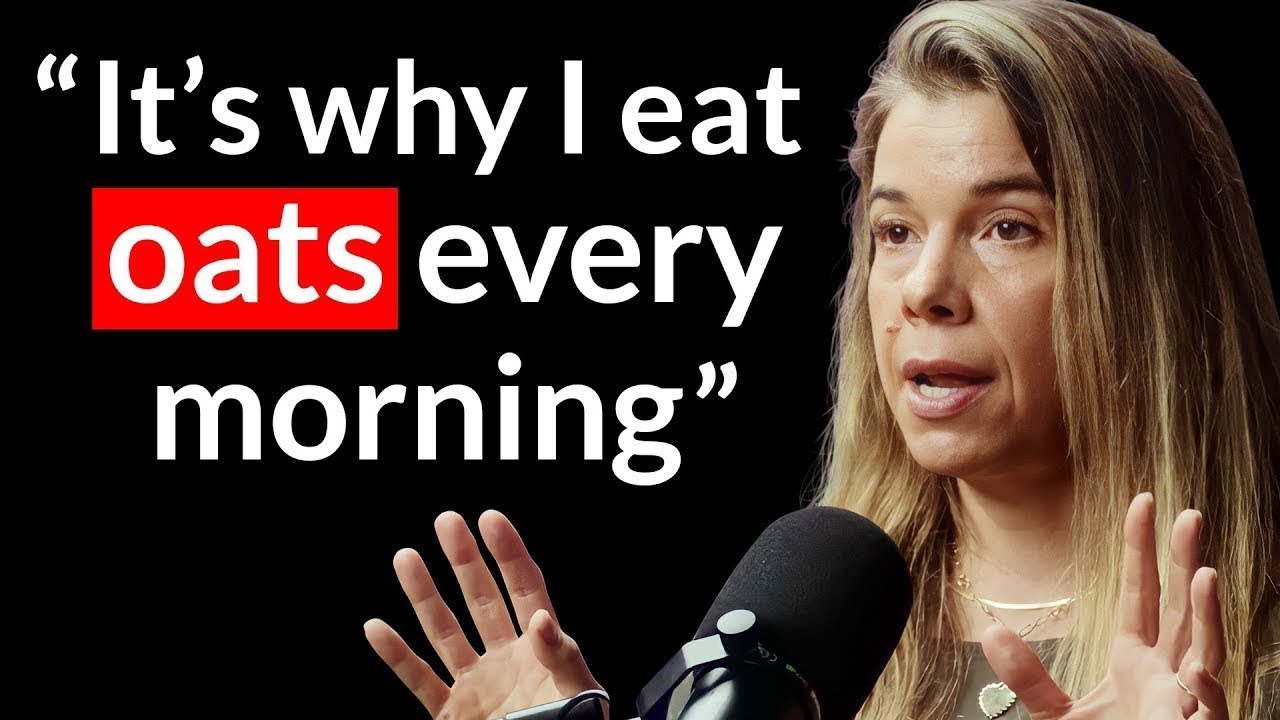
Dr. Rhonda Patrick describes practical choices she uses to reduce contact between plastic and food. She stores fruits and vegetables in Compostic bags instead of conventional zip-top bags when practical, while acknowledging that some frozen foods still come in plastic. She is especially cautious about canned foods and drinks because food can enter cans hot and liquid remains in prolonged contact with packaging.
For beverages, Dr. Patrick avoids plastic bottles and cans when she can. She uses a Yeti bottle and removes its plastic lid before drinking directly from the metal bottle. When traveling, she looks for reusable titanium bottles, while recognizing that plastic packaging is sometimes unavoidable.
Bottled water can contain very small plastic particles. Using stimulated Raman scattering microscopy, researchers identified roughly 240,000 detectable plastic particles per liter on average across three popular bottled-water brands, most of them nanoplastics. Dr. Patrick's approach focuses on recurring packaging choices she can change rather than claiming complete avoidance. [1]
- ^ Qian N; Gao X; Lang X; Deng H; Bratu TM; Chen Q, et al. (2024). Rapid single-particle chemical imaging of nanoplastics by SRS microscopy. Proc Natl Acad Sci U S A 121, 3.
Okay. We're going to move on to some more rapid-fire questions. So Anna asks, microplastics question. In the pregnancy aliquot, you say you try to avoid plastics. Is the only reason plastic-lined cans are worse than bags of frozen fruit, vegetables, is that oftentimes the canned food is put into the can hot? Do you buy frozen berries or frozen spinach for your smoothies? That are in plastic bags, or do you keep fresh fruit or greens in plastic bags and Ziploc bags? Okay. So here's what I do and my thoughts on the plastic. I do try to avoid using plastic as much as possible. It's impossible to— I mean, my toothpaste is in a plastic container. My shampoo is in a plastic. It is ubiquitous. It's everywhere in our lives. And so the more places you can eliminate the plastic, the better.
I use a brand of bags called Compostic, C-O-M-P-O-S-T-I-C, rather than Ziploc bags. So Compostic bags are what I store my food in, fruits, veggies, anything. I no longer use Ziploc or generic Ziploc brand plastic bags. Grocery store fruits, vegetables, all that stuff, I don't put them in those plastic bags. They're either not in a bag at all or they go into a compostic bag, which is a compostable bag. I do buy frozen organic berries. They are in plastic bags, and that is life. So that is a part of plastic that is still in my life. With respect to plastic lining cans, like soda water or canned foods, yes, a lot of times the canned foods go into the can hot. And so it is exponentially worse with respect to at least some of the chemicals like BPA that leach into the foods.
It's less of a problem with the frozen berries in the plastic bags. But now we have to worry about nanoplastics, which are these just microscopic plastic particles that are shed. They're shed from plastic. So I think I haven't started doing this yet, but after this question was submitted, I thought about, oh, maybe I'll buy my frozen berries and then just take my big compost bag and then transfer them. The problem with the compost bags is they don't seal as tight. And so they're not as good for long-term storage. Now with something like berries, which I frequently— I go through so quick, it doesn't matter. But if you're trying to store something longer term, it's not a really good option for storing something in the freezer long-term.
But the main thing to avoid is any kind of liquids in plastic bottles or cans or any foods in the cans. I think that's the major source, particularly during pregnancy when the developing fetus is very sensitive to BPA and all those sorts of chemicals. WEEWORM is asking in the chat for plastics, is there a water product or water bottle product that's good? I personally think the Yeti is good. The Yeti is not lined with plastic. Now you do have to keep in mind, if you are drinking the Yeti with the plastic lid, then you're getting some probably nanoplastics in with the water. So you can unscrew the lid if you're conscious of this. Unscrew the lid and just drink out of the actual just bottle, which doesn't have the plastic lid.
It's kind of annoying, but I mean, at the end of the day, if you're getting the Yeti in the first place to avoid the plastic, then you drink it with the little plastic lid thing. What's the point, right? Especially if it's like hot coffee. Do you try to avoid cans altogether? I do. I do avoid cans, bottles altogether. Now, I was recently traveling and I often look like in airports now, they'll often have like metal, like not metal, but what's it called? The titanium bottles that are like reusable. I'll look for those. Sometimes I can't find them in airports and then I just have to use a plastic bottle or can, you know, sparkling water when I'm on the airplane. Like there are times when you just can't help it. But generally speaking, I avoid cans altogether as much as possible.
Get email updates with the latest curated healthspan research
Support our work
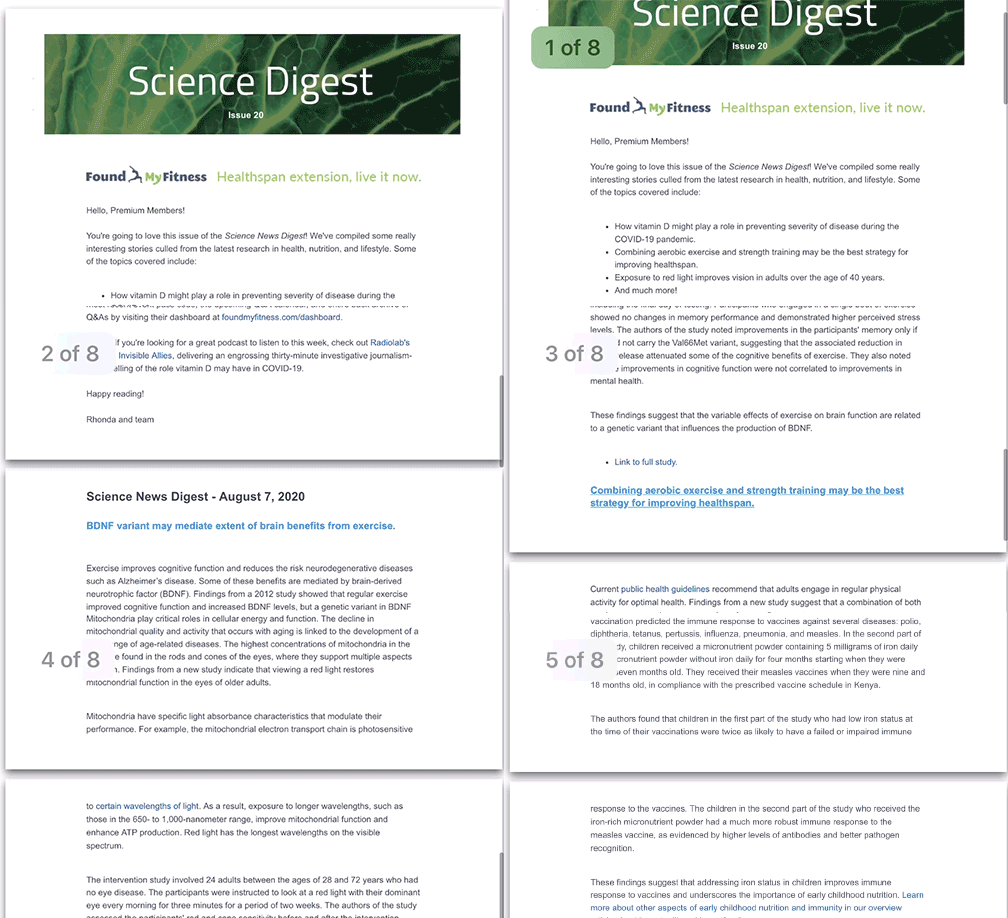
Every other week premium members receive a special edition newsletter that summarizes all of the latest healthspan research.
Environment News
- Lifestyle and environmental exposures—termed the 'exposome'—may substantially outpace genetic factors in driving premature death and age-related disease.
- High exposure to plastics, such as those in disposable takeout containers, is associated with a 13% greater risk of heart disease, potentially through changes to gut bacteria and increased inflammation.
- Researchers have been able to convert plastic waste including water bottles, milk bottles, and plastic bags, into fuel.
- Nearly all major brands of bottled water were found to be contaminated with microplastics including polypropylene, nylon & more.