How Plastic Particles and Chemicals Enter Food, Water, and Air
Get the full length version of this episode as a podcast.
This episode will make a great companion for a long drive.

The BDNF Protocol Guide
An essential checklist for cognitive longevity — filled with specific exercise, heat stress, and omega-3 protocols for boosting BDNF. Enter your email, and we'll deliver it straight to your inbox.
You'll also receive updates from Rhonda & FoundMyFitness
Dr. Rhonda Patrick separates micro- and nanoplastic particles from chemicals used in or around plastics. BPA and BPS are bisphenols, phthalates are plasticizers, and PFAS are persistent fluorinated chemicals; detecting a particle does not prove that it carries all of these compounds. Plastics and their associated chemicals have been detected in water, food, air, and human tissues, but detection alone does not show that a measured exposure caused disease.
Food contact depends on the material and conditions. Heat can increase particle shedding or chemical migration, and acidic or fatty foods can increase migration for some food-contact chemicals. Laboratory testing found millions of microplastic particles per square centimeter after three minutes of microwave heating in some plastic containers. [1] Dr. Patrick discusses plastic-lined cans and PFAS-treated microwave-popcorn bags as additional exposure sources and recommends not microwaving food in plastic, not leaving plastic bottles in heat, and using glass or stainless steel for hot foods and drinks.
Exposure also occurs by inhalation. Synthetic textiles shed fibers during wear and laundry; dryers can release fibers; and tire wear and synthetic shoe soles contribute particles to outdoor and indoor dust. These source observations do not establish a disease effect from a given household exposure. Bottled-water estimates also vary and cover only part of total intake. [2] Practical steps include ventilating living spaces, controlling dust, choosing lower-shedding materials when feasible, and filtering water. Treatment studies show that advanced filtration stages can remove many measured particles, although performance depends on particle size and system design. [3]
- ^ Hussain KA; Romanova S; Okur I; Zhang D; Kuebler J; Huang X, et al. (2023). Assessing the Release of Microplastics and Nanoplastics from Plastic Containers and Reusable Food Pouches: Implications for Human Health. Environ Sci Technol 57, 26.
- ^ Cox KD; Covernton GA; Davies HL; Dower JF; Juanes F; Dudas SE (2019). Human Consumption of Microplastics. Environ Sci Technol 53, 12.
- ^ Dalmau-Soler J; Ballesteros-Cano R; Boleda MR; Paraira M; Ferrer N; Lacorte S (2021). Microplastics from headwaters to tap water: occurrence and removal in a drinking water treatment plant in Barcelona Metropolitan area (Catalonia, NE Spain). Environ Sci Pollut Res Int 28, 42.
Plastics are everywhere. Every week, without even realizing it, we are consuming the equivalent of an entire credit card in plastic. We are unknowingly ingesting and inhaling millions of plastic particles every year. And these tiny particles aren't just passing through, they're accumulating in our organs and our tissues. In early 2024, human brain samples were found to have on average 0.5% plastic weight. In the reproductive system, higher levels of plastic like PVC have been linked to lower sperm counts. And it doesn't stop there. These microplastics are often made from or contain harmful chemicals like BPA, BPS, phthalates. These are widely used to harden plastics, make them more durable. And these chemicals are known to disrupt hormones. They alter metabolism.
They've been linked to a range of health issues from reproductive problems to neurodevelopmental diseases. But how are these microplastics entering our bodies and why are they so pervasive? The primary routes of exposure are oral ingestion and inhalation. We're consuming them through bottled water, through tap water, packaged foods, and even fresh produce that's contaminated by polluted soil and water. We're inhaling these microplastic particles suspended in the air, especially in urban environments where synthetic clothing fibers and degraded plastic waste become airborne. And they don't just pass through us, they are accumulating. They've been detected in the lungs, liver, heart, brain, reproductive organs, and even in the placenta.
This widespread presence raises critical questions about what these microplastic particles might do to our health. Could they be disrupting our cells, altering our brain function, contributing to chronic disease? In today's episode, we're going to dive into the reality of microplastic exposure. We're going to discuss how these particles get into our bodies and what it might mean for our long-term health. We're going to explore how plastic could be influencing everything from our brain health to our reproductive health. And importantly, we're going to talk about actionable steps to reduce our exposure to them and help our bodies get rid of them whenever possible. Microplastics are everywhere and they're small. They're really small.
We're talking about particles ranging from 5 millimeters in size so that's like the size of a grain of rice, all the way down to 100 nanometers, which is about 1,000 times smaller than a grain of sand. When they're that small, they're called nanoplastics. And these particles are the result of larger plastic items breaking down over time through a process called oxidation. So this is a slow but relentless breakdown process. Actually, more than 70% of microplastics come from this breakdown from larger plastics, while the rest are intentionally added to everyday products like microbeads in cosmetics, fibers in our synthetic clothing, and also industrial plastics used in manufacturing. But here's the real issue.
We're exposed to these microplastics almost constantly, and it's happening through 2 primary routes: oral ingestion and inhalation. So think about that. When we're drinking water, eating food, or simply just breathing, we're taking in microplastic particles. And the numbers are actually staggering. The average person inhales or ingests up to 120,000 microplastic particles per year from sources like tap water, bottled water, and packaged foods. And it's not just the obvious items. Microplastics have been detected in seafood, in fruits and vegetables because they're contaminated in our water, in our soil, and also in the air around us, which lands on the fruits and vegetables.
Also, we have utensils, cups, baby bottles, like plastic items that we're using every day, and these things are shedding microplastics directly into the food and drinks that we consume. Tap water alone can account for the ingestion of anywhere between 220,000 and 1.2 million microplastic particles per year, depending on the source. Studies show that people who drink bottled water exclusively could consume up to 90,000 additional plastic particles per year compared to those who only drink tap water. So the contamination in bottled water is often due to that breakdown of plastic through the oxidation process itself. Why does this matter?
Because while tap water contamination often comes from environmental sources. Bottled water brings an additional layer of plastic leaching from the packaging itself into what we're drinking. So what can we do about it? Well, one solution we'll dig into later is using a reverse osmosis water filter, which can filter out not just microplastics, but also nanoplastics and other contaminants. It's actually one of the most effective tools we have for cutting down our exposure to microplastics and nanoplastics in our water. But before we go deeper, I want to highlight another really unsettling aspect of microplastics, their role as carriers for harmful chemical additives. So plastics often are infused with chemicals such as BPA, BPS, phthalates, and the PFAS.
These are the forever chemicals, and they're infused with them to enhance the durability and flexibility of the plastics. And so these chemicals come with significant health risks, which we're going to cover in more detail in a moment. But take BPA, for example, or even its counterpart, BPS. These compounds can mimic estrogen in the body, leading to hormonal imbalances that affect everything from reproductive health to brain function. Actually, a study published in the Journal of Hypertension found that drinking from aluminum cans lined with BPA-containing resin can increase blood pressure within just a few hours, which is really a clear indicator of immediate impacts on our cardiovascular system from these endocrine disrupting chemicals like BPA.
Phthalates are another group of chemicals that are commonly used to make plastics more flexible. They've been linked to endocrine disruption, reproductive issues, and developmental problems in children. Research actually has reported that higher levels of phthalates correlate with decreased testosterone levels in males, affecting everything from muscle mass to mood. Then there are PFAS. So these are the per- and polyfluoroalkyl substances. They're often called forever chemicals. I'm going to refer to them as PFAS throughout the podcast. But the reason they're referred to as forever chemicals is because they resist breaking down in the environment and they accumulate in our bodies over time. So PFAS are used to make products resistant to water, oil, stains.
They appear in things like nonstick cookware, water-repellent clothing, and even food packaging. Exposure to PFAS has been associated with immune system suppression, thyroid dysfunction, and increased risk of certain cancers. But what's even more alarming is how easily these chemicals can leach out of plastics, especially when they're heated or when they're in contact with acidic or fatty foods. So think about that hot takeout container you pour soup in it, or plastic water bottles that are left in a hot car on a sunny day.
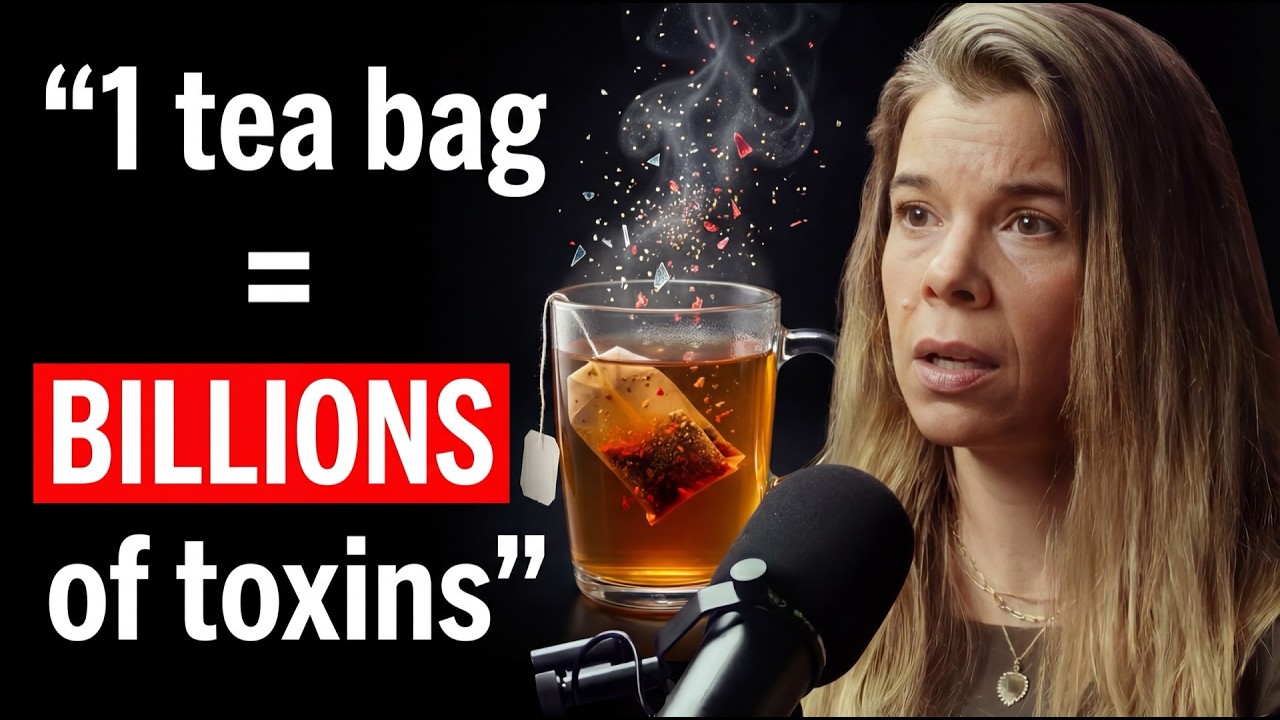
Many paper cups are lined with plastic, and when we pour hot coffee or hot water to make tea into the cup, we're not just getting our caffeine boost, we are ingesting microplastics that are breaking down from the heat, which accelerates the oxidation process, and we're also getting a slew of chemicals like BPA. So one study found that heating polycarbonate bottles to just 100 degrees Celsius can increase the release of BPA up to 55 times. And it doesn't stop there. Most canned foods and beverages are stored in cans lined with plastic that can leach these chemicals like BPA and phthalates into our food, especially when that food is acidic or fatty.
So a recent study found that microwaving food in plastic containers can release over 4 million microplastic particles into a meal in just 3 minutes, along of course with the chemicals they carry. Have you ever microwaved popcorn? I have. That bag is often lined with the forever chemicals, PFAS, to prevent oil from soaking through the bag. When heated, these chemicals migrate into the popcorn, adding of course a chemical burden to our popcorn without us even realizing it. Remember, PFAS are called forever chemicals because they are very resistant to degradation. In fact, the half-life in our bodies is from 2 to 5 years. It's the cumulative effect of these exposures that's a growing concern.
These chemicals don't just pass through our bodies, they accumulate over time, potentially leading to long-term health consequences. So understanding the sources of exposure is really important for us to be able to take proactive steps to minimize them whenever it's possible, whether that means choosing products that are packaged in glass or avoiding microwaving plastic or using microwave popcorn bags, or even just bringing our own reusable to-go coffee mug to the coffee shop. So we'll get into this more later when we cover mitigation strategies. But I do want to mention, unfortunately, microplastics are not confined to contaminated food and water. They're also present in the atmosphere, in the air we breathe.
This allows them to enter our respiratory system, where they can then lodge themselves deep within our lungs. In fact, this raises significant concerns about potential chronic lung inflammation and other health issues associated with long-term exposure. But also breathing in microplastics is one way to get them into our circulation. And once they're in our circulation, they can make their way to organs and tissues. A major source of airborne microplastics is actually synthetic textiles used in clothing. This is polyester, nylon, acrylic fibers. Every time these fabrics are washed, they shed tiny microfibers, microplastic particles that can enter waterways and eventually end up in our tap water and our oceans. But it's not just about water contamination.
These microfibers become airborne as well, meaning we inhale them during our regular wear, especially when handling laundry. Indoor dryers can exacerbate this issue if not properly ventilated to the outside. Although ventilating merely does just shift the microplastic exposure to the environment and contributes to broader air pollution. Another significant contributor to airborne microplastics is tire wear and the degradation of synthetic soles on our shoes. So each time we drive or we walk or we run, tiny particles of rubber and plastic are worn away and they're released into the air. And these particles become part of the ambient dust we inhale every day. In urban areas with high traffic density, this can represent one of the most substantial sources of airborne microplastic exposure.
And it's important, I really want to note this, that air pollution, including particulate matter like microplastics, has been increasingly recognized as an environmental risk factor for neurodegenerative diseases like Alzheimer's disease. In fact, I've discussed this in great detail in a previous episode, episode 79, with neuroscientist Dr. Axel Montagne. Make sure you check that out if you want to dive more into the role of air pollution in Alzheimer's disease.
Member only extras:

Learn more about the advantages of a premium membership by clicking below.
Attend Monthly Q&As with Rhonda
Support our work

The FoundMyFitness Q&A happens monthly for premium members. Attend live or listen in our exclusive member-only podcast The Aliquot.
Pollution News
- Filtering blood with apheresis lowered levels of five "forever chemicals" by up to 76%.
- Reducing plastic contact in food, kitchenware, and personal-care products lowered several hormone-disrupting chemicals in urine.
- Living in areas with high environmental pesticide exposure may increase cancer risk.
- Mattresses and bedding may expose children to potentially harmful chemicals during sleep.
- Kimchi-derived bacteria may help remove nanoplastics from the gut.