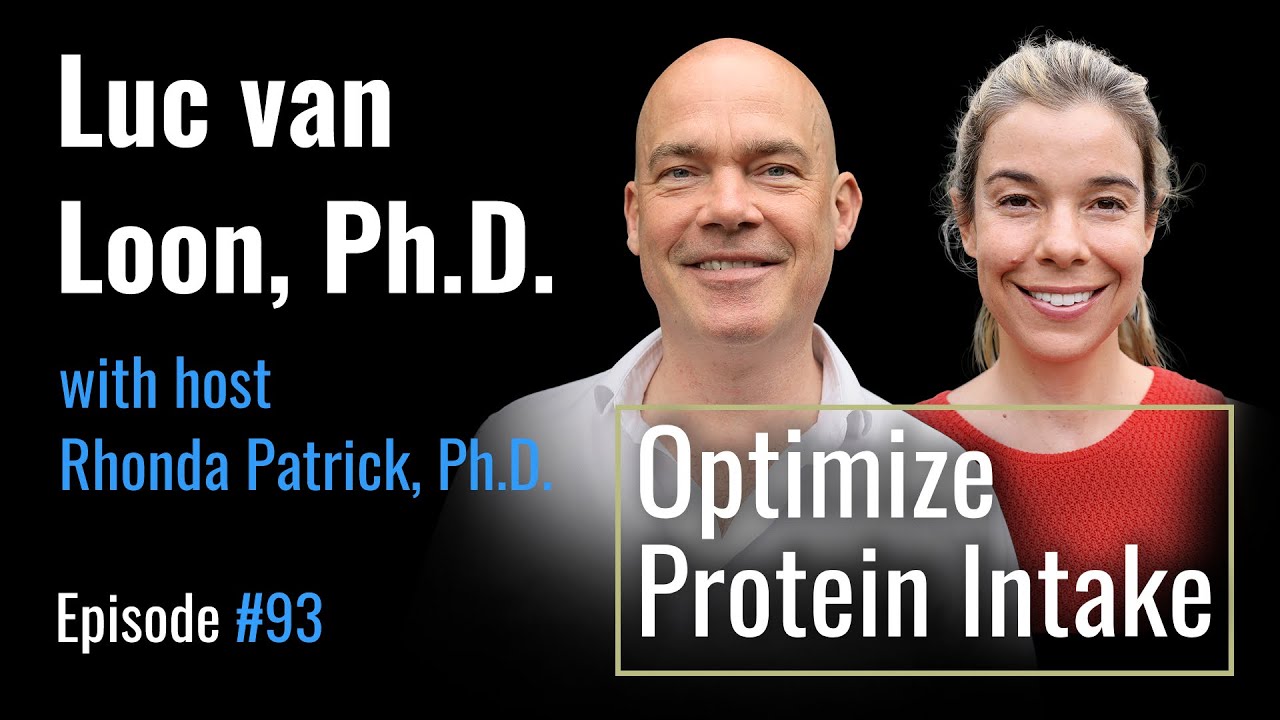
How Much Protein Supports Muscle Growth
Get the full length version of this episode as a podcast.
This episode will make a great companion for a long drive.
The Omega-3 Supplementation Guide
A blueprint for choosing the right fish oil supplement — filled with specific recommendations, guidelines for interpreting testing data, and dosage protocols.
You'll also receive updates from Rhonda & FoundMyFitness
In The Science of Protein, Dr. Rhonda Patrick uses roughly 1.2–1.6 g/kg/day as a practical framework, calculated from lean mass or an adjusted healthy goal weight when current body fat would create an unrealistic target. The appropriate point within that range depends on maintenance, muscle gain, fat loss, body recomposition, aging, energy intake, and training.
A meta-analysis found small additional resistance-training gains from protein supplementation, with average fat-free-mass benefit leveling near 1.6 g/kg/day. [1] Selected competitive athletes seeking marginal benefit, especially during energy restriction, may choose an upper range approaching 2.0–2.2 g/kg/day. That is not a general-population requirement.
Protein can improve satiety and help preserve lean mass during fat loss, but it does not replace resistance training or energy balance. Meal distribution can make the daily target practical. An acute tracer study found a larger, longer anabolic response to 100 grams than 25 grams after exercise, showing that protein above a small per-meal threshold is not simply wasted. [2] Pre-sleep casein can increase overnight synthesis in studied training settings. [3]
A review of higher-protein diets in adults without chronic kidney disease did not support the common claim that athletic-range protein intake damages healthy kidneys. [4] This reassurance does not extend unchanged to CKD, reduced filtration, proteinuria, or inherited kidney disease, where individualized targets and monitoring are appropriate.
- ^ Morton, Robert W.; Murphy, Kevin T; McKellar, Sean R; Schoenfeld, Brad J; Henselmans, Menno; Helms, Eric, et al. (2017). A Systematic Review, Meta-Analysis And Meta-Regression Of The Effect Of Protein Supplementation On Resistance Training-Induced Gains In Muscle Mass And Strength In Healthy Adults British Journal Of Sports Medicine 52, 6.
- ^ 10.1016/j.xcrm.2023.101324 , .
- ^ Reis CEG; Loureiro LMR; Roschel H; da Costa THM (2021). Effects of pre-sleep protein consumption on muscle-related outcomes - A systematic review. J Sci Med Sport 24, 2.
- ^ Van Elswyk, Mary E; Weatherford, Charli A; McNeill, Shalene H (2018). A Systematic Review Of Renal Health In Healthy Individuals Associated With Protein Intake Above The US Recommended Daily Allowance In Randomized Controlled Trials And Observational Studies Advances In Nutrition 9, 4.
So let's talk about the optimal protein intake. The optimal amount of protein will not be the same for everyone. Some people want to build muscle mass, some people want to maintain it, and others want to improve their body composition by building muscle and losing fat. Each of these goals requires a more tailored approach. The first thing to know is that it's generally agreed upon that protein needs should be calculated based on a lean body mass or an adjusted body weight reflecting a healthy body fat percentage. So for example, 12 to 15% for men and around 20% for women. This prevents unrealistic targets, especially for those who are overweight or obese.
So when I refer to protein intake in grams per kilogram of body weight per day, what I'm ideally referring to is your ideal or goal body weight. Let's address one thing up front. The recommended dietary allowance, or the RDA, for protein of 0.8 grams per kilogram per day Is thought by many to be too low. This is because the RDA was derived from nitrogen balance studies, which have limitations due to incomplete collection and inaccurate estimates of amino acid losses. The optimal range for daily protein intake is closer to 1.2 to 1.6 grams per kilogram body weight per day, or roughly 0.54 to 0.72 grams per pound.
This is based on alternative methods like stable isotope studies, which consistently show that higher intakes are necessary to maintain a positive protein balance, far above the 0.8 grams per kilogram often cited. So aiming for at least 1.2 grams and up to 1.6 grams is what we're talking about for optimal protein intake. There's good evidence to suggest this. For example, older adults consuming at least 1.2 grams of protein per kilogram body weight per day prevented age-related losses in lean mass when compared to consuming the RDA of 0.8 grams per kilogram body weight. Older women were also 30% less likely to experience frailty when consuming protein above the RDA. So what is the optimal protein intake for building muscle while resistance training?
For people engaged in resistance training, a protein intake of 1.6 grams per kilogram body weight per day has been shown to maximize gains in lean body mass with a 27% increase in muscle mass over even a 1.2 gram per kilogram intake. That's a lot. And it really just serves to really underscore how low the RDA really is when you're talking about 0.8 grams per kilogram body weight. By the way, for an excellent discussion of the protein RDA and much more, see my interview with Dr. Stuart Phillips in episode 76 of the FoundMyFitness podcast. There are special circumstances where even a higher protein intake might offer some marginal benefit.
The first example is people undergoing body recomposition, where they are in an energy deficit to lose fat mass while preserving or even increasing muscle mass. So let's talk a little bit more about body recomposition and weight loss. A higher protein intake tends to improve satiety. It helps you feel fuller for longer and may help prevent overeating. For people who want to lose weight, this is a major benefit. Eating more protein is also essential during weight loss to prevent the loss of lean body mass. When you eat a higher protein calorie restricted diet, more weight loss comes from fat mass than muscle mass. But remember, resistance training is also important to prevent the loss of lean mass.
High protein diets may also cause a slight increase in the metabolic rate due to the thermic effect of food, helping you burn a few more calories throughout the day. The second example where a higher protein intake above 1.6 grams per kilogram may be beneficial is with professional athletes where extremely marginal improvements in muscle protein synthesis gives them an edge on competition. So in this scenario, this is where up to 2.2 grams of protein per kilogram per day, or 1 gram per pound, may provide marginal benefits. Despite common misconceptions, a very high protein intake is not harmful to kidney health in people without preexisting kidney conditions.
Research consistently shows that high protein diets are safe, for most people, and any concerns over kidney damage are largely unfounded. So let's talk about this myth. Early interpretations of certain studies suggested that excessive protein intake might overwork the kidneys. While protein restriction can slow the progression of kidney disease in some individuals, we now know this does not imply that healthy people should limit their protein consumption. Higher protein diets do induce changes in kidney function, but they do not overburden the kidneys. The observed increase in markers and kidney function is a normal adaptive response to eliminate urea and other waste products generated during protein metabolism. This is entirely normal for individuals with healthy renal function.
So current evidence does not support an association between higher protein intake and kidney disease among healthy adults or those at risk, such as individuals with obesity, hypertension, or even diabetes. Moreover, research in athletes has shown that consuming protein intakes as high as 3.2 to 4.5 grams per kilogram of body weight per day for up to 1 year does not cause any adverse changes in kidney function and is considered safe. This intake is 4 to 6 times higher than the RDA for protein. And emerging research even suggests that higher protein intake may actually be beneficial for people with chronic kidney disease.
Some studies have found that consuming protein at levels above the RDA is associated with reduced mortality risk in this population, challenging the traditional approach of protein restriction. The bottom line? We can finally put to rest the myth that high-protein diets harm healthy kidneys. It's time to tackle another important aspect of protein intake, and that's how often and when we should consume it. We'll tackle 2 key points. First, how we consume our daily protein intake, whether we should spread it evenly across 3 to 4 meals or load it up into 1 or 2 meals. Second, and related, does protein have to be consumed within a critical anabolic window or timed with our workouts? In short, the answer to both of these is that factors are less important overall than you might expect.
Emerging evidence reveals that the body can effectively utilize even very large protein doses. This challenges the notion that protein must be meticulously spread over multiple meals to maximize muscle protein synthesis. Even though an even daily protein distribution is ideal, this doesn't mean that consuming the same total amount of protein in fewer high-protein meals is ineffective. Protein distribution is important but not vital. When you eat a larger dose of protein, it takes longer to digest, but your body will eventually use it. This is contrary to what some people think happens when you consume more than 20 to 25 grams of protein in a single meal. They think that the excess protein will just be excreted by the body and otherwise wasted.
In fact, a study by Dr. Luc van Loon and colleagues found that consuming 100 grams of protein after exercise led to a more robust and prolonged anabolic response than did 25 grams of protein, but had negligible effects on amino acid oxidation. The conclusion from this study was, quote, the magnitude and duration of the anabolic response to protein has no upper limit in humans and has been severely underestimated, end quote. This dispels a few myths about how the body can use only 20 to 25 grams of protein at once. As a practical takeaway, a more evenly distributed pattern of protein intake throughout the day is probably what we should be striving for.
But evidence like this highlights why more and more experts seem to be aligning on the simple fact that the vast majority of us, athletes or not, should be thinking about protein intake from the standpoint of total daily intake with less overall focus on factors like timing or the per-meal intake. Another question that people have regarding protein timing is whether protein needs to be consumed immediately after exercise to enhance the effects of training. This idea is known as the anabolic window. The anabolic window is a period after exercise, typically lasting from 30 minutes to 2 hours, during which the body is primed to absorb and utilize nutrients, particularly protein and carbohydrates, for muscle repair and growth.
It occurs because the body's ability to synthesize protein and replenish glycogen stores is heightened, aided by exercise-induced hormonal changes like increased insulin levels. Consuming 20 to 40 grams of high-quality protein, often paired with carbohydrates, can enhance muscle recovery and growth during the anabolic window. Or so it was once thought. Recent scientific evidence reveals that muscle protein synthesis remains significantly elevated for a full 24 hours following exercise, effectively debunking the notion of a very narrow anabolic window lasting only a few hours. Furthermore, supplementing with protein before exercise has the same effects on body composition and strength compared to supplementing with protein immediately after exercise.
In other words, there are no meaningful differences between pre- and post-exercise protein ingestion. This means that you're free to choose when you want to consume protein in relation to exercise, so long as your total daily intake of protein is adequately high to support optimal muscle protein synthesis. Of course, there is definitely no downside to consuming protein immediately after a workout, especially for people interested in achieving marginal gains in strength or muscle mass. To wrap up our discussion on protein timing and distribution, I want to bring up one more strategy to help with muscle building that relates to protein distribution and timing: pre-sleep protein. There's 2 ways to look at this.
One way is through the lens of time-restricted eating, and the other is through the lens of actively optimizing for muscle protein synthesis on training days. It's been shown in studies by Dr. Luc van Loon and colleagues that protein consumed before bed is digested and absorbed overnight. It also increases overnight muscle protein synthesis rates and improves net protein balance in people who had performed resistance training earlier in the day to enhance muscle recovery. The benefits of pre-sleep protein have also been shown during chronic resistance exercise training. Consuming about 30 grams of protein before bed every night while resistance training appears to increase muscle mass and muscle strength.
Another thing about pre-sleep protein is that it does not seem to reduce appetite or diminish the muscle protein synthesis response at breakfast the next morning, which may have been a concern for some people. Overall, I think pre-sleep protein is just one way to increase total daily protein intake. If you don't like going to bed hungry, having a low-calorie protein shake on training days may have the benefit of potentially enhancing your muscle gain on those training days. But don't use this as an excuse to go wild. We should still be mindful about the fall in insulin sensitivity that happens as we get close to our habitual bedtime. And this is particularly true if you're not actively training. So let's summarize some key points about protein timing and distribution.
First, while it's not necessary to consume protein immediately after a workout, there's no harm in doing so. For those who exercise fasted, having a protein-rich meal right after may be beneficial. Ultimately, total daily protein intake is the most crucial factor. Second, evenly distributing protein across meals is ideal, but your body can use even large protein meals. And finally, consuming protein before bed isn't essential, but it can be a helpful strategy to boost total daily intake or support muscle recovery, especially in those who are actively training.
Get email updates with the latest curated healthspan research
Support our work
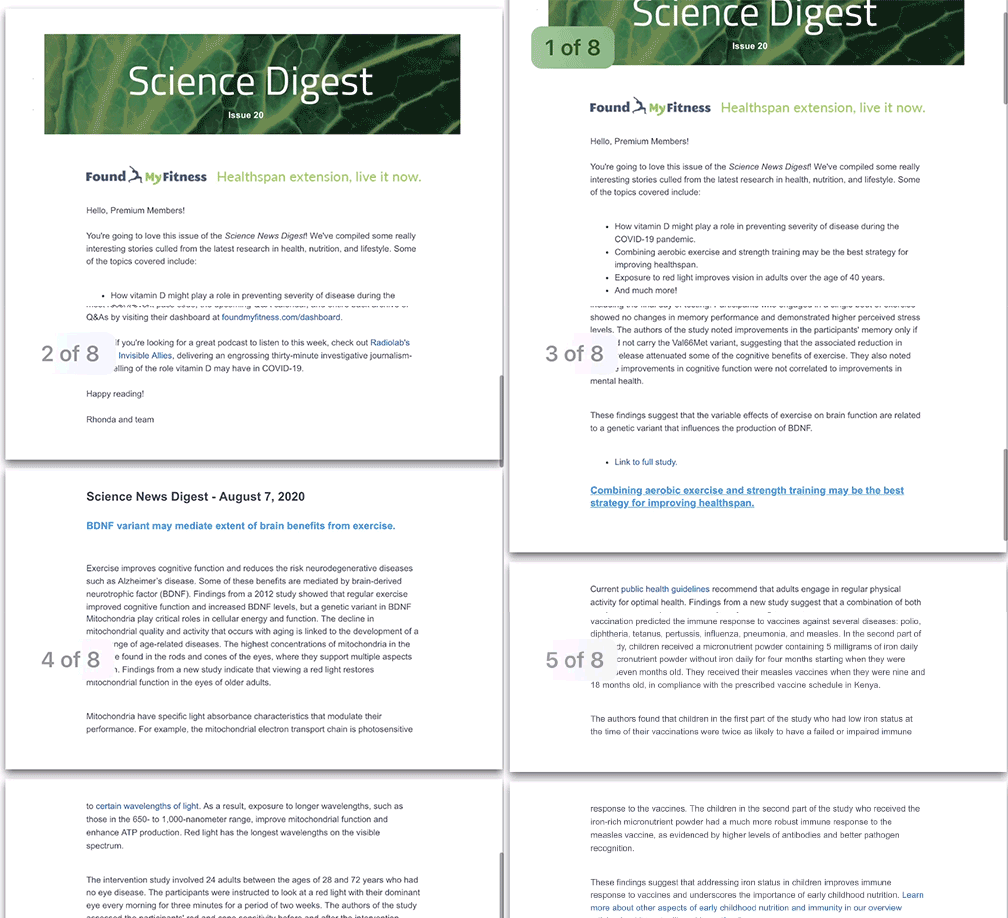
Every other week premium members receive a special edition newsletter that summarizes all of the latest healthspan research.