How to Build Muscle With a Nutrient-Dense Surplus and Quality Protein
The BDNF Protocol Guide
An essential checklist for cognitive longevity — filled with specific exercise, heat stress, and omega-3 protocols for boosting BDNF. Enter your email, and we'll deliver it straight to your inbox.
You'll also receive updates from Rhonda & FoundMyFitness
In this clip from a FoundMyFitness members Q&A, Dr. Rhonda Patrick outlines a food-first approach to gaining muscle while limiting unnecessary fat gain. She pairs a calorie surplus with resistance training and recommends building meals around protein-rich foods, carbohydrates, fruits, vegetables, and calorie-dense unsaturated-fat sources such as avocado, nuts, seeds, olive oil, and nut butter. Smoothies, larger portions, or more frequent meals can make the surplus easier to reach.
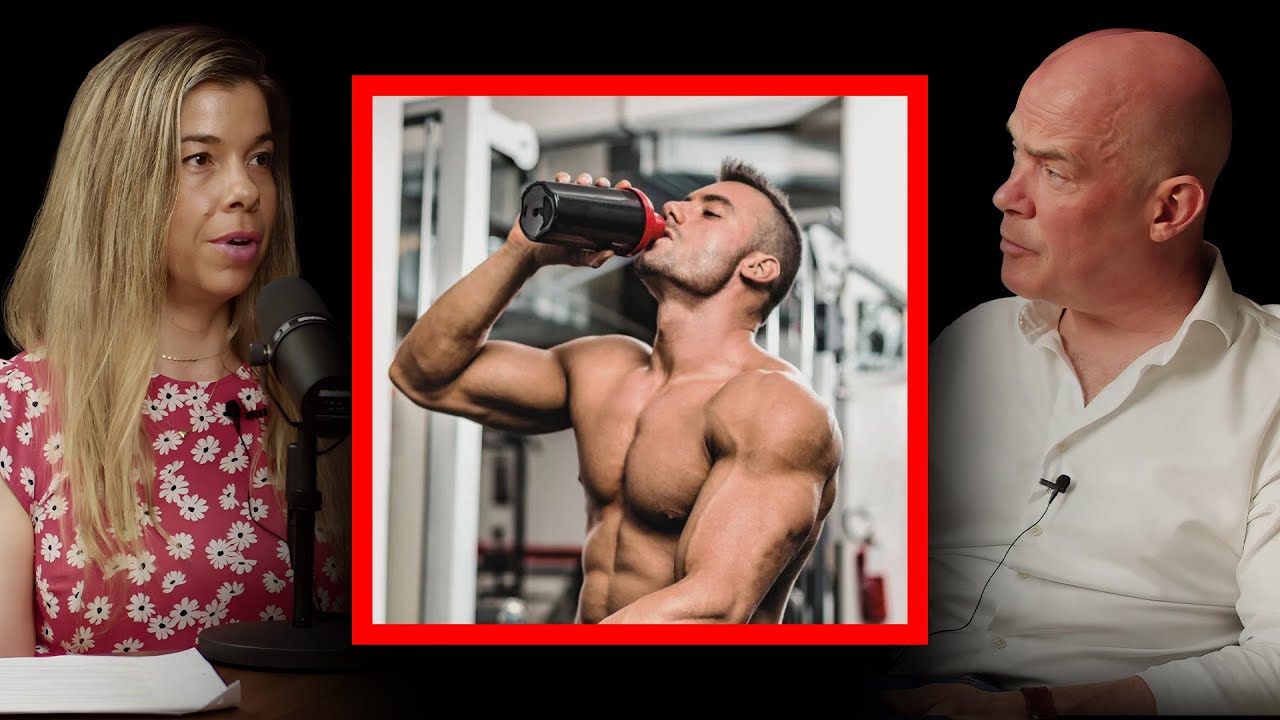
Protein is the foundation of her plan. She names lean meat, poultry, salmon, mackerel, eggs, Greek yogurt, cottage cheese, legumes, and quinoa as useful sources, with intake adjusted to training demands. A large meta-analysis found that protein supplementation improved resistance-training gains in muscle size and strength, with little additional lean-mass benefit above an estimated total intake of about 1.6 grams per kilogram per day for most participants. Dr. Patrick’s broader range of 1.2 to 2.2 grams per kilogram is context-dependent rather than a universal requirement. [1]
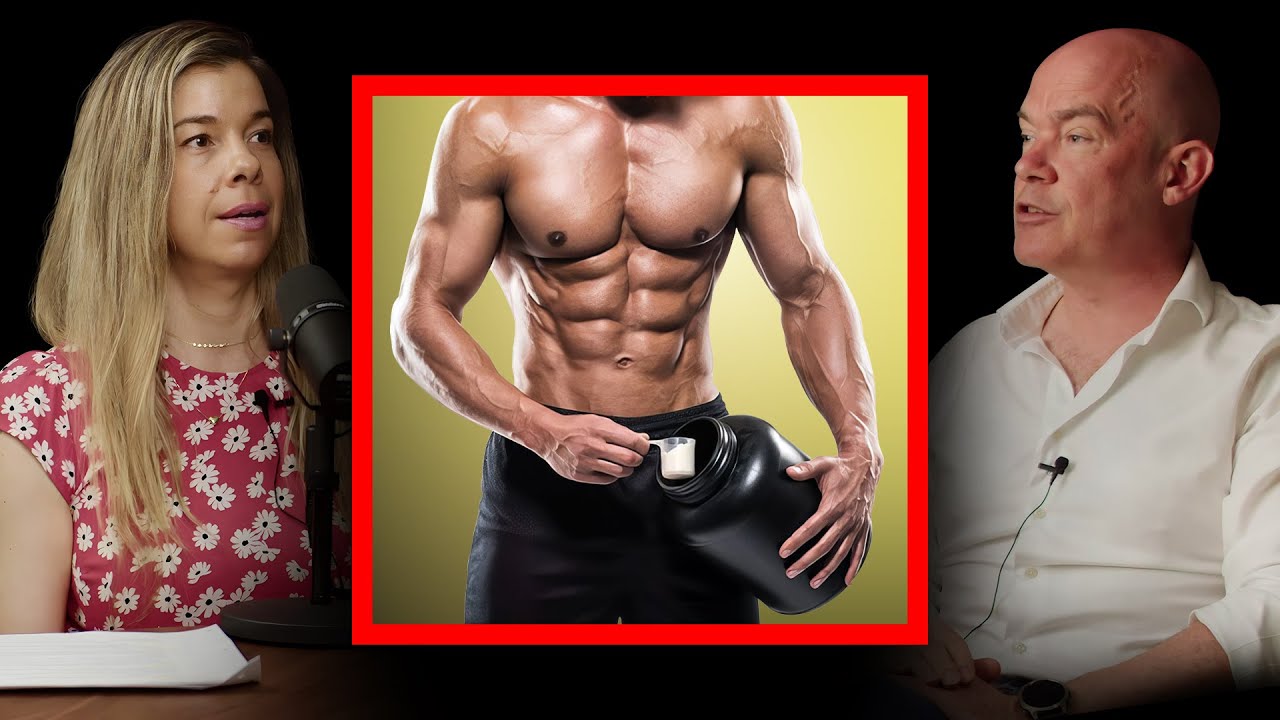
The second Q&A turns to whey protein powder. Dr. Patrick prefers whey isolate when the goal is more protein with less lactose and fat, and she discusses grass-fed sourcing, cold processing, and microfiltration as product features. Her practical quality checks are a transparent formulation and credible third-party testing for purity and contaminants. She names unflavored Nutricost Grass-Fed Whey Protein Isolate as a product she personally uses without affiliation.
Another rapid-fire question. It says, if you were a man and looking for the healthiest way possible to gain weight, bulk up, so putting on muscle mass, what would your diet look like? How would you add extra calories? So that, I mean, gaining weight and bulking up in a healthy way involves you have to consume the right amount of food. You have to do the right exercises to be able to gain the muscle mass and minimize fat gain. So obviously resistance training is very important and also doing your aerobic exercise, vigorous intensity exercise as well. With respect to protein, focusing on really high-quality protein sources. So that would be lean meat, turkey, chicken, lean beef. That would be fish, things like salmon, tuna— well, I wouldn't do tuna, but salmon and mackerel.
Eggs as well as some dairy products, maybe some Greek yogurt or cottage cheese. There's some plant-based sources of protein like legumes and quinoa. Aiming for— I mean, depending on what you're really going for and how much you work out, you know, you could go anywhere from 1.2 to 2.2 grams of protein per kilogram body weight, right? Depending on what your training schedule looks like. So the more rigorous your training schedule, the more protein you can add, right? So also incorporating some carbohydrates. Could be beneficial as well. So the quinoa, the sprouted whole grain bread might help as well as oats. So some carbohydrates, fruits and vegetables are another one, getting the vitamins and minerals. Timing some of the protein and carbohydrates around your workout might help as well.
Healthy fats would be another source of calories. So that would be avocados, nuts, seeds, olive oil, again, the fatty fish. As well, and then extra calories if you're really looking for the extra calories, adding in some like nut butters. So you could do like some almond butters, macadamia nut butters, you know some of the nut butters. There's some dried fruits with no added sugar for extra calories. There's smoothies, so you can do like the the full fat Greek yogurt with some pro you know protein powder, maybe some nut butter in there. That's just going to give you extra calories that are more nutritionally, I mean, healthy. And then adding, having larger portion of meals and then more frequent meals.
So like maybe eating, so you could do the larger portion meals or the more frequent meals. And I think, you know, the smaller portion meals, doing like 5 or 6 instead of the 3 large ones might help you increase your calorie intake because it's easier to to get more calories in with more frequent smaller meals than like 3 larger meals because like you can only eat so much within one meal. And I think that's probably some of the best way to bulk up in a healthy way. Obviously, I didn't get into the whole training stuff, but that's obvious. Owen asks what my brand of unflavored whey protein powder is. So there's a criteria I look at when looking for whey protein powders, and so there's Concentrate versus isolate. And we've talked about this in the past. Protein content.
So isolate has a higher protein content than whey concentrate. So the whey protein isolate is the one that you want with higher protein content. Lactose content. So isolate has lower lactose levels, which does— it makes it a little more suitable for people with lactose intolerance. And then there's the fat content. So isolate has less fat than the concentrate. And then there's calories. So isolate has fewer calories. Obviously it has less fat, so it's going to have fewer calories than the concentrate does. So I'm generally more interested in more protein, less fat, fewer calories, and which is why I like the whey protein isolate. And there's a few other factors to consider when looking at whey protein isolate powder. So there's the whey source.
So if it's sourced from grass-fed cows, that can have a higher nutritional value, including a better omega-3 to omega-6 acid ratio. And then there's a little bit of the processing method. So cold processed or microfiltered whey protein retains more of the natural nutrients found in whey. And then there's the organic, which is nice. So you can always look at third-party testing, which is what I do. That will help you look for the quality, the purity. It adds that layer of trust there, you know, that just really helps. So with all that said, Nutricost Grass-Fed Whey Protein Isolate, unflavored, which I have no affiliation with, is a good source. It has a high amount of the concentration of protein purity without contaminants. It's grass-fed. It's a grass-fed source. It's organic.
It doesn't have all the detectable heavy metal contaminants. It's affordable. So it's a source that I like. You can also look through third-party testing like ConsumerLab and find another one, but that's the one that I personally like.
Attend Monthly Q&As with Rhonda
Support our work

The FoundMyFitness Q&A happens monthly for premium members. Attend live or listen in our exclusive member-only podcast The Aliquot.
Protein News
- Silicon supplementation shows promise for improving hair strength and thickness.
- Vitamin D supplementation may shift the early muscle-building response to exercise and protein intake.
- The amino acid leucine may act as a nutrient signal that enhances mitochondrial function and increases cellular energy capacity.
- Lean pork stimulates more muscle protein synthesis after exercise than high-fat pork, despite equal protein content
- Vitamin D, iron, and protein may improve hair growth and thickness while sugar-sweetened beverages and alcohol may worsen hair loss.