How Fiber May Help Clear Persistent Chemicals
The Omega-3 Supplementation Guide
A blueprint for choosing the right fish oil supplement — filled with specific recommendations, guidelines for interpreting testing data, and dosage protocols.
You'll also receive updates from Rhonda & FoundMyFitness
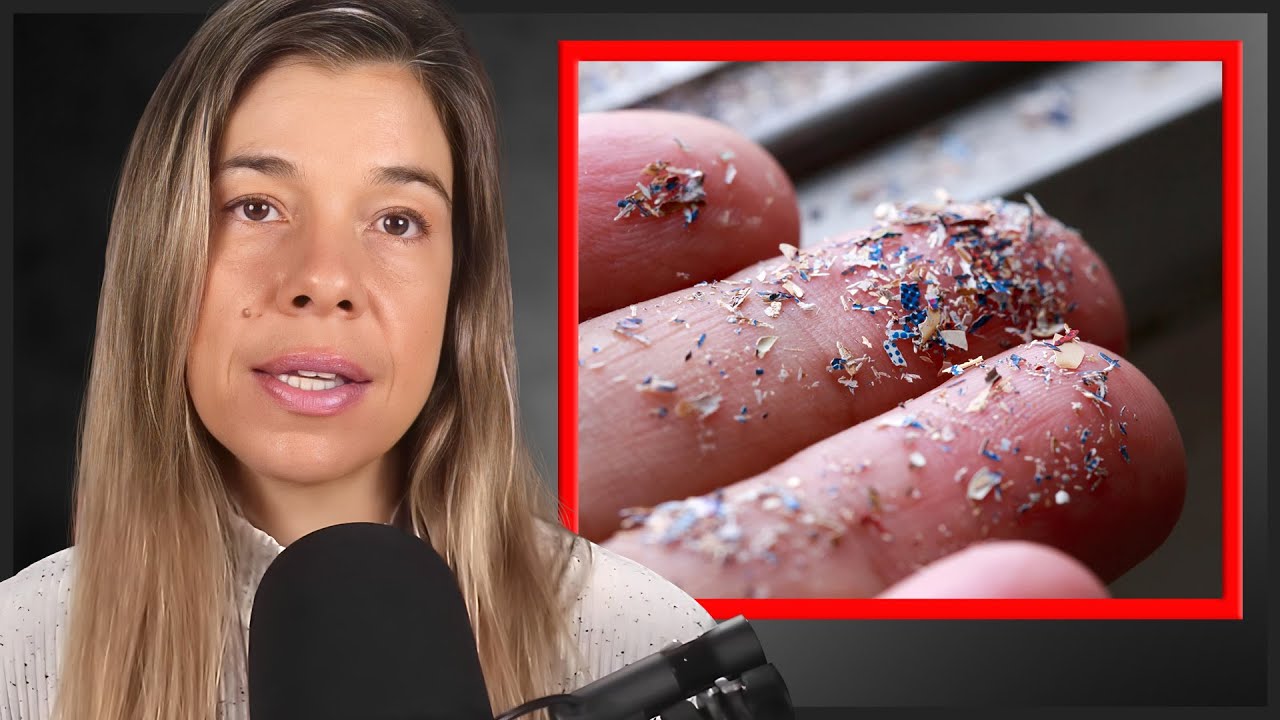
In this clip from Dr. Rhonda Patrick's appearance on Modern Wisdom, she explains why dietary fiber is a plausible first line of support for gastrointestinal elimination. Animal studies suggest that fermentable fiber or beta-glucans can bind microplastics or increase their excretion. In humans, an analysis of 6,482 US adults associated higher fiber intake with lower serum concentrations of several persistent PFAS chemicals; the observational result does not prove that fiber caused clearance. [1]
Sauna is a different pathway, not a substitute for fiber. Sweat can contain some metals and small amounts of selected chemicals such as BPA, while PFAS and ingested particles are discussed mainly in relation to urine or feces.
Dr. Patrick also discusses sulforaphane as support for cellular defense against selected airborne chemicals. In a randomized trial in a polluted region of China, a broccoli-sprout beverage increased urinary excretion of benzene and acrolein metabolites. The finding supports metabolism of selected chemicals, not removal of persistent particles or all pollutants. [2]
For wildfire smoke or other hazardous air, exposure reduction comes first: stay indoors when possible, wear a well-fitting protective mask when outside, and use indoor HEPA filtration for airborne particles. Sulforaphane may affect metabolism of selected volatile chemicals, but it does not filter particulates or microplastics from inhaled air.
This clip is excerpted, with permission, from Dr. Rhonda Patrick's appearance on Modern Wisdom. Thank you to Modern Wisdom for allowing us to share it.
Related fiber evidence
The Oats and beta-glucan topic separates the established LDL evidence from exploratory PFAS research. PFAS chemicals and microplastic particles are different exposures; the human beta-glucan studies discussed there do not establish removal of microplastics from tissues. The October 15, 2026 newsletter reviews the oat beta-glucan studies in mice and humans alongside the cholesterol evidence.
- ^ Dzierlenga MW; Keast DR; Longnecker MP (2021). The concentration of several perfluoroalkyl acids in serum appears to be reduced by dietary fiber. Environ Int 146, .
- ^ Egner PA; Chen JG; Zarth AT; Ng DK; Wang JB; Kensler KH, et al. (2014). Rapid and sustainable detoxication of airborne pollutants by broccoli sprout beverage: results of a randomized clinical trial in China. Cancer Prev Res (Phila) 7, 8.
Chris Williamson: How can I get rid of them? I've got too many microplastics in my body. How do I get rid of them?
Dr. Rhonda Patrick: Yeah, so microplastics, we kind of talked about a little bit getting rid of them, and that really the main source is excretion through feces, and that happens with dietary fiber. So, if you are eating a lot of fruits and vegetables, that does increase the chances that microplastics are going to move their way out through feces more readily.
Chris Williamson: Is that only microplastics that you're consuming along with it, or is it able to pull microplastics, sort of detoxify them from your body?
Dr. Rhonda Patrick: I think it's in general, to be honest, because if you think about like fiber, what does it do? It moves stuff through your body. It doesn't necessarily have to be something that you just ate, right?
Dr. Rhonda Patrick: Like it could be something that you had hours before. So if you're getting like fiber, daily fiber, right? Like thinking about getting your total daily fiber, I think that's something that is important because it's moving it out of your body so you can't absorb it through both ways. Like the ways of just moving it through, but also with the type of fiber that's found in things like berries and apples. So these are pectins, like inulin, all this type of fermentable fiber, green bananas, resistant starch, like that stuff makes viscous gel-like substance in your gut, which encapsulates microplastics so that you're not absorbing them. So really, I think it's just like more important to focus on the daily fiber intake versus like with a meal.
Chris Williamson: So is that the biggest mover, daily fiber intake, do you think?
Dr. Rhonda Patrick: I do, and this is all animal data. Like, this is all new. There's no real human data yet on that area in terms of like excreting it through feces and absorption, intestinal absorption. But I do think like it makes sense. Why wouldn't it translate, right? So, that's something that I think is important. Oh, the other thing, this just came out, this is interesting, also animal data. So, forever chemicals, I mentioned forever chemicals, those take 2 to 5 years to excrete, to get rid of. I say excrete, to detoxify, get outta your body. They stay in your body forever. That's why they're called forever chemicals. Yeah. Unlike bisphenol A, which is— it's in your body for like up to 4 or 5 hours, anywhere from 2 to 5 hours.
Dr. Rhonda Patrick: So, it's really kind of daily excretion and it's excreted through urine. But, there's studies showing that the— they're called beta-glucans and they're in oats and they're in mushrooms, but the study used oats. The beta-glucans, which is, by the way, a fermentable type of fiber, they were— they actually caused excretion of the forever chemicals, PFAS, in animals, which is something that doesn't happen. So, they increase the excretion through— it's this whole mechanism that affects like your liver or your bile acid and liver and cholesterol and all this like fancy stuff that, you know, might be confusing to explain.
Chris Williamson: Mm-hmm.
Dr. Rhonda Patrick: But essentially, that's been shown to increase the excretion of forever chemicals.
Dr. Rhonda Patrick: So, I've actually been adding a lot of oats. In fact, I had some oatmeal this morning because I'm like, oh my gosh, this is incredible. The reason why I also think it's happening in humans is because there was a human study, not with oats, but it's a drug that's used to lower cholesterol and it does the exact same thing that oats, the beta-glucans in oats do. It was shown to clear forever chemicals in people.
Chris Williamson: Wow.
Dr. Rhonda Patrick: So, I'm like, oh, okay, add the dots here.
Chris Williamson: What about sauna?
Dr. Rhonda Patrick: Sauna. So, sauna. So, I'm talking about excreting things from the body. Through urine or feces, right? So bisphenol A and a lot of these plastic chemicals, the primary route of excretion is through urine. And there is a way I think that we can excrete them. Sauna, you're excreting mostly is through sweat.
Dr. Rhonda Patrick: And there are a lot of toxins that we're exposed to that we do excrete through sweat. A lot of those are heavy metals. So for example, cadmium and aluminum, so aluminum's associated with Alzheimer's disease. They're more readily excreted through sweat than through urine. And so, when you get in the sauna, you really— you can excrete a little bit of BPA. It does come out through sweat as well. However, the majority of excretion chemicals that are being excreted through sweat are things like some heavy metals and things like that.
Chris Williamson: Mm-hmm.
Dr. Rhonda Patrick: So, that is important for excretion of a lot of compounds that are detrimental to health.
Chris Williamson: Yeah.
Dr. Rhonda Patrick: But, when it comes to BPA, for example, or phthalates, so these compounds are fat-soluble.
Dr. Rhonda Patrick: And, in order for us to get rid of them, we have to make them water-soluble. And, there's an enzyme that does that. And, that enzyme is activated by a system in our body called the NRF2 system. It's a system that's a major transcription factor that basically turns on a lot of genes, turns off a lot of genes. So what it does is it activates something called the phase 2 detoxification enzymes. These detox a lot of harmful compounds in our body. The major dietary activator of this system is a compound called sulforaphane, which is something that you can produce when you eat cruciferous vegetables like broccoli. Broccoli is a good source. Actually, the younger plant broccoli sprouts have 100 times more of the precursor to make sulforaphane called glucoraphanin.
Dr. Rhonda Patrick: So you basically— the sulforaphane compound is made when the plant is broken. So when you bite it, chew it, right? That's when you start to make the sulforaphane. So broccoli sprouts have a really, really high concentration of that precursor. Okay. There have been a variety of studies that have looked at sulforaphane and giving it to humans and it activating this system and causing the excretion of harmful compounds that we breathe in. So, there have been studies in China where air pollution's terrible and people are breathing in, for example, benzene. Okay. Benzene is a known carcinogen. It's also, in addition to air pollution, it's found in cigarette smoke, any plant-burning material, fires, right?
Dr. Rhonda Patrick: So, this is very relevant to people in Southern California and Los Angeles where there's a lot of wildfires and the air quality is very bad. There's benzene in the air, okay?
Chris Williamson: Mm-hmm.
Dr. Rhonda Patrick: Benzene's a carcinogen. So, there have been studies in China, more than one study showing that consuming sulforaphane about— it's like about 40 micromoles of sulforaphane causes the excretion of benzene to increase within 24 hours by 60%. So, this is really big.
Chris Williamson: You can't supplement sulforaphane?
Dr. Rhonda Patrick: You can, and I do supplement with it. So, I take a supplement called Avmacol, and that supplement has been used in a lot of different clinical studies because it's very— they've got a very reliable source of glucoraphanin, and the enzyme myrosinase is very unstable. It's sensitive to heat.
Dr. Rhonda Patrick: So, if you heat broccoli up really hot, you're actually degrading a lot of the sulforaphane that you're going to take in there.
Chris Williamson: Oh, so if someone's eating broccoli, raw would be optimal?
Dr. Rhonda Patrick: Optimal, or just lightly steamed. Lightly cooked, like lightly cooked. So, this company has been very delicate with how they've— Yeah. They've got— so, I take 2 of their advanced Avmacol, which has about, gosh, it's like 68 micromoles or something per tablet. And so, actually taking 1 tablet of that was equivalent to the study on benzene excretion. So, I take 2 tablets a day. And, the reason I do that is because I also want to increase glutathione, which is an antioxidant, a very powerful antioxidant in our body.
Dr. Rhonda Patrick: There have been clinical studies showing that people taking sulforaphane increase their glutathione levels in their plasma and also in their brain. So, in the brain, I mean, it's hugely important for cognitive function, for brain aging, everything like that. So, I take anywhere between 2 to 4 Avmacol tablets a day because that's— and by the way, I have no affiliation with them. Their stabilization process is really great. It's in a tablet form versus like a capsule. So capsules are cheaper to make, but they retain water, and water degrades the myrosinase enzyme. So a lot of—
Chris Williamson: Dancing through this minefield is basically impossible, isn't it?
Dr. Rhonda Patrick: There's a lot to consider. But when it comes back to the sulforaphane and BPA, there's not direct evidence, human evidence, that it's causing the excretion.
Dr. Rhonda Patrick: I think it's doing it because one, there's an animal study showing that if you give animals sulforaphane and then give 'em a toxic level of BPA, it doesn't induce toxicity. Two, sulforaphane activates these very enzymes that cause BPA to become water soluble and excreted.
Chris Williamson: Mm-hmm.
Dr. Rhonda Patrick: That's known. Three, we have all this, this, you know, data, human clinical data showing that sulforaphane causes the excretion of other harmful compounds that also have to be converted to be water-soluble, like benzene and acrolein, for example. So I think there's a lot of evidence suggesting that sulforaphane would help with excretion of BPA.
Chris Williamson: You touched on something there.
Chris Williamson: I don't know whether you've got any advice or whether you'd feel comfortable, but a lot of people will have been directly impacted by the fires in LA or indirectly just by it's happened around them. They've been more stressed and they've been breathing in this air, which presumably is still probably going to be in the local ecology. Is there anything, how worried do you think that people should be about what's been liberated into the air? And if you were someone that's been worried, is there a particular protocol or some things that you would consider over the next few weeks and months to try and just help yourself get back to a good place of health?
Dr. Rhonda Patrick: I do. And I have several friends that have been impacted by the LA fires, and I've kind of talked to them about some of this stuff.
Dr. Rhonda Patrick: So first, you know, avoiding going outside or wearing a mask if you're there in the thick of it, right, when it's really, really bad air quality. But, um, having a HEPA filter inside, one, um, and two, the sulforaphane. So I've, I've now told several friends that they should be taking, um, Avmacol. Again, I don't have any affiliation with them. They just— there's multiple clinical studies using their formulation, very reliable. And, um, so, you know, taking anywhere between 2 to 4 a day to increase the excretion of a lot of these harmful compounds that are in the air. Now, that's not gonna cause you, like, the microplastics that you're breathing in, you're not gonna— sulforaphane isn't going to help with that. It's gonna help with the chemical aspects of it.
Dr. Rhonda Patrick: The microplastics themselves, like, 'cause plastics are burning and lots of stuff, particulate matters in the air, that's where you get the HEPA filters. That's important to help with the breathing in that air, right?
Chris Williamson: So. Yeah.
Supporting our work
If you enjoy the fruits of
 , you can participate in helping us to keep improving it. Creating a premium subscription does just that! Plus, we throw in occasional member perks and, more importantly, churn out the best possible content without concerning ourselves with the wishes of any dark overlords.
Environment News
- Lifestyle and environmental exposures—termed the 'exposome'—may substantially outpace genetic factors in driving premature death and age-related disease.
- High exposure to plastics, such as those in disposable takeout containers, is associated with a 13% greater risk of heart disease, potentially through changes to gut bacteria and increased inflammation.
- Researchers have been able to convert plastic waste including water bottles, milk bottles, and plastic bags, into fuel.
- Nearly all major brands of bottled water were found to be contaminated with microplastics including polypropylene, nylon & more.