Why Vigorous Activity Delivers More Benefit per Minute
The BDNF Protocol Guide
An essential checklist for cognitive longevity — filled with specific exercise, heat stress, and omega-3 protocols for boosting BDNF. Enter your email, and we'll deliver it straight to your inbox.
You'll also receive updates from Rhonda & FoundMyFitness
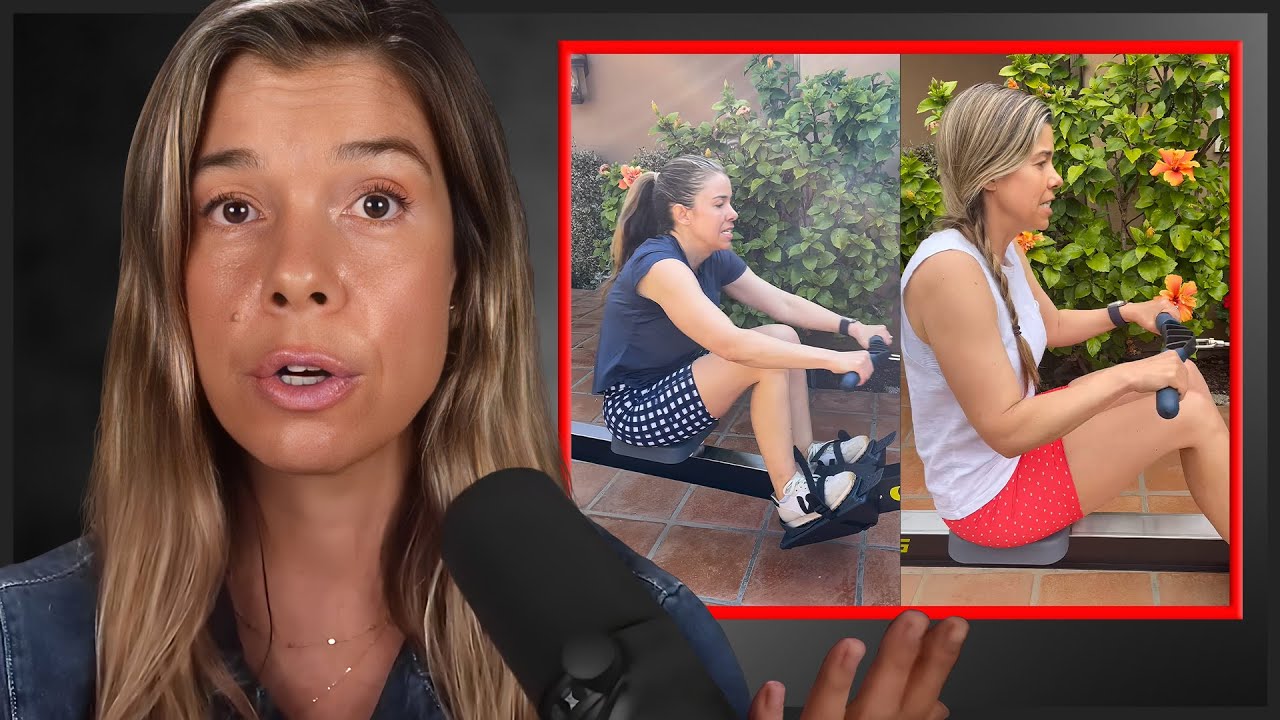
Vigorous activity can provide a strong health stimulus in less time. In this clip from Dr. Rhonda Patrick's appearance on The Diary Of A CEO, she discusses a study of 73,485 UK Biobank adults who wore wrist accelerometers and were followed for about eight years. Its fitted models associated one vigorous minute with risk reductions similar to about four moderate minutes for all-cause mortality, eight moderate minutes for cardiovascular mortality, and nine moderate minutes for type 2 diabetes. [1]
Brief vigorous activity can also fit into daily life. In more than 25,000 adults who reported no structured exercise, about three short vigorous bouts per day were associated with 38 to 40 percent lower all-cause and cancer mortality and 48 to 49 percent lower cardiovascular mortality compared with no vigorous bouts. Most bouts lasted one or two minutes, and the median total was 4.4 minutes per day. Activities such as quickly climbing stairs, walking uphill, or carrying a load can become vigorous when they produce hard breathing and allow only a few words at a time. [2]
Walking remains an important part of the picture. A meta-analysis of 15 prospective cohorts found lower mortality with more daily steps, with associations leveling near 6,000 to 8,000 steps in adults age 60 or older and 8,000 to 10,000 in younger adults. The practical approach is to keep moving, retain regular aerobic and strength training, and add brief vigorous bouts that match individual fitness and health. People who are sedentary can begin with hills or short controlled intervals and progress gradually. [3]
This clip is excerpted, with permission, from Dr. Rhonda Patrick's appearance on The Diary Of A CEO. Thank you to The Diary Of A CEO for allowing us to share it.
- ^ Biswas, Raaj Kishore; Ahmadi, Matthew; Bauman, Adrian; Milton, Karen; Koemel, Nicholas A.; Stamatakis, Emmanuel (2025). Wearable Device-Based Health Equivalence Of Different Physical Activity Intensities Against Mortality, Cardiometabolic Disease, And Cancer Nature Communications 16, 1.
- ^ Ahmadi, Matthew N; Doherty, Aiden; Gibala, Martin J.; Gill, Jason M. R.; Hamer, Mark; Stamatakis, Emmanuel, et al. (2022). Association Of Wearable Device-Measured Vigorous Intermittent Lifestyle Physical Activity With Mortality Public Health Nutrition 28, 12.
- ^ Paluch AE; Bajpai S; Bassett DR; Carnethon MR; Ekelund U; Evenson KR, et al. (2022). Daily steps and all-cause mortality: a meta-analysis of 15 international cohorts. Lancet Public Health 7, 3.
Steven Bartlett: What are your thoughts on current exercise recommendations?
Dr. Rhonda Patrick: Current U.S. guidance recommends 150 to 300 minutes of moderate aerobic activity or 75 to 150 minutes of vigorous activity each week, plus strength work on at least two days. Any activity is better than none.
A 2025 UK Biobank analysis used wrist accelerometers in 73,485 adults and followed them for about eight years. The researchers fitted separate dose-response curves for light, moderate, and vigorous activity. One vigorous minute had the same modeled risk association as about four moderate minutes for all-cause mortality, eight moderate minutes for cardiovascular mortality, and nine to ten moderate minutes for type 2 diabetes.
These are observational equivalence estimates, not causal exchange rates. Participants were not assigned to replace moderate activity with vigorous activity. The study measured movement for one week and did not measure heart rate, VO₂, or energy expenditure directly.
The clip overstates the light-activity comparisons. The paper estimated about 53 light minutes for all-cause mortality, 73 for cardiovascular mortality, 94 for type 2 diabetes, and 156 for physical-activity-related cancer mortality per vigorous minute. It did not report the clip's 100-to-300-minute range.
Brief vigorous lifestyle activity can also add up. In a separate cohort of adults who reported no structured exercise, about three short vigorous bouts per day were associated with 38 to 40 percent lower all-cause and cancer mortality and 48 to 49 percent lower cardiovascular mortality compared with no vigorous bouts. The median total was 4.4 minutes per day. These were relative observational associations, not a tested nine- or ten-minute prescription.
The claim that women doing 3.5 minutes per day had 40 percent lower cancer risk does not match the identified cancer-incidence study. That study included men and women. Around 3.4 to 3.7 minutes per day was associated with 17 percent lower total cancer incidence and 28 percent lower physical-activity-related cancer incidence.
Steven Bartlett: What about 10,000 steps?
Dr. Rhonda Patrick: Ten thousand steps is not a magic threshold, but walking remains valuable. Large cohorts associate more daily steps with lower mortality, with benefits beginning well below 10,000. No randomized study compared 10 vigorous minutes with 10,000 steps for mortality. A better message is to keep walking and add brief vigorous bouts when safe.
Intensity is relative. Vigorous activity causes hard, fast breathing and allows only a few words before pausing. A wrist accelerometer's classification is not interchangeable with a universal percentage of estimated maximum heart rate. Fast wrist motion during curls also does not prove vigorous whole-body aerobic work.
Sedentary adults should progress from walking, hills, or short controlled intervals. People with known cardiovascular disease, exertional chest pressure, fainting, uncontrolled hypertension, severe unusual breathlessness, or important balance or joint limits should obtain clinical guidance before abrupt vigorous exercise.
Hear new content from Rhonda on The Aliquot, our member's only podcast
Listen in on our regularly curated interview segments called "Aliquots" released every week on our premium podcast The Aliquot. Aliquots come in two flavors: features and mashups.
- Hours of deep dive on topics like fasting, sauna, child development surfaced from our enormous collection of members-only Q&A episodes.
- Important conversational highlights from our interviews with extra commentary and value. Short but salient.