Can Omega-3 Affect Biological Aging? What the Trial Found
The BDNF Protocol Guide
An essential checklist for cognitive longevity — filled with specific exercise, heat stress, and omega-3 protocols for boosting BDNF. Enter your email, and we'll deliver it straight to your inbox.
You'll also receive updates from Rhonda & FoundMyFitness
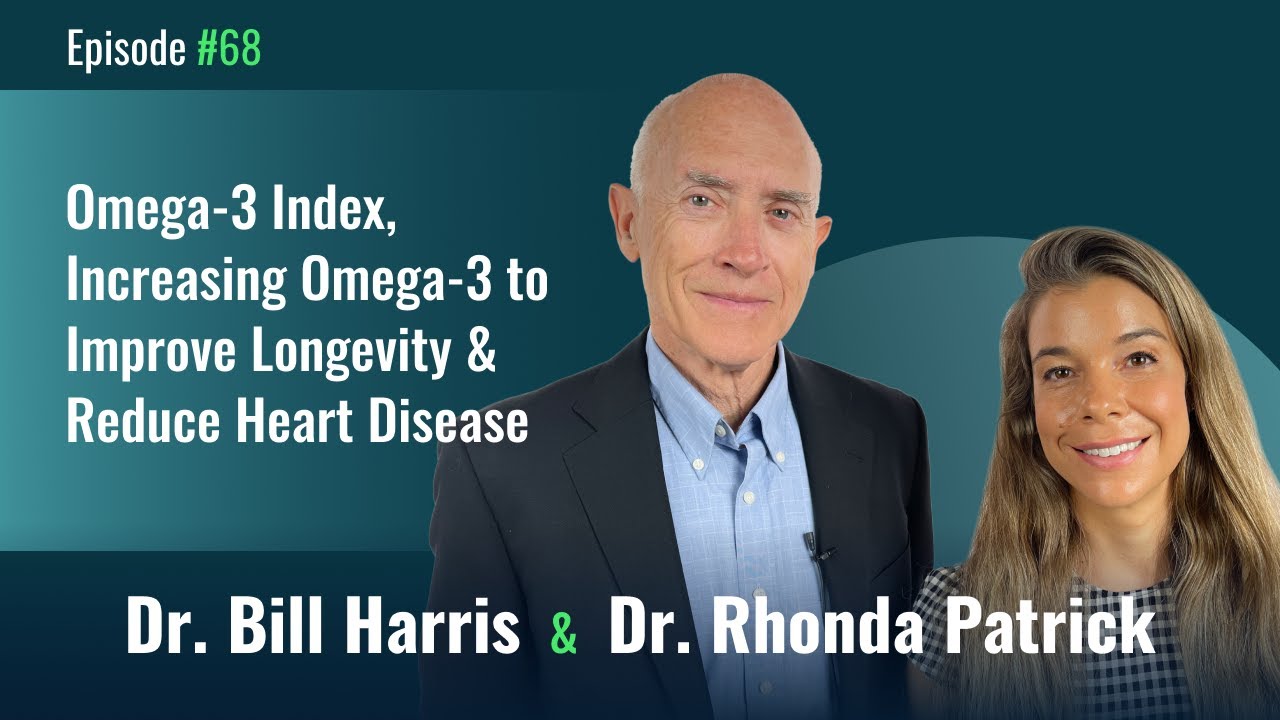
Omega-3 status reflects both dietary intake and individual response. In this clip from Dr. Rhonda Patrick's appearance on The Dan Bongino Show, she explains that the amount of EPA and DHA needed to change the Omega-3 Index varies with baseline status, body size, formulation, diet, and adherence. Proposed index ranges can help frame risk and response, while the appropriate dose still depends on the person's goals and cardiovascular context. [1]
The DO-HEALTH substudy followed 777 generally healthy Swiss adults age 70 or older for three years. One gram per day of algae-derived EPA and DHA produced small favorable differences in several DNA-methylation aging measures. Combining omega-3, 2,000 IU of vitamin D3, and a home exercise program produced an additive effect on one clock. These findings show that nutritional and exercise interventions can influence selected aging biomarkers, although the trial's six prespecified primary clinical outcomes did not significantly improve. [2] [3]
Cardiovascular effects also depend on the formulation and population. REDUCE-IT found fewer cardiovascular events with 4 grams per day of prescription purified EPA in selected high-risk, statin-treated adults with elevated triglycerides. VITAL and STRENGTH tested different populations or omega-3 formulations and did not improve their primary cardiovascular endpoints. Higher-dose use also requires attention to atrial fibrillation, bleeding risk, medicines, surgery, and product quality. [4] [5] [6]
This clip is excerpted, with permission, from Dr. Rhonda Patrick's appearance on The Dan Bongino Show. Thank you to The Dan Bongino Show for allowing us to share it.
- ^ Flock MR; Skulas-Ray AC; Harris WS; Etherton TD; Fleming JA; Kris-Etherton PM (2013). Determinants of erythrocyte omega-3 fatty acid content in response to fish oil supplementation: a dose-response randomized controlled trial. J Am Heart Assoc 2, 6.
- ^ Bischoff-Ferrari, Heike A.; Gängler, Stephanie; Wieczorek, Maud; Belsky, Daniel W.; Ryan, Joanne; Kressig, Reto W., et al. (2025). Individual And Additive Effects Of Vitamin D, Omega-3 And Exercise On DNA Methylation Clocks Of Biological Aging In Older Adults From The DO-HEALTH Trial Nature Aging 5, 3.
- ^ Bischoff-Ferrari HA; Vellas B; Rizzoli R; Kressig RW; da Silva JAP; Blauth M, et al. (2020). Effect of Vitamin D Supplementation, Omega-3 Fatty Acid Supplementation, or a Strength-Training Exercise Program on Clinical Outcomes in Older Adults: The DO-HEALTH Randomized Clinical Trial. JAMA 324, 18.
- ^ Bhatt DL; Steg PG; Miller M; Brinton EA; Jacobson TA; Ketchum SB, et al. (2019). Cardiovascular Risk Reduction with Icosapent Ethyl for Hypertriglyceridemia. N Engl J Med 380, 1.
- ^ Manson JE; Cook NR; Lee IM; Christen W; Bassuk SS; Mora S, et al. (2019). Marine n-3 Fatty Acids and Prevention of Cardiovascular Disease and Cancer. N Engl J Med 380, 1.
- ^ Nicholls, Stephen J.; Lincoff, A. Michael; Garcia, Michelle; Bash, Dianna; Barter, Philip J.; Davidson, Michael H., et al. (2020). Effect Of High-Dose Omega-3 Fatty Acids Vs Corn Oil On Major Adverse Cardiovascular Events In Patients At High Cardiovascular Risk Jama 324, 22.
Dan Bongino: If you could take only a small set of supplements, what would you choose?
Dr. Rhonda Patrick: Supplement needs depend on diet, health conditions, medicines, laboratory results, and personal goals. No evidence supports one universal longevity stack.
Vitamin D dosing should be individualized. Four thousand IU per day is the adult tolerable upper intake level, not a minimum for everyone. Omega-3, multivitamins, magnesium, creatine, sulforaphane, CoQ10, and curcumin each have narrower uses and safety limits.
For omega-3, the dose must refer to combined EPA and DHA, not total fish-oil weight. An intake near 1.6 to 2 grams per day may move some people from a low Omega-3 Index toward 8 percent, but the response varies with baseline status, body size, formulation, diet, and adherence. Eight percent is a proposed risk target, not a universal treatment threshold. Algal EPA and DHA are valid direct sources as well as fish-derived products.
Higher red-blood-cell omega-3 levels are associated with lower mortality. The estimated five-year contrast and comparison with smoking come from observational modeling. They do not prove that taking fish oil adds five years or offsets the harms of smoking.
Dan Bongino: What do randomized cardiovascular trials show?
Dr. Rhonda Patrick: In REDUCE-IT, prescription purified EPA at 4 grams per day reduced a composite cardiovascular endpoint in selected statin-treated, high-risk adults with elevated triglycerides. That result does not apply automatically to healthy adults or ordinary mixed EPA-DHA supplements. VITAL and STRENGTH did not improve their primary cardiovascular endpoints, and higher doses can increase atrial-fibrillation risk.
The DO-HEALTH analysis studied 777 generally healthy older adults in Switzerland. One gram per day of algae-derived EPA and DHA produced small favorable differences in several DNA-methylation aging measures over three years. The combined omega-3, vitamin D, and home-exercise program showed an additive effect on one clock. These biomarker changes do not prove longer life or clinical rejuvenation.
Separate exploratory DO-HEALTH analyses reported lower odds of prefrailty and a lower relative hazard of invasive cancer with the full three-part intervention. The methylation-clock change did not cause or validate those outcomes. The main trial did not significantly improve its six prespecified primary clinical outcomes.
Higher red-blood-cell DHA has also been associated with lower Alzheimer disease risk. That is observational evidence. Supplement trials have not shown that an Omega-3 Index of 8 percent prevents half of Alzheimer cases.
People considering higher-dose omega-3 should account for atrial fibrillation, bleeding risk, anticoagulant or antiplatelet use, surgery, pregnancy, allergies, and lipid disease. Product content and oxidation also matter.
Hear new content from Rhonda on The Aliquot, our member's only podcast

Listen in on our regularly curated interview segments called "Aliquots" released every week on our premium podcast The Aliquot. Aliquots come in two flavors: features and mashups.
- Hours of deep dive on topics like fasting, sauna, child development surfaced from our enormous collection of members-only Q&A episodes.
- Important conversational highlights from our interviews with extra commentary and value. Short but salient.
Omega-3 News
- Omega-3 fatty acid supplementation benefits people with depression.
- Adding omega-3s to statin therapy significantly reduces the residual risk of major cardiovascular events.
- Omega-3s show promise in easing oral mucositis symptoms during head and neck cancer radiation therapy.
- Omega-3 fatty acids protect the brain from the harms of air pollution.