How Progressive Exercise Can Reverse Cardiac Stiffness
Get the full length version of this episode as a podcast.
This episode will make a great companion for a long drive.
The Omega-3 Supplementation Guide
A blueprint for choosing the right fish oil supplement — filled with specific recommendations, guidelines for interpreting testing data, and dosage protocols.
You'll also receive updates from Rhonda & FoundMyFitness
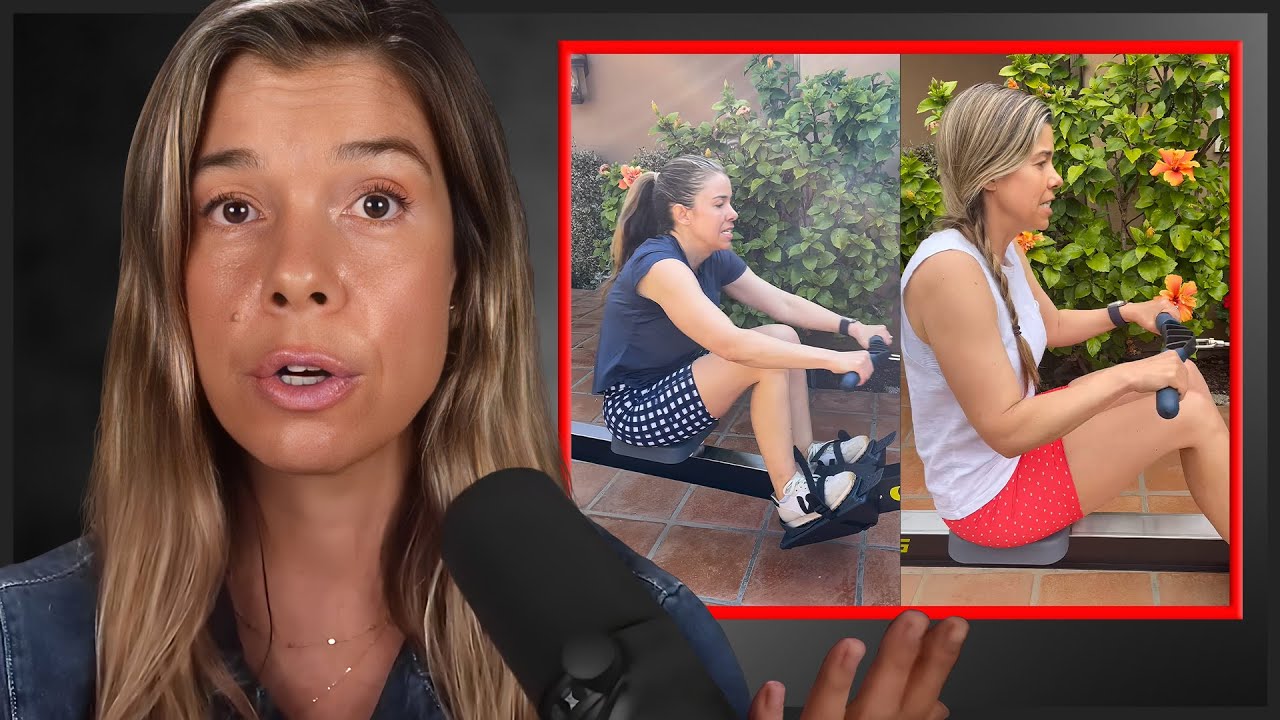
In this clip from How to Train According to the Experts, Dr. Rhonda Patrick and Brady Holmer examine a two-year exercise trial in healthy but sedentary middle-aged adults. The program progressively built toward four aerobic sessions and two resistance-training sessions per week, including one interval workout and one longer base-pace session.
The randomized trial increased VO2 max by 18% and reduced left-ventricular stiffness, while the control group did not improve. Exercise also increased the heart's end-diastolic volume, allowing a greater stroke volume at a given filling pressure. These changes reversed measured features of sedentary cardiac aging rather than changing every aspect of biological age. [1]
Brady Holmer turns the protocol into a weekly framework: one interval session, one longer easy session, additional base-pace activity, active recovery, and at least two resistance sessions. Dr. Patrick emphasizes the progressive build. The participants did not begin with the final workload, which makes consistency and gradual adaptation central to the result.
- ^ Howden, Erin J.; Sarma, Satyam; Lawley, Justin S; Opondo, Mildred; Cornwell, William; Stoller, Douglas, et al. (2018). Reversing The Cardiac Effects Of Sedentary Aging In Middle Age—A Randomized Controlled Trial Circulation 137, 15.
Dr. Rhonda Patrick: Well, let's talk a little bit about some of, of Dr. Benjamin Levine's research on getting into that, starting into that late middle age 50. And this was a, a very pro— he calls it one of the most cited or most viewed on their, on the website in the Journal of Circulation studies of all time. And rightly so. I think it's a, a pretty astounding study. It was a 2-year intervention trial where he and his colleagues took 50-year-olds that were otherwise healthy, but sedentary. I would argue that's not healthy if they're sedentary. It is, is a disease, but they don't have any other identified diseases like cardiovascular disease or hypertension, for example, but they had been sedentary.
And he put them on a 2-year exercise protocol, which maybe you can discuss in a minute, that was pretty intense. And they looked at the structure of their heart before starting this protocol. And then 2 years after this exercise protocol, they looked at their hearts again and found that in many aspects like the, the cardiac compliance and a variety of different parameters that they looked at, the size of the heart and the stiffness, right? The stretchiness of the heart in, in many aspects had reversed in terms of, of their aging. In fact, it was comparable. Their hearts looked more like those of 30-year-olds. So they had essentially started this program and they, they had these 50-year-old looking hearts and with respect to the, the size and the compliance.
And then after this 2-year exercise protocol had reversed 20 years of cardiac aging, which is pretty astonishing and inspirational in many respects. So the protocol wasn't necessarily easy though.
Brady Holmer: It wasn't at all. It was, I think it wasn't easy, it was simple. And I think something that everybody can kind of work up to and use as kind of a framework for how to structure their training. So yeah, as you mentioned, this was a 2-year study, which again, like if anybody's familiar with exercise physiology research, like doing a 2-year exercise intervention is pretty incredible to get those participants to adhere to that regimen.
I can't remember how many participants were in that study off the top of my head right now, but I think it was, you know, somewhere around 200 maybe, but they had a pretty, pretty decent number of participants. But it involved a 2-year commitment and they didn't start them out right away doing everything that they were doing at the end, but they scaled up their exercise gradually throughout the 2 years. By year 1, they were kind of, you know, reaching their peak exercise and then they maintained them for the second year. And so what this involved was eventually doing about 5 to 6 hours of aerobic exercise, or I guess it was total training per week was kind of 5 to 6 hours. And what that involved was one Norwegian 4x4 session.
They actually, at one point in the study, just before the 1-year mark, were doing 2 Norwegian 4x4 interval training sessions per week. After the year, they dropped it down to just one for the maintenance phase. So one Norwegian 4x4 interval training session per week. They did one session per week that was an hour or longer of their base pace. So we could refer to that as low to moderate intensity exercise, zone 2 training, but it was like a 1-hour longer base pace session. And that could be just a bike, a run, a walk, a hike, something like that. And then they did another 30-minute base pace session per week. So another zone 2 exercise training session per week. They also did a very light recovery day after all of their interval training sessions.
So the day after their Norwegian 4x4, they did a light active recovery day. And then they did 2 resistance training exercise sessions per week. So they were doing 4 aerobic training sessions, 2 resistance exercise training sessions for the protocol. And again, they scaled up to that. So this wasn't, we're doing a 4x4 all at once, but they progressively, you know, added that for the first year. By the end of the second year, they were maintaining that. So they, you know, for 2 years did about 5 to 6 hours of exercise and like you mentioned, they reversed certain aspects of their cardiovascular structure by, you know, an estimated 20 years, which is pretty astounding. So yeah, not an, not an easy protocol, but certainly not something like a high-level elite endurance athlete is doing.
Dr. Rhonda Patrick: So it's something that everybody I think could do. And these were people who were 50, 60 years old. Right. It's, it's doable. And I, I'd be curious to know how many of those people continue to maintain that after the study was over, knowing they reversed their heart aging in, in some, in, in terms of the structural aging of their heart by almost, you know, about 20 years. I, I feel like that'd be very motivating for any 50 or 60-year-old to go, wow, I should keep this up. This is like, I wanna, you know, I wanna, I want my heart to stay like a 30-year-old, right? I mean that, yeah, for me it would for sure.
Brady Holmer: It would be cool to see a follow-up study.
It would also just be cool to see if they didn't maintain that training, they just totally stopped, how long those benefits kind of lasted. I think that would be interesting too. And if I'm, I know Dr. Benjamin Levine and his team have follow-up studies on some of the exercise training, but it would be interesting to see for that one. Cuz I'm sure you maintain some of those benefits for a few years, but the bedrest training study or just some of the studies on detraining, you see like kind of once you stop, it's a very steep slope down back to where you were. Right. Especially with respect to your cardiorespiratory fitness.
Dr. Rhonda Patrick: Certainly. Yeah.
Well, a lot of this research, so this intervention study, you know, we are talking about the masters athletes looking at identifying, you know, I called it the dose, but it's, it, it really is in terms of frequency, how many days a week you have to work out to kind of help maintain that youthful cardiac structure has led Dr. Benjamin Levine to have what he calls his Prescription for Life with respect to exercise. He does add a little bit of resistance training into that Prescription for Life. Maybe we can talk a little bit about that and then talk about our own sort of our Prescription for Life, like what our protocols are.
Brady Holmer: His Prescription for Life was honestly one of, I think, my favorite takeaways from that episode. Because it was something that I felt was reasonable for everybody.
It's more, a lot more exercise than probably most people are doing, but not something that everyone couldn't work up to at some point. And so his Prescription for Life was very similar to kind of that 2-year training study that he cited. He cited the sweet spot of 4 to 5 days per week of aerobic exercise or 5 to 6 hours per week of training. That seems to be kind of the sweet spot, performing interval training once per week. And, you know, while in that study they used the Norwegian 4x4, you know, you could do any type of intervals. We just mentioned a few other protocols, the 10x1, the Tabata, but really just, just do high, some type of high-intensity interval training once per week. After every high-intensity interval training session, take a light recovery day.
Levine definitely stressed the importance of recovery, not only just for, from a muscular perspective and your, you know, your autonomic nervous system, but the cardiac and cardiovascular system also needs to recover, you know, when you stress it with a high heart rate. You do increase some markers of like cardiac damage, and those also need time to recover. So if you're doing interval workout the next day, you know, doing 30 or more, maybe minutes of very light activity, that's also kind of part of his prescription. His one-hour or longer base pace session per week was definitely kind of a foundation of his prescription.
And then the two or more resistance-training sessions per week, which, you know, this is a very, very practical approach and I think most people could, you know, maybe you should just take this and paste it up on your wall and use that to guide your training every week. I think if most people did that, they would be certainly in a, a good place, not only to, I think, age better, but the way I see it, I mean, I look at Levine's Prescription for Life and it mirrors a lot of like what I do for my weekly training. I mean, the way I structure kind of my training, I do, I have one long run every week. I do probably 2 easy zone 2 exercise sessions. I do one high-intensity interval session and then I try to strength train twice per week.
So, I really follow Levine's Prescription for Life. I just kind of scale it up to meet the volume that I'm seeking per week. And so, I'm sure you, Rhonda, probably do something similar to that.
Dr. Rhonda Patrick: Well, you're doing, how many total hours would you say?
Brady Holmer: I would say on the typical week, I'm probably exercising like 14 to 16 hours. Most of it's endurance. So I'll probably do 14 hours of endurance training and then, you know, getting in like 1 to 2 hours of, of strength training. I could probably veer more towards the, the strength training, but again, you know, it's as we talked about earlier, what I'm trying to optimize for at this point in my life.
Get email updates with the latest curated healthspan research
Support our work

Every other week premium members receive a special edition newsletter that summarizes all of the latest healthspan research.