How Vigorous Exercise Can Remodel the Aging Heart
Get the full length version of this episode as a podcast.
This episode will make a great companion for a long drive.
The Omega-3 Supplementation Guide
A blueprint for choosing the right fish oil supplement — filled with specific recommendations, guidelines for interpreting testing data, and dosage protocols.
You'll also receive updates from Rhonda & FoundMyFitness
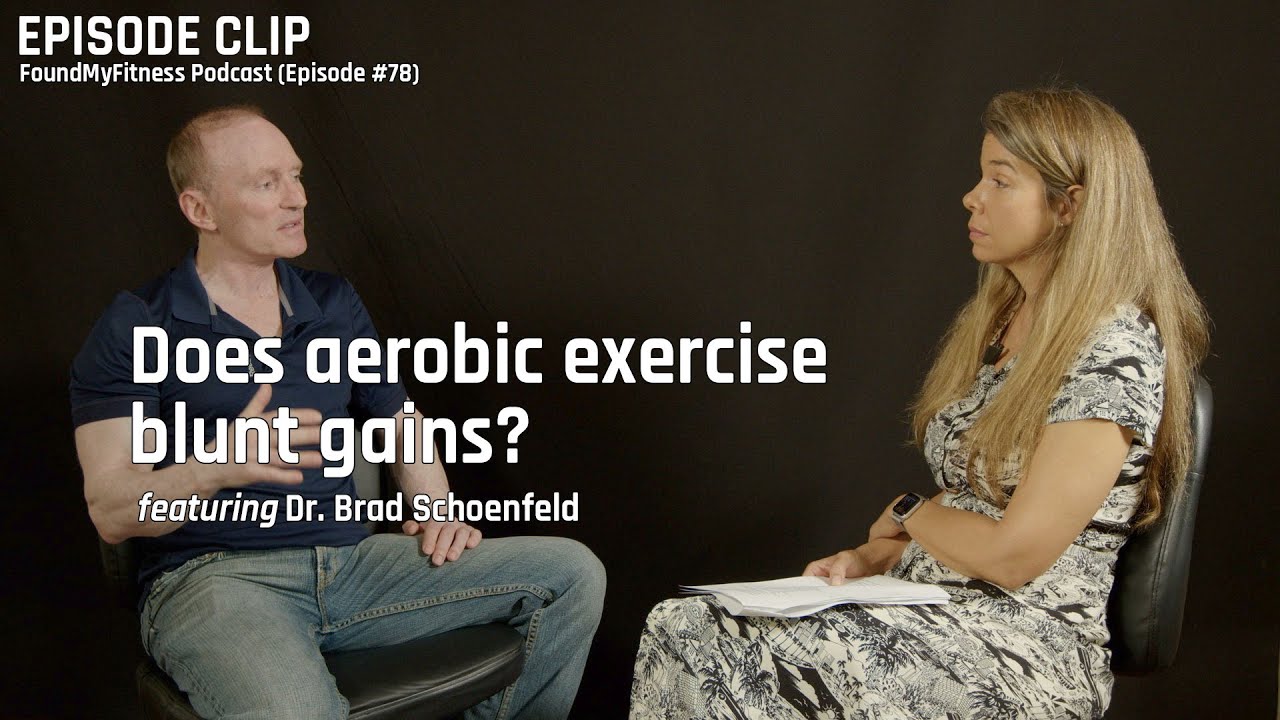
In this excerpt from Dr. Rhonda Patrick’s A4M LongevityFest 2023 keynote, she reviews a randomized trial in sedentary middle-aged adults. Two years of progressive, supervised aerobic training increased VO2 max and reduced left-ventricular stiffness. The progressive, supervised program lasted two years. [1] Exercise also reduced ambulatory blood pressure across randomized hypertension trials, supporting a role alongside usual care. [2]
During vigorous exercise, lactate acts as fuel and a signaling molecule. Dr. Patrick distinguishes human associations between exercise lactate and circulating BDNF or norepinephrine from animal evidence for direct brain BDNF effects. She also discusses serotonin and norepinephrine signaling, focus, and impulse control. These mechanistic and biomarker findings do not by themselves prove long-term cognitive benefit.
Dr. Patrick describes an emerging hypothesis that exercise-related shear stress can damage circulating tumor cells and discusses exercise findings in colon cancer. The mechanism remains investigational, and exercise is adjunctive care rather than a stand-alone cancer treatment.
This clip is excerpted, with permission, from Dr. Rhonda Patrick's keynote at A4M LongevityFest 2023. Thank you to the American Academy of Anti-Aging Medicine for allowing us to share it.
- ^ Howden, Erin J.; Sarma, Satyam; Lawley, Justin S; Opondo, Mildred; Cornwell, William; Stoller, Douglas, et al. (2018). Reversing The Cardiac Effects Of Sedentary Aging In Middle Age—A Randomized Controlled Trial Circulation 137, 15.
- ^ Saco-Ledo, Gonzalo; Valenzuela, Pedro L.; Ruiz-Hurtado, Gema; Ruilope, Luis; Lucia, Alejandro (2020). Exercise Reduces Ambulatory Blood Pressure In Patients With Hypertension: A Systematic Review And Meta‐Analysis Of Randomized Controlled Trials Journal Of The American Heart Association 9, 24.
This study out of UT Southwestern in Dallas by Dr. Ben Levine is really what has convinced me that vigorous exercise is extremely important for the heart and the way the heart ages. I mentioned cardiovascular disease. That's the number 1 killer in developed countries. As we age, our heart undergoes certain inevitable changes. It gets smaller, it shrinks, it gets stiffer, less flexible. And this affects a lot of things. It affects our cardiovascular disease risk. It affects our cardiorespiratory fitness, the ability for us to do aerobic exercise. And so what Ben did in this study, Dr. Levine did in this study, was really remarkable. He took a cohort of participants that were 50 years old on average. And these were sedentary individuals that were otherwise healthy.
So they didn't have any type 2 diabetes, hypertension, et cetera. They were, quote unquote, healthy, but they were sedentary. And he separated them into 2 groups. So the first group was the control group who did sort of stretching and yoga for 2 years. And then the second group was the exercise intervention group. So these were the people that were going to be doing the exercise. It ended up being a vigorous exercise protocol, but because they were sedentary, it started out sort of lower to moderate intensity. And by the time it was 6 months, these individuals were doing 5 to 6 hours a week of aerobic exercise, with a large percentage of that time being in what's called the maximal steady state.
So that's what I'm talking about when you're going as hard as you can, and you maintain that for about 20 or 30 minutes. So it's usually around 75% to 80% of maximum heart rate, and you're doing that for about 20 to 30 minutes. They also did the Norwegian 4x4 protocol once a week. And after 2 years, they essentially reversed these structural changes in their aging heart by like 20 years. So their hearts were essentially looking more like a 30-year-old heart after those 2 years of vigorous-intensity exercise. Now, like I mentioned, they were doing 5 to 6 hours a week of vigorous, a large portion of it in vigorous exercise. But it's simply astonishing, you know, the structural changes that they found.
So there was more than 25% improvement in the elasticity of the heart after those 2 years, particularly in the left ventricular muscle of the heart. Of course, they did increase their VO2 max by about 20% as well. It's just quite astounding that you can take a 50-year-old, put them on a pretty intense exercise program for 2 years, and essentially reverse a lot of the structural changes that happen with the heart, with the aging process. For people willing to put in the effort, blood pressure improvements can have drug-sized effects, although there are always non-responders. In other words, they can be comparable to some drugs that are given to reduce hypertension.
An analysis of 24 randomized controlled trials found that 6 weeks of moderate- to vigorous-intensity exercise, 20 to 60 minutes of that, 3 to 4 days a week, had almost drug-size effects in reducing blood pressure. Hypertension is not only a risk factor for cardiovascular disease; it is also a very, very important risk factor for dementia and Alzheimer's disease. So there's every reason to want to not have hypertension. And 20% of young people aged 18 to 39 have hypertension. And then half the— about half the US population of older adults have hypertension. So it's a very common thing that, again, can be modified to quite a bit of an extent with aerobic exercise, particularly vigorous intensity exercise.
Let's talk a little bit about, on the molecular level, why I'm talking about vigorous exercise and really that 80% max heart rate. It has to do with the fact that you are pushing— when you push your muscles to work harder than the oxygen can get to them, to make energy, they shift from using mitochondria and using oxygen for energy to using glucose through glycolysis. And it's a quick process that doesn't require oxygen. It makes lactate as a byproduct, only it's not a byproduct. We often thought about it as a metabolic byproduct, but it's so much more than that. So lactate generated from muscles is what— it's an exerkine, a myokine, and it's a signaling molecule. It gets into circulation, and it is consumed by the brain. It's consumed by the heart, by the liver, also by the muscle.
It's consumed as a very easily utilizable source of energy, but also as a signaling molecule, as we'll talk about. And this is called the lactate shuttle. It was pioneered by Dr. George Brooks out of UC Berkeley. And when I say a signaling molecule, it's a way for your muscles to directly communicate with other parts of the body, like the brain. And so lactate itself has been shown to be responsible for increasing brain-derived neurotrophic factor, both in the plasma— this is in human studies, humans that exercise— lactate correlates with the BDNF activation in plasma. BDNF can cross over the blood-brain barrier. But also animal studies showing that it directly increases brain-derived neurotrophic factor in the brain.
So brain-derived neurotrophic factor is a very important neurotrophic factor. It is responsible for neuroplasticity, which is your brain's ability to adapt to the changing environment. It is very important during the aging process. You know, as things are changing, you want your brain to adapt to those changes. It is also important for depression. People with depression often do not adapt to the changing environment, and this is partly responsible for some of the depressive symptoms. But brain-derived neurotrophic factor also is important for neurogenesis, the increase of new neurons, particularly in some brain regions like the hippocampus, which is involved in learning and memory. It's an— it helps, you know, existing neurons survive. There have been animal studies that have shown that when you induce them to do exercise and they get those learning and memory improvements that have also been found in human studies, that if you give them a drug and block brain-derived neurotrophic factor, they don't get those learning and memory benefits.
So it really seems as though brain-derived neurotrophic factor is important to get those learning and memory benefits from exercise. And again, lactate is a key signaling molecule that increases brain-derived neurotrophic factor. Lactate is generated from your exercising muscles when you're forcing them to work hard. This isn't just going on a brisk walk. This is really getting your heart rate up, sweating, getting flush in the face. Lactate is also a signaling molecule to increase neurotransmitters in the brain. This has been shown in both human studies and animal studies. So it's important for the production of serotonin. So studies have found that people that exercise produce a lot of lactate.
This correlates with an increase in serotonin, which also correlated with improved impulse control. Serotonin plays an important role in many neurological processes, including impulse control. So serotonin has this inhibitory effect, which also plays a role in focus and attention. Norepinephrine is another one that's been shown. So as we're exercising really hard, our muscles are working harder, our heart is working harder, but our brain is also working harder. And there have been human studies out of, I believe it's Norway, that have found that the lactate produced during vigorous intensity exercise crosses the blood-brain barrier, is consumed by the brain. And this correlates with a burst of norepinephrine production, which fuels the brain to work harder during exercise.
It's also important for focus and attention and some of those effects that you get after you do a vigorous intensity workout. So there's some protocols that have been shown to maximize brain-derived neurotrophic factor in humans. And some of these have also correlated with lactate levels. It seems as though, like, the best is getting the best of both worlds. So, you want vigorous intensity, about 80% max heart rate, but you also want duration. So, you want to get, like, 30 to 40 minutes of that is the most robust at increasing brain-derived neurotrophic factor as measured in plasma in people. But 20 minutes will also increase it as well, just 30 to 40 minutes does it even more. There's also some protocols that are more high-intensity interval training.
So doing 6 rounds of 40-second intervals where you're going as hard as you can for 40 seconds followed by a recovery period also really increases brain-derived neurotrophic factor. In fact, it increases it 4 to 5 times more in people compared to individuals that are doing about an hour and a half of more lower-intensity cycling at about 25% of their peak VO2 max. I want to just shift gears for a minute and talk about some of the anti-cancer effects of vigorous intensity exercise independent of the immune system. Exercise activates the immune system. There's a robust effect on a variety of anti-metastatic effects there. But just the mechanical force of blood flow actually affects what are called circulating tumor cells.
So circulating tumor cells escape from the primary site of the tumor, get into circulation, eventually travel to distant sites, and then they take residence and establish a new tumor elsewhere. So this is metastasis. So circulating tumor cells, you obviously do not want to have them in circulation because they can play a role in metastasis. Well, the shearing forces of blood flow itself can kill these circulating tumor cells because on every cell surface we have a mechanical— we have these mechanoreceptors that respond to movement. And cancer cells are all wonky and disrupted and messed up. And so they just can't handle that movement and they die.
So the more intense the exercise, the more— the greater the blood flow, the higher proportion of circulating tumor cells that actually undergo apoptosis and die. There have been some studies looking at people that undergo about 6 months of aerobic exercise anywhere between 50% to 70% max heart rate for 150 minutes a week. That significantly reduces the circulating tumor cells in people with anywhere between stage 1 to stage 3 colon cancer. Other studies have found and correlated that circulating tumor cells are linked to a 3 times higher risk of cancer recurrence and a 4 times higher risk of cancer mortality in people with cancer. Also, stage 3 colon cancer patients that engage in aerobic exercise have a 40% reduction in cancer recurrence and a 63% reduction in cancer mortality. Exercise also plays an important role in cancer metastasis and also in helping as an adjunct therapy to treating cancer as well.
Supporting our work
If you enjoy the fruits of
 , you can participate in helping us to keep improving it. Creating a premium subscription does just that! Plus, we throw in occasional member perks and, more importantly, churn out the best possible content without concerning ourselves with the wishes of any dark overlords.