How Exercise-Derived Lactate May Support Brain Health
Get the full length version of this episode as a podcast.
This episode will make a great companion for a long drive.
The BDNF Protocol Guide
An essential checklist for cognitive longevity — filled with specific exercise, heat stress, and omega-3 protocols for boosting BDNF. Enter your email, and we'll deliver it straight to your inbox.
You'll also receive updates from Rhonda & FoundMyFitness
In this FoundMyFitness episode excerpt, Dr. Rhonda Patrick explains that lactate crosses the blood-brain barrier through monocarboxylate transporters. Within the brain, glycolytic astrocytes produce lactate that neurons can import and use as fuel. Using lactate can spare glucose for the pentose-phosphate pathway, which produces NADPH needed to regenerate glutathione. This is a proposed metabolic advantage, not proof of slower brain aging.
Small TBI trials found that sodium lactate lowered intracranial pressure more than mannitol in severe TBI and improved cognitive scores more than 3% sodium chloride in mild TBI. [1] [2] These small clinical studies do not establish vigorous exercise as TBI treatment or prove the proposed glucose-sparing mechanism.
Lactate also acts as a signal. Dr. Patrick discusses norepinephrine and BDNF responses and distinguishes human acute biomarker or cognitive findings from animal evidence for direct brain adaptations. [3] She also describes lactate signaling at the blood-brain barrier through VEGF, angiogenesis, vascular repair, and density. The vascular evidence is primarily mechanistic or animal evidence.
Blood-brain-barrier breakdown is associated with brain aging, neuroinflammation, and early dementia markers, but that association does not prove that exercise-derived lactate prevents dementia. Exercise also changes blood flow, cardiovascular fitness, neurotransmitters, and endorphins, so lactate should not be treated as the sole pathway.
- ^ Ichai C; Armando G; Orban JC; Berthier F; Rami L; Samat-Long C, et al. (2009). Sodium lactate versus mannitol in the treatment of intracranial hypertensive episodes in severe traumatic brain-injured patients. Intensive Care Med 35, 3.
- ^ Bisri T; Utomo BA; Fuadi I (2016). Exogenous lactate infusion improved neurocognitive function of patients with mild traumatic brain injury. Asian J Neurosurg 11, 2.
- ^ Li, Qing; Zhang, Li; Zhang, Zhengguo; Wang, Yuhan; Zuo, Chongwen; Bo, Shumin (2022). A Shorter-Bout Of HIIT Is More Effective To Promote Serum BDNF And VEGF-A Levels And Improve Cognitive Function In Healthy Young Men Frontiers In Physiology 13, .
Exercise intensity like high-intensity interval training has been shown to have unique benefits for brain health. Obviously, all types of exercise are beneficial for the brain, but high-intensity exercise may have additional neuroprotective and cognitive benefits. And one of the mechanisms that's thought to underlie this is, you know, the unique effects of vigorous-intensity exercise, or HIIT, on the brain because of the lactate production. So during high-intensity exercise, lactate is produced in large amounts, as we've talked about, largely as a byproduct of the metabolic stress. You're kind of pushing that anaerobic threshold. And when you produce lactate, it's getting into circulation and it can cross the blood-brain barrier.
There are lactate transporters, MCT transporters, on the blood-brain barrier. Lactate can cross the blood-brain barrier and get into the brain, where it then acts as a signal and triggers a variety of beneficial adaptations. So let's talk about some of those. First, you know, lactate can be used by neurons as a preferential energy source. So it's actually energetically favorable. It takes less energy for mitochondria to use lactate versus glucose. In fact, neurons are used to using lactate because astrocytes in the brain, which are supporting cells for neurons, are mostly glycolytic. That means they're mostly using glucose as energy, they're not using mitochondria, and they're producing lactate as a byproduct.
So astrocytes are churning out tons of lactate in the brain, and that lactate is being taken up, you know, by neurons through the MCT transporters and used as energy. There have actually been studies showing that the brain is working harder during exercise, much like the muscles and the heart are working harder. And it's been shown that lactate actually fuels the brain during exercise. So that lactate being transferred into circulation is just soaked up by the brain, and it's fueling brain activity during exercise. Another benefit of neurons using lactate as an energy source instead of glucose is that it spares glucose. It's freeing up glucose to be used by another biochemical pathway known as the pentose phosphate pathway.
And this pathway uses glucose to make NADPH, which is needed for the production of one of the most powerful antioxidant systems in the brain, glutathione. So the less glucose is taken up by neurons to be used as energy, the more it can be spared for the pentose phosphate pathway to make glutathione. This has really important relevance for normal brain aging. I mean, if you're able to use more lactate as energy, spare glucose, and make more glutathione in the brain, generally speaking, that's going to be more beneficial for normal brain aging.
But it has special relevance also for traumatic brain injury, or TBI, because when there's that bolus of damage, glutathione is needed the most. But you're also needing glucose for neurons as well. And it's also awful because astrocytes, which are usually making lactate for the neurons, also become damaged during a TBI. And so there's a lactate shortage for neurons. There have been a few studies showing that patients with TBI who get an infusion of sodium lactate have improved TBI outcomes, as measured by Glasgow Coma Scale scores.
So, generally speaking, there's direct evidence of improved TBI outcomes, and I think this glucose-sparing effect could be involved. I'm proposing a mechanism here with respect to lactate. Lactate also stimulates mitochondrial biogenesis. Animal studies have shown this in the brain and neurons as well. We don't have direct human evidence of that, but there's no reason to think that wouldn't be a conserved mechanism. So I think we covered the importance of brain lactate, energetically speaking. It's energetically favorable, right? Neurons preferentially use it. We talked about glucose sparing.
But let's go back to the signaling molecule aspect. As we talked about earlier in the muscles, we talked about it increasing GLUT4 transporters. It's also a signaling molecule in the brain. You know, it's acting as a messenger. It's a way for the muscles to communicate with the brain directly. And when neurons in the brain are using more lactate, they're releasing a variety of neurotransmitters. They release more norepinephrine, for example, to help the brain work better and have more focus and attention. It also signals to the brain to make more brain-derived neurotrophic factor, BDNF. And I mean, this is a very powerful neurotrophic factor. It promotes the survival, growth, and function of neurons. It plays a crucial role in neuroplasticity.
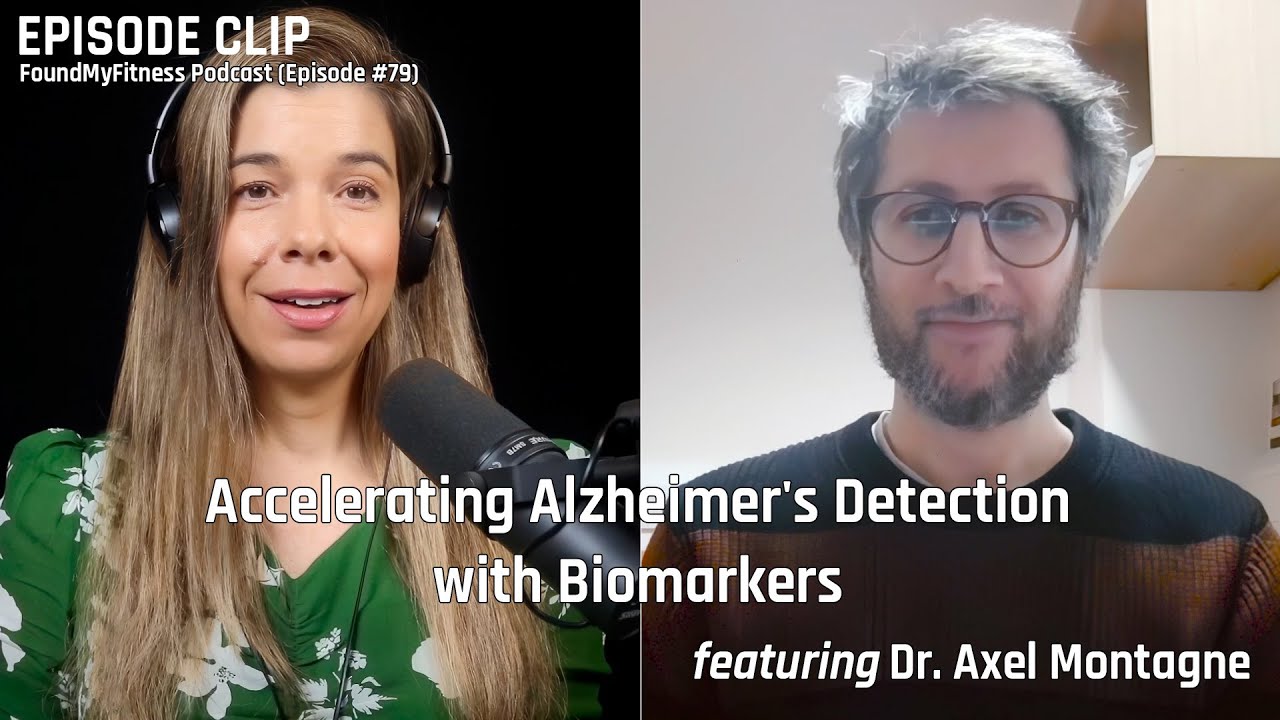
So this is the ability of the brain to adapt and form new connections. Higher levels of BDNF have been linked to improved cognitive function, enhanced memory, and protection against neurodegenerative diseases like Alzheimer's disease. If you want to put this in sensational words to explain it, BDNF is the youth elixir for the brain, and exercising muscles produce lactate to help you bathe your brain in it. So that's a little simplistic and more sensational, but essentially, that's what's happening when lactate increases BDNF in the brain. Lactate is also a messenger, not only in the brain, but at the blood-brain barrier. You know, this is made up of tiny blood vessels. We covered this in a podcast with Dr. Axel Montagne.
So lactate signals an increase in another growth factor at the blood-brain barrier called VEGF, or vascular endothelial growth factor. This helps grow new, tiny vessels. This is called angiogenesis. It helps grow new vessels at the blood-brain barrier and also helps repair damaged blood vessels. These are important for preventing the breakdown of the blood-brain barrier. So essentially, VEGF is increasing vascular density. Breakdown of the blood-brain barrier is a major cause of brain aging and neuroinflammation. It contributes to the vicious cycle of neuroinflammation.
And there's also emerging evidence suggesting that breakdown of the blood-brain barrier is one of the earliest signs of dementia. So again, this is another reason why vigorous-intensity exercise, through the generation of a lot of lactate that then gets to the brain and the blood-brain barrier, has unique benefits for overall brain health. It's important to know that the brain benefits of high-intensity exercise are not exclusive to lactate, right? There's increased blood flow, improved cardiovascular fitness, the release of neurotransmitters, and the release of endorphins. All of these things contribute to the positive effects of physical activity on the brain.
But vigorous intensity exercise, I do think, has some unique and very robust effects on brain health because of that lactate. And so I really wanted to kind of dive deep into that so that you guys understand that. You know, your muscles are being pushed to work extra hard, and this is then now causing adaptations in the brain that are pretty substantial.
Attend Monthly Q&As with Rhonda
Support our work

The FoundMyFitness Q&A happens monthly for premium members. Attend live or listen in our exclusive member-only podcast The Aliquot.
Brain News
- Human longevity was associated with decreased levels of genes involved in neural overactivity.
- Noninvasive stimulation of facial lymphatic vessels doubles cerebrospinal fluid outflow, enhancing the glymphatic system's clearance of brain waste, even in aged mice.
- Flashing light at a specific frequency altered brain activity in a way that reduces levels of brain amyloid-beta plaques (linked to Alzheimer's).