How Meal Composition May Affect Inflammation and Brain Fog
The Omega-3 Supplementation Guide
A blueprint for choosing the right fish oil supplement — filled with specific recommendations, guidelines for interpreting testing data, and dosage protocols.
You'll also receive updates from Rhonda & FoundMyFitness
Physical inactivity is associated with chronic low-grade inflammation, while exercise produces a different, short-lived immune response. Contracting muscle releases IL-6 during exercise, followed by metabolic and anti-inflammatory signaling. This acute rise is part of the normal response that helps the body adapt to physical activity. [1]
Meal composition can also shape short-term metabolism. In a three-week crossover trial in 29 healthy young men, sugar-sweetened beverages changed fasting glucose, LDL particle patterns, and high-sensitivity CRP. Small meal-challenge studies have also measured higher endotoxin and selected cellular inflammatory signals after saturated-fat-rich cream or coconut-oil meals. In a 20-person crossover study, endotoxin increased after a saturated-fat meal and decreased after a DHA-rich meal, while the measured inflammatory biomarkers did not differ between treatments. Together, these studies show that the response depends on the meal, dose, population, and outcome measured. [2] [3] [4]
Inflammatory signaling can affect mood and cognition under strong experimental conditions. Intravenous endotoxin temporarily worsened mood in healthy volunteers, showing one pathway through which a substantial immune challenge can influence the brain. Post-meal sleepiness and ordinary brain fog are more complex and can also involve meal size, circadian timing, glucose and insulin dynamics, sleep loss, and other factors. Mouse studies of feeding during infection also found different responses across bacterial and viral models, so a minimally processed dietary pattern, regular exercise, and normal hydration and nutrition during illness provide a more useful foundation than one universal food or fasting rule. [5] [6]
This clip is excerpted, with permission, from Dr. Rhonda Patrick's appearance on Thomas DeLauer's podcast. Thank you to Thomas DeLauer for allowing us to share it.
- ^ Shephard RJ (2002). Cytokine responses to physical activity, with particular reference to IL-6: sources, actions, and clinical implications. Crit Rev Immunol 22, 3.
- ^ Aeberli I; Gerber PA; Hochuli M; Kohler S; Haile SR; Gouni-Berthold I, et al. (2011). Low to moderate sugar-sweetened beverage consumption impairs glucose and lipid metabolism and promotes inflammation in healthy young men: a randomized controlled trial. Am J Clin Nutr 94, 2.
- ^ Deopurkar R; Ghanim H; Friedman J; Abuaysheh S; Sia CL; Mohanty P, et al. (2010). Differential effects of cream, glucose, and orange juice on inflammation, endotoxin, and the expression of Toll-like receptor-4 and suppressor of cytokine signaling-3. Diabetes Care 33, 5.
- ^ Lyte, Joshua M; Gabler, Nicholas K.; Hollis, James H. (2016). Postprandial Serum Endotoxin In Healthy Humans Is Modulated By Dietary Fat In A Randomized, Controlled, Cross-Over Study Lipids In Health And Disease 15, 1.
- ^ Engler H; Brendt P; Wischermann J; Wegner A; Röhling R; Schoemberg T, et al. (2017). Selective increase of cerebrospinal fluid IL-6 during experimental systemic inflammation in humans: association with depressive symptoms. Mol Psychiatry 22, 10.
- ^ Wang A; Huen SC; Luan HH; Yu S; Zhang C; Gallezot JD, et al. (2016). Opposing Effects of Fasting Metabolism on Tissue Tolerance in Bacterial and Viral Inflammation. Cell 166, 6.
Dr. Rhonda Patrick: Physical inactivity is associated with chronic low-grade inflammation. Exercise can produce a short rise in muscle-derived IL-6, followed by metabolic and anti-inflammatory signaling. Heat exposure can also change cytokine responses.
Diet matters too. One small crossover trial gave healthy young men sugar-sweetened beverages for three weeks. High-sensitivity CRP increased during some conditions, although the absolute values were low and the response varied.
Whole foods that contain fiber produce a different metabolic response from free sugar in a drink. Large meals that combine refined carbohydrate with a high saturated-fat load can also produce post-meal triglyceride and inflammatory signaling. The effect depends on the meal, dose, fat type, and the person's metabolic health.
Thomas DeLauer: What about butter in coffee? When someone consumes a large amount of liquid fat quickly, can that exceed the body's ability to handle it and leave more circulating fat?
Dr. Rhonda Patrick: Butter coffee can deliver a large saturated-fat and calorie load quickly. After a large fat-rich meal, dietary triglycerides travel in chylomicrons and can remain elevated for hours.
Some small human studies have also measured higher circulating lipopolysaccharide, or LPS, after saturated-fat-rich challenge meals. LPS is a bacterial cell-wall component that can stimulate immune signaling. The mechanism is more complex than fat simply acting as a detergent, and studies do not find a consistent rise in every inflammatory marker.
Meal fatty-acid composition may affect this response. In a 20-person crossover study, measured endotoxin increased after a saturated-fat meal and decreased after a DHA-rich meal. The study did not find a treatment effect on the measured inflammatory biomarkers, so it does not show that fish oil neutralizes an unhealthy meal.
Meal pattern may also affect how long a person remains in a post-meal state. Frequent energy-dense snacking can extend post-meal triglyceride exposure, while very large meals can create larger metabolic excursions. Total calories, food quality, timing, and metabolic health matter more than one universal meal-frequency rule.
Large meals can make people sleepy. Inflammatory signaling may contribute, but post-meal sleepiness can also involve meal size, circadian timing, autonomic responses, glucose and insulin dynamics, sleep loss, and other factors.
Thomas DeLauer: When I had a cold, I fasted for about 48 hours and felt better. My symptoms returned after I ate. Could fasting have reduced the inflammatory response?
Dr. Rhonda Patrick: Infection biology differs between pathogens, and animal studies suggest that energy metabolism can change disease tolerance. Those findings do not establish fasting as a treatment for a cold.
I often feel mentally sharper when I perform while fasted or mildly ketotic, but that is a personal response. Ketones can serve as brain fuel, and inflammation can affect cognition and mood. Responses to fasting vary, especially during illness.
Visceral fat also releases cytokines and is associated with insulin resistance, type 2 diabetes, fatty liver disease, and some cancers. Experimental LPS administration can transiently worsen mood and cognition in healthy volunteers, which shows that a strong inflammatory challenge can affect the brain. It does not mean that inflammation is the sole cause of depression or ordinary brain fog.
Regular exercise, reducing excess visceral fat when present, and limiting energy-dense processed foods rich in refined sugar and saturated fat can improve metabolic health. Omega-3 fatty acids may support triglyceride and inflammation-resolution pathways, but they do not cancel the effects of an unhealthy meal.
Get email updates with the latest curated healthspan research
Support our work
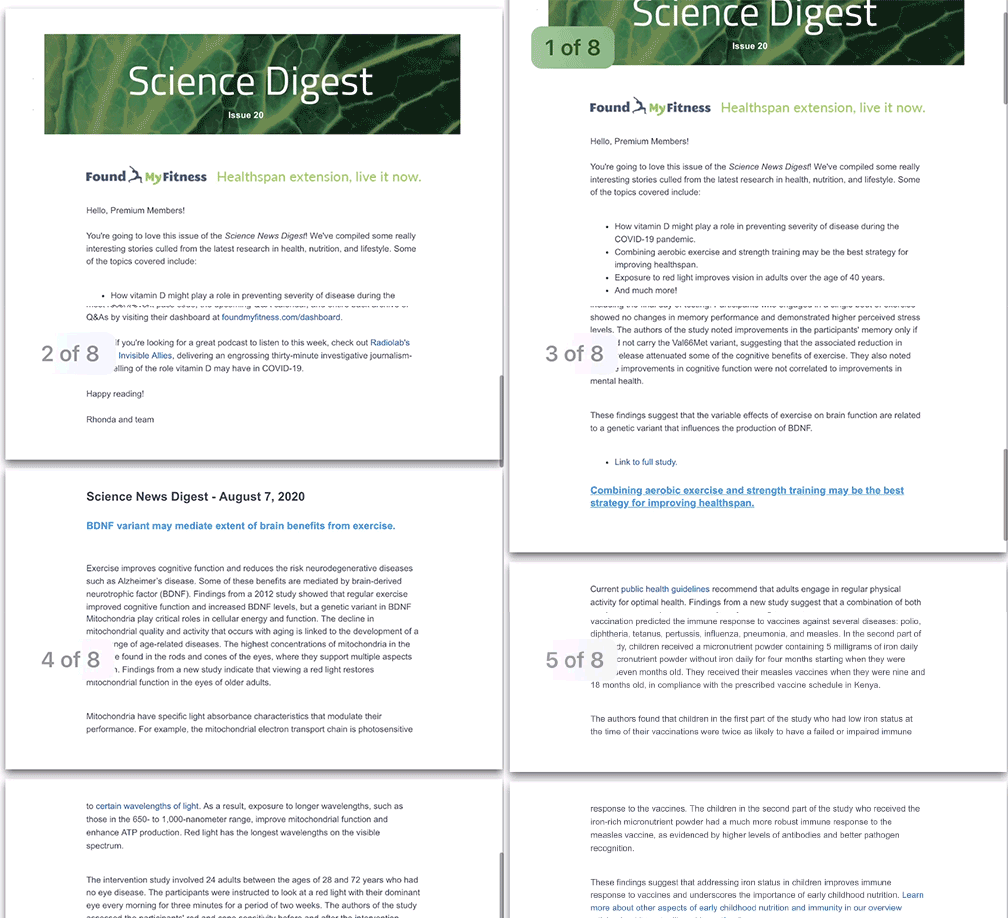
Every other week premium members receive a special edition newsletter that summarizes all of the latest healthspan research.
Inflammation News
- Adiposity may account for much of the testosterone decline commonly attributed to aging.
- Late-life treatment with the GLP-1 receptor agonist semaglutide extended lifespan, preserved physical function, and improved memory in female mice.
- A week of urolithin A injections improved memory and reduced brain inflammation after sleep loss in mice.
- Abdominal obesity may be more strongly linked to mortality when vitamin D is deficient.
- Blood omega-3 levels were associated with both brain structure and amyloid burden in older adults at elevated Alzheimer's risk.