How Zinc, Vitamin D, and Magnesium Relate to Testosterone
The BDNF Protocol Guide
An essential checklist for cognitive longevity — filled with specific exercise, heat stress, and omega-3 protocols for boosting BDNF. Enter your email, and we'll deliver it straight to your inbox.
You'll also receive updates from Rhonda & FoundMyFitness
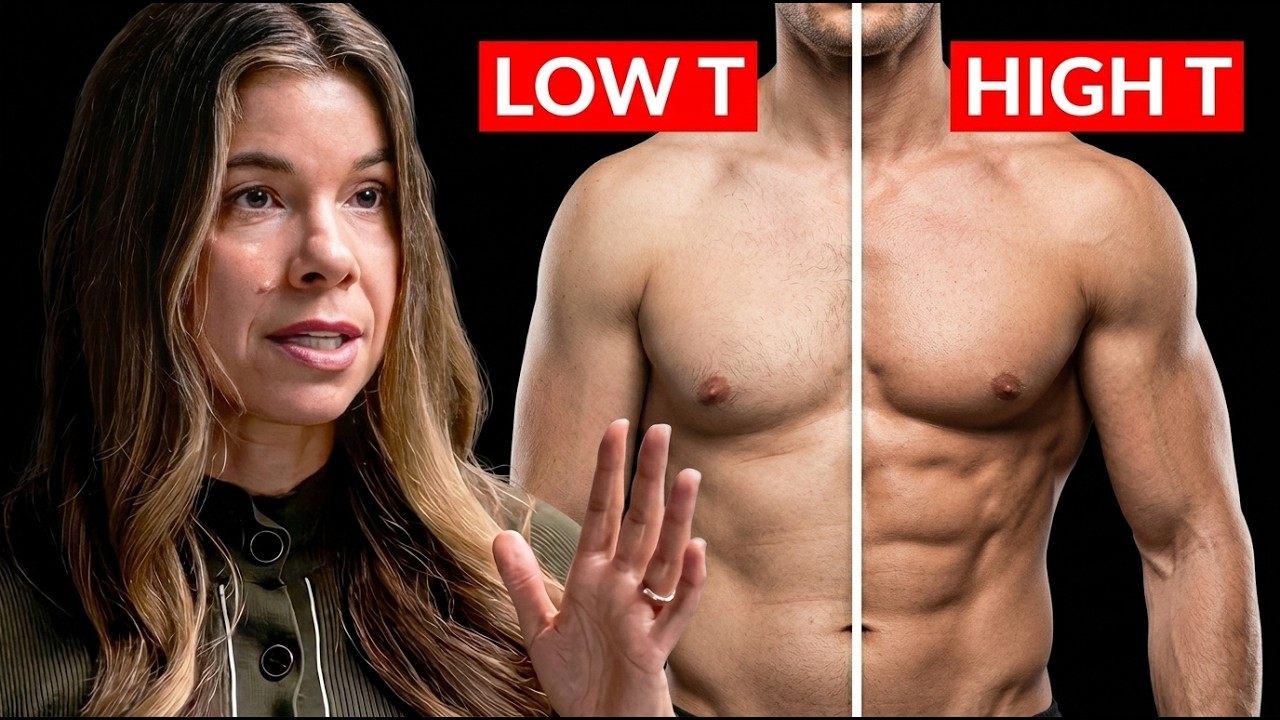
In this clip from Dr. Rhonda Patrick's appearance on the Jack Neel Podcast, she explains how zinc contributes to normal testosterone production and highlights oysters and shellfish as concentrated food sources. In a small human study, zinc restriction lowered testosterone, while restoring zinc in marginally deficient older men increased it. The practical benefit is most relevant when intake or status is low. [1] [2]
Vitamin D participates in endocrine signaling and gene regulation, but supplementation does not reliably raise testosterone. In three small trials of men with normal baseline testosterone, vitamin D supplementation did not increase circulating testosterone. Fatty fish can contribute vitamin D through food, and decisions about supplements should reflect measured status and individual context. [3]
Magnesium supports enzymes involved in vitamin D metabolism and is supplied by leafy greens, nuts, seeds, legumes, and whole grains. Dietary fat also matters to steroid-hormone physiology: a meta-analysis found modestly lower testosterone on low-fat diets than higher-fat diets, without establishing that saturated fat or any one food should be used as a testosterone treatment. Zinc supplements require restraint because the adult upper intake level is 40 milligrams per day and chronic excess can impair copper status. [4]
This clip is excerpted, with permission, from Dr. Rhonda Patrick's appearance on the Jack Neel Podcast. Thank you to Jack Neel for allowing us to share it.
- ^ Prasad AS; Mantzoros CS; Beck FW; Hess JW; Brewer GJ (1996). Zinc status and serum testosterone levels of healthy adults. Nutrition 12, 5.
- ^ Te L; Liu J; Ma J; Wang S (2023). Correlation between serum zinc and testosterone: A systematic review. J Trace Elem Med Biol 76, .
- ^ Heijboer AC; Oosterwerff M; Schroten NF; Eekhoff EM; Chel VG; de Boer RA, et al. (2015). Vitamin D supplementation and testosterone concentrations in male human subjects. Clin Endocrinol (Oxf) 83, 1.
- ^ Whittaker J; Wu K (2021). Low-fat diets and testosterone in men: Systematic review and meta-analysis of intervention studies. J Steroid Biochem Mol Biol 210, .
Jack Neel: Are there any foods that reliably boost your testosterone?
Dr. Rhonda Patrick: Foods that boost testosterone. Yes. So, I would say at the top of the list would be oysters or shellfish, foods that are high in zinc. Zinc is required to make testosterone. Only about 15% of the population doesn't get enough zinc, so it's not like half the population, but it's enough.
There have been studies showing that men with low zinc who supplement with 30 or 40 milligrams of zinc a day for a couple of weeks can double their testosterone levels. If you are already getting enough zinc, the effect may not be as large. You also do not want to megadose zinc. Going over about 40 milligrams a day disrupts the zinc-copper ratio and can deplete copper. You want the right amount without depleting copper.
So, it's also important to keep in mind. I would say another food that might increase testosterone would be fatty oily fish, like salmon, mackerel, because it has vitamin D in it. But even better would be supplementing with vitamin D because there's not I would say enough of it in the fish, but you asked me about foods. So, vitamin D is also very important. Vitamin D gets converted into a steroid hormone like testosterone, estrogen or steroid hormones. Vitamin D also gets converted into one of those.
So, it's very important for many different biological processes. It's regulating over 1,000 genes. Some of those genes are involved in testosterone production. So, if you're not getting enough vitamin D, you're not going to be making testosterone efficiently. And there are also studies showing that men who are vitamin D deficient, when they supplement with vitamin D, they can raise their testosterone levels to a higher level. I don't remember off the top of my head the number.
That is another consideration. I would also add dark leafy greens, almonds, oats, and other foods that contain magnesium. About half of the US population does not get enough magnesium. Magnesium is required by vitamin D-dependent enzymes that convert vitamin D3 into its hormone form. Without enough magnesium, taking vitamin D3 does not ensure that conversion.
It's not going to be doing it efficiently. So you need both. And so magnesium is something that's found in dark leafy greens because magnesium is at the center of a chlorophyll molecule. Chlorophyll gives plants their green color. So it's an easy way to think about magnesium. And that's why people are not getting enough magnesium because nobody's eating dark leafy greens anymore.
No one's eating that. Another food consideration is to avoid going too low in fat. Eating a reasonable amount of saturated fat can contribute to cholesterol production, and cholesterol is needed to make steroid hormones, including testosterone. A source of saturated fat, if you can tolerate dairy, would be whole-fat yogurt. It also provides probiotics for the gut.
Cheese is another one. Cheese has a food matrix. In fact, there are studies that have compared cheese to butter, which is also a saturated fat, and cheese does not raise LDL like butter does because it has a food matrix. Yet again, that food matrix is very important. When you remove it, it's processing foods a bit. And so it's important to have that food matrix.
And so I think that would be another food that would be important to consume would be a fat and particularly saturated fat.
Hear new content from Rhonda on The Aliquot, our member's only podcast
Listen in on our regularly curated interview segments called "Aliquots" released every week on our premium podcast The Aliquot. Aliquots come in two flavors: features and mashups.
- Hours of deep dive on topics like fasting, sauna, child development surfaced from our enormous collection of members-only Q&A episodes.
- Important conversational highlights from our interviews with extra commentary and value. Short but salient.
Testosterone News
- Adiposity may account for much of the testosterone decline commonly attributed to aging.
- Testosterone therapy without clear evidence of symptomatic deficiency may be linked to higher long-term cardiovascular risk.
- Testosterone signaling slowed brain tumor growth in male mice and was linked to longer survival in older men.
- Creatine supplementation does not influence hair growth or hormone levels even after three months of usage, undermining theories of its potential link to hair loss.
- Men with low testosterone are five to six times more likely to develop dementia.