Magnesium deficiency and inadequacy is hard to measure accurately | Rhonda Patrick
Get the full length version of this episode as a podcast.
This episode will make a great companion for a long drive.

The Omega-3 Supplementation Guide
A blueprint for choosing the right fish oil supplement — filled with specific recommendations, guidelines for interpreting testing data, and dosage protocols.
You'll also receive updates from Rhonda & FoundMyFitness
Magnesium, a mineral found in dark leafy greens, serves as a cofactor in several biological functions, including energy production and DNA repair. National surveys indicate that much of the US population is not meeting their daily magnesium requirement. Clinical symptoms of magnesium deficiency are unlikely, but long term insufficiency can lead to the accumulation of DNA damage over time, which is associated with the diseases of aging. In this clip, Dr. Rhonda Patrick talks about the importance of obtaining adequate magnesium in the diet.
I would say that I absolutely think magnesium is really, really important and as you said, you know, like they're, you know, half— at least back in 2014, you know, 45% of the US population was not getting adequate amounts of it. What does that mean for people? Like if they're not getting enough, you know, most people will be like, oh, okay, I'll have a banana or something. Like what does that mean in terms of symptoms? Like why do we need this much magnesium? Well, for one, it's hard to say that— so because magnesium is stored in muscle tissue and in bones, Uh-huh. Your— your body anytime it's low, it pulls it out of those. So your plasma levels, unless you're like severely deficient, your plasma levels aren't gonna really indicate much of a deficiency.
So the way that inadequacy or deficiency like I'm talking about is measured is from dietary intake. So people aren't getting what they're supposed to be getting, you know, depending on if they're a man or a woman, it's like between 300 to 400 milligrams a day of magnesium. And most people aren't doing that, meaning they're not eating the right foods. You know, these foods— magnesium is high in dark leafy greens. It's, you know, magnesium is at the center of a chlorophyll molecule. Chlorophyll gives plants their green color, so things that are dark and green plants have a lot of magnesium. Of course, it's bound up to— some of it's bound up to phytate which can, you know, affect the bioavailability. Nuts also are a great source.
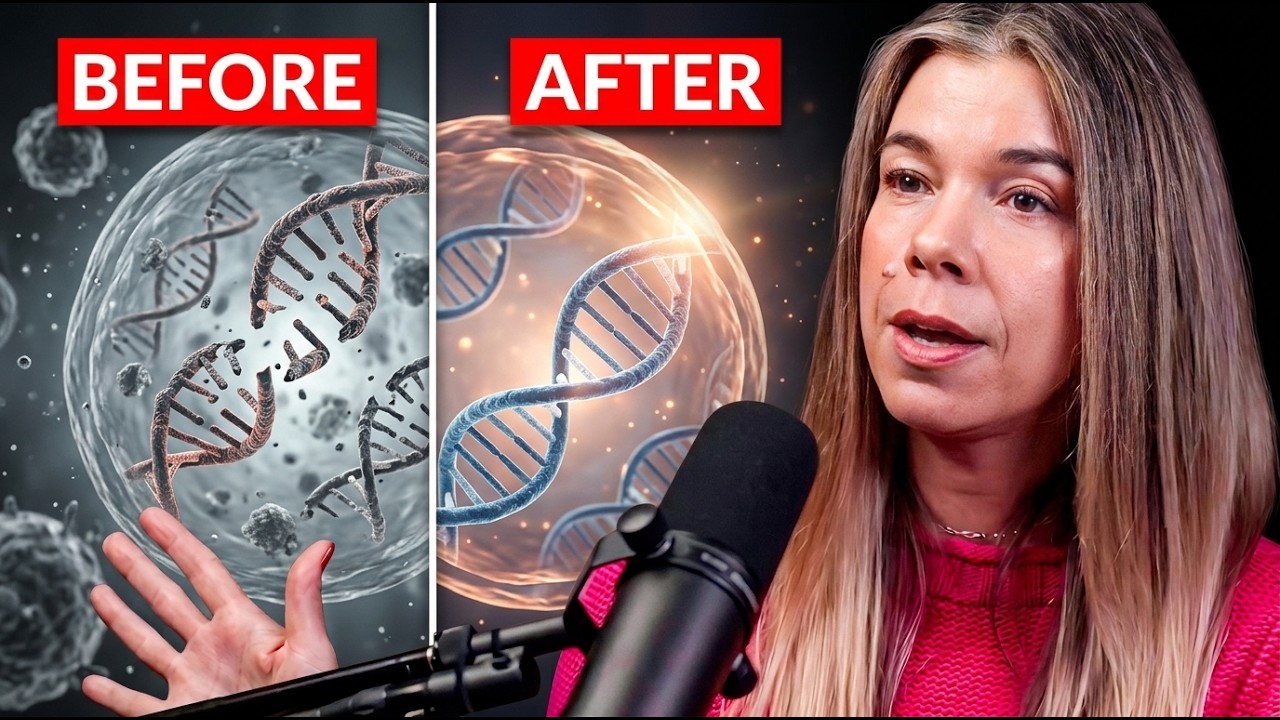
But the thing is, is you're probably not gonna have a clinical symptom, like you're not gonna wake up and go, oh my— you know, like, I can see DNA damage happening because magnesium is critical to repair damage of your DNA. But, that's not something you can see. That's not even something that's ever clinically measured, right? I mean, it's not like if you had scurvy, right? You were so vitamin C deficient, you had scurvy that your gums started bleeding. You wake up in the morning, you're like— Right. Oh, my gums are bleeding. Maybe I, like, you know, should get some vitamin C. But magnesium, I mean, this is one of those things where it's insidious types of damage that over the course of decades builds up and starts to lead to diseases of age, right?
Defects in DNA repair absolutely play a role in cancer, big-time role in cancer. And also just in cellular dysfunction. When you start to accumulate damage and stuff, cells don't work as well including in the brain. So magnesium is also critical for the production of ATP and the utilization of it. So you can have low energy. of, you know, potentially maybe. But see, you know, the thing is, is that it's possible that because you need to make energy to survive that all your magnesium then will be used for things that are critical to prevent death in the short term, right?
So, this is part of my mentor's theory, triage theory on aging that he's talked about and published on where, you know, some of these little insufficiencies in micronutrients like magnesium they are resulting in insidious damage that builds up over decades, things that you aren't aware of but show up later in life and actually as diseases of aging. And so, you know, regulate the aging process itself. So, I don't know that you're really going to know if there is a real clinical symptom— Yeah. Unless you're severely magnesium deficient.
Get email updates with the latest curated healthspan research
Support our work
Every other week premium members receive a special edition newsletter that summarizes all of the latest healthspan research.