#52 New Omega-3, sulforaphane research, and more! [Kevin Rose Show]
This episode is available in a convenient podcast format.
These episodes make great companion listening for a long drive.
The Omega-3 Supplementation Guide
A blueprint for choosing the right fish oil supplement — filled with specific recommendations, guidelines for interpreting testing data, and dosage protocols.
You'll also receive updates from Rhonda & FoundMyFitness
Dr. Rhonda Patrick visits the Kevin Rose Show to discuss metformin, magnesium L-threonate, fish oil and brain health, sulforaphane, goitrogenic activity of isothiocyanates, sauna, and more. Subscribe to the Kevin Rose Show on iTunes.
-
FoundMyFitness Intro
-
Kevin Rose Show Intro
-
Conversation starts
-
Increasing omega-3 levels in the brain with phospholipid DHA
-
Metformin's effects on longevity and possible harms
-
Fasting and NAD+ supplementation
-
Getting sulforaphane from food and supplements
-
Magnesium L-threonate efficacy for brain health
-
Sauna use mimics exercise, improving heart and brain health
-
Learn more about Kevin Rose
-
FoundMyFitness Intro
-
Kevin Rose Show Intro
-
Conversation starts
-
Increasing omega-3 levels in the brain with phospholipid DHA
-
Metformin's effects on longevity and possible harms
-
Fasting and NAD+ supplementation
-
Getting sulforaphane from food and supplements
-
Magnesium L-threonate efficacy for brain health
-
Sauna use mimics exercise, improving heart and brain health
-
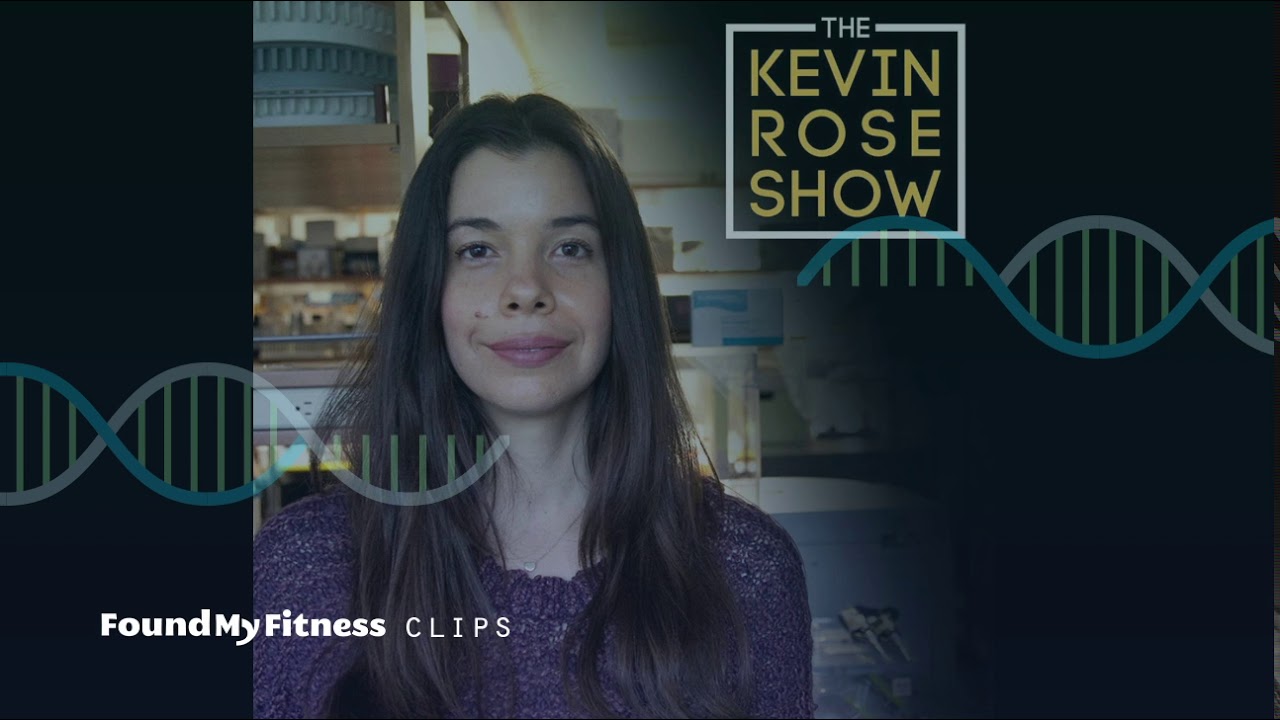
Hey folks. Today's episode was originally recorded for the Kevin Rose Show. Many of you may already be familiar with Kevin thanks to his history as a notable personality in the technology world, his frequent guest appearances on the Tim Ferriss Show, and the many, many podcasts he's hosted over the years. However, those of you who are not familiar with Kevin, he comes at a lot of this health and lifestyle stuff as an honest-to-goodness hardcore N=1 self-experimenter. I think this really imparts a certain spirit of practicality and implementation emphasized a little more in this conversation than others I've had. Not to mention, he has quite a few highly relevant anecdotes he drops in too.
Given some of the unique discussion we had, I had no choice but to ask the great Kevin if he would let me repost it over here on the FoundMyFitness podcast feed, a request which he graciously obliged. In this discussion with Kevin, we discuss the unique value phospholipid DHA has due to its propensity to be metabolized into a form of omega-3 DHA metabolite that utilizes a specialized system of active transport mediated by a transporter called MFSD2A, which helps get the DHA across the blood-brain barrier. This is important because an alternative means of transport, which is passive diffusion, may become less effective as disease and aging impairs the blood-brain barrier.
With as important as omega-3 DHA is for the brain, finding new and better ways to get it transported into the brain may be good news. While phospholipid DHA, which is uniquely found in some specialized sources like fish roe, where it makes up up to 40% of the total DHA content, may stack the deck in favor of getting a greater quantity of this actively transported DHA metabolite called DHA lysophosphatidylcholine, we may also end up with more of this metabolite just through greater intake of marine omega-3 fatty acids as a whole, since at least some of the DHA lysophosphatidylcholine gets produced even from more conventional forms of DHA we get, like the triglyceride form found in most fish oil supplements.
In addition to this omega-3 discussion, which actually makes up a lot of this episode since it is based off of my own published work, We also cover some of my thoughts on metformin as a healthspan strategy. We talk about animal and human research here, both of which has some interesting twists and turns. We talk about sulforaphane, a unique compound richly found in broccoli sprouts, and the somewhat recent evidence that it increases glutathione in the brain in humans. Glutathione is a potent endogenous antioxidant. We also discuss some of the concerns surrounding sulforaphane as a potential goitrogen. We discuss supplementation and more. We talk about my thoughts on magnesium L-threonate, thanks to some of the animal and limited clinical research suggesting it might enhance cognition.
We talk about the sauna, a passion Kevin and I share, and some of the research that's come out since the last time him and I talked. Finally, we talk about some of the recent updates on the FoundMyFitness website, particularly the new premium membership. For those of you that enjoy this conversation, please make sure to also head over to Kevin's iTunes, which you can find by Googling The Kevin Rose Show. He's had many overlapping guests we've had over here, including Drs. David Sinclair and Valter Longo. Outside of Healthspan, he also interviews founders, entrepreneurs, and notable personalities from the investment world, which you can also find represented on his recently relaunched podcast called Foundation, also on iTunes. Big thanks to Kevin for having me on. Now away to the episode.
Hey everybody, Kevin Rose here. Welcome back to another episode of The Kevin Rose Show. Happy 2020. It's a brand new year. And so I'm really excited to have Dr. Rhonda Patrick on the show because what better way and thing to address than health and longevity in January? It's surely a topic that is on a lot of our minds. I, for one, am going to try mostly a mostly pescatarian diet for this first month and get my blood work checked and see what it does to some of my numbers. I'm also going to be cutting out drinking for the most part because I have a trip planned to Japan at the end of the month. I will be drinking in Japan. I'll be having sake and good Japanese beer, but the first few weeks I will not have any drinks and get my blood tested before all of that.
Anyway, Dr. Rhonda Patrick is one of my favorite scientists. She goes in Reads all of the published studies around health and longevity and really takes that information out of there that is too technical for the average person to understand and then translates it into things that we can incorporate into our everyday lives. This is the best way to get your health advice, people. Like, doctors are always, always 4, 5, 10 years behind, except for some doctors like Peter Attia. But, but the average doctor is, is many years behind what the science is actually telling us to do. So if you want to know the latest and greatest, it's best to go to scientists. And thankfully, due to podcasting, Rhonda has a fantastic podcast and also a great website called foundmyfitness.com.
She has been able to give us that direct link to scientists. And so she interviews a bunch of great scientists and really help us make better decisions earlier on. So for example, in this episode, we talk about omega-3s and why they're not all created equally. And there's various different forms of omega-3, and we talk about about which ones that she takes, how much she actually takes personally. A lot of great information there because not only is she understanding the science to relate it to us, but also has published her own science around omega-3s, and she's done a bunch of research in regards to omega-3s' impact on dementia and Alzheimer's. So great to have her talking about that. We also talk about metformin, which is a very hot drug right now.
Hot— I don't know if you can call a drug hot, but it's a very popular drug, at least in Silicon Valley. For people taking it to extend life and some of the potential pitfalls that it has. We also talk about a compound called sulforaphane, which is found in broccoli. She has talked about at length on her own podcast about sulforaphane, but there is some new data out there that we cover. And we also talk about a new brand of sulforaphane that she has imported that she takes. So a lot of interesting stuff there. We cover sauna usage. Some new studies have come out there, so a lot of really new things to chat about. And this was a great episode. I really enjoyed it, and I know that you will too. So happy 2020. Cheers to you.
I'm really hoping that all of you stay happy and healthy this year, introduce some new healthy habits into your life, and hopefully subscribe to all of Rhonda's stuff, as you'll hear her talk about later in the episode when she talks about all the new things that she's building for her website as well. So I hope you enjoy the show. This is Dr. Rhonda Patrick. Rhonda, thanks so much for coming back on the show. You were actually my very first guest and now I look back and I'm almost like 40+ episodes deep. So, so thank you for returning. Totally. Um, yeah, I totally remember that the first episode we recorded a few years ago. I was living in New York. I didn't have any babies. Like you didn't have any babies. Things have changed. Definitely things have changed a lot.
Becoming a parent is like the, the definite— definitely a huge change in the life. Yeah, absolutely. I'm just now returning and getting enough sleep again. So things are, things are looking up, especially for Darya as well. One of the things I wanted to cover that has changed since we last talked is you had really gone deep and published a paper around the phospholipid form of omega-3s and its benefits. I was wondering if you could bring us up to speed on that and what your current thinking is on omega-3 supplementation. So, when it comes to— if we're talking about phospholipid DHA, when it comes to DHA in general, DHA is one of the omega-3s. It's predominantly found in marine sources. Really what I care about is getting it to the brain. That's my number one interest.
The only type of DHA that crosses the blood-brain barrier is DHA that is bound to albumin, which is a protein found in your bloodstream, transports a variety of goodies in addition to DHA to other tissues including the brain. But there are 2 forms of DHA that are bound to albumin. And these 2 different forms are transported by different mechanisms. So the first is DHA that is not esterified. It's not— Right. bound to anything other than albumin, so it's in a free fatty acid form. And I often refer to that as DHA-free. It's— it's free. It's not bound to anything— Uh-huh. Aside from albumin. It gets transported across the blood-brain barrier via this mechanism that's passive diffusion, which just means it's, you know, passively crossing the blood-brain barrier.
And the blood-brain barrier, there's a variety of things that, you know, make it up. But one of the things that's important in this discussion is that endothelial cells line the blood-brain barrier and they're— the endothelial cells are attached to each other by tight junctions. So this passive diffusion mechanism where free DHA gets across the brain depends on the integrity of the blood-brain barrier. So unfortunately, as we age, the blood-brain barrier becomes compromised and this is even more of an issue in people that have an APOE4 allele. APOE4 is just a gene, and allele just means, you know, one copy of the gene. You have 2 copies of every gene, one from your mom, one from your dad, so you have 2 alleles of every gene.
And just to bring people up to speed, if you have one copy of this gene, you are how much more likely to get Alzheimer's disease? People that have one copy of the APOE4 allele are about twofold more likely to get Alzheimer's disease than people that have no copies of it. People that have 2 copies of it, it's not very common, so about 25% of the population has at least one copy of it. 2 copies, much, much less common. I don't know the percentage off the top of my head, but you can figure the math out if, you know, 25% has one copy, what, you know, 2 copies would be. But that increases the risk for Alzheimer's disease from anywhere between 10 to 15-fold. And what percentage of the population that is diagnosed with Alzheimer's disease has at least one copy? Anywhere between 65 to 85%. Wow.
Yeah. So this is a pretty big indicator then. It is. And, we could spend hours talking about the reasons why that is. And, I do talk a lot about that in my paper that I published last October in FASEB Journal. But basically, to get back to the whole DHA part of the story, I mentioned that there's 2 ways it can be transported in the brain. This one form that's free, not bound to anything other than albumin, it goes through passive diffusion. However, ApoE4 actually disrupts that because it does compromise the blood-brain barrier and that even gets worse with age. Things like traumatic brain injury also compromise the blood-brain barrier. The good news is there is another form of DHA that is bound to albumin.
It's a form that is a specific type of phospholipid form called lysophosphatidylcholine DHA or DHA lysopC as I like to call it for short. And, that's also transported across the blood-brain barrier through an entirely different mechanism. It uses a transporter called MFSD2A. And basically, when this phospholipid form of DHA binds to the transporter, the transporter flips it across the outer membrane into the inner membrane of the blood-brain barrier and it potentially bypasses any defects, for example, in tight junctions— Hmm. In the endothelial cells that I was just mentioning, which by the way, ApoE4 does disrupt tight junctions in lining the blood-brain barrier.
So, I sort of argue in my latest publication that this specific DHA lysopC form of DHA may be a nice way to bypass that, you know, defect that ApoE4 causes or even just normal brain aging causes where you can get DHA into the brain. Is your hypothesis here that lack of this DHA is a cause, potential cause of dementia? Yes, specifically making people with ApoE4 more susceptible to it. So DHA plays a lot of important roles in the brain. It plays a role in preventing and ameliorating a couple of the hallmarks associated with Alzheimer's disease, tau tangles and amyloid beta plaques. And that's been shown in clinical studies. It's been shown that DHA supplementation can lower the amyloid burden and also tau tangle pathology in people that have them.
So specifically people with Alzheimer's disease. And it also can improve cognitive function. The other thing that DHA does, it's really important for transporting glucose across the blood-brain barrier. And this is a really major hallmark of Alzheimer's disease, not gating glucose into the brain basically. Hmm. That is actually something that can be observed before any other clinical features of Alzheimer's disease. And it's specifically found early in people with APOE4. So, DHA is important for increasing levels of the transporters that transport glucose across the blood-brain barrier, the glucose transporters. So I always thought that, you know, people for a while were calling dementia like, or Alzheimer's disease, like potentially type 3 diabetes.
I'm sure you've heard it called that before. I always thought an increase or too much glucose in the body would be a bad thing. But here you're saying the brain getting a lack of glucose is a bad thing. What I'm saying here, yeah, is that getting, not having glucose in the brain can be a bad thing, but that's separate from, you know, obviously from like dysregulated blood glucose levels and insulin insensitivity. Right. Like, those things are all hallmarks of aging and cause multiple, multiple problems for sure. It's kind of a different thing that I'm talking about here. So, like, brain glucose levels are important for preventing a lot of the hallmarks associated with Alzheimer's disease.
And, this has to do with a lot of very specific molecular mechanisms having to do with forming tau tangles and stuff like that. So, not being able to get glucose into the brain can play a causal role in Alzheimer's disease. And perhaps that is also linked to this type 3 diabetes that you're referring to. That would be a completely separate but sort of parallel mechanism. Got you. As DHA, I think it could play a role in addition, right? So, DHA is important for getting glucose in the brain, but also some newer research does indicate that insulin insensitivity can reduce glucose getting into the brain as well. So, those 2 things could even possibly synergize. Who knows? I mean, it'd be nice to see data on that. Yeah.
But, in terms of getting the DHA in the brain and the question you kind of asked at the beginning and I'm sure people are wondering is, well, what are the dietary sources of these different types of DHA, the free DHA versus this lysopC DHA, the one that's a phospholipid form that's transported across the blood-brain barrier? And the simple answer actually is that all dietary forms can form either of those forms of DHA. That's the simple answer. There's there's definitely a much more complicated answer that you know involves even getting down to the chemical level. So DHA, looking at dietary sources like fish, fish roe, krill oil—those are all sources that have DHA in. Phospholipid form. Predominantly, you find phospholipid form being phosphatidylcholine as the phospholipid.
Triglyceride form is found in fish, also in fish roe, and also in higher-quality fish oil supplements or DHA supplements. There's also other forms that you could find in supplements. A majority of supplements that are molecularly distilled, which is the process used to purify fish oil to purify away contaminants like mercury, PCBs, etc. A lot of fish oil supplements are found in ethyl ester form. Some are even in free fatty acid form. Those forms are a little less bioavailable than triglyceride form fish oil supplements. But the main thing here is actually the difference between ingesting it in phospholipid form versus any of those other forms because those other forms to some degree are metabolized in a very similar manner.
Compared to phospholipid form, and the reason for that is because phospholipid form, again found in fish, fish roe, a variety of different you know eggs, fish eggs, caviar as people call it, and also krill oil have DHA in this phospholipid form predominantly phosphatidylcholine, and the phospholipid form has this backbone. It's a glycerol backbone, and the thing that differentiates it from the other forms is that there's actually two DHAs attached. There could be a DHA attached at. 2 positions on it, positions meaning different carbon atoms, one on the SN1 position as it's called and one on the SN2 position. And so, the triglyceride, ethyl ester, all those forms have DHA on the SN2 position. Uh-huh.
And, there's a difference between the way DHA is metabolized on the SN2 versus SN1 position. On the SN1 position where it's found in this phospholipid form, You can actually metabolize it and it retains its phospholipid form throughout metabolism. It's then bound up into HDL and it gets cleaved by an enzyme and it forms DHA lysopC, that form that bound to albumin crosses the blood-brain barrier through a transporter. The DHA on the SN2 position, which is found in all forms, is cleaved by an enzyme. It forms a free DHA molecule which then is bound up in LDL instead of HDL. An enzyme cleaves it out of the LDL and it can form either free DHA bound to albumin or it can form the DHA lysopiece. So, it can form either.
But, the bottom line here is that for the phospholipid form, the dietary phospholipid form you're consuming, you're going to get more bang for your buck in terms of forming that DHA lysopiece form that you want to cross the blood-brain barrier. Uh-huh. That's the bottom line. So the majority of supplements that you see out there are mostly— is it triglyceride form? Is that right? The high-quality ones are triglyceride. Most of them— Okay. Are actually ethyl ester. Oh, really? Yeah.
Yeah, because there's an extra— it's more costly, you know, when you're molecularly distilling these fish oil supplements, they're removed from their triglyceride form which is what they originate in, and— and they're put on this ethyl ester backbone and— and that's how they like run it through this column where they're purifying it and doing all this chemical Cool stuff, and then at the end of the day, a lot of people just leave it in that form because the enzymes in your pancreas and small intestine things like that they can recognize that ethanol backbone and cleave DHA off of that. The higher quality fish oil supplements after that whole molecular distillation process then reesterify it to a triglyceride form. So it's an extra step. So extra step means more money, right? Right.
And so that's why I say higher quality. Higher quality usually also means. You have to pay more for them, you know, as well. What are your thoughts on, say, eating salmon roe versus getting a krill supplement versus finding a form of omega-3 that is phospholipid? I know Nordic Naturals came out with one not too long ago. What do you recommend there? So I should probably start with this. Fish contain around 1 to 1.5% of their DHA in phospholipid form. The remaining is triglyceride form. Fish roe, and this includes salmon roe, herring roe, pollock roe, flying fish roe, they contain between 38 to 75% of their DHA in phospholipid form. I didn't know this was flying fish roe as well. That's great for sushi fans out there. Yes, it is.
Now each— Because that's the easiest to— Yeah, like the easiest to down because it's smaller. It doesn't have that like very pungent, you know, fishy— Yeah, they're just little poppy things, yeah. Right, yeah. I know— I know you have a harder time than I to eating salmon roe, for example. You're probably like more like my husband. He's like, oh, it's like medicine to him, you know. Yeah, I take it like pills. I like put a scoop in my mouth and then just like drink water real quick or pop them real quick to make sure they get all out and then it's horrible. Well, I like to eat mine. I put mine on a little bit of seaweed with a slice of avocado and some lemon, sometimes a little ginger, and it really— I really like how that tastes. I give it to my son.
Now, he, he likes it with this type of cheese called Boursin. B-O-U-R-S-I-N. It's like this like cream cheesy garlic herb, you know, stuff. That sounds great. And it masks the salmon roe taste. And so he gets that almost every morning. And Dan is getting that. He, he likes it on this like paleo waffle with some sour cream and that cheese and that and the salmon roe. And that totally masks it. Like, he's, you know, so for me, like, I can just Yeah. I can just eat that stuff. But, I probably should mention that this form, this DHA lysopC form, in addition to be what I argue in my most recent publication to be really important for brain aging and preventing Alzheimer's disease, particularly for people with ApoE4 alleles, also it's been shown in multiple animal studies to be a preferred source of DHA to be taken up into the developing brain.
In fact, it's taken up in some cases 10 times better than DHA in free fatty acid form. So that's kind of why I mentioned my son. You know, he's still in the brain developmental stage, and so that's why I'm trying to get him the salmon roe. But back to the whole important question that you asked, because it really is— it is an important question. I mentioned, you know, 38 to 75% of DHA in these, you know, in these different roes from fish are found in phospholipid form. Krill oil is another phospholipid form you mentioned, and about 35% of the DHA in krill oil is Phospholipids. Krill oil supplements are not very high in terms of their concentration.
So if you look at a majority of krill oil supplements out there, consumer available supplements, you'll see that between 60 to 80 milligrams, you know, per two softgels or something like that is what you'll find compared to like what I take in my fish oil supplement, which is each pill has 500 milligrams of highly purified DHA. So two pills have a gram. So one gram compared to 60 to 80 milligrams. I mean, even regardless of the fact that there, you know, more of that DHA is bioavailable to be— to form the phospholipid DHA form, the DHA lysopC, you're gonna get more from, you know, a gram of fish oil. Yeah. What I choose to do is I actually take fish oil and I take— I eat salmon roe and I eat fish. So I do all of those things.
Do you have any preferred sources of where you get your supplementation oil? So I take a fish oil. It's called N-Pure 3. So it's, it's basically Nordic Pure 3, and it's a, it's a friend of mine. He, he makes it in Norway, and he's basically convinced me that it's one of the most purest forms of fish oil. He doesn't add any lemon or strawberry or anything to mask the fish. One little trick in the industry is unfortunately it can mask the smell of rinse, you know, when something's rancid. Uh-huh. You can smell it. And if you pop open a fish oil pill, you can definitely— you don't even have to pop it open sometimes. You can smell it. You can definitely taste it. That's hard to do when you got lemon and strawberry flavors and stuff like that. Right. He doesn't put any of that stuff in there.
And it's funny, like when I first— when I first met him, I popped open one of his pills and tried it and it was like the best tasting. I couldn't believe I could just eat it. Like it was— Oh, you actually chewed it up? I just— yeah. I did. Yeah, that's my litmus test. That's my— that's usually my litmus test. But he's also shown me data. That's crazy. Like, my dog Toaster does that. It's like, it's really— I give my dog— I always wonder because I hand him the— I give omega-3s to Toaster and I'm always— I watch him chew them up and I'm like, is that good? He's like my little tester. Yeah, totally. Um, I, I actually pop open those pills and I put it in, in my son's oatmeal and I mask it with lots of butter. So, so he's getting the DHA pills in his oatmeal as well.
Where— and again, it is that it tastes good, so it's not like, you know, gross. And I should mention that I don't have any ties to this fish oil company. I don't get any kickbacks. I'm not affiliated with them, but he is a friend of mine. And you do a gram of that a day? I actually take 3 grams a day. Wow. Yeah. So that's a great point. Like, what's the upper limit of this? Like, have you read about any downsides, any potential downsides of doing high dose? The only potential thing I've seen has been for high-dose EPA, and it is— and it is really possibly because it can inhibit with like leukotrienes and stuff, things that are involved in like blood clotting, that maybe it can thin the blood a little bit.
So it could, you know, contraindicate people that are taking blood-thinning medications. But there's also randomized— large randomized controlled trials coming out now showing that highly purified EPA in high doses up to 3 grams a day are like dramatically reducing triglycerides and lowering the risk of cardiovascular disease. And so it's— Wait, that's for DHA or EPA? That was EPA. EPA, right? EPA, yeah. That's more like— EPA is more linked to heart health, right? Well, it's also a really potent anti-inflammatory which is linked to brain health. Inflammation— Hmm. in the brain. So there's also been some evidence showing that it may help with depression, specifically EPA as well. Hmm. So how do you balance that?
If you're doing 3 grams of DHA, do you do a gram of EPA or— So the high DHA that I get, so he— so he makes 2 different versions, a high DHA, a high EPA, and the high DHA does still have EPA in it just to a much, you know, smaller degree. I don't remember off the top of my head. Recently— now, I was really, you know, while I was breastfeeding, you know, I was like super hardcore about getting tons and tons of DHA, you know, through the salmon roe and also, you know, like taking the 3 grams which turns out to be 6 pills of these high DHA. And, because there's studies showing that like women that take in, in a dose-dependent manner, DHA in breast milk increases. And like, and there, it's really like it reaches a limit but it's a super high dose is like 10 grams or something like that. Wow.
Now I'm trying to do high DHA and high EPA, but I take— I take one in the morning, like one— I sort of like take them at different times of the day. But DHA has basically been my, you know, my number one thing for a while just because of pregnancy and breastfeeding and all that. But, but I'm trying to take both actually. Cool. All right, well, let's, let's move on to another question I had for you around metformin. There's been so much talk and kind of controversy around this over the last, I don't know, 6 months or so, where everyone in Silicon Valley was on the bandwagon. Like, all my friends were on metformin. Like, it's crazy. And then— Wow. And then that study— it's, it's insane. Like, they'll have doctors that just write the prescriptions for longevity.
You know, everybody was doing that. And then I have one friend of mine that is, you know, he's probably as close as— like, he's not, you know, a professional bodybuilder, but he's darn close and that he's like really cares about just being in absolute peak shape, like 6-pack abs, like to where it's like a little too much. But he started taking it and then immediately saw a decrease in just his output and his power in the gym. And I know that was a recent study was mentioning that. I just want to get your thoughts on it. Like, do you, do you take it? Are you curious? Do you think that it— it actually leads to longevity? I would love to give you my thoughts on that and— and I can actually give you my thoughts on every single one of those questions you just asked me. Sweet.
So I have absolutely— well, I'll just start off by saying, no, I don't take it. I had never have taken it. But I will say that I am— I have been interested in metformin for several years and, you know, it's— it's obviously a very commonly prescribed medication. I think there's like something like 80 million prescriptions or something like that worldwide. It is a drug that's in a— it's a class of drugs that's called biguanides. And basically, it acts by decreasing liver gluconeogenesis, which is the production of glucose in the liver. It decreases glucose uptake in the gut and it also increases overall glucose utilization by improving insulin sensitivity in skeletal muscle and also in adipose tissue.
So it has a lot of effects on, you know, basically decreasing the amount of glu— at any given time, the amount of glucose you'd find in your circulation. Yeah. I mean, yeah, it's increased my pizza consumption. I, cause I, I, it's sad, but it's true. Like I've noticed with the Dexcom, you know, continuous glucose monitor and like, I, I, I can eat it like a good few slices of pizza and I don't get the crazy spikes like I used to. It's a miracle drug. Right. So, well, high blood glucose and insulin levels and insulin signaling and all those things, they've all been shown to play a role in regulating the aging process, age-related diseases, turning down those pathways. So, what you're saying essentially decreasing your blood glucose levels, decreasing the insulin signaling pathway.
It's been shown to improve lifespan in multiple organisms, worms, flies, mice. It's been linked to a variety of improvements in healthspan in humans. So, there's certainly a huge interest in the field of aging. Some of the evidence, you know, looking at the sort of, you know, gold standard for aging in the animal studies would be looking at lifespan, right? Uh-huh. And the interesting thing about metformin is that there's been really variable effects on lifespan in rodents. So it seems as though there's gender-specific differences, there's dose-dependent differences, and there's also timing differences depending on age of when it's first administered. And there's been multiple studies on this.
You know, if you look at male and female mice that were given metformin about 100 milligrams per kilogram body weight. Weight, which for— that's a human equivalent dose of like 8 milligrams per kilogram body weight. So that translates to something like 660 milligrams for like a 180-pound person. So that given to mice, it decreased the average lifespan of male mice by 13% and increased the average lifespan of female mice by about 4%. Now, the negative effect on male lifespan could actually be dose-dependent. So there was another study looking at different doses in male mice. So male mice were given either a 0.1% or a 1% dose of metformin in their diet starting at the age of 50 weeks or something, 54 weeks. Their lifespan, their average lifespan increased at the lower dose.
So, their average lifespan increased by close to 6%. But, the high dose, it was toxic. It reduced their average lifespan by what I mentioned earlier, something between 13% to 14%. So, that's something to consider, the dose. And then also, the age that, you know, these animals are given their first treatment. There was another study, and this is in female— a lot of studies have been done in female mice because that was— female mice have been shown to be the most responsive in terms of lifespan-extending effects. And female mice that were given, again, 100 milligrams per kilogram body weight of metformin starting at the age of 3, 3 months, 9 months, or 15 months, the most robust effects happened earlier. So at 3 months, lifespan was increased by 14%.
If they were given at the age of 9 months, it increased by only 6%. And if they were given it at the age of 15 months, they were— their lifespan, there was no effect, no difference at all. Now, mice live on average around 2 to 2.5 years, so it's like their average lifespan. So 15 months— What do mice typically die of? Just old age? It depends, you know, some of them they get like lymphomas and yeah, but they do, they die of old age. The reason why I ask is that, you know, some of the life extension, things on the human side I've heard have been linked to its ability to prevent certain cancers. Yeah. We'll get to that. Yeah.
And that's one thing, like mice don't get human types of, I mean, humans get lymphomas and, and leukemias, but the majority of human cancers are, are what's called epithelial-based cancers, not blood-based cancers. They're epithelial-based cancers, meaning they're like solid tumors, you know, prostate cancer, liver cancer, breast cancer. Ovarian cancer, right? You know, these, these are all solid tumors. Some of the human studies, which is what you just brought up, I mean, that's, that's kind of like getting to the human data is what's really important. But I wanted to mention that animal study data because it's the variable effects on, you know, depending on gender and dose and time of administration. I think that's all important stuff to like consider, right?
And we don't really know why, honestly, why men, why the male mice are so like sensitive to dose in terms of like their lifespan effects. But to the cancer note that you mentioned, that's also— that's been pretty interesting. There's been a lot of different prospective studies showing that metformin reduces cancer incidence and mortality among type 2 people with type 2 diabetes, right? You know, so that's important to also consider. This isn't like— these aren't like healthy people. You know, type 2 diabetes also increases cancer incidence, right? So The fact that you can find meta-analyses showing that metformin reduces overall cancer incidence by like 30% or cancer death by 35% or something like that is not that surprising, right?
You're talking about people with type 2 diabetes when they're taking— so compared to people with type 2 diabetes that are not taking metformin, they're going to have a higher cancer incidence. Dysregulated glucose metabolism and all that stuff has been shown to play a role in cancer. There's also been some interesting studies on people taking with depression and type 2 diabetes who were given metformin or placebo, and metformin did seem to improve cognitive performance and also reduce depressive symptoms compared to placebo. Again, this is all in the background of type 2 diabetes, right? Mm-hmm. So the real interesting question, as you mentioned, you knew people that don't have type 2 diabetes that are taking metformin, right?
So the real question is, well, what about people that don't have type 2 diabetes? We want to get a tighter control on our blood glucose levels and our insulin sensitivity. And probably one of the studies that sort of sparked that interest was a large study, prospective study that showed— it was like 78,000 individuals. Some of these people took metformin. There were type 2 people with type 2 diabetes that took metformin and some were people with type 2 diabetes that did not take metformin. And there was also some that took another type of drug. I forgot the name of it. But the interesting thing was that the people with type 2 diabetes taking metformin lived on average— I should also mention there were age-matched controls that did not have type 2 diabetes. Right.
The people with type 2 diabetes that were taking metformin lived on average around 15% longer than the age-matched controls without type 2 diabetes. Like that's what got my interest. That's good. That's what I was like— that's the— that's the study where— that really piqued my interest. I was like, okay, what's going on, right? Yeah. It's like, do I have to— now can I be a healthy individual and take metformin or do I have to go So get type 2 diabetes first and then take metformin. Or— right. Or do you— are— okay, so you said healthy individual and take metformin, or are you a healthy individual and you exercise? So there was a large randomized controlled trial done by the US Diabetes Prevention Program. I don't remember when this was published, a few years ago.
They showed that 150— this is a randomized controlled trial, okay? 150 minutes of moderate-intensity exercise per week. prevented the progression of prediabetes to type 2 diabetes by about almost 60%. So people with prediabetes that were assigned to this exercise group to do 150 minutes of moderate intensity per— exercise per week. Which is a good amount of exercise. It is. It is. But— and that's— but that's pretty robust, 60— about 60%, you know, preventing the progression, right? Now the other group was also people with prediabetes. They were given metformin. And metformin prevented the progression into type 2 diabetes by 31%. So exercise, that moderate-intensity exercise, 150 minutes a week, was about twice as good, right? Right.
Now, the real question is, what if you were a healthy individual that was— that exercises like you, me, and probably most of your friends in Silicon Valley are and you took metformin? Is there a synergistic effect, right? Is there an additive effect? Right. That's the real question. And, I'll tell you, multiple, multiple randomized controlled trials now, not just 1, not just 2, not just 3, not just 4, more than that have shown that the opposite seems to be true where taking metformin in the context of either aerobic exercise or strength training exercises seems to blunt many of the positive effects of exercise. So, let me get a little more specific there.
There was a randomized controlled trial published, I believe it was a year ago or something, that was done because there had been multiple ones done in people with type 2 diabetes or prediabetes showing that metformin could blunt some of the positive effects of exercise on insulin sensitivity and things like that. But, this is one of the first real randomized controlled trials done in healthy individuals that were at risk for type 2 diabetes but didn't have type 2 diabetes, okay? They were basically given increasing doses of metformin starting from 500 milligrams and then increasing up to 2,000 milligrams depending on their body weight. This was a 4-week trial, so it was about a month long. And, they were doing 45 minutes of aerobic exercise on elliptical 3 times a week.
Metformin prevented the exercise-induced improvements in cardiorespiratory fitness by 50%. Other randomized controlled trials have shown this to be true in people with type 2 diabetes. And also, there's one other study in of active adults. So, that's really concerning. Cardiorespiratory fitness is one of the biggest predictors of disease and mortality. So, that is really not good that metformin prevented it by 50%. Wow. It also inhibited improvements in mitochondrial respiration. And, that may be something linked to some of— I didn't talk about all the mechanisms of metformin. One of the molecular One of the other mechanisms that's thought to play a role in improving all this glucose regulation and insulin sensitivity is the activation of an important pathway called AMP kinase.
That pathway is activated by energy stress. And, energy stress can be caused by things like exercise, can be caused by fasting or caloric restriction or metformin. Another thing that metformin does, and it's actually even thought by some people that This is how AMP kinase is activated, is by basically disrupting a certain part of the mitochondria that generates energy called complex one. You've got five complexes inside your mitochondria; they're basically just passing electrons around, and this this is how you can make energy in the form of ATP. Well, metformin disrupts one of those complexes, mildly disrupts it. Complex one. For the longest time, I wasn't a huge. I wasn't hugely convinced by that because the majority of data was in vitro, meaning you.
dump metformin on cells in culture and this happened and it's like, well, that could be a really big dose-dependent thing. Most in vitro studies, you can show one thing and completely show an opposite thing if you were talking about what's called in vivo or at the level of the whole organism. Uh-huh. But there was a study published a few years like 2014 or '15 or something like that showing giving— if you fed rats very— actually they were rats that were— had type 2 diabetes and they were fed various doses of metformin, 30 milligrams per kilogram body weight, 100, or 300 milligrams, right, showed that at higher doses, 100 or 300 milligrams per kilogram body weight, metformin could decrease the mitochondrial oxidative capacity specifically linked to complex I activity if they isolated muscle from these rats that were orally given these doses.
So, I was like, okay, that's evidence that it is obviously doing something. Mm-hmm. That's physiologically relevant. So, that could be why it's preventing cardiorespiratory fitness which has been linked to mitochondrial function. It could be why it's— metformin's inhibiting adaptations with mitochondria. Metformin also diminished whole-body insulin sensitivity after aerobic exercise. But, it wasn't like everything was bad. So, metformin didn't diminish other improvements from exercise like the decrease in HbA1c which is a long-term marker of blood glucose levels. It didn't affect fasting insulin or blood glucose or fat mass or skeletal muscle telomere length, which increased with exercise. So that's good. But it is concerning that it had all those negative effects, right?
And these are in healthy people. Do you think this is something where eventually, you know, we— because we do want this activation of AMPK, right? That's a positive thing. Here's the thing. So activation— Could we pulse it? So the activation of— so here's the thing. That's the question, right? Well, what if you time your metformin, right? There's things to consider other than the half-life of metformin or, you know, the important thing is— so, for example, exercise activates AMP kinase. The activation is relatively transient, but the effects of exercise last about 48 hours. Metformin activates AMP kinase and the effects of metformin last about 36 hours after the last dose. So, is it the AMP kinase activation that's responsible for these effects? We don't even know.
Like, that's not even— it's not even known. Or how long is the complex 1 inhibition lasting after you take your last dose? Is that also 36 hours after? We don't know. They're open questions, right? Right. Not to mention that there was just, I don't know, a couple of months ago, another randomized double-blind controlled trial showing metformin. This was also in healthy adults that were doing resistance training. And they were older adults. Both of these studies were older adults, 65, you know, age 65 years and older.
But this study also showed that after 14 weeks of taking about 1,700 milligrams of metformin, which is quite high, that it— and this gets back to your friend's anecdote— the participants that took the placebo gained more lean muscle— lean body mass and also thigh muscle mass compared to those who took metformin. So metformin blunted some of the gains in muscle mass. Right. It also diminished the strength, but those results were not significant, statistically significant, so it's trending towards Your friend's anecdote, what he, what he found with his power and output and stuff. What about brain health? What do we know that metformin does there?
Well, because it, you know, glucose levels, like glucose dysregulation, you know, heavily tied to, you know, disrupting brain health, it makes sense that improving and improving blood glucose levels and glucose, blood glucose regulation improves brain health. So there have been some clinical studies showing that metformin in people with type 2 diabetes taking metformin can improve cognitive function and things like that. Which is almost certainly linked to the improvements in you know glucoregulatory improvements. I say my thoughts, my my my concluding thoughts on this is that I think exercise is better than metformin for preventing type two diabetes. That's been shown treating type two diabetes, but also I think it's better than metformin in delaying aging.
I think that you're better off doing exercise. than taking a metformin pill. Now, I don't think the effects are going to be synergistic. So, you know, is there a place for metformin? Absolutely. I mean, there are tons of people that will never exercise, right? So, you sit down, you tell someone you have to exercise 150 minutes a week or you can take this pill, they're going to be like, give me the pill, you know? Right. But, that doesn't mean that, you know, we don't know all the other side effects of metformin or for people like you and I that it's not just about laziness, it's about wanting the best, right? I want the best. So, currently, my thoughts on the field are the best is exercise. Yeah. And, I am not convinced that taking metformin in addition to exercise is good.
In fact, I think it's actually not beneficial for people that are exercising. And, you can do this whole argument, I'll take it on days I don't exercise, but we don't know how long the effects, you know, of this metformin. Like I said, 36 hours after the last dose of metformin, you still have AMP kinase activation. AMP kinase activation, by the way, inhibits mTOR downstream. And part of the blunting of the muscle hypertrophy effects of resistance training, it's thought, at least the authors of that randomized controlled trial think, has to do with the fact that mTOR was not being activated enough in the muscle because the metformin was kind of dampening it too much. Hmm.
You know, again, it's not just about, well, how long does metformin stay in my system, then I'll exercise on a day when it's not in my system. Right. This comes down to you can look at anything. You can look at things like, you know, using the sauna activating heat shock proteins which we can talk about. But, you know, like those effects last for 48 hours after you get out of the sauna. There's lasting effects on these molecular pathways that it's perturbing, right? So, that's what you really need to consider, not just the bioavailability, the half-life of the compound that you're ingesting, right? Yeah.
I had another buddy that had previously had a form of cancer and, you know, he was thinking, well, gosh, maybe I just take this because of its, you know, there seems to be potentially— I know it's only in people with type 2 diabetes are more likely to get cancer, but there's potentially some benefit there for certain types of cancers. And so that, that to me was kind of interesting, but it sounds like this is a pretty complicated topic. Yeah, and when it comes to cancer, I mean, I would come to the same conclusions as your friend based on everything we, you know, the science that we know. With the exception of— and cancer is always, always the curveball, 110% of the time, 1,000% of the time, it's the curveball. Everything that's good for you when you have cancer, it's good for cancer.
Now, it seems unlikely that's with metformin. It seems highly unlikely. But, I'm always hesitant with supplements when it comes to cancer. That's what scares the crap out of me about NMN and NR and these NAD boosters. I'm sure you saw that paper about promoting cancer. Yeah. So, I actually did a podcast on this. I sort of did this research roundup where I talked about my thoughts on the whole field and that specific study in general, which was— it's a very specific type of cancer. It's a type of cancer, prostate cancer, that depends on these inflammatory molecules that are secreted by what are called senescent cells. Senescent cells accumulate with age. So, the older you are, the more of them you have. Again, the older you are, the more likely you are to get cancer.
But senescent cells, they are still metabolically active but they're just not like— the cell's not functioning. It's not doing its normal function that it's supposed to do. So, it's almost like the cell's dead but it's not dead. In fact, it's doing something worse. It's secreting these pro-inflammatory cytokines and other inflammatory type of molecules that are promoting inflammation to nearby cells. Uh-huh. NAD is requi— you know, is absolutely essential for the generation of energy. So you can imagine that a senescent cell wants NAD because they want, you know, to produce more energy to make that, you know, they're making their— their inflammatory cytokines and stuff like that. Let me ask you a question. When— when you're fasting, doesn't that kill off those senescent cells?
Well, it doesn't kill off senescent cells. It kills off damaged cells. Damaged cells. Yeah, that can become senescent. Gotcha. Yeah, so I mean, the fasting is like— that's a really— I would say that's, you know, one of the biggest— it all depends on what your goals are, right, with fasting and stuff, prolonged fasting specifically. Yeah, the reason why I asked is because I know that during fasting your NAD levels increase, correct? Yeah, they do. So wouldn't it make sense to— if you're gonna do supplemental precursors to NAD, to do them while you're fasted? Yeah, possibly. I mean, that has Yeah. So, I think that's one of the things that hasn't been tested. When you're fasting, you're increasing the NAD to NADH ratio.
So, NADH is what's used to actually transport, harvest an electron like I was talking about earlier. Electrons are moved around inside the mitochondria and that's how you make energy. So, when you're eating food, you're getting more of those, you're increasing your NADH. There's all these sorts of nuances that I just don't know. Yeah, I'm excited to check out that episode. I saw that you posted it recently, all about— it was, it was a follow-up to the Sinclair episode you did, correct? Yeah, so I know you've had Dr. David Sinclair on your podcast. I've had him on my podcast. He's definitely an expert in lots of things like resveratrol, and also he's done some studies with nicotinamide mononucleotide.
So I, I basically just wanted to— because, you know, sometimes, as you often know, like, you're having a conversation with people, you don't get to explain everything. And so sometimes, right, we're like, what the heck is going on, right? So I kind of wanted to give a lay of of the land and give some of my concluding thoughts on some things that I thought was important. Very cool. Yeah, speaking of the lay of the land, I'd love to hear your latest thoughts on sulforaphane. I know that, you know, here, gosh, what, it's been a couple years now when you first started doing videos and posts about the benefits of sprouting broccoli seeds and this miracle compound called sulforaphane. And where are you now with all that? I'm still super excited about it. Yup.
Sulforaphane is— it's something that is formed from a precursor called glucoraphanin, and glucoraphanin is found in a variety of what are called cruciferous vegetables, things like broccoli, Brussels sprouts, cabbage, daikon, you know, watercress, all these things, cauliflower. These things are all from a cruciferous family of vegetables. So glucoraphanin is the precursor to it. When the plant tissue is, you know, crushed, chewed, torn apart, it activates an enzyme called myrosinase. Which turns glucoraphanin into sulforaphane. Sulforaphane has about 70% bioavailability if you orally ingest it. The precursor glucoraphanin only has about 10% bioavailability to be converted into sulforaphane.
So, there's been tons and tons of intervention trials where people are given either a broccoli sprout— broccoli sprouts, by the way, have about up to 100 times more of the precursor to sulforaphane called glucoraphanin than the mature broccoli plant, which is kinda why I've talked a lot about broccoli sprouts because that's— that's— that's a— I can't eat anymore, Rhonda. You had me eating so many of them. I was eating like cups of those a day and they don't taste good. Right. And I'm like trying to add stuff to them. I just— I had to go to the supplements. Yeah. Well, so here's the thing. The supplements— so there's only— there's a couple of supplements that have been, you know, scientifically validated to really have what they say they have.
Sulforaphane is not— is not a very stable molecule. It's very unstable and it's difficult to get it, you know, in a supplement form. There's been 2 supplements that are really, I would say, have been clinically validated and have been used in randomized controlled trials that have been peer— you know, peer-reviewed and published. One is Avmacol. And Avmacol is— by the way, I have no affiliation with any of these supplements or supplement companies at all. You don't have any— yeah, I was gonna say you don't have any affiliation with any supplement companies. I don't, but, you know, I just— I have to say that because people don't know that. So— No, I get it. I don't have affiliate marketing. Neither do I. Yeah. Good to mention. I've been taking, you know, there's 2 supplements.
One's called Avmacol. I think Avmacol has around 3.5 milligrams of sulforaphane in each tablet and the recommended dose on their bottle is 2 tablets. So, that would be about 7 milligrams of sulforaphane. The other supplement is called Prostaphane. Prostaphane is unfortunately not available in the US. I shouldn't say that. It's made in France, right? Yeah. It's made in France and because sulforaphane is so unstable, Like the company just didn't want to deal with like the whole shipping it to another country and all that and dealing with all that, right? But you can buy it. Like I buy prostafane. There's online pharmacies you can have it shipped to you. Oh, really? Yeah. Like I'm having another shipment arriving tomorrow. Oh, so even you stopped with the broccoli sprouts?
So here's the thing. Okay, let me answer your question. So each prostafane tablet has around 10 milligrams of sulforaphane in it. There are trade-offs, you know, for doing broccoli sprouts versus supplements. I would say Okay, first and foremost, the supplements are expensive. Prostafane is really expensive. They're expensive and— What are we talking like $50 a pack or? Something like $90-something for a pack of 60 for Prostafane. It's quite expensive. But again, it has— How many are you taking a day? One. Oh, so that's not that bad. 60-day supply. Each one has 10 milligrams of sulforaphane and I'll, you know, to get to that dose, maybe I should talk about some of the clinical— I mean, there's been some new clinical studies that Cool. Yeah, please do.
But let me just finish with the sprouts. They're cheaper and you get a ton of sulfur. So, like for 100 grams of fresh sprouts, you use something around like 40 milligrams of sulforaphane, you know, can be bio— you know, basically you can get something around 40 milligrams of sulfur. That's a lot, right? For a lot cheaper. Now, the trade-off is it's a pain. You have to Like work, right? You have to make them. I mean, they're not super, super hard, but there's a risk for contamination. They're very— they can easily be contaminated, and I've had them contaminated, and it kind of gives you some, you know, it's not fun. So— Yeah.
That's the risk, and there's all sorts of, you know, people say you should bleach the seeds first, and then I don't personally feel comfortable bleaching the seeds and do it. I just don't wanna like ingest anything that's, you know, had bleach on it. I've been doing the Prostafane for one simple reason. I'm a mom now and I'm also running FoundMyFitness and trying to do all this research and stuff and, and also trying to like exercise and there's just— I just— there's too much, you know, there's just too much for me. So I found it easier for me to take the Prostafane supplement. I would like to get back to the sprouts and I will probably mix that up again, but for now I'm sort of taking the easy way. That's good. You're too busy. Like seriously, my fridge looked like a little mini farm.
Like it was like FarmVille up my fridge. It was like there was sprouts everywhere and some of them were going bad. Yeah, that was like me and I was freezing some of them and yeah, it was just— yeah. So what does this do for people? Like, people have heard us talk about sulforaphane for a few minutes now, but like, what are the benefits? There's tons and tons of studies that have been published showing that taking either, you know, broccoli sprout extract or broccoli sprout powder or even sulforaphane increases the levels of glutathione in plasma and also in the brain. In fact, the first clinical study to show that in the brain was published last year in 2018. In human brains? Yes, in humans. This is a clinical study in humans. How did they even get at that?
They did some sort of magnetic resonance spectroscopy thing. Crazy. Yeah, but it was so exciting because the amount that they were taking was actually would be equivalent to 2 Prostafanes because it was about Almost 18 milligrams a day. They were taking that for a week. And, that increased their plasma glutathione and brain. And, for people who don't know what glutathione is, it's the major, major antioxidant endogenous system and particularly in the brain. I mean, it's been shown to have a huge relevance for all sorts of brain aging, traumatic brain injury, other neurological disorders, including autism. So, oxidative stress, which plays a role in brain aging and traumatic brain injury, It also has been shown to play a role in autism.
Very interestingly, there's been 2 clinical studies, one in children and one in adolescents, where the children were given on average like around 12.4 milligrams of sulforaphane a day. Was this done with Avocall or— I— but this was Avocall, yeah. And the child— this is for children that were between 100 to 200 pounds. So that would be like 4 Avocalls or something like that. And it improved a variety of autistic behaviors in both, you know, the children and adolescents. And these are 2 separate studies that I'm referring to. So it's clearly Uh-huh. So it's really not only increasing, you know, glutathione in the brain, but it's having an effect on behavior which is— which is really exciting.
And it's thought that is probably linked to this glutathione because again, I— I mentioned there's been some evidence that autism is multifactorial. Many, many different things have been shown to play a cause in it and not just one thing. So, you know, of the— of the myriad of things shown to play a role in autism, oxidative stress is one of them. And combating that with glutathione is one of the major ways to improve that. And there's been tons of other interventions trials. For example, eating like 300 grams of Brussels sprouts a day increases glutathione levels also in the plasma and also decreases oxidative DNA damage by like 30%.
So it's like literally decreasing the amount of DNA damage, which is, you know, I should probably mention that there has been like an in vitro study that I've seen where sulforaphane at a very, very high concentration was dumped on cells And it caused DNA damage. It's one of those instances again where it's like in vitro studies, when you're dumping things on cells in a petri dish, has very little relevance unless you're looking at you know the the broader literature, right? You've got to look at what happens at the level of the organism, something that's even physiologically relevant. And so it's actually doing the opposite. It's not only increasing the antioxidant systems; it's decreasing DNA damage by quite significantly by thirty percent. And this is in humans.
Okay, this is not animals. It's certainly not in Petri cells in a dish. It's in humans. Very important. So how are they measuring that with the DNA damage? They— are they taking samples at 2 separate times or what's the deal there? Yeah, they do baseline and then after treatment. What was the duration? In this study, oh darn, I don't know. Usually it's like a month or so. I don't know if this study was— was a week or not. I just can't remember. There's been other studies also where people were given broccoli sprout extract like 10 grams or something. And, it lowered oxidized LDL in their— oxidized LDL, which is thought to play a role in the pathology of cardiovascular disease. It lowered serum triglycerides by 18-point-something, close to 19%. And, this was a month-long trial.
And, it decreased their atherogenic index by 50%, which is a measure of cardiovascular disease. So, this is, of course, in people. Again, There's been other studies showing that sulforaphane can cause— immediately after, after 24 hours can cause you to excrete harmful, potential harmful carcinogens like benzene and acrolein by up to like 60%. So this is crazy. I remember that. Now do you think— so this is like what's found in air pollution, right? Yes. I mean, if you're a smoker, it's found in your cigarettes, but I mean, air pollution is a major source of benzene. Couple questions there. One, okay, let's say I take this sulforaphane, I'm excreting all this crap out of my body that we can clearly measure, right? Like, let's say I continue to do this and I keep getting tested day after day.
Is there a point where the body's kind of like detoxed and all this crap's out of it, or is this something that just continues to go on because it's built up so long in the body? Oh, great question. I think that has to do with the exposure. So these studies that were done, there's been more than one study done on the excretion of benzene. Yeah. Most of them are done in China for the simple reason that there's a huge air pollution problem in China. Yeah. And so— so you can imagine— and this is always the case for any sort of clinical trial you're doing. It's always nice— you'll see more robust results if you have a starting population with something that you need to fix, right? So— Right.
So, like, yeah, if you're trying to lower triglycerides, you want a population of people that don't already have low triglycerides. You want them to have high and then see if you can lower them, right? So the same goes for like benzene. I mean, these people are being exposed to benzene daily. So it probably really depends on the exposure. And these days, you know, and if you live in an urban area, you're being exposed to it, unfortunately. I mean, it's just tons of studies coming out on air pollution. Yeah, that would be a fun study to do, right? Just to see if it kind of like finally gets out of your system and then how long it takes before it builds back up.
Yeah, well, it, you know, part of the mechanism by which— and I sort of haven't gone into everything in detail, it would take too much time. But part of the mechanism by which this is happening is that sulforaphane activates a very, very important pathway involved in longevity called the NRF2 pathway. And this basically— what this master regulator gene does is it— when it gets active, it goes around and finds all these genes that have a very specific sequence of DNA in them called an antioxidant response element, binds to it, and like either turns them on or off depending on the gene. It's kind of elegant that basically sulforaphane does this and that it basically is the switch on for this whole system. And clearly, it's meant to happen.
There's identifiable sequence of DNA in tons and tons of genes that this master regulator will recognize and bind to. I mean, it's crazy. It's super crazy to think about. Anyways, part of what it's doing is it's increasing the what are called phase 2 detoxification enzymes, and those are responsible for detoxifying potential carcinogens and a variety of other harmful compounds. It also turns off what are called phase 1 biotransformation enzymes, which are enzymes that can actually take a pro-carcinogen and convert it into an actual carcinogen. So, you actually want those turned down. Uh-huh. So, it does all sorts of interesting things. There has been some concern about sulforaphane possibly competing with iodine for transport into the thyroid.
And hence, you know, a potential what's called goitrogen, which is something that can disrupt the production of thyroid hormones, particularly for people that are iodine deficient which— or have hypothyroidism. Uh-huh. Again, that's a concern mostly you find in blogs and stuff. If we actually look at the scientific data, for example, clinical data, healthy people that were, you know, that don't obviously have iodine deficiency or hypothyroidism. But, they're healthy and they were given the amount of isothiocyanates. So, sulforaphane is a part of a broader family called isothiocyanates.
They were given the amount that's roughly equivalent to what you'd find in 70 grams of broccoli sprouts daily for a week and there was no negative effects on thyroid hormones, no toxicity on liver, anything like that. So, the question is, what about people, what about the context of iodine deficiency? By the way, that's very rare these days. Yeah. I mean, you just get a sea snack at Whole Foods. Yeah. And also, just most salt, people are eating things with salt and they're salt-iodized mostly if you're getting any type of processed foods and stuff too, right? Uh-huh. There was a long-term study published last year in animals where rats that were iodine deficient or had hypothyroidism induced by a drug, they were given large quantities of broccoli sprouts for a long period.
This is a long-term study. And, there was zero effect on thyroid hormones. There was no change in thyroid stimulating hormone, no change in T3 or T4. None of those hormones were affected. In these rats that were iodine deficient or had hypothyroidism. In fact, animals that had hypothyroidism, broccoli sprouts actually exerted a beneficial effect on their thyroid because it increased glutathione. Wow, crazy. So there you have it. You know, should you be concerned if you have hypothyroidism? Potentially. I don't— you know, the thing to do would be to do a baseline thyroid test and then do one after, you know, a month or however long. Yeah. I mean, always talk to your doctor with this stuff. Right. You know, that's the best advice.
But I'm still super excited about it for sure, especially after the brain study. Do you take it daily? So, yes, I do take it daily, but the effects— so here's the thing. It activates NRF2 and that's again a majority of the effects are mediated by that because it's just hundreds and hundreds of genes are being regulated by that pathway. Those effects can actually last a couple of days, at least in animals. So it may be something that you could take every couple of days, but then again translating what a couple of days is in animals to humans, I mean, I don't know. So I think it's possible you could— you could take it every couple of days just because the effects are lasting. One last question on the detox side. When people are peeing this stuff out, does it also come out in the sweat?
Benzene? Yes. I believe so. Something— I don't know if it's more in sweat than urine, but, um, so something is going on. I'll tell you like an N of 1, uh, thing from me. So I take Avmacol, the sulfur-containing supplement, every day for a month, and then I take a month off, and then I take it again the next month. I don't know why I picked that, I just did it. So here's the weird thing. I do a sauna almost every single day, right? And when I get out of the sauna, I lay on this black bench that I have just to kind of cool off and just lay there. And of course, you know, you're dripping wet, there's sweat, all that good stuff. stuff. It's nasty, whatever. When I'm not taking it, it just dries up and the bench looks fine.
When I am taking it, it leaves like a cloudy kind of like stuff from the sweat. I know it's disgusting, but like something is coming out of my pores when I'm on sulforaphane. It's really weird. That is so interesting. I am going to put that one in my pocket and take it out and talk to, uh, show Jed, Dr. Jed Fahey, the sulforaphane expert, about that, because that, that's something super interesting. I would Yeah, something is coming out because Daria was like, what the hell? Like, there's like a stain of like this like stuff. And I'm like, I'm like, I'm sorry. It's like the only thing I changed was the sulfur vein. Wow. It's really, really crazy. But it makes sense that if the body was excreting something and getting rid of it, it might come out in sweat as well.
Yeah, it's also excreting acrolein and other things. I do believe those come out in sweat. Crazy. I know back in the day you were a big— you were one of the early people to come in and and realized that there's a serious magnesium deficiency in the United States. And you were one of the very first to start talking about that online, which is awesome. Not too long ago, maybe a year or so ago, I learned about a new form that was developed at MIT called L-theonate. I think I'm saying that right. Theonate? Threonate. Yeah, for brain health. I'm curious, are you familiar with this form? And given that you're into all things brain I am familiar with this form.
My interest was also piqued when I read some of the earlier animal studies that had shown so that, that this specific form, this magnesium L-threonate, was a specific form of magnesium that could cross the blood-brain barrier better than magnesium not in that form, and that it like improved cognitive function and prevents the loss of synapses and reverses memory deficits and all sorts of like amazing stuff. Yeah. Of course, it was very high concentrations in animal studies. But my excitement for that is still kind of on hold because there was a clinical study, one clinical study published actually showing a high dose of magnesium 3 and 8, something like 1,500 to 2,000 milligrams a day depending on the person's body weight for 12 weeks.
The study claimed that it improved cognitive ability relative to placebo. placebo. But when you look closer at the data, first thing that kinda jumps out is that they looked at whether or not this, you know, and this is pretty high dose they were giving people, you know, 1.5 grams or 1,500 milligrams a day is a lot. Uh-huh. There was a very meager increase in plasma magnesium levels. Uh-huh. Very small. No difference in red blood cell magnesium. So like getting inside tissues would be some— and red blood cells are, by the way, usually a marker for brain. Things that get into red blood cells are sometimes used as biomarkers for things that get into the brain, for example, like DHA. And so, there was no change in red blood cell magnesium.
And there was tons of magnesium being excreted in the urine. So, people that were taking this versus placebo. So, people that were taking this magnesium threonate were essentially peeing out most of it. There was 4 cognitive tests that were done. And if you look individually at each of those cognitive tests, there was no— like the confidence interval, like there was no real significance. But when you pulled all 4 together, then you could say that it was improving cognitive performance with all 4 of them pulled together. A little kind of— a little, you know, I would say— Switcheroo. Yeah, a little manipulation there just to get the p-value you want, the significance you want. So I would say that I absolutely think magnesium is really, really important.
And as you said, you know, like there's you know, half— at least back, back in 2014, you know, 45% of the US population was not getting adequate amounts of it. What does that mean for people? Like, if they're not getting enough, you know, most people be like, okay, I'll have a banana or something. Like, what is— what does that mean in terms of symptoms? Like, why do we need this much magnesium? Well, for one, it's hard to say that. So because magnesium is stored in muscle tissue and in bones, your, your body, anytime it's low, it pulls it out of those. So your plasma levels Yeah. So, plasma levels, unless you're severely deficient, your plasma levels aren't going to really indicate much of a deficiency.
So, the way that inadequacy or deficiency like I'm talking about is measured is from dietary intake. So, people aren't getting what they're supposed to be getting depending on if they're a man or a woman. It's between 300 to 400 milligrams a day of magnesium. And, most people aren't doing that, meaning they're not eating the right foods. foods. Magnesium is high in dark leafy greens. It's, you know, magnesium is at the center of a chlorophyll molecule. Chlorophyll gives plants their green color, so things that are dark and green plants have a lot of magnesium. Of course, it's bound up to some— some of it's bound up to phytate, which can, you know, affect the bioavailability. Nuts also are a great source. But the thing is, is you're probably not gonna have a clinical symptom.
Like, you're not gonna wake up and, and go, Oh my, you know, like I can see DNA damage happening, but because magnesium is critical to repair damage of your DNA, but that's not something you can see. That's not even something that's ever clinically measured, right? I mean, it's not like if you had scurvy, right? You were so vitamin C deficient, you had scurvy that your gums started bleeding. Wake up in the morning, you're like, you're like, oh, my gums are bleeding. Maybe I like, you know, should, should get some vitamin C. But magnesium, I mean, this is, this is one of those things where it's insidious types of damage that over the course of decades accumulates, builds up, and starts to lead to diseases of age, right?
Defects in DNA repair absolutely play a role in cancer, big-time role in cancer. And also just in cellular dysfunction. When you start to accumulate damage and stuff, cells don't work as well including in the brain. So, magnesium is also critical for the production of ATP and the utilization of it. So, you can have low energy. That is one of potentially maybe, but see, the thing is that it's possible that because you need to make energy to survive that all your magnesium then will be used for things that are critical to prevent death in the short term, right?
So, this is part of my mentor's theory, triage theory on aging that he's talked about and published on where some of these little insufficiencies in micronutrients like magnesium, they're resulting in insidious damage that builds up over decades, things that you aren't aware of but show up later in life and actually as diseases of aging and so regulate the aging process itself. So, I don't know that you're really going to know if there is a real clinical symptom unless you're severely magnesium deficient. What do you take for something like this? Are you doing a slow time-release magnesium? Because I know one of the big side effects is stomach upset. In what form? Because there's like 5 or 6 different forms out there.
try to get my magnesium from food because, yeah, because the GI problem where you can really cause like diarrhea and stuff, like if you're taking— especially if you're taking high doses. I've previously in the past supplemented with magnesium glycinate. Mm-hmm. Dose, I think it was like 200 milligrams or something like that, and that's, that's, that's kind of what I'll do when I'm supplementing with it. But you'll get your, your dietary requirements if you're just doing a pretty green leafy vegetable-heavy diet. Is that right? Okay. Which is what I typically try to do, but if I don't, then I do, I do like to take a supplement. On the sauna side of things, is there anything new to report on research-wise? And then also, when you do the sauna, are you doing it with a hat or without a hat?
Again, have you thought about, does the exposure of the heat to the head cause any benefits? And then also, what are your thoughts on cold showers in between Like doing, say, 15 to 20 minutes on, do a cold shower, and then hop back in. Does that— is that a good thing or bad thing? Okay, so the sauna, the newest stuff that I'm excited about is, you know, there have been so many studies showing that frequent sauna bathing has a positive effect on a variety of different heart-related diseases, you know, where it's like it can— doing it 4 to 7 times a week can lower fatal heart disease by like 50%, you know. stroke by 51%, 60% lower sudden cardiac death, just on and on, right? Multiple studies have shown that.
There's been some intervention studies showing that like a single 30-minute sauna session can improve your arterial compliance, which is like the ability of your arteries and stuff to respond to stress. We're talking about 175 or so degrees Fahrenheit for this, right? Exactly, for about 20 minutes. And so this— and there's a dose-dependent effect on, you know, the effect on cardiovascular disease. Also, there's effect on all-cause mortality. Also, lower, like 60% lower Alzheimer's and dementia risk with 4 to 7 times, right? And of course, cardiovascular health is very related to Alzheimer's disease, but I also think there's another mechanism like heat shock proteins that also could play a role.
Basically, staying in the sauna for longer than 19 minutes, there was— there's a much more robust effect on these lowering of the cardiovascular and all-cause mortality than staying in the sauna for like 11 to 18 minutes. Here's the question. Let's say I hit my 20 minutes. When I leave the sauna, Am I just doing a normal cooldown slowly, or can I do the cold shower right afterwards? I'll get to that. Let me get to that. Okay. Okay, so let's continue on with the new stuff. And then, because, well, that— to answer that question, I'll say I don't know. I will say there have been some studies that have done a cold— so they've done like a protocol where they'll do sauna for like 15 minutes, and then they'll do cold water or something like cold shower.
I think it was, and then back into the sauna again. And there were still like some of the same benefits on different parameters of like mitochondrial function and things like that. That's a very Finnish thing to do. It is. Yes, it is a very Finnish thing. So that's good news, right? Because that's kind of like— and again, a lot of these studies that I just cited come out of Finland where a good 10 to 20% of the population, they're doing the sauna to cold, sauna to cold, sauna to cold, right? So, they're doing that. Not everyone does it, but a lot of them do.
I would say that some of the most exciting things that have come out in the last year or so have been that a lot of these positive effects on the sauna on heart health, also even on brain health, you know, are very similar to what's seen with regular exercise, right? Physical exercise, which is not that surprising because what happens when you're exercising? You're raising your core body temperature, right? You're getting hot. So, your skin— Heart rate goes up. Exactly. So, these are the things that happen. Your skin and core body temperature rise. There's like a 50 to 70% redistribution of your blood flow away from the core all the way to your skin. And the reason for that is to facilitate sweating. You start to sweat, your heart rate increases up to 150 beats per minute, you know.
So all this stuff is very similar. Well, there was a study that came out that showed in fact that's exactly what happens. The sauna has been shown to mimic some of the effects of moderate-intensity aerobic exercise. So a 25-minute sauna was comparable to 25 minutes doing 100 watts on a stationary bike. And, it improved both blood pressure and also lowered heart rate after. So, obviously, during the activity, heart rate increased and blood pressure increased in both instances. But then, immediately after, heart rate dropped below baseline levels and also blood pressure dropped below baseline levels. Hmm. It's been shown to really mimic that effect that cardiovascular exercise has I was just gonna say, you mentioned 150 beats a minute in the sauna. Like, who gets that high?
I, I've— I, I can sit in there for 20 minutes at 175, and I, I don't even cross 105. Oh, really? Yeah, how high do you get? About a 120. So I, so I usually sit in, and the sauna I'm going in is, is probably around 168 because it's, it's not, it's not one that's going up to 174. And I stay in for about 30 minutes. And at the end of 30 minutes, you're at how many beats? I probably get close to around 120. I've seen that go down over time though, as my body gets more and more used to it. You adapt. Yeah. Yeah. And actually, I should probably mention that I don't measure it while I'm in there. I measure it immediately after I get out because I don't want to take my Apple Watch in there. By the way, here's the secret. You can take your Apple Watch in there.
You just have to put your hand over the front of it. Because if you put your hand over the top of it, it keeps it cool enough and it won't overheat. And so, and then you can pull your hand off and just like, you know, look at your heart rate and stuff like that. Oh, really? Huh. Okay. I'll try that. I've never fried mine. One time I forgot to put my hand over it and it automatically shuts itself off because it gets too hot. I say that to everyone listening. I'm not buying you a new Apple Watch if you break yours. Do not, do not take it in the sauna. I've also noticed the Fitbit HR, I was able to take into the really hot saunas in New York, like the old Turkish bathhouses where they get like 200 degrees. And, and no issues with that one breaking on me. So those work as well.
It's kind of fun to sit there and watch your heart rate go up. It's pretty cool. Yeah, I mean, I will measure mine manually too, but, you know, I'd absolutely immediately put my Apple Watch on and see what my heart rate is. It's close to like 120. But, you know, you mentioned the hat and wearing, wearing the hat. I think I've worn the hat before only in like the condition where the sauna was like, like over 200 degrees Fahrenheit. And it helps you stay in longer because like your ears and your hair— I think it protects your hair too because your hair just starts to get super hot, right? Yeah, absolutely. So I don't think it's like blunting anything or, you know, you know, if anything, it probably helps you stay in longer, honestly.
Obviously, you should listen to your body and not like, you know, stay in too long. I have had instances where like I'll stay in too long and basically I'll get a very, very slight headache. That doesn't really happen often and fact, it's kind of a rare thing for me, but, but it has happened. Yeah, I'll become like a little bit of a zombie afterwards where you just like sit there in the corner looking down like at the floor because you're just kind of like so heat exhausted and just like— Yeah, well, there's, you know, there's also been some other studies. I usually do it after a workout. It's been like, there's been a study showing that it reduced delayed onset muscle soreness and improved muscle strength after high-intensity training. Yeah, I heard that.
Doesn't it increase testosterone in men too or something like that or muscle growth hormone or something like that? Growth hormone. Growth hormone, yeah. And so which can be potentially, you know, linked to muscle mass. But also, you know, there's been a— there was a recent study where it was local heat exposure and it was done in people that where they immobilized them for like 7 days. So they exposed them to the heat or not and they found that being exposed to the heat Wow. So, it's huge. And, this is really in line with animal studies that I have talked about in the past. So, I was really happy to see that repeated in humans. And, I think that has largely to do with the heat shock proteins and growth hormone. So, the animal studies showed that it was dependent on heat shock proteins.
So, heat shock proteins are one of the most protective adaptive responses to heat stress that are induced. And, it's not just heat stress. things like cold also can induce heat shock proteins. Sulforaphane can induce heat shock proteins. Heat does it really robustly. Awesome. But yeah, I think that— so they've been shown to protect against muscle atrophy, against a variety of diseases that are as a consequence of like aggregated proteins like, you know, cardiovascular atherosclerosis, Parkinson's, Alzheimer's. Animal studies have shown that they can prevent and also help reverse some of that pathology.
And the good news is that like there's been some human studies that have shown that people that go into the sauna about 163°F and stay in for 30 minutes can activate their heat shock proteins 50% above their baseline. And that, you know, so heat shock proteins can remain activated for about 48 hours. And the cool thing is, is that this happens quicker and better in people that are heat adapted. Oh, really? Yeah. And heat shock proteins have been linked to longevity, to human longevity, also longevity— and there's been longevity studies in lower organisms, you know, like flies and stuff and worms. It's also great for sleep too, you know, doing it just before. Yeah, it's phenomenal. It totally helps me. It helps with my sleep. It's repeatable, hands down for sure.
And in my mood, it helps mood. And that— and you know, it's interesting, there's been a sham-controlled study where people with major depressive disorder were treated with— they basically had their core body temperature was elevated similar to what would happen in a sauna, and it improved. Just one treatment actually improved depressive symptoms and this thing lasted— the improvement lasted for like 6 weeks or something crazy like that. Crazy. There's another study that's being done to kind of repeat that and try to generalize it and do it with the sauna. So I'm pretty excited about that. But my mood is totally affected. Like I do the sauna. Exercise also is one thing I do for my mood. Exercise and sauna. Like— Yeah. I need it for my brain, period. Yeah, same.
It really helps my mood and then I do the Wim Hof Method every winter and I'm starting on December 1st this year and that is another huge Huge mood booster for me. It's crazy. That for me is a— it helps me more with like anxiety and like focus when I do like a cold shower. If I do like a 5-minute cold shower, I don't do those. I don't like— I try to do the sauna 4 times a week. The last 2 weeks have been terrible because I've been super busy, but I hardly ever do cold showers. I should get back to that though. I really should because I do like doing them. Especially in the winter. I feel like it's just like that time of year. Oh yeah, when the water's much colder. Yeah, exactly. Cool.
Well, before I let you go, the last thing I wanted to talk about is your website because you've done a massive revamp. It has changed so much over the last couple of years. And I think that anyone that is a fan of yours or is listening to this podcast and will start listening to your podcast, we want to see more content. How can we help? And what are you working on these days in terms of new features for your website? I'm trying to do exactly what you, what you just said, which is get more content out. I mean, it's been an amazing journey. And one One of the bottlenecks has been that I just can't do it all by myself. It's impossible. Not only is it impossible, it's not good for my mental health, right?
I mean, there's so much to do, so much information that I'm researching and wanting to communicate. And the way to do that is to really get a team of really good people to help me do that. And so, one of the ways that I'm trying to do that is by offering people that I want— for once, I don't take any advertising. I don't do any advertising on my podcast or on my YouTube videos or on my website. The way I'm able to do anything is because people are contributing and supporting me and they're doing it on a monthly basis because they want to help me keep getting information out and they want me to get more of it. And, the way that we're trying to kind of grow this thing so I can basically hire more team members— How many do you have right now? Well, I mean, it depends.
I've got a lot of contract— different contractors, you know, but I need some full-time scientists, you know. I need PhD-level scientists, you know, people that, that can work with me, and that I'm lacking right now. What we're doing is we're offering what we're calling a premium membership to people that want to support us, and this premium membership is that we're giving them extra added perks in addition to everything that we're doing with FoundMyFitness with the goal of increasing our output. Mm-hmm. For Found My Fitness. So these extra perks include, you know, they get a private podcast feed where I have early releases of episodes, but I also have unique content. Like, I'm doing a monthly ask-me-anything question-and-answer session.
So once a month, supporters can submit questions, and I, you know, go through those questions. And questions, it could be anything, like things that come up during podcasts people hear me on, or things that come up on posts I do, or, you know, you know, anything related to anything that, you know, I've talked about in the past. And, and I answer those questions, uh, in a live— what's, what's called a video chat. I use Crowdcast, so it's like a live interaction thing, so people can chat with me while I'm doing this, and I'll answer some of the questions also live. But I select through them, you know, beforehand and answer them as well. Those get put on the, on the podcast feed. They're also in a video you can watch.
Um, we have a whole members dashboard where you can, you know, get access to all these benefits, where you, you get that, you get these background notes that I put together for every podcast I do. So it's lots of information that I think is relevant to whatever the topic is I'm talking about. People get these podcast slides, which are like in some cases like over 150 slides, which are used to all the information that we put on our videos for our podcasts. Tons and tons of work goes into that. It's one of the reasons why it takes me so long to get interview podcasts out. Yeah, I feel bad for Dan. Yes. I just think of him doing all those, like, because you do so many of those, like, graphic renders. It's a, it's a team and we need help, but, but people, members get that.
So they get all those slides. Let's say you listen to the audio version and you want to see those visuals to help you with more information, to help you get figures and all that. So you get that as well for all the podcasts. You can go on the dashboard and see all that. You also— we have a Science Digest that we release twice a month where it's basically a summary. We just released our first one last Friday. We do it every other Friday and you get tons of stories and that I think are important, interesting. I gotta see. I'm a member. I didn't see that. Oh, you didn't see it? It was sent to your email. It should have been unless you had spam. I gotta go check for that. Yeah. So, that's another thing. Yeah. And then, you know, other things as well.
We give you a t-shirt and you get free updates on our genetic report. We just actually released a new version. I haven't talked about it yet. I'm getting ready to talk about the new version, a bunch of new cool genes and stuff. So, there's lots of little perks that you get and the premium subscription is $15 a month and it's really people that want to help support me doing what I'm doing. They get extra perks, but the whole goal is to meet— for me to be able to do more of it, right, by bringing a team in. So, so I'm pretty excited about that. It's called— that's our premium membership. Yeah, foundmyfitness.com. foundmyfitness.com. You can hit this little green button that says become a member. I will tell you that the genetic reporting stuff that you guys do is just so awesome.
Like, I, I'm a firm believer that this is the future of personalized medicine. medicine, you know, just being able to peer into your genes and, and figure out what's going on, hopefully compare it then to blood work and then, you know, kind of make tweaks and go back and rinse and repeat until you dial things in. And I go to your website and run my report every time you come up with a new update. That alone is worth subscribing just for that, because I know there's a lot of other— or not a lot, but there's a few other sites out there that offer, you know, the same type service where you upload your 23andMe data and then they spit out a report, but none of them are as well-researched and as comprehensive as yours. So yeah, I recommend it to everyone. It's awesome. Oh, thank you.
Thank you so much. Yeah, I agree with you. There's so many conflicting studies in nutrition that I think can be explained to some degree by gene-diet interactions. Like, you know, there are certain genes that are— that are interacting with the food that we eat and regulating the way we're metabolizing saturated fat or complex carbohydrates. And like, I have found so much information. Like you said, you have to do other test in combination. But, I think the SNPs give me the why. I also wear a continuous glucose monitor like you do. And, one of the things that I've noticed is that I absolutely need exercise in order to have a good glucose regulation. And, after about 3 days, if I don't exercise for 3 days, boom, it's like I will wake up with significantly higher fasting blood glucose levels.
Crazy. How high Like higher— like higher 90s. Oh, that's— that's pretty decent. Is it? Well, compared to like a low 80— like a mid-80s. Well, some— you know, sometimes it— it depends on sleep, too. Like I— I can get up to like 101, 105 or something. So the— the— my point is that what I have noticed is that I really need exercise. And it also depends on when I— like my time-restricted eating schedule, how late I ate din— dinner. You know, sometimes with the kid, it's like I gotta do all his stuff first and then he doesn't want this to eat and I'm making this and that and it's like, you know, 5 meals later, I get to eat and I'm like— Oh no, I missed my TRE. So it happens, and I do, and I absolutely notice it with my glucose monitor, continuous glucose monitor.
And I found I have this interesting SNP in a gene that's like it's thought to like it's like the ancestral gene where before you know made like this whole major agricultural and you know industrialization happened. There's a gene that basically because you know, humans went through periods of fasting, right? They had to be able to like make glucose. And, you know, when you're fasting, you want to still make glucose because you need glucose. You absolutely need it. Your red blood cells can't use anything else. They have no mitochondria, right? And so, I have this SNP in that gene that kicks in, man. You're going to keep on the way you're like regulating your blood glucose and disposing of it.
So, if I do a fasted exercise, which I've actually been probably with— I would say the last 2 months is when I really started being hardcore about it. It has really changed my, my fasting blood glucose, my postprandial, where it's really like improving it to the— like, like I was saying, like low, like mid-80s. So, so this is the first time I've really been able to achieve like really, really good levels like that. It's crazy what the data will tell you. I have similar issues. Like, I take a glucose tolerance test and I have glucose disposal issues, so I keep a higher elevated glucose for longer than I should. Right. I do, too. And there's a gene— there's— we just— we just— our new update just released one of the SNPs on that.
It's funny because I find— I'm— I gather all this data from my continuous glucose monitor and from the foods I eat and things like that, and then I see the SNPs I have and I'm like, oh, that explains it potentially, right? You know, or— so being the nerd that I am, I enjoy that aspect of it where it's like, what's causing this? And then you kind of like look into it and and you kinda find a potential thing. Have you also noticed that like eating a high amount of protein before eating carbohydrates will— will regulate the postprandial glucose response? It'll be lower? Oh, that's interesting. No, I haven't. Well, I've noticed that and lo and behold, there's randomized controlled trials showing that a very thing does exist. It happens like— So protein before carbs? Yeah.
So like let's say you had your quinoa salad with beans or whatever or something. Like you want— you wanna make— eat your chicken before you eat that. That's great to know. Test it out, Kevin. Yeah, absolutely, because there's always those times when you're like, okay, tonight's gonna be somewhat of a carb night, right? For some reason, I try not to do processed carbs, but you know, you're gonna get your carbs somehow. Or maybe I do do a pizza and maybe I should have a little bit of protein first. Yeah, try that out. Yeah, I've been able to get my glucose down in the 70s now, which is crazy through fasting. Yeah, see, that's the thing that, you know, I am I did an extended breastfeeding protocol which was a lot of work.
So, I hadn't done really any prolonged fasts, but I really would like to at the very least start with some 48-hour fasts because for me, it was like I got super interested in this stuff a few years ago and I got pregnant and then I was breastfeeding for a while. And so, it's just like 3 years go by and I'm like, dang, I gotta do this now. Yeah. But anyways, this is sort of— we're going— I could go on and on about it. But yeah, I'm excited to try that. Well, try the monk's fast. I think you'll like that. It's a 36-hour. Oh, interesting. Interesting. I would like to work my way up to a 5-day, but that's a whole other story. And well, I did one 5-day and it almost killed me. So, okay. I mean, it didn't almost kill me, but it was like, it was so— your sleep goes to hell. Mine did.
I get— you get cold. Like day 2, you start getting really cold. Like all your extremities are just like really Just like the blood flow is not there. And you got to take some magnesium too, because I was getting some muscle twitches and heart palpitations and stuff. Like your body's like in— it's in full-on dying mode. Like you're dying basically. Like you're trying to stay alive, you know? Right. It's pretty intense. You know, Valter Longo, I know you've had him on your podcast, Dr. Valter Longo, like some of his research in animals has shown that like the prolonged fasts, that's what it does. It's literally organs shrink. during that stage and then they regrow during the refeeding phase. And, like, one of his studies was like a 2-day water fast.
It's like 28% of the white blood cells like literally were gone, like killed off. And, and that's activated stem cells and caused the stem cells to grow. That's crazy. I know. And, it's like— so, that's one of the reasons why I want to try because I think a 5-day fast for humans is more equivalent to a 2-day fast in mice based off of just the IGF-1 level. So, that whole— the whole re-shrinking and then regrowing of the organs was dependent on IGF-1 going down. And there's been animal studies showing that IGF-1 after 2 days in mice will go down more than 50%, but— and third, and glucose will down— go down like 30%. But in humans, it takes 5 days for that to happen. So anyways, I'm digressing. You know what you should do? You should do for members only like a 5-day fast.
You know, I think Zero will help sponsor it. We'll do a 5-day fast just for your members and then do a private like, like video at the end of every day that you do like live, you know, everyone gets to like, because I think a big part of it is like you want to be doing it with someone else, you know, you want like a buddy to do it with. That could be really cool when you're ready. I got to start with the 48-hour fast because I think that's also where the, the, a lot of benefits kick in right there. So yeah, I'll start. Actually, that's a way better idea. All right, Rhonda, well, thank you so much for doing this. I really appreciate it. And everyone should go check out foundmyfitness.com and I'll put a bunch of links in the show notes. So, so thanks so much. Thanks, Kevin.
All right, that's it. Thank you so much for listening. If you would do me a favor in this new year and head on over to the iTunes store, find The Kevin Rose Show and give me a 5-star review, I would really appreciate it. That helps us get more listeners and I in turn have better guests on the show. Thanks so much and take care.
Supporting our work
If you enjoy the fruits of
 , you can participate in helping us to keep improving it. Creating a premium subscription does just that! Plus, we throw in occasional member perks and, more importantly, churn out the best possible content without concerning ourselves with the wishes of any dark overlords.
Rhonda News
- Check out the Vitamin D Infographic I was privileged to be able to do in collaboration with FMF!
- Ben Coomber interviews Dr. Rhonda Patrick on micronutrients in health and disease.
- Rhonda makes a second appearance on the Joe Rogan Experience: check out episode 502 if you haven't already!
- I have a brand new iPhone app! Get the latest news & podcasts, and feel good about boosting our app store rank... all in one shot.