How Creatine Supports Muscle Energy and Training
The Omega-3 Supplementation Guide
A blueprint for choosing the right fish oil supplement — filled with specific recommendations, guidelines for interpreting testing data, and dosage protocols.
You'll also receive updates from Rhonda & FoundMyFitness
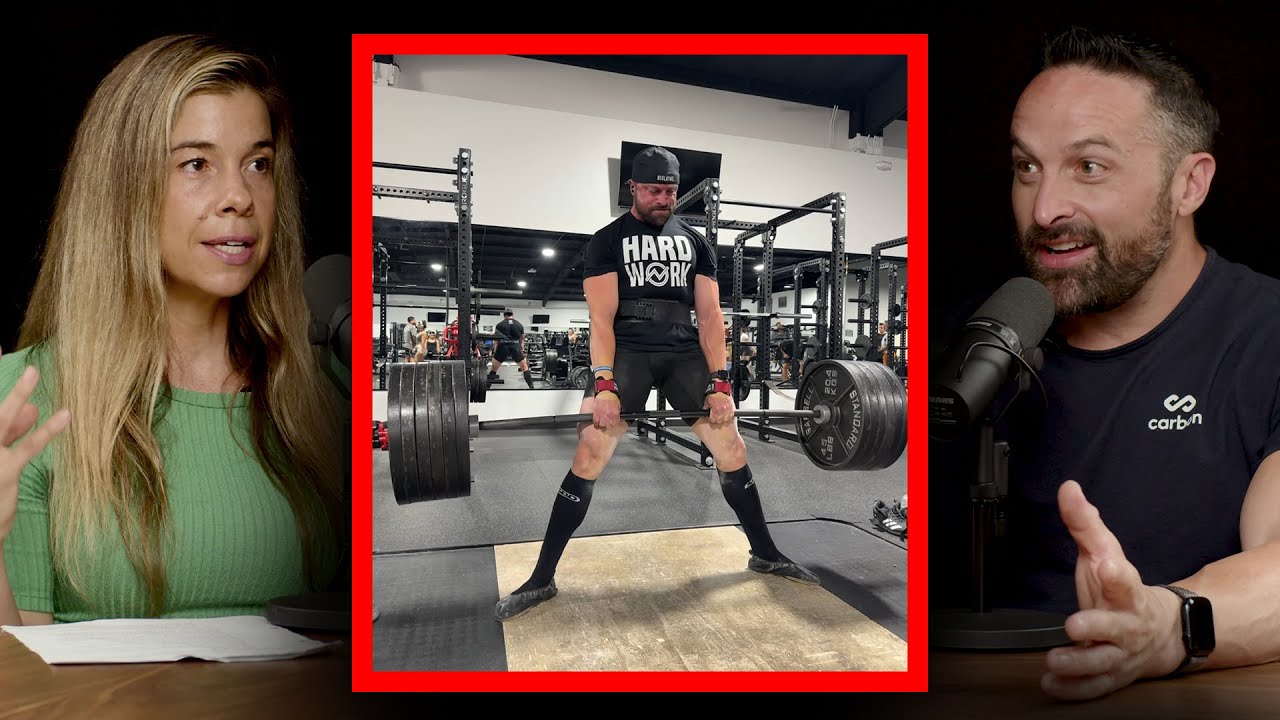
In this member Q&A clip, Dr. Rhonda Patrick explains how creatine replenishes phosphocreatine, which rapidly donates phosphate for ATP production during repeated high-intensity efforts. A loading phase of roughly 20 to 30 grams per day in divided doses can raise muscle stores quickly, while about 3 to 5 grams per day is commonly used for maintenance. Loading is optional, and the appropriate dose depends on body size, diet, goals, and tolerance.
Creatine has a large performance literature. By increasing available phosphocreatine, it can support repeated high-intensity work, training volume, strength, muscular endurance, fat-free mass, and recovery when paired with training. In a small randomized trial of adults aged 60 to 80, five grams per day during 12 weeks of supervised resistance training increased lean mass more than placebo plus training; measured strength and bone outcomes did not significantly differ between groups. [1]
Dr. Patrick places creatine within healthy aging because resistance training and adequate nutrition counter the loss of muscle, strength, and bone associated with sedentary aging. She also mentions emerging brain research without treating it as established proof for every cognitive outcome. Across a large safety literature, the most consistent effect is water-related weight gain. Evidence in healthy participants does not show kidney damage at studied doses, although kidney disease, pregnancy, medications, or unexplained laboratory changes warrant clinical guidance.
The hair-loss concern comes from one small crossover study of 20 college-aged male rugby players. A loading-and-maintenance protocol increased serum DHT, but the study did not measure hair growth or loss. [2] Most later studies found no meaningful change in total or free testosterone, but they generally did not measure DHT and therefore do not directly replicate the original finding. The evidence does not establish that creatine causes baldness; this narrow uncertainty should not outweigh the much larger performance, aging, and safety evidence reviewed in the clip.
- ^ Pinto, Camila Lemos; Botelho, Patrícia B; Carneiro, Juliana Alves; Mota, João Felipe (2016). Impact Of Creatine Supplementation In Combination With Resistance Training On Lean Mass In The Elderly Annals Of African Medical Research 7, 4.
- ^ 19741313
So the next question was submitted by Peter, and Peter asked about creatine. Peter says, creatine as a supplement is long touted as stimulating muscle growth. Is there any evidence for this? So we have a topic page on creatine. It's very in-depth. It goes into everything under the sun on creatine. So foundmyfitness.com/topics, they're alphabetized, click on C and you'll find creatine. Please go look that up if you want to learn what my team and I have put together on creatine. So how does creatine work? It does play a really important role in how our muscles produce energy. Inside of our muscles, creatine is transformed into phosphocreatine through the action of an enzyme called creatine kinase, which, by the way, requires magnesium to function.
So phosphocreatine is a key player in the production of ATP. This is the primary source of energy. Most all of our cells, particularly during high-intensity, short-duration exercise or long-duration endurance exercise as well. Supplementing with creatine can sort of supercharge this whole energy production process. It boosts our muscle's capacity to produce ATP. It enhances energy available, particularly under intense, you know, anaerobic activities. This increase in available energy can lead to improved muscle power, It can, you know, help performance as well. These enhancements can lead to, you know, even gains in muscle performance and growth. So, you know, creatine has— there's enough data out there to sort of make those statements.
Additionally, creatine has been shown to help speed up with muscle recovery post-workout, so potentially making it easier to bounce back after really intense training sessions. The International Society for Sports Nutrition regards creatine monohydrate as the most effective ergogenic nutritional supplement on the market for athletes and fitness enthusiasts looking to increase their strength, their power, muscle mass. Again, go to our topic page because it has all those studies backing up those statements. With respect to dosing, the research indicates that creatine monohydrate supplementation, a lot of the times, a lot of these studies were done with a loading phase.
So they're about 5 grams or approximately 0.3 grams per kilogram of body weight of creatine taken 4 or 5 times a day. So that's a lot of creatine. And that was able to increase creatine stores in muscle tissue by 20% to 40%, with continued supplementation, 3 to 5 grams per day required to kind of maintain those elevated levels. You know, a lot of the— there's a lot of studies dating back to the 1980s where oral creatine supplementation was routinely used to enhance physical performance. There's many studies now showing that, you know, muscle creatine uptake improves exercise performance while low creatine phosphate levels are related to muscle fatigue, particularly during physical activity.
So in particular, there's evidence suggesting that these people that are participating in heavy resistance training while supplementing with a total of 20 to 30 grams of creatine per day, they can maintain higher-intensity training. They can increase their fat-free mass. They can increase their endurance strength. And it promotes muscle recovery after exercise training. As we age, we do face the challenge of declining muscle mass, bone density, strength. That's part of the natural aging process, or should I say natural sedentary aging process. Engaging in resistance training is a way to counteract these, you know, age-related training, these age-related sedentary-related changes.
So this, you know, adding the creatine supplementation into that mix, particularly for older adults, may increase those benefits even more. They may amplify them. So there was a meta-analysis, again, which pulls together data from a lot of different studies, and it is found that combining resistance training with creatine supplementation does improve strength. It improves upper and lower body strength. It increases fat-free mass, and it enhanced muscular endurance and bone mineral density. There's also a variety of studies looking at creatine's effect on brain function as well that are very interesting. I'm also very interested in. You can find those on our topic page, on our creatine topic page, so make sure you check that out. Adverse effects, misconceptions of creatine.
There's been over 1,000 studies that have been conducted using creatine. And the really only consistent reported side effect from creatine supplementation has been, I would say, weight gain, but not fat mass. So this probably is water gain. But that's really the main, I would say, consistent main adverse effect with creatine supplementation. There's a lot of short-term and long-term studies in healthy and also people with diseases ranging from infants all the way to elderly. And the doses of creatine ranging from 0.3 to 0.8 grams per kilogram body weight per day for up to 5 years. And they've shown that creatine supplementation really has no adverse, serious adverse health risks. And again, may even promote a variety of health and performance benefits.
There's been a lot of interest in kidney damage or renal function, and there's really no— there's no data to support negative effects on kidney health with respect to creatine supplementation. Does creatine cause hair loss and baldness? I think that's another, I would say, misconception that sort of makes its rounds in the blogosphere and people's minds. So that link between creatine supplementation and hair loss originates from this one study. It was in college-aged male rugby players. And in the study, the participants took 25 grams of creatine a day for a week, just one week. And then they did— that was their loading phase. And then they did 5 grams a day for 2 more weeks.
And after the end of the 3-week trial, there was a notable increase in their serum DHT levels, their dihydrotestosterone levels. So it was a 56% rise after their initial week and then a 40% increase from baseline even after the maintenance period. So this outcome was significantly different from the placebo group, which consumed glucose instead of creatine. So the DHT has been— increases in DHT has been associated with hair loss in some cases. So the concerns about creatine contributing to baldness have come from this study and DHT levels, not, not any, you know, indication of actually those participants losing hair or anything like that.
There have been, there have been some subsequent studies exploring creatine's impact on testosterone levels to look at a little bit more of a broader perspective. So among 12 additional studies that have looked at creatine doses ranging from 3 all the way to 25 grams a day over periods of 6 days to 12 weeks. Only 2 of those studies out of the 12 observed minor increases in total testosterone that were deemed, you know, actually, they were deemed physiologically maybe relevant. The majority of them, 10 studies, found no change at all in testosterone levels. And then furthermore, in the studies that measured free testosterone, so this is the precursor for the DHT production, there were no increases at all that were detected.
So I think that that initial study has now sort of been called into question because there have now been a variety of studies that have come out that have shown there's really no evidence to support, you know, an increase in the testosterone or free testosterone or anything that would be leading to the DHT. Now, why they didn't measure DHT directly, who knows? But I would say right now it doesn't seem like it's a big concern based on those newer and the quantity of those newer studies. And so one study versus these other 12.
Supporting our work
If you enjoy the fruits of
 , you can participate in helping us to keep improving it. Creating a premium subscription does just that! Plus, we throw in occasional member perks and, more importantly, churn out the best possible content without concerning ourselves with the wishes of any dark overlords.
Creatine News
- Gut bacteria may help creatine reach the brain and support its antidepressant effects.
- Creatine supplementation does not influence hair growth or hormone levels even after three months of usage, undermining theories of its potential link to hair loss.
- Creatine improved bench-press strength and increased lean mass even without structured exercise in middle-aged adults.
- Creatine strengthened cancer-fighting immune cell activity and reduced tumor growth in a mouse melanoma model.