Sulforaphane boosts detoxification of air pollutants benzene and acrolein | Rhonda Patrick
Enter your email to get our 15-page guide to sprouting broccoli and learn about the science of chemoprotective compount sulforaphane.
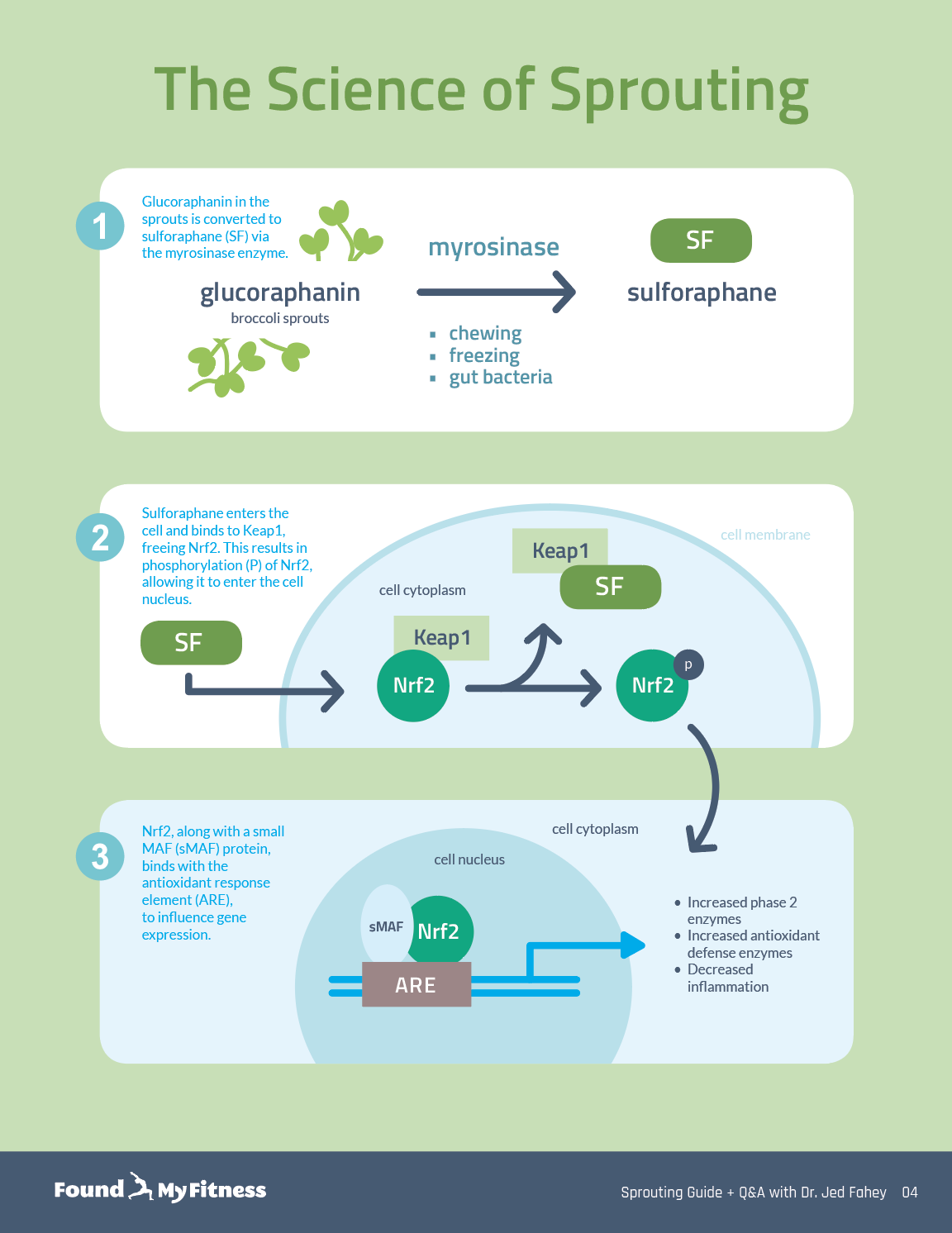
Broccoli sprouts are concentrated sources of sulforaphane, a type of isothiocyanate. Damaging broccoli sprouts – when chewing, chopping, or freezing – triggers an enzymatic reaction in the tiny plants that produces sulforaphane.
Get the full length version of this episode as a podcast.
This episode will make a great companion for a long drive.
Recent clinical evidence suggests that sulforaphane can help the body to rapidly excrete potential cancer-causing compounds, such as benzene and acrolein, which are prevalent in air pollution and cigarette smoke. Sulforaphane activates Nrf2, a master regulatory gene that orchestrates the expression of protective proteins that aid the body in combating oxidative stress. In this clip, Dr. Rhonda Patrick discusses the many ways in which sulforaphane aids the body in excreting harmful compounds.
There's been other studies showing that sulforaphane can cause immediately after— after 24 hours can cause you to excrete harmful— potential harmful carcinogens like benzene and acrolein by up to like 60%. So this is crazy. I remember that. Now do you think— so this is like what's found in air pollution, right? Yes. I mean, if you're a smoker, it's found in your cigarettes, but I mean, air pollution is a— is a major source of benzene. Yes. Couple questions there. One, okay, let's say I take this sulforaphane, I'm excreting all this crap out of my body. That we can clearly measure, right? Like let's say I continue to do this and I keep getting tested day after day.
Is there a point where the body's kind of like detoxed and all this crap's out of it or is this something that just continues to go on because it's built up so long in the body? Oh, great question. I think that has to do with the exposure. So these studies that were done, there's been more than one study done on the excretion of benzene. in China for the simple reason that there's a huge air pollution problem in China. And so, so you can imagine— and this is always the case for any sort of clinical trial you're doing. It's always nice— you'll see more robust results if you have a starting population with something that you need to fix, right? Right. So, so like, yeah, if you're trying to lower triglycerides, you want a population of people that don't already have low triglycerides.
You want them to have high and then see if you can lower them, right? So the same goes for like benzene. I mean, these people are being exposed to benzene daily. So it probably really depends on the exposure. And these days, you know, and if you live in an urban area, you're being exposed to it unfortunately. I mean, it's just tons of studies coming out on air pollution. Yeah, that would be a fun study to do, right? Just to see if it kind of like finally gets out of your system and then how long it takes before it builds back up. Yeah. Well, it— you know, part of the mechanism by which— and I sort of haven't gone into everything and do this, it would take too much time, but part of the Uh-huh.
And the mechanism by which this is happening is that sulforaphane activates a very, very important pathway involved in longevity called the NRF2 pathway. And this— basically what this master regulator gene does is it— it— when it gets active, it— it goes around and finds all these genes that have a very specific sequence of DNA in them called an antioxidant response element, binds to it and it like either turns them on or off depending on the gene. It's kind of elegant that, you know, basically sulforaphane does this and that, you know, it basically is the switch on for this whole system. And clearly, it's meant to happen. There's like identifiable sequence of DNA in tons and tons of genes that this master regulator will recognize and bind to. I mean, it's crazy.
It's super crazy to think about. Anyways, part of what it's doing is it's like turning— it's increasing the— what are called phase 2 detoxification enzymes. And those are responsible for detoxifying potential carcinogens and a variety of other harmful compounds. It also turns off what are called phase 1 biotransformation enzymes, which are enzymes that can actually take a pro-carcinogen and convert it into an actual carcinogen. So you actually want those turned down. Uh-huh. So it does all sorts of interesting things.
The simplest unsaturated aldehyde, created by the burning of glycerol in animal fat. Acrolein, a toxic, colorless liquid, is a strong irritant for the skin, eyes, and nasal passages of humans. It has a disagreeable, acrid smell, easily recognizable as the odor associated with burning fat.
A protein typically present in the cytoplasm of mammalian cells. Nrf2 can relocate to the nucleus where it regulates the expression of hundreds of antioxidant and stress response proteins that protect against oxidative damage triggered by injury and inflammation. One of the most well-known naturally-occurring inducers of Nrf2 is sulforaphane, a compound derived from cruciferous vegetables such as broccoli.
An isothiocyanate compound derived from cruciferous vegetables such as broccoli, cauliflower, and mustard. Sulforaphane is produced when the plant is damaged when attacked by insects or eaten by humans. It activates cytoprotective mechanisms within cells in a hormetic-type response. Sulforaphane has demonstrated beneficial effects against several chronic health conditions, including autism, cancer, cardiovascular disease, diabetes, and others.
Get email updates with the latest curated healthspan research
Support our work
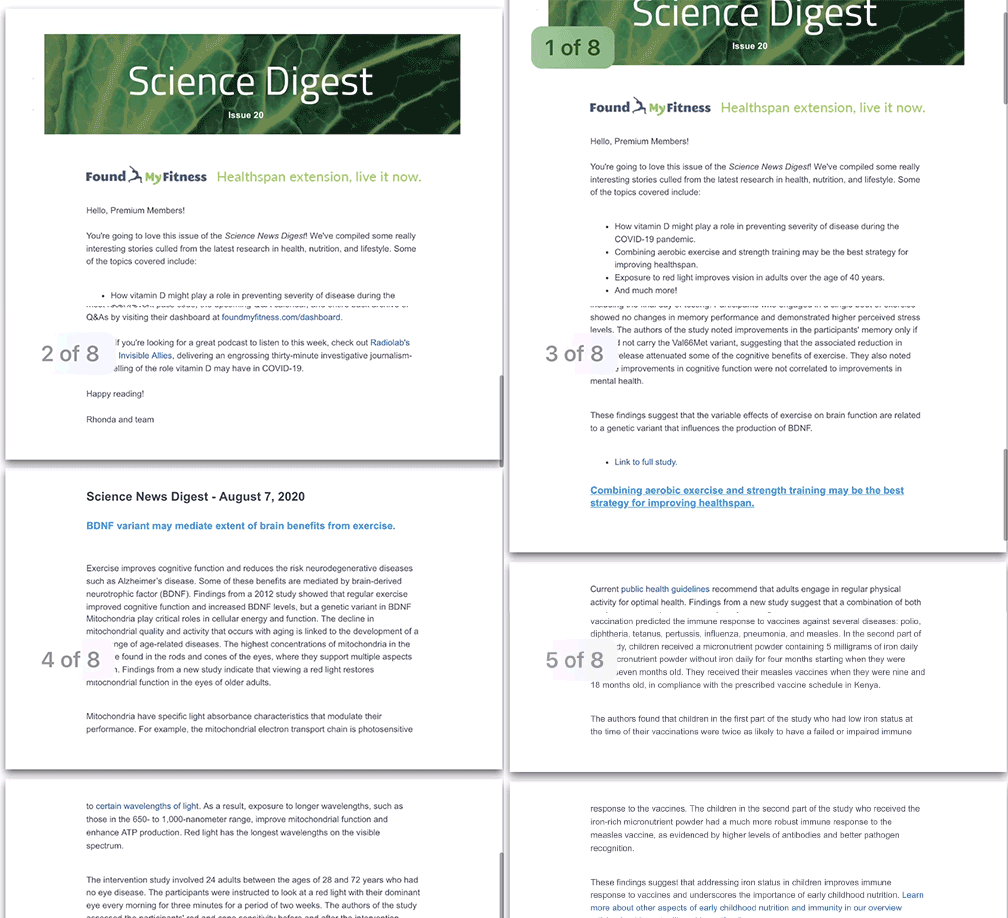
Every other week premium members receive a special edition newsletter that summarizes all of the latest healthspan research.
Sulforaphane News
- Another pilot clinical study finds sulforaphane increased blood glutathione levels and increased levels in brain.
- Sulforaphane (beneficial compound in broccoli) found to help with symptoms of autism. Improvements in various dimensions like social interaction.
- Sulforaphane extends lifespan and healthspan in worms via insulin and insulin-like growth factor-1 signaling.
- Consumption of broccoli sprouts during late gestation & lactation confers protection against developmental delay induced by maternal inflammation.
- Every 1 percent drop in body weight slows brain aging by nearly nine months, highlighting the substantial, and often overlooked, neuroprotective benef