Ultra-Processed Foods
Ultra-processed Foods (UPFs) featured article
Ultra-processed foods (UPFs) have quietly taken over modern diets, making up nearly 60% of the average American's daily intake. Unlike whole or minimally processed foods, UPFs are industrial formulations packed with additives, artificial ingredients, and refined sugars and fats designed to enhance taste and shelf life—but at a significant cost to health. These foods don't just contribute to obesity and metabolic disorders; emerging research shows they actively rewire the brain, altering decision-making, impulse control, and reward processing in ways that drive overeating. Incredibly, studies reveal that even five days on a high-calorie UPF diet can impair white matter integrity in the brain, diminish reward sensitivity, and increase liver fat by 63%, all without noticeable weight gain.
The real danger of UPFs isn't just their calorie content but their ability to disrupt metabolic and neurological pathways before visible signs of disease appear. By altering insulin signaling...
Episodes

Dr. Rhonda Patrick reviews a five-day snack-overfeeding study that changed liver fat and brain insulin response without increasing visceral fat.
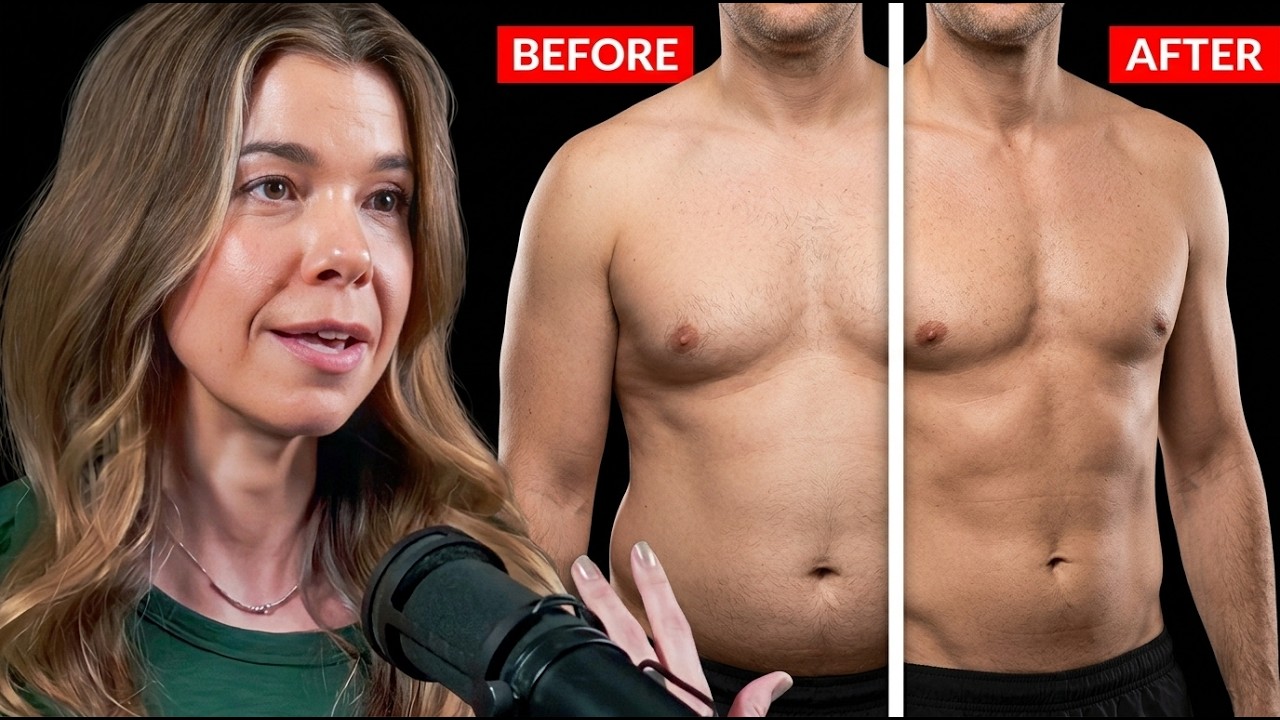
Dr. Rhonda Patrick explains how exercise, energy balance, sleep, menopause, and time-restricted eating relate to visceral fat.
Visceral fat is a highly metabolically active form of fat that accumulates deep within the...
-
Nutrition Exercise Brain Obesity Insulin Resistance Inflammation Fatty Liver Visceral Fat Ultra-Processed FoodsDr. Rhonda Patrick reviews a five-day snack-overfeeding study that changed liver fat and brain insulin response without increasing visceral fat.
-
Exercise Brain Diet Sleep Hormones Insulin Resistance Stress Satiety Time-Restricted Eating Weight Loss Visceral Fat Ultra-Processed FoodsDr. Rhonda Patrick explains how exercise, energy balance, sleep, menopause, and time-restricted eating relate to visceral fat.
-
Visceral fat is a highly metabolically active form of fat that accumulates deep within the...
-
Drs. Rhonda Patrick and Mark Hyman discuss how an ultra-processed diet can increase calorie intake and short-term weight gain.
-
Dr. Rhonda Patrick explains how ultra-processed foods can increase calorie intake, weaken satiety, and promote weight gain.
-
Natural flavors sound harmless—but are they? In this Aliquot, I unpack what "natural" and "artificial" really mean when it comes to ...
-
Dr. Rhonda Patrick explains how added sugar can transiently lower testosterone and reinforce dopamine-driven eating.
-
Dr. Rhonda Patrick's testimony before the United States Senate Special Committee on Aging.
-
In this clip, Dr. Rhonda Patrick discusses food chemicals, health risks, ultra-processed foods, and the safety of BPA-free products.
-
Processed foods fall on a spectrum, from minimally processed (like oatmeal or canned tomatoes) to ultra-processed...
Topic Pages
News & Publications
-
Xanthan gum is a food additive used to thicken and stabilize many processed foods. Although it is widely used, animal research has raised questions about whether regular intake could affect gut health. A new study examined whether xanthan gum could promote inflammation and alter the intestinal barrier.
The study included 32 adult male rats divided into four groups. For 10 weeks, one group ate a control diet, while the other three ate the same diet supplemented with 462.5, 925, or 1,850 milligrams of xanthan gum per kilogram of food. After the feeding period, researchers examined tissue from the lower part of the colon under a microscope and looked for proteins tied to inflammation and intestinal barrier function. They also analyzed gut bacteria and tracked food intake, body weight, and blood markers of metabolic health.
- Microscopic examination showed more inflammation, including more immune cells in the intestinal wall, in the middle- and highest-dose groups than in the control group, while the group with the lowest dose showed no clear difference.
- Staining of thin intestinal tissue slices showed that a greater proportion of cells contained TNF-α, a protein involved in inflammatory responses, at all three xanthan gum doses. Claudin-2, which forms channels between intestinal cells and can make the intestinal lining more permeable, was also found in more cells and across a wider area of the tissue in rats given xanthan gum.
- A separate test measuring total protein levels found higher IL-1β, another protein involved in inflammatory responses, only at the middle dose, while Claudin-2 and ZO-1, the latter of which helps organize the seals between intestinal cells, rose only at the lowest dose.
- Xanthan gum caused only a small change in gut bacteria. The variety of bacteria and how much of each common type was present remained similar between the diet groups.
- Body weight and blood markers of metabolic health did not clearly differ. The groups had similar food intake, weight gain, and body fat. Blood sugar and measured blood fats, including triglycerides and cholesterol, were also similar.
Xanthan gum may activate immune cells in the wall of the colon. Once activated, these cells can release proteins that attract additional immune cells into the tissue. As more immune cells accumulate and become activated, the tissue can become increasingly inflamed. The same signals can also affect the intestinal barrier, making it more permeable and allowing water and other dissolved substances to cross the intestinal lining more easily. Substances reaching the tissue beneath the lining could then further activate immune cells, reinforcing the inflammation. Because gut bacteria changed little overall, a broad disruption of the bacterial community is less likely to be the main explanation.
The study did not directly test whether the intestinal barrier became more permeable, and the inconsistent dose patterns make it less certain how confidently the observed changes can be attributed to xanthan gum. Because the study was conducted in rats, it also remains unclear whether the same effects occur in people. Confirmation in human studies would strengthen the case for greater caution around frequent intake of xanthan gum and the ultra-processed foods that often contain it. In Aliquot #111, I explain why ultra-processed foods and their additives are harmful.
-
Modern diets are often dominated by ultra-processed foods (UPFs), yet scientists still debate whether their harm arises mainly from their tendency to drive excess calorie intake or also from other aspects of industrial processing. To test this, researchers at the University of Copenhagen conducted a tightly controlled crossover study in healthy men.
The study enrolled 43 men aged 20 to 35, each randomized to two 3-week diet phases with a 12-week break between them. Both meal plans were matched for calories and macronutrients, but differed sharply in composition: the ultra-processed version supplied about 77% of calories from UPFs, while the minimally processed plan contained less than 1%. One study arm received adequate calories based on estimated energy expenditure and the other received 500 calories per day in excess.
Results showed that processing level, not just calories, shaped health outcomes:
- Men gained about 1.3 to 1.4 kilograms more (mostly from increased fat mass) on the ultra-processed diet than on the minimally processed diet, in both the adequate- and excess-calorie groups.
Adequate-calorie group:
- Total cholesterol and the LDL-to-HDL ratio were higher on the ultra-processed diet than on the minimally processed diet — both signs of worse lipid balance.
- The signaling molecule interleukin-4 (IL-4) increased on the ultra-processed diet. IL-4 is a cytokine with a dual role in immunity, promoting both allergic responses and supporting anti-inflammatory and tissue-repair processes.
Excess-calorie group:
- Diastolic blood pressure was higher on the ultra-processed diet than on the minimally processed diet.
- Growth differentiation factor-15 (GDF-15) decreased on the ultra-processed diet. GDF-15 is a mitochondrial stress signal that promotes energy expenditure and appetite suppression.
- Follicle-stimulating hormone (a hormone essential for sperm development) was lower on the ultra-processed diet, yet sperm concentration did not change.
Because calories and macronutrients were matched and estimated intake was similar within arms, the findings indicate effects attributable to processing level itself. The researchers suggest several explanations, including that the processing may increase the usable energy of foods or influence hormones that regulate appetite and metabolism. Packaging chemicals and additives might also contribute through subtle endocrine effects.
The study was brief, so some effects may not have had time to fully manifest, and it also depended on participants strictly adhering to the prescribed diets. Additionally, the findings published so far are not the main outcome the study was originally designed to test, but rather exploratory health measures the researchers chose to examine as well — so they should be viewed as early signals rather than firm conclusions. However, the pattern suggests that reducing heavily processed foods could benefit both metabolic and reproductive health. In this clip, I explain how ultra-processed foods impact appetite, inflammation, and long-term disease risk.