How Stimulants Change Motivation and Focus
Get the full length version of this episode as a podcast.
This episode will make a great companion for a long drive.
The Omega-3 Supplementation Guide
A blueprint for choosing the right fish oil supplement — filled with specific recommendations, guidelines for interpreting testing data, and dosage protocols.
You'll also receive updates from Rhonda & FoundMyFitness
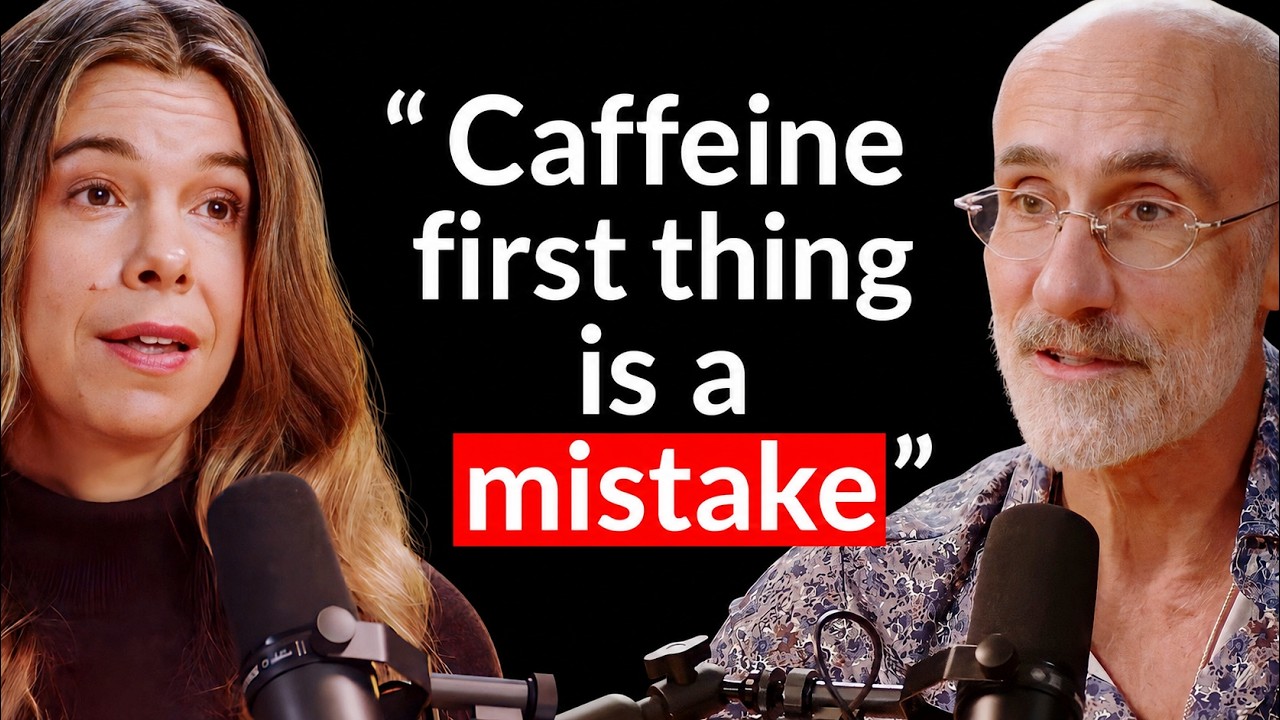
In this excerpt from Dr. Andrew Huberman's FoundMyFitness interview, he explains why people often reach for substances when motivation is low. Caffeine blocks adenosine signaling and can increase alertness; a PET study found that 300 milligrams increased striatal dopamine D2/D3 receptor availability. [1]
Prescribed stimulants can have clinical value for some conditions, while nonmedical use and dose escalation are different.
Dr. Huberman explicitly says he does not recommend nicotine. He describes his own limited nicotine-gum experiment while emphasizing that nicotine is reinforcing, constricts blood vessels, and raises blood pressure. A randomized imaging study found nicotine-gum-related striatal dopamine release in smokers, related to dependence severity. [2] This does not establish a safe cognitive-enhancement protocol.
He contrasts 2-milligram gum with pouches commonly containing roughly 4–8 milligrams each. He describes users escalating from one pouch to several per day or a canister every day or two, illustrating rapid dose escalation and habit formation.
Repeated stimulation can shift baseline experience. Caffeine withdrawal increased sleepiness and impaired selected performance measures, while regular use produced tolerance to some benefits. [3] Dr. Huberman favors training and behavioral cues as the foundation and warns that stacking caffeine, nicotine, music, and other rewards can make effort feel dependent on stimulation.
- ^ Volkow, N D; Wang, G-J; Logan, J; Alexoff, D; Fowler, J S; Thanos, P K, et al. (2015). Caffeine Increases Striatal Dopamine D2/D3 Receptor Availability In The Human Brain Translational Psychiatry 5, 4.
- ^ Takahashi H; Fujimura Y; Hayashi M; Takano H; Kato M; Okubo Y, et al. (2008). Enhanced dopamine release by nicotine in cigarette smokers: a double-blind, randomized, placebo-controlled pilot study. Int J Neuropsychopharmacol 11, 3.
- ^ Rogers PJ; Heatherley SV; Mullings EL; Smith JE (2013). Faster but not smarter: effects of caffeine and caffeine withdrawal on alertness and performance. Psychopharmacology (Berl) 226, 2.
Dr. Andrew Huberman: I think that people rely often too heavily on psychological motivators, and we overlook this entrainment phenomenon and the ability for our body to entrain to certain times. You know, I, for instance, it's a terrible thing, but I like to get up, hydrate, caffeinate slowly, do some mental work, and then my ideal training time, if I ever retire, I don't know that I ever will, but would be to train mid-morning, like 10:30. Amazing. I love it. My workouts are always best, et cetera, but my life isn't organized that way. So I like to try and exercise within an hour of waking up. But I have to drink caffeine first. I don't do my 90-minute delay thing. I drink my caffeine first if I'm going to exercise right away.
And I should say that for people that feel amotivated, what do we do? Generally, we consume things like caffeine, which, as we know, disrupts the adenosine system. So adenosine is a molecule of sleepiness or fatigue. Caffeine also upregulates dopamine receptors. Incidentally, it's actually shown in human dopamine receptors. Pretty interesting there. Regular caffeine consumption very likely increases the sensitivity and or number of dopamine receptors available. So whatever dopamine is released can have, quote unquote, more of an effect in terms of motivation and reward. People will take nowadays – and I'm not passing judgment here – but there's a lot of use of things like Adderall, modafinil, vyvanse, stimulants. What do all those stimulants do?
They release the catecholamines, mainly dopamine and epinephrine. They are amphetamines. Okay, people go, oh, my goodness, speed. But that's what they are. Again, not passing judgment. They can have certain positive effects for certain clinical issues in some cases. Again, not promoting or discouraging, just stating the reality. But what do people do? They take stimulants. What did I do right before this podcast? I'll come clean. I don't hide these things. I've been experimenting lately with two milligrams of Nicorette, nicotine in the form of gum. I don't smoke, vape, dip, or snuff. Those are all bad, carcinogenic, et cetera. I know people say vaping is not as bad. Vaping is bad, okay, is it as bad as smoking? Probably not, but it's not good for you. Don't vape. I just got some enemies.
But that's my read of the data. More coming. But nicotine taps into the acetylcholine system, increases focus. It also will tap into the epinephrine and dopamine system. It's highly reinforcing. So I limit myself to two milligrams, maybe four times a week total. And I'm thinking about stopping altogether because I'm just running this as an experiment on myself, and it really, really works for me. What does it do? It makes me more alert, more motivated. That also scares me. It's not, and many people I know that take, they're these pouches that come in canisters. I've never tried them. I don't want to. Those are generally four to eight milligrams of nicotine per pouch.
I hear over and over again that people take one, they love it, take one pouch, they then will do two a day, three a day, and pretty quickly they’re consuming a canister or so, if not every day, every couple of days. So it's a very quick route to, let's just call it habit. Is it addictive? Maybe. Is it habit forming? Clearly. And this is becoming all the rage now. I don't recommend it. Nicotine is a vasoconstrictor, which isn't good, raises blood pressure, et cetera. There's some evidence that nicotine can be a cognitive enhancer, and maybe later in life it might be something that I'll return to for that reason. But it does have certain health hazards.
Clips always get cut of me saying the cognitive enhancing part, but the point here is that when people feel amotivated, they tend to look for something that they can ingest. Remember, no effort, get the molecules going, and there's nothing wrong with that. A cup of coffee or espresso or yerba mate. I'll do all three sometimes. And you're more alert, you're more aroused. You need to do something with that energy and then try and lean into work. The problem is with pharmacology, it's hard to get the dose just right so that you have the ideal level of focus, ideal level of alertness, but not so much that you have agitation and your mind is kind of darting all over the place. So my typical thing is I will use coffee or yerba mate or both prior to a hard weight workout.
But when it comes to cardio, I try and do my cardio without any caffeine or even, and certainly no excessive caffeine. Maybe a half a cup of coffee, maybe a yerba mate or two, and then just get out and go run in my case, or do the HIIT workout and let the workout itself be its own source of neurochemicals. But that's just me. I know some people are doing the energy drinks combined with nicotine combined with, I mean, all sorts of stuff, and it's wild because then what they find is in the absence of those things, they're amotivated. Well, why? It was minimal to zero effort followed by high amplitude dopamine release and probably less directly from the exercise that you're doing.
Dr. Rhonda Patrick: Right. You talked about the stacking of things that are releasing dopamine, either because you enjoy them or they're something that can release dopamine, a substance is what will cause you to have the really high amplitude peak and then you can go below baseline. How does caffeine from coffee affect… So you mentioned the dopamine receptors. Is there like, long term? Because then you start to… You never feel as good as if you take a break from caffeine, then you have that first cup of coffee. Right?
Dr. Andrew Huberman: I know. I can't say I relate because I can't remember the last time I took a break from caffeine. I've done it when I had a cold or the flu, because I just don't want to drink caffeine under those conditions, usually like chamomile tea and I'm just huddling in bed or something. I love caffeine. I don't drink that much of it, but probably total out about 400 or 500 milligrams a day. I weigh 215, 220 pounds, so that's not that much. And I'm pretty caffeine acclimated. And I tend to drink caffeine in the early part of the day and not so much in the evening, certainly not after 3 p.m. So I can sleep well. But yeah, the stacking is something that…
I don't want to give the impression that if you have an energy drink like a pre-workout, and you've got the music blasting and you're hydrated and you slept great, have a great workout, like crush a workout every once in a while. But don't be surprised if the next time you're walking into the gym you don't feel quite as motivated. And I don't think one should rely on that every single time that you need to… If you need a stimulant every time you're going to exercise, you are creating a pattern of behavior and likely some underlying neurochemical habits that are not going to serve you well in the long run. You're going to feel less motivation to do the thing that itself can generate feelings of motivation. And that's what we've been talking about.
A cold shower would be a great one because of that long… I'm just fascinated by this. I've never seen anything else, no drug, prescription or otherwise, no supplement, no workout that I'm aware of, but I haven't explored every single one, that creates that long arc of dopamine, epinephrine and norepinephrine release that one minute, one minute of being uncomfortably cold can create. Now, in that study, it was a longer exposure. They used warmer temperatures and it was much longer. But I think based on my understanding of things you presented, and as I understand it, shorter, colder exposure no doubt creates similar subjective experience.
Dr. Rhonda Patrick: Yeah, well, I was going to ask you about that because there's a lot more papers looking at norepinephrine release with respect to cold exposure. And that can be even 20 seconds, like 39 degrees or whatever Fahrenheit.
Dr. Andrew Huberman: Quickening of the breath. Adrenaline is an incredible molecule.
Dr. Rhonda Patrick: But I'm wondering with the dopamine, what you think, and this can be, some of your opinion, is the minimum duration and what the temperature should be to get an increase in the dopamine peak above what you're at, like you're talking about.
Dr. Andrew Huberman: Yeah. So unfortunately, there hasn't been a lot of exploration of this, and there needs to be. And at one point, my colleague at Stanford, Craig Heller – who's done a lot on cold exposure and in particular palmar cooling for lowering core body temperature before exercise as a way to increase and prolong effort, a lot of Stanford athletes do this, other athletes, pro athletes do this as well, interesting topic – and I were considering doing some work on this, but we haven't gotten around to it. I guess we've both been busy with other things.
Supporting our work
If you enjoy the fruits of
 , you can participate in helping us to keep improving it. Creating a premium subscription does just that! Plus, we throw in occasional member perks and, more importantly, churn out the best possible content without concerning ourselves with the wishes of any dark overlords.
Caffeine News
- Exercising, drinking coffee and having sex are triggers that raise rupture risks for brain aneurysm, retrospective study finds. (2011)
- Consuming the caffeine equivalent of four cups of coffee up to 12 hours before bedtime reduces deep sleep by 21 minutes—undetectable by the consumer.
- Caffeine was shown to increase the activity of an enzyme (called NMNAT2) that is known to protect against dementia.