A Five-Part Morning Routine for Deep Focus
Get the full length version of this episode as a podcast.
This episode will make a great companion for a long drive.
The BDNF Protocol Guide
An essential checklist for cognitive longevity — filled with specific exercise, heat stress, and omega-3 protocols for boosting BDNF. Enter your email, and we'll deliver it straight to your inbox.
You'll also receive updates from Rhonda & FoundMyFitness
In this clip from the FoundMyFitness episode with Dr. Arthur Brooks, he describes the morning routine he uses to manage negative affect and prepare for concentrated creative work. He wakes before dawn, exercises, attends Mass, takes creatine, delays coffee, and eats a protein-rich breakfast. These steps form a repeatable personal practice that connects physical activity, spiritual reflection, and nutrition.
Several parts of the routine have independent scientific support. Morning light can influence alertness, mood, and circadian timing, while exercise can improve positive affect. In a small laboratory study, artificial dawn simulation supported mood and selected cognitive measures after sleep restriction. Dr. Brooks's exact practice of waking 96 minutes before dawn comes from the Vedic concept of Brahma Muhurta rather than a tested clinical protocol. [1] [2]
Creatine may provide modest cognitive benefits in some settings, although results in healthy adults are mixed. Research on protein-rich breakfasts also suggests possible benefits for satiety and selected concentration measures. Dr. Brooks waits about two and a half hours before taking 350 milligrams of caffeine. The benefit of that delay has not been tested directly, while research shows that a high dose can affect sleep even when taken many hours before bedtime. For his routine, the value comes from a consistent sequence that helps him move from waking to sustained creative work. [3] [4] [5] [6]
- ^ Gabel V; Maire M; Reichert CF; Chellappa SL; Schmidt C; Hommes V, et al. (2013). Effects of artificial dawn and morning blue light on daytime cognitive performance, well-being, cortisol and melatonin levels. Chronobiol Int 30, 8.
- ^ Tavares VDO; Schuch FB; Tempest G; Parfitt G; Oliveira Neto L; Galvão-Coelho NL, et al. (2021). Exercisers' Affective and Enjoyment Responses: A Meta-Analytic and Meta-Regression Review. Percept Mot Skills 128, 5.
- ^ Sandkühler JF; Kersting X; Faust A; Königs EK; Altman G; Ettinger U, et al. (2023). The effects of creatine supplementation on cognitive performance-a randomised controlled study. BMC Med 21, 1.
- ^ Xu, Chen; Bi, Siyuan; Zhang, Wenxin; Luo, Lin (2024). The Effects Of Creatine Supplementation On Cognitive Function In Adults: A Systematic Review And Meta-Analysis Frontiers In Nutrition 11, .
- ^ Dalgaard LB; Kruse DZ; Norup K; Andersen BV; Hansen M (2024). A dairy-based, protein-rich breakfast enhances satiety and cognitive concentration before lunch in overweight to obese young females: A randomized controlled crossover study. J Dairy Sci 107, 5.
- ^ Gardiner CL; Weakley J; Burke LM; Fernandez F; Johnston RD; Leota J, et al. (2025). Dose and timing effects of caffeine on subsequent sleep: a randomized clinical crossover trial. Sleep 48, 4.
Dr. Arthur Brooks: I have very strong, science-based protocols dedicated to lowering negative affect and increasing productivity and creativity.
Dr. Rhonda Patrick: So tell me.
Dr. Arthur Brooks: Yeah, for sure. It is all designed to do so: what I ingest, when I ingest it, and what I actually do.
I get up very early. There is a lot of research on how the brain works. There is an ancient Vedic literature on something called the Brahma Muhurta. I spend a lot of time in India. I go to India every year, and I study with both scientists and spiritual teachers. I am a Catholic, but I do that anyway because it is really good stuff.
They have always talked about the Brahma Muhurta, which in Sanskrit means “the creator’s time.” It is an hour and 36 minutes before dawn. A muhurta is 48 minutes long in ancient Vedic physics. That is arbitrary from a scientific point of view, but there is research suggesting that being awake before dawn while the sun is rising has neurochemical and immune effects. I have seen literature suggesting that you are more productive, effective, creative, focused, and happy. Andrew Huberman talks about sunrise a lot too.
That is what I practice. I get up at 4:30. I usually work out from 4:45 to 5:45 every morning. I am a seven-day-a-week guy, which means I have to be careful not to damage my joints. I want to be working out when I am in my 80s, a couple of decades from now, so I have to structure it well. A lot of it is zone 2 cardio and sometimes zone 3 or high-intensity interval training, but I also do a lot of resistance training. I am able to stay healthy without using hormones, which is a nice side effect. That manages my negative affect from the first moment.
The second thing I do is metaphysical fitness. That is my second technique for managing negative affect, but it is also personally important to me. I go to Mass every day because I am a Catholic. It is the most important thing in my life. I have also studied Vipassana meditation and Stoic philosophy. Everybody has to find their thing—something they practice that is a form of transcendence, to focus on things greater than themselves every day.
I go to Mass from 6:30 to 7:00 every day. When I am at home, I go with my wife. When I am traveling, I go by myself. The great thing about the Catholic Church is that it is like Starbucks: it is a high-quality, uniform product and is easy to find. For me, that works.
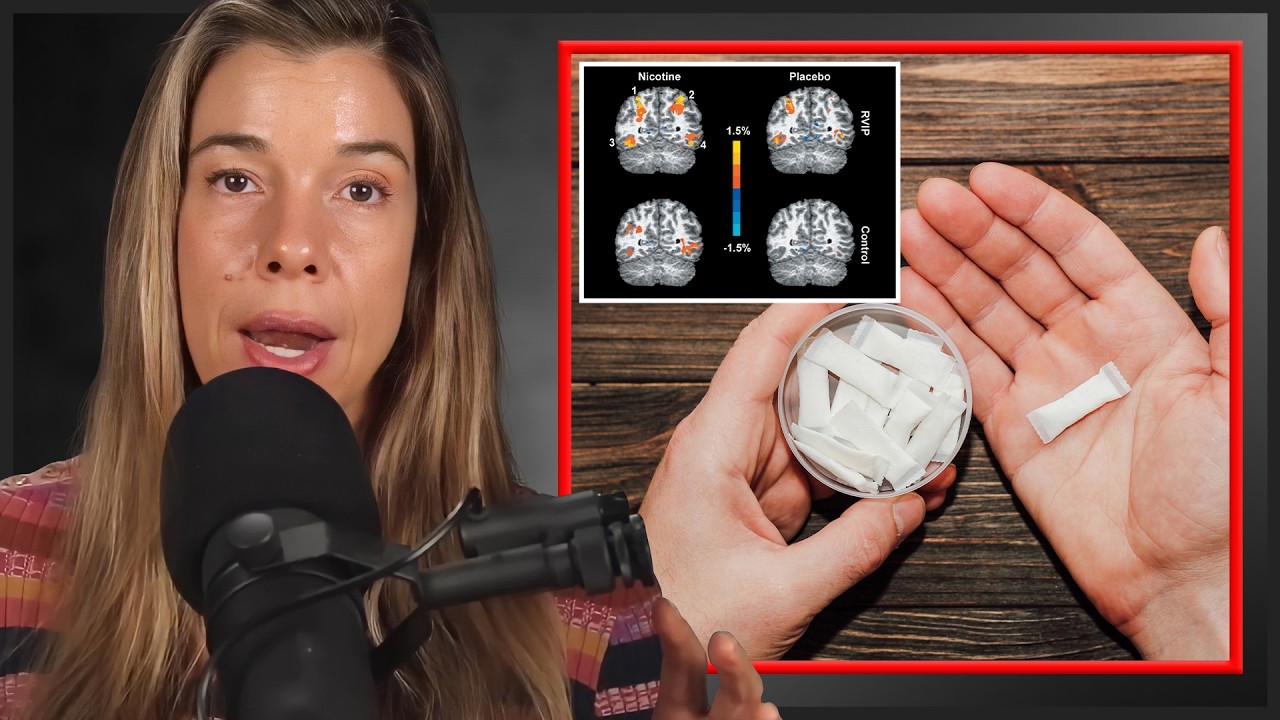
At this point, I have not ingested anything except electrolytes with 10 grams of creatine monohydrate. I want that second 5 grams because it may be good for the brain. I have heard you talk about the research, and it is great.
I am not ingesting anything else until I get back. Then I self-administer a psychostimulant: caffeine. I like caffeine. I grew up in Seattle and drink a lot of dark-roast coffee. The more they burn it, the better I like it. I drink 350 milligrams of caffeine as a bolus after I get back and before I eat anything. At that point, it has been two and a half hours since I got up. The idea about waiting for adenosine to clear is contested, but it works for me. I do not get an afternoon crash.
Only then do I eat. I get about 60 grams of protein in my first meal of the day. Greek yogurt has a lot of tryptophan, and that will hold you. When I get to work, I can do three and a half hours of concentrated creative work. I cannot write for three and a half hours unless I set up my day in a particular way. I am also not unbearable to live with because I have managed my negative affect. That is my five-part protocol.
Attend Monthly Q&As with Rhonda
Support our work
The FoundMyFitness Q&A happens monthly for premium members. Attend live or listen in our exclusive member-only podcast The Aliquot.
Cognition News
- Late-life treatment with the GLP-1 receptor agonist semaglutide extended lifespan, preserved physical function, and improved memory in female mice.
- Three midlife vascular risk factors were linked to nearly 13 fewer dementia-free years.
- Omega-3 supplementation during pregnancy altered children's brain metabolism a decade later.
- Hormone replacement therapy may be linked to better cognitive performance in aging women.
- Parenthood may be linked to better cognitive performance and younger-looking brains.