How Exercise Snacks Add Vigorous Movement to the Day
The BDNF Protocol Guide
An essential checklist for cognitive longevity — filled with specific exercise, heat stress, and omega-3 protocols for boosting BDNF. Enter your email, and we'll deliver it straight to your inbox.
You'll also receive updates from Rhonda & FoundMyFitness
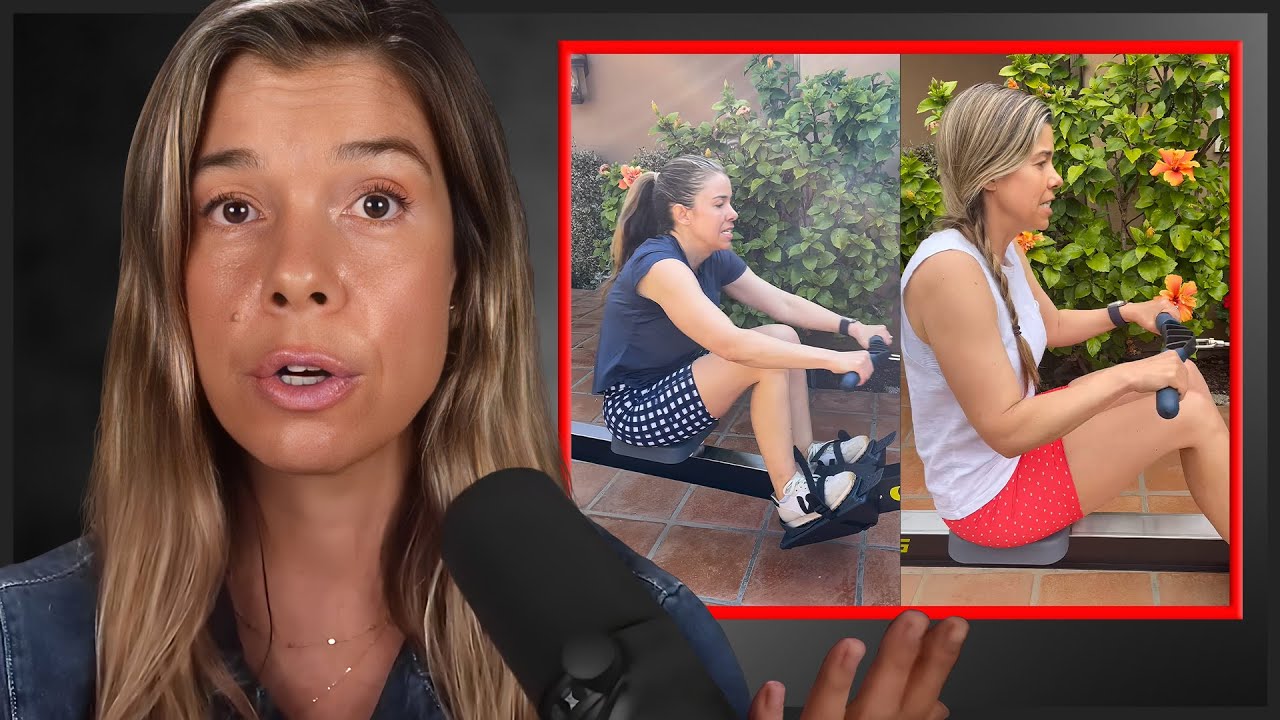
Exercise snacks are brief bursts of activity that make vigorous movement easier to fit into an ordinary day. In this clip from Dr. Rhonda Patrick's presentation for Biote, she describes bodyweight squats, stair climbing, brisk walking, and other short efforts that raise the heart rate. In more than 25,000 adults who reported no leisure-time exercise, about three daily bouts of vigorous intermittent lifestyle physical activity lasting one or two minutes were associated with lower all-cause, cardiovascular, and cancer mortality. [1]
Short activity breaks can also support glucose control during prolonged sitting. In a randomized crossover study of 18 young men with overweight or obesity, ten three-minute walking or squat breaks spaced every 45 minutes across 8.5 hours lowered post-meal glucose exposure more than uninterrupted sitting or one continuous 30-minute walk. The study tested repeated three-minute breaks, while Dr. Patrick uses a one-minute group squat as a practical demonstration. [2]
Brief vigorous training can improve fitness even when the sessions are small. In a six-week trial of 24 sedentary young adults, three vigorous ascents of a three-flight stairwell per day, separated by one to four hours, improved cardiorespiratory fitness. Vigorous intensity is relative to current fitness, so exercise snacks can begin with manageable movements and progress over time. These short bouts complement, rather than replace, regular aerobic and resistance exercise. [3]
This clip is excerpted, with permission, from Dr. Rhonda Patrick's presentation for Biote. Thank you to Biote for allowing us to share it.
- ^ Ahmadi, Matthew N; Doherty, Aiden; Gibala, Martin J.; Gill, Jason M. R.; Hamer, Mark; Stamatakis, Emmanuel, et al. (2022). Association Of Wearable Device-Measured Vigorous Intermittent Lifestyle Physical Activity With Mortality Public Health Nutrition 28, 12.
- ^ Gao Y; Li QY; Finni T; Pesola AJ (2024). Enhanced muscle activity during interrupted sitting improves glycemic control in overweight and obese men. Scand J Med Sci Sports 34, 4.
- ^ Jenkins EM; Nairn LN; Skelly LE; Little JP; Gibala MJ (2019). Do stair climbing exercise "snacks" improve cardiorespiratory fitness? Appl Physiol Nutr Metab 44, 6.
But what if you don't have a lot of time and you still want improvements in brain health, heart health, and cancer risk? There's something called exercise snacks. These are really short bursts of vigorous-intensity exercise. Again, you're going to 80% or more of your maximum heart rate, and the burst could be one to three minutes long. They can be any type of exercise you like to do. You could do bodyweight squats, burpees, high knees, or jumping jacks. There's lots of different ways to do exercise snacks. But there's now a lot of evidence out there that they're highly beneficial. In fact, there've been about three very large studies. They examine vigorous intermittent lifestyle physical activity, or VILPA, V-I-L-P-A.
These studies have been done in people wearing accelerometers, so researchers can measure movement intensity and distance. Researchers found that people who did one- to two-minute vigorous bouts three times a day had 40% lower cancer-related mortality, 40% lower all-cause mortality, and 50% lower cardiovascular-related mortality than people who did not do these types of short bursts of exercise throughout the day. This was true even in people who identified themselves as non-exercisers. In other words, people who said, "No, I don't go to the gym. I don't take time out of my day to exercise." Yet they were doing these types of exercise snacks. In many cases, it wasn't the structured type of snack I told you about where you get up and do some air squats. It's more like taking advantage of everyday situations. For example, "I'm not going to use the elevator. I'm going to sprint up the stairs. Not just walk. I'm going to go fast, right?" Or, "I'm going to briskly walk to the office." They're taking advantage of everyday situations to get their heart rate up, and it really does pay off.
There are many ways that you can actually implement exercise snacks throughout your day. A recent study found that doing about 30 bodyweight squats every 45 minutes during a seven-and-a-half-hour workday improved glucose metabolism more than a 30-minute walk. I love doing exercise snacks. We're actually all going to get up right now, and we're going to do just one minute of bodyweight squats. What do you think? One minute of bodyweight squats? Everyone, turn to the side. I'm going to set my timer. Okay, is everyone up? Are you ready? So, we're going to do bodyweight squats. Put in the effort. Don't just go through the motions. Try to go fast. Try to squat as low as you can.
All right, here we go. One, two, three. So, we're going to do one minute of this. Really try to get your heart rate up. Feel the burn. Feel uncomfortable. Okay, we got 45 seconds left. Now, I'm not going as fast because I want to be able to talk, but usually I'd be going a lot faster. We got 30 seconds left, guys. I know you're thinking, "What? This is the longest minute of my life." Okay, we only got about 15 seconds left. Come on, don't stop now. Keep going. Ten, nine, eight, seven, six, five, four, three, two, one. All right, everyone. Amazing. If you don't feel great right now, there's something wrong with you. So, set your timer for 45 minutes. Do it again. No, but seriously, when you're sitting, you can take one minute.
I don't care if you're in your office with a patient. Do it with your patient. You can take one minute. If you're at your desk, I'm serious. Try to find a way to implement exercise snacks. It'll change your life.
Attend Monthly Q&As with Rhonda
Support our work
The FoundMyFitness Q&A happens monthly for premium members. Attend live or listen in our exclusive member-only podcast The Aliquot.