Importance of carotenoids for eye health | Bruce Ames
The Omega-3 Supplementation Guide
A blueprint for choosing the right fish oil supplement — filled with specific recommendations, guidelines for interpreting testing data, and dosage protocols.
You'll also receive updates from Rhonda & FoundMyFitness
Carotenoids are molecules ubiquitous in nature that prevent cellular damage from the sun. In this clip, Bruce Ames explains that two carotenoids in the eye, lutein and zeaxanthin, are able to mitigate the harmful effects of singlet oxygen produced by sunlight. Deficiency of these two carotenoids leads to macular degeneration. He shares that he is currently writing a paper arguing that lutein and zeaxanthin should be considered vitamins because they are critical for long-term health of the eye.
This transcript is reserved for members.
FoundMyFitness Members get access to exclusive content not available anywhere else, including a transcript of this episode.
You wouldn't believe how cool being a premium member of the world's best cross-disciplinary science-focused website and podcast really is.
Organic pigments that are found mainly in the chloroplasts of plants and are responsible for absorbing light. Plants use carotenoids to create energy and protection from harmful UV rays and animals commonly use carotenoids as a precursor for vitamin A.
Get email updates with the latest curated healthspan research
Support our work
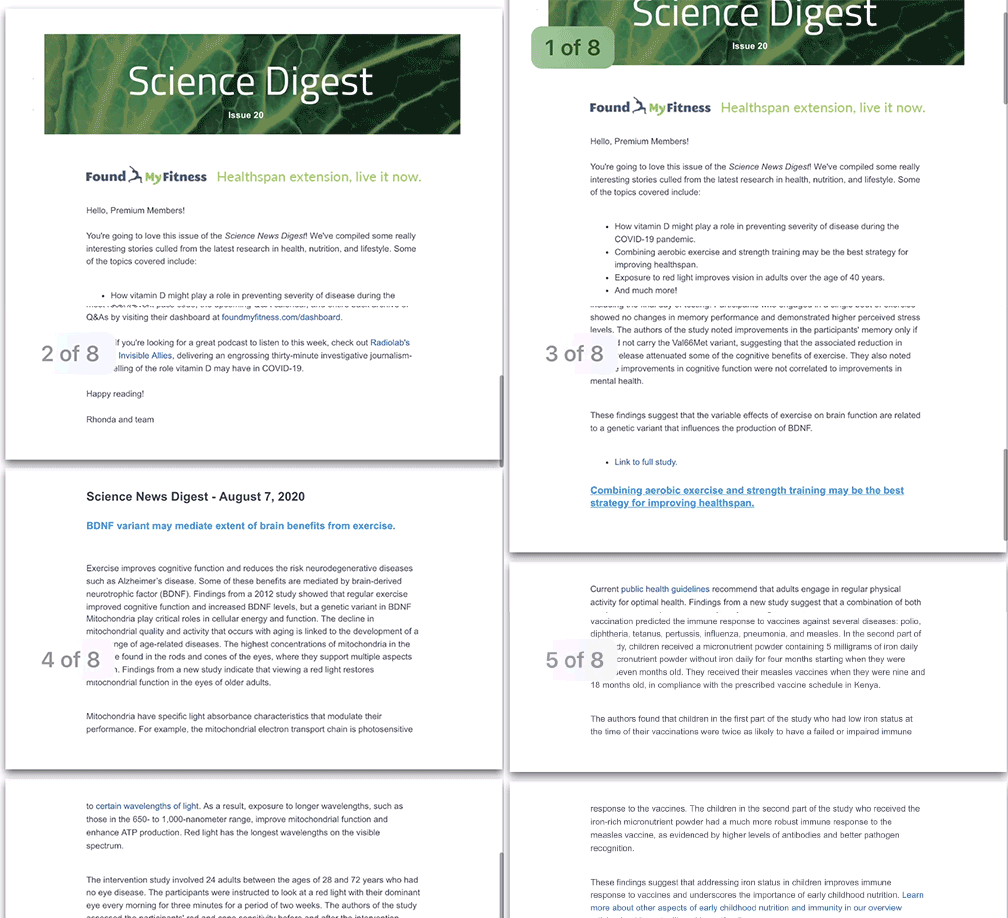
Every other week premium members receive a special edition newsletter that summarizes all of the latest healthspan research.
Vitamin d News
- Check out the Vitamin D Infographic I was privileged to be able to do in collaboration with FMF!
- Low magnesium levels impair vitamin D metabolism.
- Supplementing with 4,000 IU of vitamin D per day for 16 weeks reversed epigenetic aging by 1.85 years in overweight and obese African Americans
- Berries have a compound called pterostilbene that works with vitamin D to improve immune function against infection


