Lifestyle Factors That Influence Testosterone
Get the full length version of this episode as a podcast.
This episode will make a great companion for a long drive.
The BDNF Protocol Guide
An essential checklist for cognitive longevity — filled with specific exercise, heat stress, and omega-3 protocols for boosting BDNF. Enter your email, and we'll deliver it straight to your inbox.
You'll also receive updates from Rhonda & FoundMyFitness
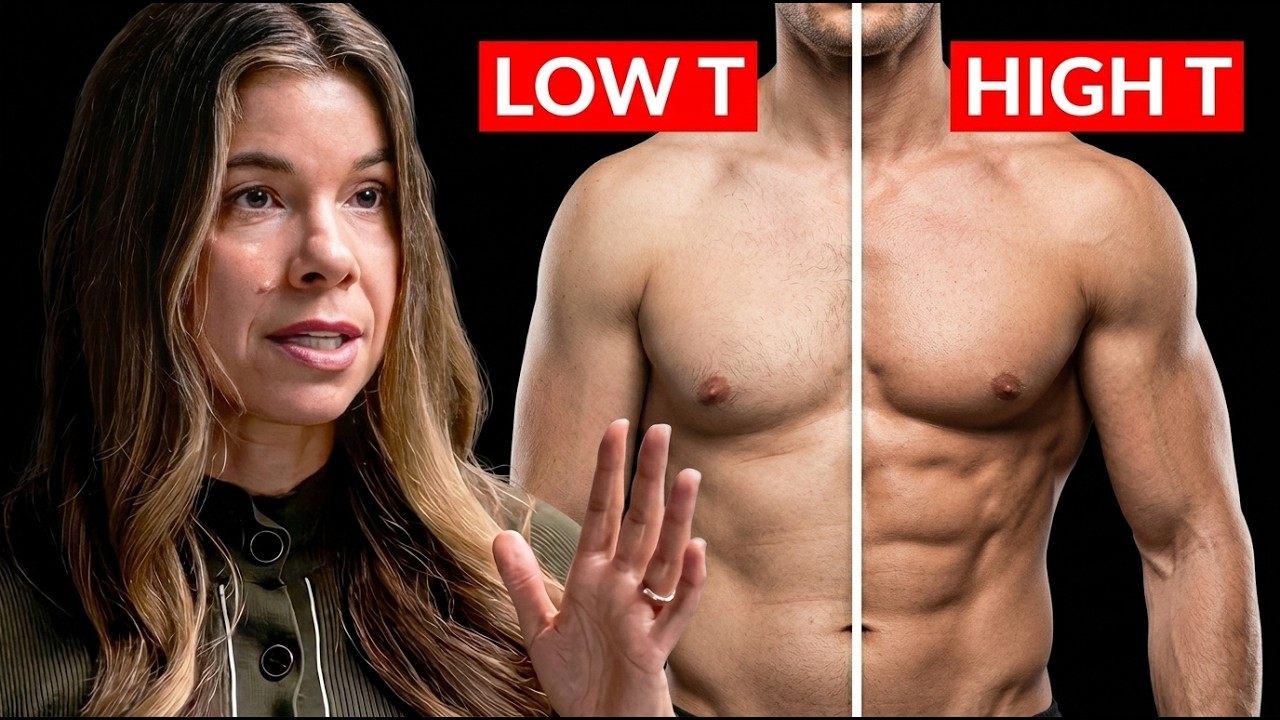
In this clip from Dr. Rhonda Patrick's interview with Derek from More Plates More Dates, Derek explains why testosterone is not an on-or-off state. He discusses body composition and environmental exposures as possible influences on hormone production and signaling, while emphasizing that effects vary between people.
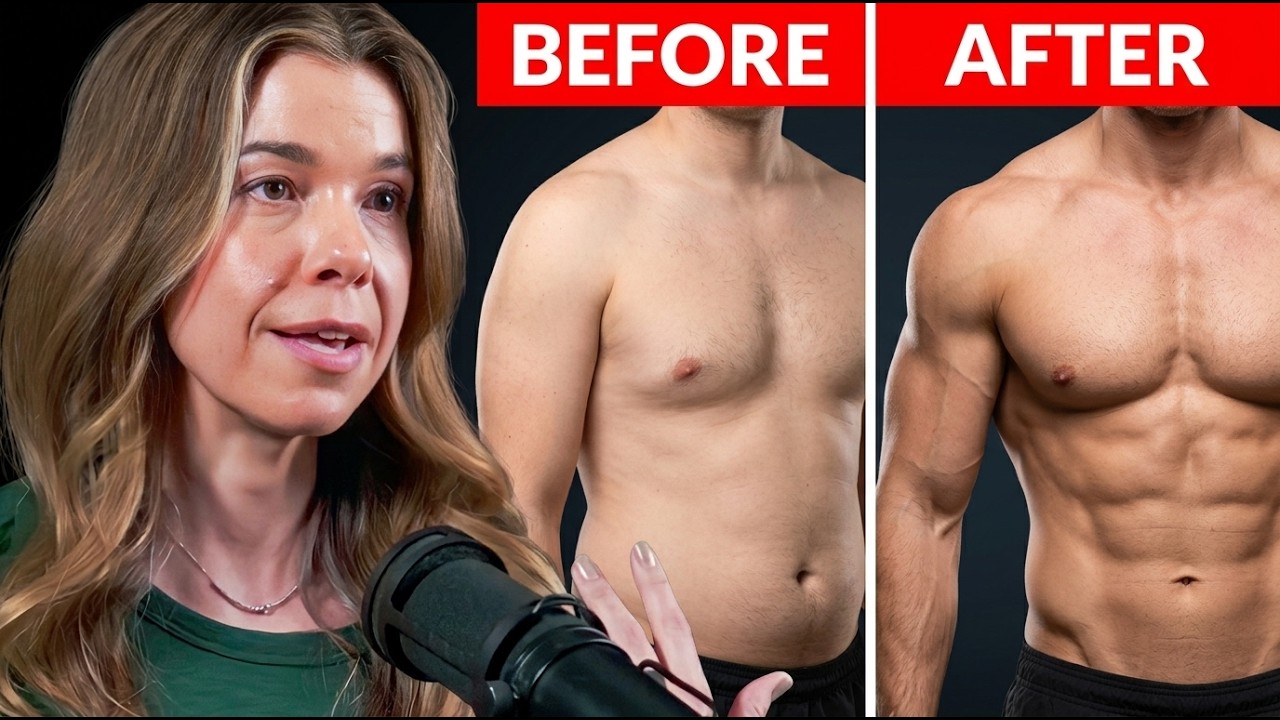
A central focus is obesity. Derek explains how excess adipose tissue can alter feedback between testosterone and estrogen, and how fat loss may help restore a healthier balance. A clinical review identifies obesity as a major risk factor for functional secondary hypogonadism and reports that substantial weight loss can reverse it in some men. [1]
The clip also raises questions about micronutrient status. A systematic review found a slight association between vitamin D status and total testosterone, with substantial heterogeneity, and concluded that both may reflect overall health status. This supports evaluating nutrient status in context rather than assuming one supplement approach fits every person. [2]
- ^ Fernandez CJ; Chacko EC; Pappachan JM (2019). Male Obesity-related Secondary Hypogonadism - Pathophysiology, Clinical Implications and Management. Eur Endocrinol 15, 2.
- ^ D'Andrea S; Martorella A; Coccia F; Castellini C; Minaldi E; Totaro M, et al. (2021). Relationship of Vitamin D status with testosterone levels: a systematic review and meta-analysis. Endocrine 72, 1.
Dr. Rhonda Patrick: So you mentioned that by age 30, total testosterone decreases by about 1% per year, and then you mentioned even—
Derek from MPMD: In general.
Dr. Rhonda Patrick: In general, right. On average. Yeah, exactly. And that's where I was going to ask.
Derek from MPMD: I've absolutely seen 70-year-olds with 900 total T levels.
Dr. Rhonda Patrick: So the question is then, are there lifestyle factors that really can sort of modulate that general decrease or not? Maybe they can accelerate it, or maybe slow it, right? And I want to dive into some of those lifestyle factors. What should men avoid or try to minimize in terms of their environmental exposure, or what lifestyle factors are known to accelerate the decline in testosterone and/or increase the binding protein so there's less free testosterone? Anything that's going to regulate the ability of testosterone to exert its function, essentially.
Derek from MPMD: I would love to bang out an exhaustive list, but forgive me. I guarantee we'll miss something. Alcohol's direct toxicity effects inhibit steroidogenesis in the testicles themselves. It will also impact sleep dramatically, which has the backhand effect of inhibiting the output of signaling hormones. Indirectly, that will also impact body composition and the whole downstream cascade. Smoking is obviously not helpful.
Dr. Rhonda Patrick: How much alcohol is it? Is it any amount, or light drinking, moderate drinking?
Derek from MPMD: I think obviously the safe answer for me is to say no drinking. I think it would be more of a dose-dependent toxicity effect, and it depends on your capacity to handle it. Ultimately, the testes are very affected by oxidative stress. If you're not capable of handling that adequately, it will be reflected in inadequate local hormone output. I would love to give hard-and-fast numbers, but there are a lot of people who will be able to get away with murder and probably be okay. Some guys might have low-normal function to begin with, and a couple of drinks a week might throw off their sleep a bit and push them over the edge. It all depends. It is very much a spectrum. Going from optimal to blatantly hypogonadal from a symptom perspective is not just on versus off. The way there is a transition of shittiness as you arrive at that worst-case scenario.
Derek from MPMD: Other things I could point to: if you have a totally fat-deficient diet, I think that macro distribution is almost certainly going to hinder your capacity to produce hormones. Also, if you have a diet devoid of carbohydrate intake, it would inhibit freely circulating hormones from liberating themselves. With a lack of protein, you would not be able to get as robust of a response when recovering from workouts or build muscle, which would indirectly improve body composition and your hormones. So it's all kind of like: balanced diet, don't eat bad.
Derek from MPMD: I could definitely point to micronutrient intake if you're deficient. Not every mineral or vitamin is going to have a game-changing, dramatic impact on your testosterone levels, but things like zinc, magnesium, and vitamin D all have a marked impact on your testosterone response or your capacity to produce it. Or even, like you mentioned in our podcast, the conversion of vitamin D into active vitamin D. You might think you have adequate vitamin D status because the dose you're taking is super high, but you're not actually utilizing it. You think you are, and that's impacting your testosterone production and your response to it at the androgen receptor itself as well.
Derek from MPMD: From a vitamin and mineral standpoint, the low-hanging fruits are typically B vitamins. But in particular, magnesium, zinc, and vitamin D3 are three things that, on top of the minerals and vitamins everyone is familiar with from multivitamins, are more difficult to get in adequate doses. Zinc is typically adequate in many multivitamins, but magnesium almost never is because of its weight. Otherwise, you would have to take a multivitamin that's 8 to 10 capsules, which nobody does. Vitamin D is fat-soluble. Typically, you're going to have it in a softgel, and it's not always going to be at the dose you need in a multivitamin. So, just worth noting. Those are some low-hanging fruits. If you don't look at them as part of your micronutrient optimization strategy, you could be overlooking a deterioration of 100-plus nanograms per deciliter per deficient micronutrient, potentially, depending on how severe the deficiency is.
Derek from MPMD: Another thing I could point to is being obese. That's probably the worst one and should have been mentioned first because it dramatically impacts negative feedback to your hypothalamic-pituitary axis. By that I mean, in men and women, a significant amount of fat will elevate aromatization, which is the conversion of testosterone to estrogen. This is more impactful in males because the brain is signaled more significantly by estrogen than by testosterone directly. There's a bit of nuance there. But in general, you need adequate estrogen to tell your brain, "Okay, we're good. You don't need to make more testosterone because I have enough estrogen." That's the downstream cascade of these metabolite conversions. You produce testosterone to produce other things too, and estrogen is a very potent mediator of telling your brain, "We're good."
Derek from MPMD: If a significantly elevated amount of estrogen is being converted from the testosterone you make because of how much fat you have, you are achieving a proportional increase in estrogen that is much higher than the amount of testosterone substrate that led to that conversion. So you have that signal telling your brain, "Okay, we're good," but the amount of testosterone you had to begin with was not good. That's problematic. I would love to give hard-and-fast numbers, but the difference for people who are obese could be significant, maybe half of a reference range. It could be the difference in quality of life between being fine and being blatantly deficient. And what else could I point to?
Dr. Rhonda Patrick: What does weight loss do to those levels? If you are someone that's obese and then you lose weight, does that bring you back?
Derek from MPMD: Yeah, as long as you are losing, ideally, visceral fat. Overall fat loss is going to be very supportive of getting the amount of estrogen, estradiol in particular, back into balance. Once that balance is favorable because you are leaner, you will have balanced feedback to the brain. That regulates the homeostasis between adequate testosterone and estrogen. So you will actually notice more testosterone being produced because, to get this signal that we deem adequate, we had to produce more testosterone to get that amount of estrogen. There's a Goldilocks zone. Of course, you can't just become a malnourished, bodybuilder-shredded person and continue to get this elevation in proportion. At some point, you will end up starving your body of the nutrients needed to support hormone production. But in general, guys who are around 12 to 15% body fat will find that they have a dramatic increase in testosterone relative to when they were obese. It's super significant in how much it will improve hormone status.
Dr. Rhonda Patrick: I wanted to get your opinion on endocrine-disrupting chemicals. How have you or your company looked at them? Have you seen anything, or do you have any speculation as to what the scientific literature has shown in terms of them affecting hormone levels?
Derek from MPMD: Yeah, I think we're pretty convinced that there is an effect. It's just that the magnitude often gets hyped up and may be overexaggerated. There are low-hanging-fruit things to avoid. Don't use plastic Tupperware and heat it up. Try to use glass when you can. Try to ensure you have high-quality air if possible. I think pollution is a big factor in your body's capacity to deal with stress. The allocation of resources to chronically deal with a toxic environment will inhibit broad systemic processes. If you could make sure you have decent water quality, that'd be solid.
Derek from MPMD: As far as the actual magnitude of impact for most people, I think those things are going to be relatively negligible in contrast to obesity, diet, exercise, sleep quality, and the potential carcinogens they might be exposed to. Some of the lifestyle factors are more important to address as the base infrastructure before you start thinking, "Oh, it must be my shower shooting chlorine at me." Sure, get a shower filter, but it's not going to be the game changer. I do think you should avoid the basics, though. Switch to glass where you can. Don't use plastic water bottles, things like that.
Derek from MPMD: There is blatant evidence showing interactions with estrogen receptors by some of these compounds, as well as interactions with androgen receptors. In turn, those interactions will impede the ability of the hormones you produce to bind to those receptors and do what they need to do. So you're essentially competing with yourself for activity in the body. Even if they're low-activity compounds, they still act as anti-androgens or anti-estrogens by occupying receptors. To whatever degree they are doing that, it is not ideal because it's inhibiting space that could be occupied by endogenous hormones that you need to produce and need to work properly. You don't want to be competing with environmental toxins to do things in the...
Attend Monthly Q&As with Rhonda
Support our work
The FoundMyFitness Q&A happens monthly for premium members. Attend live or listen in our exclusive member-only podcast The Aliquot.
Testosterone News
- Adiposity may account for much of the testosterone decline commonly attributed to aging.
- Testosterone therapy without clear evidence of symptomatic deficiency may be linked to higher long-term cardiovascular risk.
- Testosterone signaling slowed brain tumor growth in male mice and was linked to longer survival in older men.
- Creatine supplementation does not influence hair growth or hormone levels even after three months of usage, undermining theories of its potential link to hair loss.
- Men with low testosterone are five to six times more likely to develop dementia.