How to Reduce Plastic Exposure From Food and Water
The Omega-3 Supplementation Guide
A blueprint for choosing the right fish oil supplement — filled with specific recommendations, guidelines for interpreting testing data, and dosage protocols.
You'll also receive updates from Rhonda & FoundMyFitness
Food packaging can introduce both plastic particles and chemicals into what we eat and drink. In this conversation with Jack Neel, Dr. Rhonda Patrick discusses hot takeaway drinks, food containers, bottled water, and the habits she uses to reduce exposure. Laboratory research illustrates how temperature can matter: boiling water increased BPA migration from polycarbonate bottles by up to 55-fold in one experiment. That result describes a particular chemical, material, and testing condition. [1]
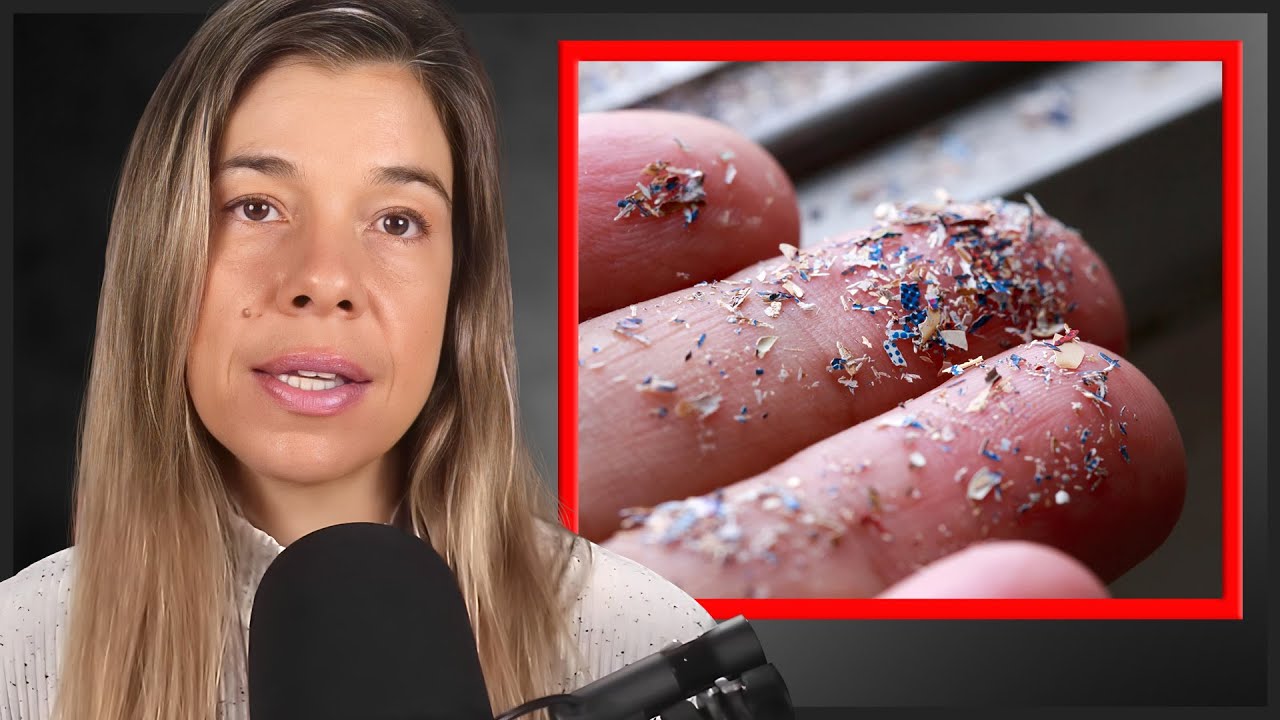
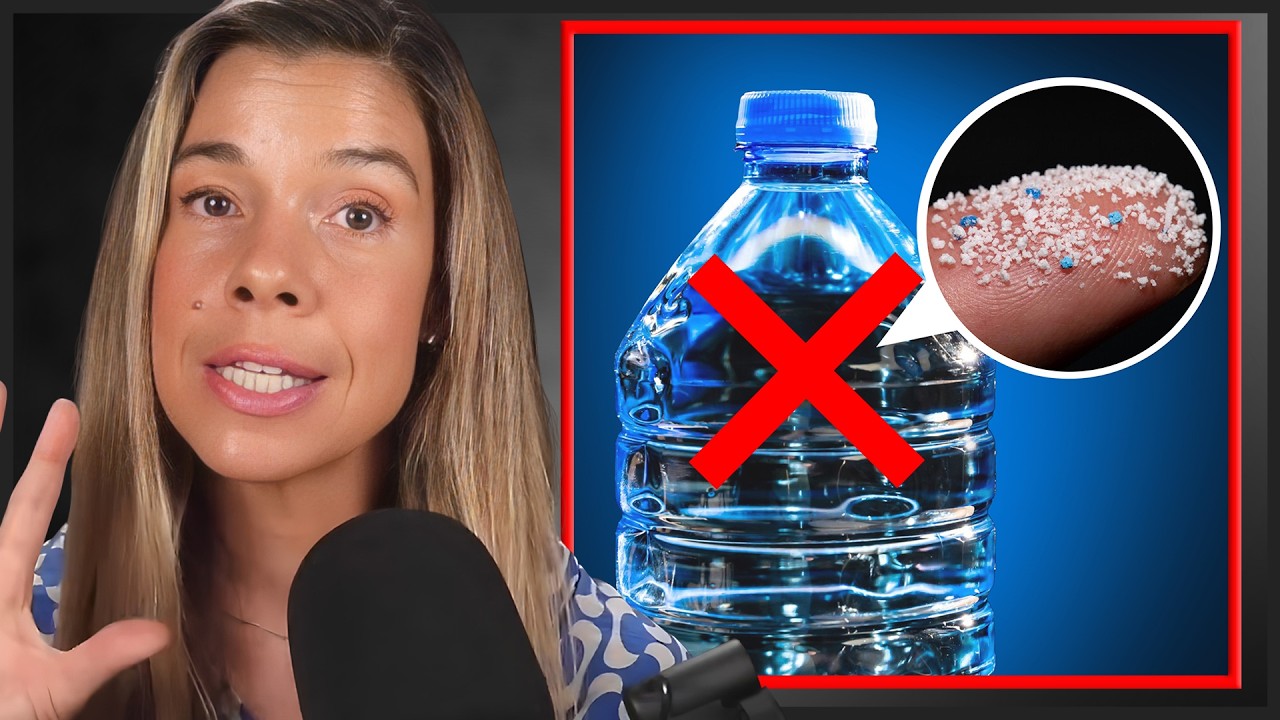
Plastic-lined paper cups are another potential exposure route. One laboratory study placed 100 milliliters of water at 85 to 90 degrees Celsius in disposable paper cups for 15 minutes and detected approximately 25,000 micron-sized particles. A separate bottled-water analysis used sensitive imaging to estimate roughly 240,000 particles per liter, most in the nanoplastic size range. These studies measure contamination under defined conditions; they do not directly measure health effects in people. [2] [3]
Dr. Patrick describes bringing a reusable mug, choosing glass containers, and filtering drinking water. Packaging details remain relevant even with glass: a French beverage study linked some contamination to paint on bottle caps. The discussion also considers particle size and differences between local water supplies. Together, these examples make food-contact materials a practical place to examine everyday exposure, while the amount absorbed and the health effects of specific drinking habits remain active research questions. [4]
This clip is excerpted, with permission, from Dr. Rhonda Patrick’s appearance on Jack Neel Podcast episode 91. Thank you to Jack Neel for allowing us to share it.
- ^ 10.1016/j.toxlet.2007.11.001
- ^ Ranjan VP; Joseph A; Goel S (2021). Microplastics and other harmful substances released from disposable paper cups into hot water. J Hazard Mater 404, Pt B.
- ^ 10.1073/pnas.2300582121
- ^ Chaïb, Iseline; Doyen, Perine; Merveillie, Pauline; Dehaut, Alexandre; Duflos, Guillaume (2025). Microplastic Contaminations In A Set Of Beverages Sold In France Journal Of Food Composition And Analysis 144, .
Jack Neel: What are some everyday items quietly poisoning young men?
Dr. Rhonda Patrick: Yeah, okay. Water, microplastics, nanoplastics, chemicals, pharmaceuticals. We got all sorts of stuff in our water, right? That's a big source of microplastics and stuff in our system. That would be one. Getting a water filter. A reverse osmosis water filter is great. Any activated carbon water filter is good, to be honest.
Two, food, right? The more ultra-processed and processed foods you eat, the more you're getting a lot of these plastic chemicals, particularly if you're eating out, if you're having to-go, because the food is being put into plastic hot. That's dramatically increasing the breakdown of microplastics and their chemicals into your food. In fact, there was a study showing that heating up food or beverages causes like 50-fold more plastic chemicals to go into the food and beverage. And the same with microplastics. Whole foods, cook your own food. I don't know how else to say that.
To-go coffees, big, big, big source. People going out and getting their coffee to-go. Plastic cups. You may think, oh, it's in a paper cup. No, it's lined with plastic. You're putting this hot beverage into that plastic, and again, you're drinking plastic microplastics, and you're drinking the chemicals.
Jack Neel: What if you're just drinking an iced coffee? Is that okay?
Dr. Rhonda Patrick: Have you watched them make the iced coffee? If they don't put the ice in first, I would—I mean, essentially, the shot of espresso goes into the plastic cup.
Jack Neel: Mhm.
Dr. Rhonda Patrick: If you have a bunch of ice there to buffer it, it's a little better, right? But yeah, you're still getting the ice. It's better than getting hot.
Jack Neel: Right.
Dr. Rhonda Patrick: It's better if you're like, you need to get your coffee, you're on the go, you're traveling, for sure. Even on a cold day, I would say, if you can't drink it in the mug or bring your own mug, which is often what I do. I'll bring a Yeti mug and have them make it. Most of the time they'll do it. Sometimes they're like, "Mhm, can't do that. I got to pour it from here to there." And I'm like, that defeats the purpose.
Jack Neel: Yeti to Starbucks?
Dr. Rhonda Patrick: Mhm. I do. I bring it with me. I travel in the airport. I bring it to the airport. I have them make my latte or whatever. And most of the time they'll do it, like I said. Certain businesses, it's kind of random. I don't know if it's the people working there. They're like, I don't want to deal with this. I don't know. Possibly. But I do. I bring my own Yeti mug because I can't do it. All I can think about is I'm drinking plastic and BPA, right?
That's another thing I think people aren't realizing is slowly poisoning them. And then again, all the foods and to-go foods you're not thinking about. That stuff is hot. It's going into your food. Anything that's acidic or spicy in a plastic container, so like salad dressing in those little plastic containers, or your condiments that are in plastic. If you get hot sauce or ketchup, it's full of plastic and their chemicals. This is stuff people aren't thinking about, but it's there. Because the acidity is doing kind of what heat does. It's causing it to leach into your condiments. That's another thing. I mean, not to drive you crazy, but it is something to think about.
Jack Neel: Do you bring your own sauces when you go out?
Dr. Rhonda Patrick: I usually am just not using the sauce.
Jack Neel: Hm.
Dr. Rhonda Patrick: When I buy my own condiments, I go for the glass. It's like glass in the salsa, glass in the ketchup. Primal Kitchen makes a lot of nice—and they have a lot of glass things. Sometimes I'll just deal with them. I'm like, all right, just live this once. You got to live life. I want this dressing on my salad or whatever if I'm on a long flight. But oftentimes I'll just pass on it because I'm like, oh, it's full of plastic.
Jack Neel: The water portion. I remember hearing this sentiment about there's plastic in the water and it's lowering your testosterone, and my solution was drink out of—I think I had a reverse osmosis filter for a bit. And then I saw some counter thing that was like, this isn't as nutritious as typical water. So I got vitamins put in it. It's like it's still not good enough. We've just opted for drinking glass water bottles, like a can of water, occasionally plastic water bottles. But is that pretty much just as bad as drinking tap water, in your view?
Dr. Rhonda Patrick: Aluminum cans are lined with plastic.
Jack Neel: Right.
Dr. Rhonda Patrick: And that plastic's leaching into that water or beverage, and that's definitely not a great thing. Same with plastic. Drinking water out of plastic bottles, because these bottles are on ships to get here. They're on these big trucks, and it's hot, and who knows the temperatures, right? You get it cold when you're getting it from the store, but it wasn't always cold. There's plastic in them. In fact, you get more plastic particles from drinking out of the plastic bottle than you do from tap water, but there's a lot in tap water.
Reverse osmosis, it is better. It's better. You can add minerals back. You can take a mineral supplement, which is what I do. That's the biggest concern. If you're eating a diverse diet—if you're on a carnivore diet, yeah, okay, you're not getting enough—but if you're eating a diverse diet and you're taking a multivitamin, a lot of those trace elements and stuff are in those as well. I would say reverse osmosis is the king when it comes to drinking water because you're getting rid of the nanoplastics, you're getting rid of all the chemicals, you're getting rid of all that stuff. Forever chemicals, PFAS, they're in tap water. That is, I would say, the gold standard, and yeah.
Jack Neel: Microplastics in glass water bottles?
Dr. Rhonda Patrick: Yes, microplastics are also in glass water bottles as well. I know, so heartbreaking for me. It wasn't actually the first study to show that. I did a deep dive into that. There's other studies showing that as well. It's coming from the paint on the lids. There's paint on the lids, and during the manufacturing and bottling of it, all these little things are like—we can't see them, but they're coming off and getting into the water.
The saving grace for me is that the studies have looked at the size of the microplastics and compared them to microplastics in water coming from a plastic water bottle. The size is bigger from the glass bottle because it's coming from paint than the plastic bottle, which is coming from the plastic itself. That makes a big difference in the ability of your gut to absorb it. You actually don't absorb all the microplastics that are getting into your gut. It's a small fraction of them, actually. And the more fiber you eat, guess what? Less you're absorbing.
The bigger the plastic particle, the less likely your gut is going to absorb it. It's the smaller particles, the nanoplastics, which is what you'll find in plastic water bottles, that are really easily getting across these gut epithelial cells and the barrier that they make. Size matters, and I do think that is something. When I'm traveling, when I get to my hotel, one of the first things I do is I Instacart glass water from glass because I just can't drink out of plastic. It's really hard for me to drink.
I know some people that really have gone far, and they're like, when they're traveling, they get all their water from fruit. I guess you could say that. I'm not that extreme. I will drink out of a plastic bottle if I have to, but I prefer not to.
Jack Neel: Right. But glass water overall better than tap water, you would say.
Dr. Rhonda Patrick: I would say, yeah.
Jack Neel: Okay. Interesting.
Dr. Rhonda Patrick: Yeah. But particularly, it depends on where you're at, too. I spent 6 years living in Memphis, Tennessee. They have these really great aquifer, like natural filter system there. The tap water there is actually pretty clean.
Jack Neel: Right.
Dr. Rhonda Patrick: Let me modify my statement and say it depends. If we're talking about Southern California, yes, definitely better. If we're talking about somewhere that has a nice natural aquifer that's filtering water naturally through the ground, maybe better to drink that than the glass, certainly, but than the plastic.
Supporting our work
If you enjoy the fruits of
 , you can participate in helping us to keep improving it. Creating a premium subscription does just that! Plus, we throw in occasional member perks and, more importantly, churn out the best possible content without concerning ourselves with the wishes of any dark overlords.
Microplastics News
- Filtering blood with apheresis lowered levels of five "forever chemicals" by up to 76%.
- Kimchi-derived bacteria may help remove nanoplastics from the gut.
- Microplastics may disrupt bone remodeling and blood cell formation, potentially raising risk for osteoporosis and other bone disorders.
- Microplastic-derived compounds form unstable heavy-metal complexes, making them highly reactive and prone to breaking down into harmful molecules.
- The average person inhales up to 68,000 microplastic particles daily, with higher concentrations in car cabins than homes.