How to Reduce Everyday Microplastic Exposure
The Omega-3 Supplementation Guide
A blueprint for choosing the right fish oil supplement — filled with specific recommendations, guidelines for interpreting testing data, and dosage protocols.
You'll also receive updates from Rhonda & FoundMyFitness
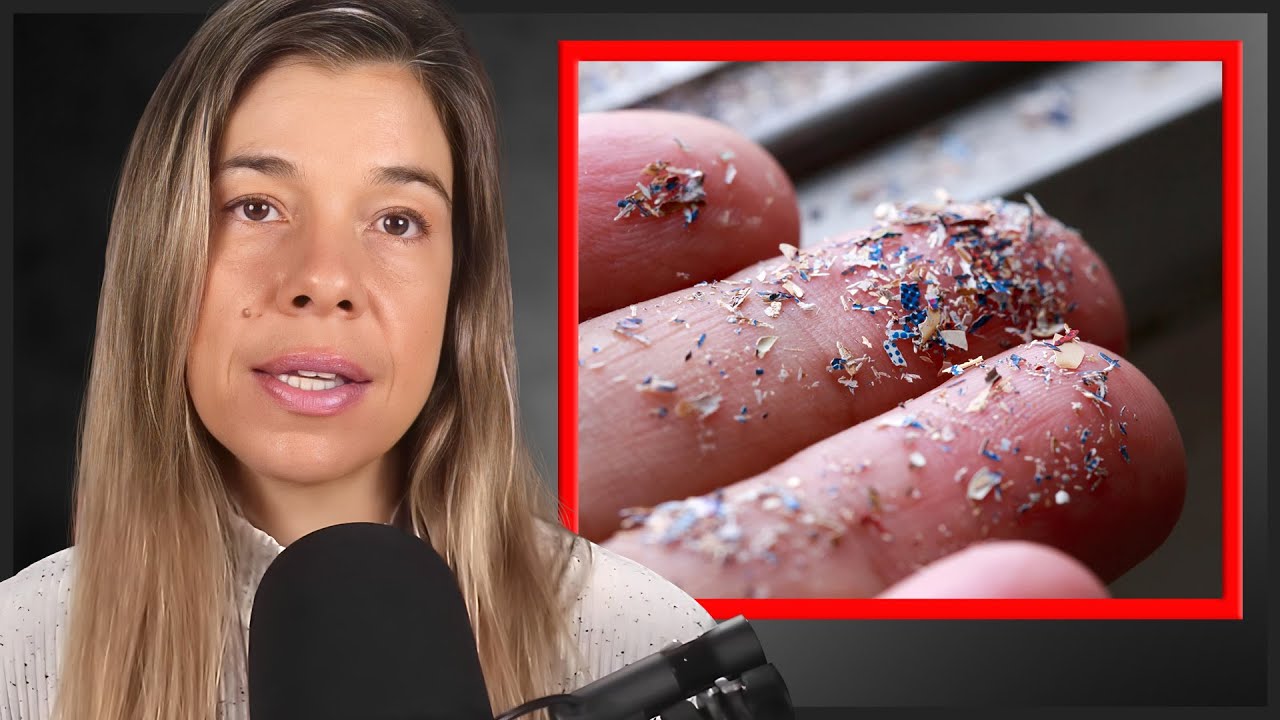
In this clip from Dr. Rhonda Patrick's appearance on The Rich Roll Podcast, she prioritizes the most controllable sources of microplastic and plastic-associated chemical exposure. Heat and friction accelerate transfer, so she starts with avoiding microwaving food in plastic, limiting hot food contact with plastic containers, replacing worn plastic kitchen tools, and using glass or stainless steel when practical.
Water is another useful place to intervene. Drinking-water treatment can remove many microplastic particles, with performance depending on particle size and the treatment process. Dr. Patrick favors a well-characterized home filtration system when feasible, while noting that reverse osmosis also removes minerals and requires thoughtful maintenance. [1]
She also discusses canned-food linings, plastic cutting boards, synthetic clothing, packaged salt, and thermal-paper receipts. The goal is not perfect avoidance. It is to reduce repeated exposure from the highest-contact habits while keeping the plan realistic. A few durable substitutions can lower daily contact without turning ordinary life into an impossible contamination audit.
Black plastic deserves special caution because some recycled electronics plastics can carry flame retardants into kitchen tools and takeout containers. A corrected screening study detected flame retardants in some black plastic household products; it did not show that every black item is contaminated or calculate a clinical risk from one contact. [2] Dr. Patrick prioritizes avoiding hot food on black plastic and replacing black plastic spatulas or serving tools.
Exposure also occurs through air. Synthetic textiles shed particles during wear and drying, so venting a clothes dryer outdoors and using a well-maintained HEPA filter in frequently occupied rooms can reduce airborne particles. These steps reduce exposure; they do not establish that all inhaled particles are removed or reverse an existing body burden.
Thermal-paper receipts can transfer BPA to skin. In a controlled human study, handling thermal receipts after using hand sanitizer increased BPA transfer to skin and subsequent absorption, especially when participants then ate with their hands. [3] Dr. Patrick recommends reducing unnecessary receipt handling, particularly when hands are wet or recently treated with skin products. For people who handle receipts at work, Dr. Patrick recommends nitrile gloves.
This clip is excerpted, with permission, from Dr. Rhonda Patrick's appearance on The Rich Roll Podcast. Thank you to The Rich Roll Podcast for allowing us to share it.
- ^ Negrete Velasco A; Ramseier Gentile S; Zimmermann S; Le Coustumer P; Stoll S (2023). Contamination and removal efficiency of microplastics and synthetic fibres in a conventional drinking water treatment plant in Geneva, Switzerland. Sci Total Environ 880, .
- ^ Liu, Megan; Brandsma, Sicco H.; Schreder, Erika (2024). From E-Waste To Living Space: Flame Retardants Contaminating Household Items Add To Concern About Plastic Recycling Chemosphere 365, .
- ^ Hormann AM; Vom Saal FS; Nagel SC; Stahlhut RW; Moyer CL; Ellersieck MR, et al. (2014). Holding thermal receipt paper and eating food after using hand sanitizer results in high serum bioactive and urine total levels of bisphenol A (BPA). PLoS One 9, 10.
Rich Roll: All right, well, let's go into like, you know, the things that we can do. Like, what is the, you know, in terms of like risk and danger, like where should our attention be focused?
Dr. Rhonda Patrick: I think that's a really good question because otherwise you can drive yourself literally crazy.
Rich Roll: Yeah, I mean, it's paralyzing, right?
Dr. Rhonda Patrick: It is.
Rich Roll: You don't wanna be like the boy in the bubble, and God forbid that bubble is made out of plastic, right?
Dr. Rhonda Patrick: Right, yeah, exactly. You're like, what are you gonna do then? Oh, um, like Howard Hughes, you're gonna be like in the room and you're gonna— yeah. You're like, and turn the heat up and then all that plastic from the bubble. Oh no. So I think the worst offenders, right?
So it's like, it's sort of like an imperfect solution, but really like you really want to sort of avoid the worst offenders. When it comes to the worst offenders, first of all, heating plastic, absolutely a no. So you want to, of course, never microwave anything in plastic, but also You have to think about these plastic bottles of water. Like, yeah, they're cold when you go into the CVS and grab it out of the fridge, but like, was it cold when it was on the freight train or the boat or, you know, wherever it was to get there? And how long has it been there in the warehouse before it was in the fridge? And probably been exposed to some heat. In some shipping container, right, coming overseas on, you know, in the South Pacific or something, right?
I would say, now, there's cases like when you're traveling, it's kind of hard to avoid water out of a plastic bottle, but for the most part, trying to not drink water out of a plastic bottle is really advisable, because that is a big source of microplastics. And then, if you can get a— well, first of all, any type of activated carbon filter will filter out a lot of the plastic-associated chemicals. Um, but if you really want to filter out all these microplastics in all their sizes, including nanoplastics, a reverse osmosis filter at home, whether it's a tabletop one that you just drink your water out of or it's a whole, whole home filtration system, is the, is the way to go because it does filter out even the nanoplastics.
Now, the thing to consider with that is also it filters out essential minerals and trace elements. So you will have to make sure you're taking a nice mineral supplement, make— or you can even get some dry that are in like a glass bottle to add back to the water, mineral drops they make that you can add back to the water to make sure you're getting those essential minerals and trace elements back in the water.
Rich Roll: What are the important minerals that it's filtering out?
Dr. Rhonda Patrick: Oh, there's a whole list of them.
Rich Roll: Okay, that's another 4-hour webinar.
Dr. Rhonda Patrick: Yeah, I mean, it's like magnesium and calcium and manganese and iodine and lithium. Like, there's a whole list of chemicals that are filtered out that are usually in the water.
Um, so you want to make sure that you're, you're like, if you're taking a multivitamin supplement, most of your bases are going to be covered probably. But there's also some mineral supplements out there that are just like the— it's like the mineral supplement, and that covers all the ones that are, that are filtered out from reverse osmosis. Alternatively, some people like to get these drops that are specifically made for people that have reverse osmosis filters, and they're in— you want to get one that's in like a glass container, not plastic, and then you want to introduce those into your water. There's also filtration systems that will reintroduce the minerals back in. However, I'm not sure if those filtration systems are made of plastic.
So, you know, you don't want to reintroduce the plastic after you just filtered it out. So, oh my God, you know, you have to—
Rich Roll: It's crazy.
Dr. Rhonda Patrick: Yeah, but
Rich Roll: But I guess, I mean, look, there's a million different water, water filtration systems out there. It's sort of dizzying, you know, for the average consumer.
Dr. Rhonda Patrick: As long as it's reverse osmosis, exactly, you're gonna be okay. You're gonna be, you're gonna be— yeah, you're, you're like 95% there, right?
Rich Roll: And on that topic of plastic bottles, is there any wisdom at all in— I mean, not all plastic is the same, right? Like, there are different types of plastic bottles, and you look underneath and there's the number, and this is plastic safe, et cetera. Is that all bunk from your perspective, as long as it's plastic?
Because there's those really thin ones that are crinkly, you know? Those. Obviously, you know, that— this is not good, right?
Dr. Rhonda Patrick: No, yeah.
Rich Roll: And then there's the thicker, more robust, like, you know, Gatorade comes in it, you know, like that. So you're like, well, these aren't exactly the same.
Dr. Rhonda Patrick: Yes, you bring up a good point. So the crinkly ones are more like, I mean, those are like degrading, like they're degrading like as you're holding it.
Rich Roll: As you're eating it.
Dr. Rhonda Patrick: In your hand. Yeah, in your hand. Yeah, so that's the whole thing, that the microplastics are being shed like through the degradation process. I would say the black plastics are like the ones to really avoid, and those are like, the reason for that is there was a study that was published last October.
The problem with the black plastic, so think sushi container,
Rich Roll: Or, um,
Dr. Rhonda Patrick: Any takeout container.
Rich Roll: Or like rotisserie, or any takeaway, right, rotisserie chicken like container, or takeout, you know, container, or those black forks, you know, that you have at parties or whatever.
Dr. Rhonda Patrick: Those are often, not always, but often made of recycled plastic from recycled electronics. And the study that was published, I forgot the name of the journal, it was some kind of environmental, you know, health journal, that journal found that those black plastics, like the black plastic spatula. For example, those plastics contain a variety of chemicals that are carcinogen, known carcinogens. So they have like flame retardants in them, things that are just bad, bad chemicals.
And so they're— they seem to be even worse. So you're really avoiding the black plastic and especially heating those, right? So you think of your to-go food, it's going hot on the black plastic that's causing those chemicals to leach into your food. I mentioned that heat, you know, causes the leaching of chemicals like BPA 55 times more. So, you wanna, you really wanna try to avoid those black plastics also. The other, the other main offenders would be to-go coffee mugs. Those are, most to-go coffee mugs are lined with plastic, and that plastic breaks down with heat and BPA, and those are, you're drinking—
Rich Roll: You're drinking hot.
Dr. Rhonda Patrick: Yeah, something hot in there. Yeah, exactly.
Rich Roll: Is it the same lining that you would find inside like a can of, a canned soup or a can of beans?
Dr. Rhonda Patrick: It is, yeah, it is.
And then also in a can of sparkling water, right? Like, those cans are lined— aluminum cans are lined with plastic lining to protect the aluminum from corrosion from the beverage or food. So you think, you think you're avoiding the plastic by drinking out of a can. Turns out you're actually drinking out of a plastic-lined can. And so if you can not drink those every day—
Rich Roll: I had heard about like the, the black plastics, but the way I heard about it was through like the spatula version, right? Mm-hmm. I hadn't thought about like the to-go food packaging and all of that.
And I think it brings up a, another issue that maybe deserves a little elaboration, which is, which is, which is the difference between what we think of as single-use plastic and then the kind of plastic that, you know, we all have in our houses, whether it's a spatula or some other version of which, it, which is like robust and thick. And you're like, well, this isn't a single-use I use plastic, like, this is probably okay.
Dr. Rhonda Patrick: No, especially if you're cooking with it, right? Because it is, cooking heat is accelerating that whole degradation process. It is, you are shedding microplastics and chemicals into the food.
So, you want to get wooden cooking utensils, and also, I would say, I mean, you can use the stainless steel as well, but you want to, like, use stainless steel on a stainless steel pan, but avoiding also the pans lined with, like, nonstick stuff, right? Because that has forever chemicals in it, the Teflon stuff. So, uh, yeah, I, I, I still— if, if you're putting heat in any way, shape, or form on any type of plastic, how robust it seems, it doesn't matter because the heat is really what's breaking that down. It's breaking it down and it's, it's leaching into the, the food or the beverage. So the heat, the heat is the thing to— you're talking about avoiding the worst offenders, really it's heat.
Um, so any, anything that's gonna have heat with your plastic, big, big time, uh, you know, try to avoid that. The water filter's another one. And then, you know, shellfish, probably not, not something to eat all the time. It's okay once in a while, right? But like the shellfish are, are, they, they have unfortunately a lot of microplastics in them. And, um, fish do as well, as long as you're not eating the digestive system of the fish, you know, but it's in fish. Um, produce as well, but you wash your produce, you're better off. You're not like avoiding the food packaged in the plastics. Now, your strawberries come in a plastic container, and so you have to wash your strawberries really good, right? 'Cause it does shed particles.
Now, it's not like those strawberries have been in that plastic container for that long, so it's not likely that it's shedding tons and tons and tons of particles into your strawberries, right? It's more likely that the strawberries took it up from the soil that's been contaminated with the plastic.
Rich Roll: Mm-hmm.
Dr. Rhonda Patrick: But I think, in terms of consumption, those are the main things to sort of avoid, those worst offenders, and then with respect to breathing it in, right, like getting a high-quality HEPA filter for your house, several rooms in your house, I mean, they're not that expensive, and you can have 'em in multiple, certainly in the room you're sleeping in, so getting a HEPA filter can filter out some of those microplastics as well, because they are, in our circulation, we do breathe them in.
Unfortunately, using a dryer, making sure that you're having good proper ventilation, that it's ventilating outside, is very important, right? 'Cause the microplastics are coming from our clothing.
Rich Roll: Right.
Dr. Rhonda Patrick: In fact, our clothing is the major, one of the major sources, aside from the breakdown of the large plastic trash in our ocean, which is the major cause of the microplastics in our ocean, our clothing is the second major cause. So when we are, all of our clothing that's made of all these mixed fibers, when we wash them, that runoff is going into the ocean and it's full of microplastics. So—
Rich Roll: Is it, are the nanoplastics part of the clothing also that are being absorbed into our skin? Do we know this or not? Like, I'm thinking of like, maybe these are like edge cases.
Like, this is getting into neurosis land. I'm thinking about like my Vitamix. I've been there. I have a Vitamix. It's plastic.
Dr. Rhonda Patrick: Oh no, get the stainless steel one.
Rich Roll: But it's thick. Yeah, like I don't have— I have the plastic one. It's a thick plastic, but sometimes we're putting something hot in that and blending it up. And I'm thinking, I probably shouldn't do that.
Dr. Rhonda Patrick: No. Yeah, I did the same thing. I actually just got in the past, you know, few months since I did this deep dive. I didn't know there was a stainless steel. There's a stainless steel Vitamix container. I, I got it a few months ago and it's great. It's— I got one for my— I got it from my in-laws. Anyone in my family that uses Vitamix, I'm like, no, you need to get this. It's $200.
It goes on— just get the container because it'll fit on the Vitamix that you have. Unfortunately, friction does increase the shedding of microplastics, so blending itself also affects it. But yeah, I was doing the same thing. I was doing the same thing.
Rich Roll: Yeah, I mean, I don't want to be neurotic, you know what I mean? Yeah, I mean, look, you can take this to the X degree, right? Like, you can definitely go down that rabbit hole. But if there is a stainless steel Vitamix container, why not get it if you can? It's not super expensive and, you know, it's not going to hurt, so why not get it?
Dr. Rhonda Patrick: I would say. But that's not the main focus. I would say we've discussed the worst offenders, right?
Rich Roll: Talk to me about how salt contributes to this problem.
Dr. Rhonda Patrick: Yeah, so salt, especially sea salt, right?
If you're getting sea salt, you're getting it from the ocean, which is polluted with microplastics. So sea salt is a contributor of microplastics to people. And I, you know—
Rich Roll: You buy it in a little plastic jar too.
Dr. Rhonda Patrick: And it's in a plastic container, exactly. And so if you're gonna use salt, it's better to get like a rock salt, like, you know, pink Himalayan salt, which also does have microplastics, but less. It has fewer particles than sea salt does. So, you know, salt is also a contributor. I don't know that it's the main, main contributor, but if you're using salt, go for the Himalayan salt rather than the sea salt, or even the Morton's, like the old Morton's salt, you know, that was like at everyone's table 20 years ago. Those are rock salts as well.
Rich Roll: And should we be concerned about the receipts that we're given every single day?
Dr. Rhonda Patrick: Yes.
Rich Roll: I've heard a lot about this. Is there truth to this? Um, I mean, I avoid putting my hands on it just because this is what I've heard, but I haven't read the studies. I don't know how robust of a problem this actually is.
Dr. Rhonda Patrick: Um, so receipts are made of thermal paper, which is heavily coated with BPA. And I think the first study came out, gosh, almost 10 years ago. I remember reading it 10 years ago. It was a study that was looking at people who had put lotion on their hands and then touched the thermal paper of the receipt. The BPA that got into their circulation was astronomical.
I mean, usually transdermal absorption isn't that big of a deal. So, we're talking about our clothing. It's not like I'm absorbing microplastics through my skin very easily from the clothing I'm wearing. It's really—
Rich Roll: It's more about what ends up in the water table as a result.
Dr. Rhonda Patrick: Yeah, yeah, and sometimes, you know, if you're exercising in that clothing, maybe you're getting some particles, but the majority of the particles that you're breathing in are not coming from your clothes directly. They're coming from the air, from the other sources, right? I do think that people that are— I also try to avoid receipts, and so I always opt for no receipt or can you trash it for me? But I do think people that work in an industry where they're every day—
Rich Roll: Handling them all day long.
Dr. Rhonda Patrick: They should be wearing nitrile gloves. So there have been now studies showing that people that handle thermal paper, which is the receipts, and they wear nitrile gloves, blocks the BPA from being absorbed in their skin. And so I don't think latex did the same thing. It really had to be a nitrile glove. So anyone that's in that industry that's handling receipts daily really should be wearing gloves. It should, it should be something that I think all, you know, companies employ, like, to protect their— I mean, people don't know about this, right? I think, I think that they should be told. So I mean, you've got like pregnant women working behind a cash register and dealing with those BPA receipts.
And I told you the study came out showing that, you know, pregnant women with higher urinary BPA have sixfold, you know, higher likelihood of having a child with autism. So, yeah, there, there are little steps that can be taken that, um, that I think, you know, there's a big bang for your buck, right?
Rich Roll: Yeah.
Dr. Rhonda Patrick: And, and certainly if you're working in an industry where you're handling receipts, you should be wearing nitrile gloves.
Get email updates with the latest curated healthspan research
Support our work
Every other week premium members receive a special edition newsletter that summarizes all of the latest healthspan research.
Environment News
- Lifestyle and environmental exposures—termed the 'exposome'—may substantially outpace genetic factors in driving premature death and age-related disease.
- High exposure to plastics, such as those in disposable takeout containers, is associated with a 13% greater risk of heart disease, potentially through changes to gut bacteria and increased inflammation.
- Researchers have been able to convert plastic waste including water bottles, milk bottles, and plastic bags, into fuel.
- Nearly all major brands of bottled water were found to be contaminated with microplastics including polypropylene, nylon & more.