Rhonda Patrick’s Blueberry Smoothie and Why She Leaves Out Bananas
The Omega-3 Supplementation Guide
A blueprint for choosing the right fish oil supplement — filled with specific recommendations, guidelines for interpreting testing data, and dosage protocols.
You'll also receive updates from Rhonda & FoundMyFitness
In this excerpt from The Knowledge Project, Shane Parrish asks Dr. Rhonda Patrick to build a smoothie. She describes her usual kale, avocado, frozen-blueberry, whey, collagen, moringa, and water blend. Kale supplies folate, magnesium, vitamin K, fiber, lutein, and zeaxanthin; blueberries supply anthocyanins. Avocado adds fat, and a small feeding study found that avocado increased absorption of lutein and other carotenoids from salad. [1]
Dr. Patrick distinguishes plant ALA from the marine EPA and DHA she seeks from fatty fish or fish oil. She also says AG1 is a supplement rather than a replacement for intact greens and their fiber and food matrix.
The main ingredient-interaction evidence concerns polyphenol oxidase. A small controlled crossover study found that a high-PPO banana smoothie greatly reduced circulating flavan-3-ol metabolites compared with a low-PPO berry drink or capsule control. Dr. Patrick therefore leaves banana out when preserving berry flavanols is the goal and flags beet greens and Swiss chard as other high-PPO ingredients to separate from berries. This does not make bananas, beets, or chard unhealthy or show that every berry compound is eliminated. [2]
This clip is excerpted, with permission, from Dr. Rhonda Patrick's appearance on The Knowledge Project. Thank you to The Knowledge Project for allowing us to share it.
- ^ Unlu NZ; Bohn T; Clinton SK; Schwartz SJ (2005). Carotenoid absorption from salad and salsa by humans is enhanced by the addition of avocado or avocado oil. J Nutr 135, 3.
- ^ Ottaviani JI; Ensunsa JL; Fong RY; Kimball J; Medici V; Kuhnle GGC, et al. (2023). Impact of polyphenol oxidase on the bioavailability of flavan-3-ols in fruit smoothies: a controlled, single blinded, cross-over study. Food Funct 14, 18.
Shane Parrish: I want to, like, start using this in a, in a practical way, right? Like, so if I, um, were to make a smoothie in the morning, what is the best thing to put in my body at the start of the day after having slept, which means I've been fasting? Um, what is like the, the, the most incredible smoothie you can think of that would just be full of health benefits for the day? So it would have like omega-3, it would have protein powder, it would have like leafy. Like, walk me through this. What do you— do you do this?
Dr. Rhonda Patrick: I do smoothies. It doesn't have omega-3, but I'll walk you through my smoothie that I do. I probably, about 4 to 5 days a week, have this smoothie. And typically this smoothie is about, I don't know, 4 or so kale leaves. And that's usually my green source that I use. Right. And so I'm getting the magnesium, I'm getting the vitamin K, I'm getting the folate, but I'm also getting something in there called lutein and zeaxanthin, which is— these are carotenoids, much like beta-carotene or astaxanthin, like we were talking about. It's another one that accumulates in the eye, rods and cones of the eye, so it helps prevent macular degeneration, but it accumulates in the brain as well. And it's so interesting because there's been studies that have shown that that, like, giving older adults, like, supplementing with something like 20 milligrams, which is what, like, 3 kale leaves has of lutein. I mean, it's, like, really equivalent to just getting it from the greens. It improves neural efficiency. So basically, like, your brain works better with less energy. There's been other studies in older adults where giving them lutein and zeaxanthin will improve crystallized intelligence. So that's basically, as you get older, it's the ability to still kind of use all the information that you've learned throughout your life and like still use it. I don't know if that makes sense. But so anyways, I know I'm going on a tangent here, but it's something people don't think about. There's other compounds in these greens that are not micronutrients or not essential vitamins and minerals and amino acids and fatty acids. But they're like these phytochemicals. And it's interesting because they're so beneficial for us. And lutein and zeaxanthin is another one of those. They're carotenoids, so not essential, but they're doing beneficial things and they're accumulating in the brain. It's so interesting, right? And there's been randomized controlled trials showing that it improves, again, those markers of cognition that I mentioned. So that's the kale. It also has fiber, right? Fiber is great for your gut. And then I also add an avocado. And avocado also increases the bioavailability of those carotenoids, the lutein and zeaxanthin, by like up to 6-fold, anywhere between like 3 to 6-fold. So you're getting more of the lutein and zeaxanthin. You're basically making them more bioavailable by adding the avocado. Also, it's a great source of monounsaturated fat. Avocados are high in potassium. Something like 96% of the US population doesn't get enough potassium.
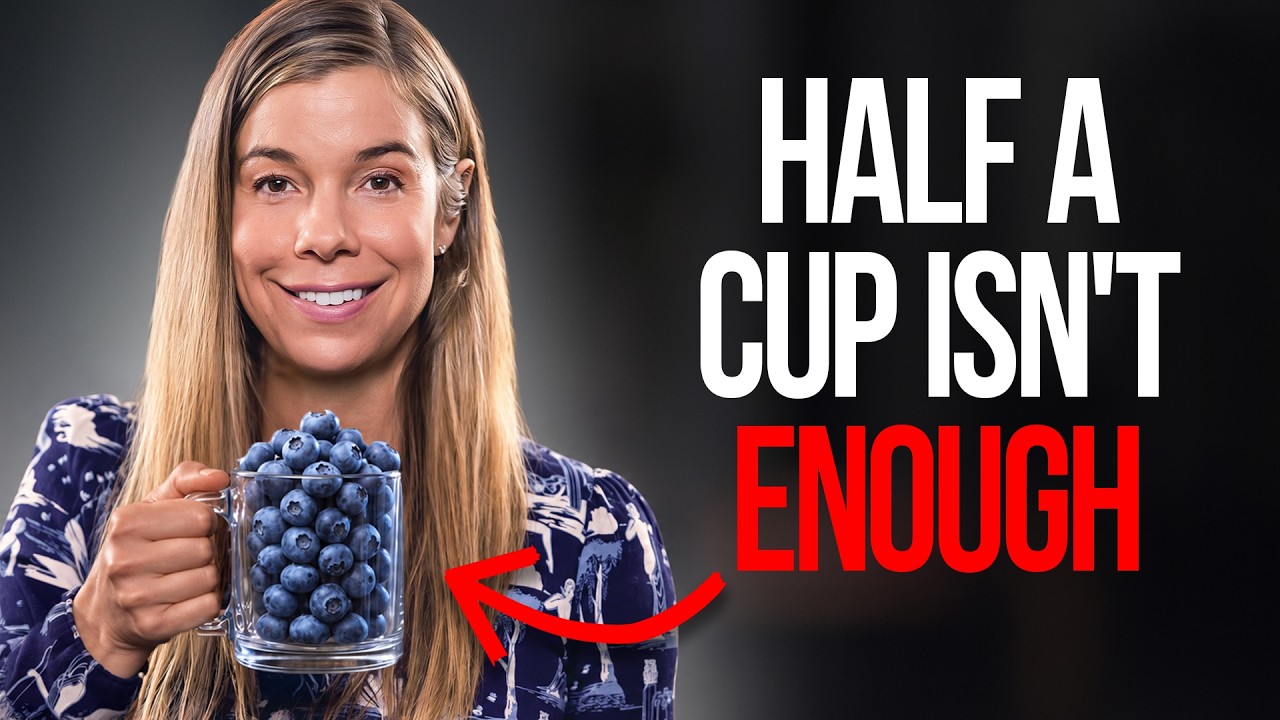
Dr. Rhonda Patrick: And so, that's another thing you're getting from avocados. I personally like it because it makes the smoothie creamy. And then, I add a ton of frozen blueberries. And blueberries are— yes, you're getting your vitamin C and you're getting some fermentable fiber for the gut, but they're also high in those phytochemicals. So they have polyphenols in them, and they have anthocyanins. And these things are, they're like superpowers for the brain. So there's been so many studies that have been done, randomized controlled trials, either with freeze-dried blueberry extract, or actually just blueberries, showing it improves cognition.
Shane Parrish: Hmm.
Dr. Rhonda Patrick: Yeah, it improves mood. So when I was a postdoc, I studied, I did some studies in people, we were looking at freeze-dried blueberry powder.
Dr. Rhonda Patrick: I was looking at DNA damage in their blood cells. So markers of those double-stranded breaks I talked about, like if you don't get enough folate, it causes double-stranded breaks. If you stand in an ionizing radiation machine, it causes double-stranded breaks. Blueberries, people that are eating terrible diets and that are, you know, overweight and obese have more double-stranded breaks in their blood cells. So that's something that I've measured, you know, like I was doing some studies on that during my postdoc work. And we were getting a population of people that were overweight and obese, and then giving them this freeze-dried blueberry extract. And over the course of 4 or 8 weeks, it lowered their DNA damage. So again, so it's like, it's got anti-inflammatory, antioxidant, you know, aspects to it. Personally, it's like, I, what I noticed is like the mood enhancer. It's like I get that blueberry and it's like, whoa. But here's a really important thing. I used to add bananas to my smoothie years and years ago, like 10 years ago or something. And I liked the banana because it also— it was like it made it more creamy. This is before I like started doing the avocado. And, you know, there's some— it's not that bananas are bad for you, but they have this enzyme in them called polyphenol oxidase. PPO. Well, as the name implies, it breaks down polyphenols, which is what you want from the blueberries to get the benefits in the brain and the benefits— Yeah, exactly. What—your mouth, jaw dropped.
Shane Parrish: Oh, interesting.
Dr. Rhonda Patrick: Yeah. It’s like—so there was a very, very recent study in 2023 that came out. And this was a controlled trial where people were given a smoothie with blueberries, either with and without the banana. And then metabolites of polyphenols were measured in their urine and blood. And if they had the banana, their polyphenol levels were just plummeted. Like they weren't getting them from the blueberries. And this is— I'll tell you what's enraging about it is anywhere you go, you— like if you want to buy a smoothie when you're out and about, everything has a banana in it. And, you know, like I'm a parent and so I like, you know, I'm out and about and I have my kid with me and it's like I want to get him a smoothie. And it has blueberries in it. And I'm like, but it also has a banana.
Dr. Rhonda Patrick: And I'm like, but you know, there's been studies on children as well. And giving children blueberries improves their cognition. So they perform better on like tests, cognitive tests and stuff. And so, you know, it's not just good for adults, it's like throughout the lifespan. And so now I have to like tell them, okay, don't put the banana. But like everywhere you go, there's a banana in the smoothie.
Shane Parrish: So that's interesting. I'm gonna give you my smoothie recipe after and you can grade it, but I'm gonna switch out the banana starting tomorrow.
Dr. Rhonda Patrick: Okay. So we have kale leaves, avocado, frozen blueberries, and—
Shane Parrish: Protein powder.
Dr. Rhonda Patrick: So I'll do— especially if I'm doing it, like you said, first thing in the morning when I'm— and sometimes I'll have my smoothie in the afternoon, in which case, like, if I didn't work out and I've already gotten my protein, like, I won't put the protein powder. But these days, I'm mostly always putting them, to be honest. I'm like doing something every day. And so— and I just— it's hard to get the protein requirement for me. So I usually do some whey protein. And then I also add a little bit of hydrolyzed collagen powder as well. So there's some studies showing— I mean, if you're getting the protein, you probably don't need the hydrolyzed collagen powder. But I personally, there's studies showing that randomized controlled trials showing that it improves, like, skin elasticity and, you know, things that I'm also interested in addition with respect to skin. I mean, there's all sorts of studies also showing it helps with joint health and this and that. I mean, so— You know, I don't know. I like adding that as well. And then the other thing I add is I do a little bit of moringa powder. So moringa is— it's a plant. It's high in some micronutrients. Like it has things like zinc and iron and magnesium. But it also has something in it that is called moringin. And it is a phytochemical that is very similar to sulforaphane, which is found in, like, broccoli, broccoli sprouts. It's really high in broccoli sprouts. And it activates genetic pathways in our body, the same ones that sulforaphane activates, that have been shown to increase antioxidants in the brain, like glutathione, that have been shown to lower DNA damage in our cells, all sorts of benefits. But the other thing that it does, and I've noticed this, so I used to wear a continuous glucose monitor, like, for years. And it lowers, it blunts the postprandial glucose rise from a smoothie when I put moringa powder in it. And I reached out to an expert, Dr. Jed Fahey, who's done a lot of research on, you know, these compounds. And I was like, have you seen anything? And he's like, oh, yeah, this is being explored. He, like, totally knew about it.
Dr. Rhonda Patrick: And as you look into the literature, you can start to find some studies on Moringa actually improving blood glucose levels. And so I put that in my smoothie as well. Now that's a little spicy tasting. I would say if you're like in one of those moods where you don't want the like, like not so great tasting smoothie, you know, you can skip the moringa or go, go for a smaller amount. But I do like a big heaping tablespoon of it. Oh, and then I add some water. Yeah. Water to kind of mix it up.
Shane Parrish: That's pretty cool. I'm going to give you my smoothie. You can give me a grade on this and keep in mind, I'm a parent of two boys who devour food. So we came up with this, and I've never told anybody the exact recipe before, but here, here's basically what it is. And we call it the Tom Brady because they wanted to call it the GOAT smoothie. So we ended up calling it the Tom Brady. So we call— this is what we call it at home. It's got protein powder in it. It's got AG1. It’s got walnuts. It’s got blueberries, yogurt, almond milk—but, like, real almond milk, no other additives or anything, banana, chia seeds, and hemp seeds.
Dr. Rhonda Patrick: Yeah, so you're going for the kind of omega-3 that's in those plant sources, like walnuts and chia seeds, is ALA. And we were talking a lot about the EPA and DHA, which are from the marine sources. ALA, I mean, walnuts are great. There's like studies showing like if you eat a handful of walnuts a day, you're—you know, you have lower cancer risk and cardiovascular disease risk. They're clearly good for you, but they're not the same as the EPA and DHA. So don't substitute. I'll tell you, you can— so your body does convert ALA from plant sources of omega-3 into EPA and DHA, which is essentially what your— the final products that you need are. But everybody does it differently, and the conversion efficiency is about 5%. Now, women, when they're making— when they're high in estrogen, that can go up really, that can go up much higher. And I think that's because, because during pregnancy and child development in utero, the DHA is so important that your body makes sure you're just turning all that ALA into that, that DHA. Because when you're pregnant, your estrogen level goes, it's like 100-fold higher, it's like super high. But so if there are people that are relying on just plant sources of omega-3, that is a mistake. And if you do an omega-3 index test, and there's, you know, OmegaQuant is probably one of the best places to do that, then you'll figure that out really quick that you're—
Shane Parrish: Okay. Well, yeah, well, this is great, right? So like, what would we supplement here? We take out the bananas because they're counteracting the blueberries. We'd add avocado. That's a lot of fat in there. What else would we, like, take out or add or switch? What would you say?
Dr. Rhonda Patrick: So, you're doing the AG Greens as your source of green?
Shane Parrish: I'm doing that as sort of, like, the base vitamin, 'cause they have a daily multivitamin, and I just count that as the daily multivitamin.
Dr. Rhonda Patrick: That's their daily multivitamin, okay. But did you add any greens in there?
Shane Parrish: I didn't— No, they don't have any greens in there.
Dr. Rhonda Patrick: So, that would be something that I would—
Shane Parrish: Like, sneak some kale leaves in? Oh my God, if they saw that, they wouldn't pay me to do that.
Dr. Rhonda Patrick: No, don't let them see. Or do they have to make it to be part of it? So I put kale leaves in my son's, or even romaine lettuce, you know, that would be— don't put chard in there.
Shane Parrish: Okay.
Dr. Rhonda Patrick: So here's the other thing. So there's really not a lot of foods that can go into a smoothie that would degrade the polyphenols because they're high in that enzyme, polyphenol oxidase. But the ones that are are bananas and beets and anything in that family. So like chard, I used to put chard in my smoothie. Swiss chard, you know, like they're so— it's so good.
Dr. Rhonda Patrick: And look, these are great foods to eat. Like, just don't put them in your smoothie with blueberries.
Shane Parrish: Just not with blueberries.
Dr. Rhonda Patrick: Exactly. So, I mean, I used to put chard in my smoothie and it was just like— this like changed my world. I was like, this is unbelievable. I can't— you know, thankfully, I stopped doing the banana in my smoothie quite a while ago. In fact, I kind of just got lazy and it was like, okay, kale, I just need like a base of like greens, you know what I mean? Thankfully, like years ago. So, even though this study just kind of came out last year, I've been ahead of game on that.
Shane Parrish: I wish I knew that. They're going to blame me for their poor test results now. They're going to be like, you sent us to school with blueberries and bananas, Dad. What were you thinking?
Dr. Rhonda Patrick: Are they physically active? Cardiorespiratory fitness is another thing that correlates with academic performance. So, the better fit the child is, they score better on a lot of academic tests as well.
Get email updates with the latest curated healthspan research
Support our work
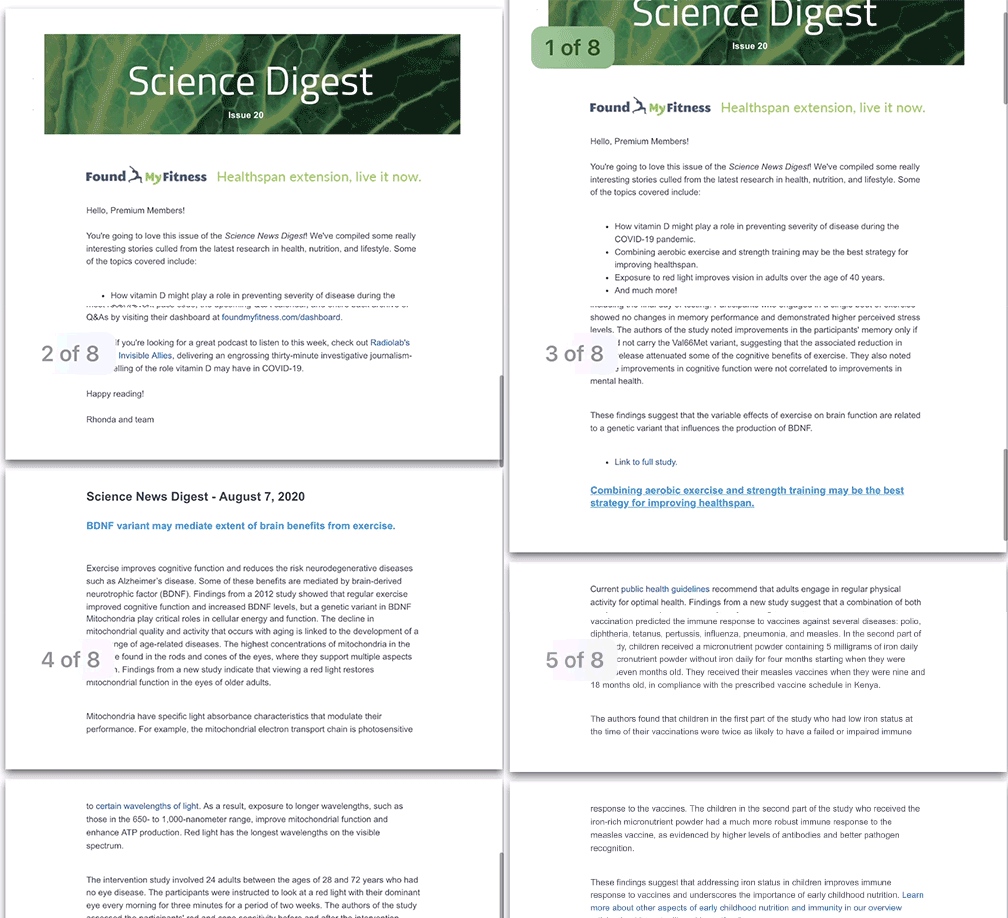
Every other week premium members receive a special edition newsletter that summarizes all of the latest healthspan research.
Nutrition News
- Moderate zinc intake – less than 11 milligrams – reduces the risk of developing hypertension by 7 percent, but higher intake increases the risk by 14 percent per additional milligram.
- Tyrosine, found in things like fruit, spinach, and eggs improves mental speed in a "stopping" task
- Dietary AGEs linked to overeating and 30 percent shorter lifespan in worms.