Sulforaphane reduces DNA damage (in vivo vs. in vitro evidence) | Rhonda Patrick
Enter your email to get our 15-page guide to sprouting broccoli and learn about the science of chemoprotective compount sulforaphane.
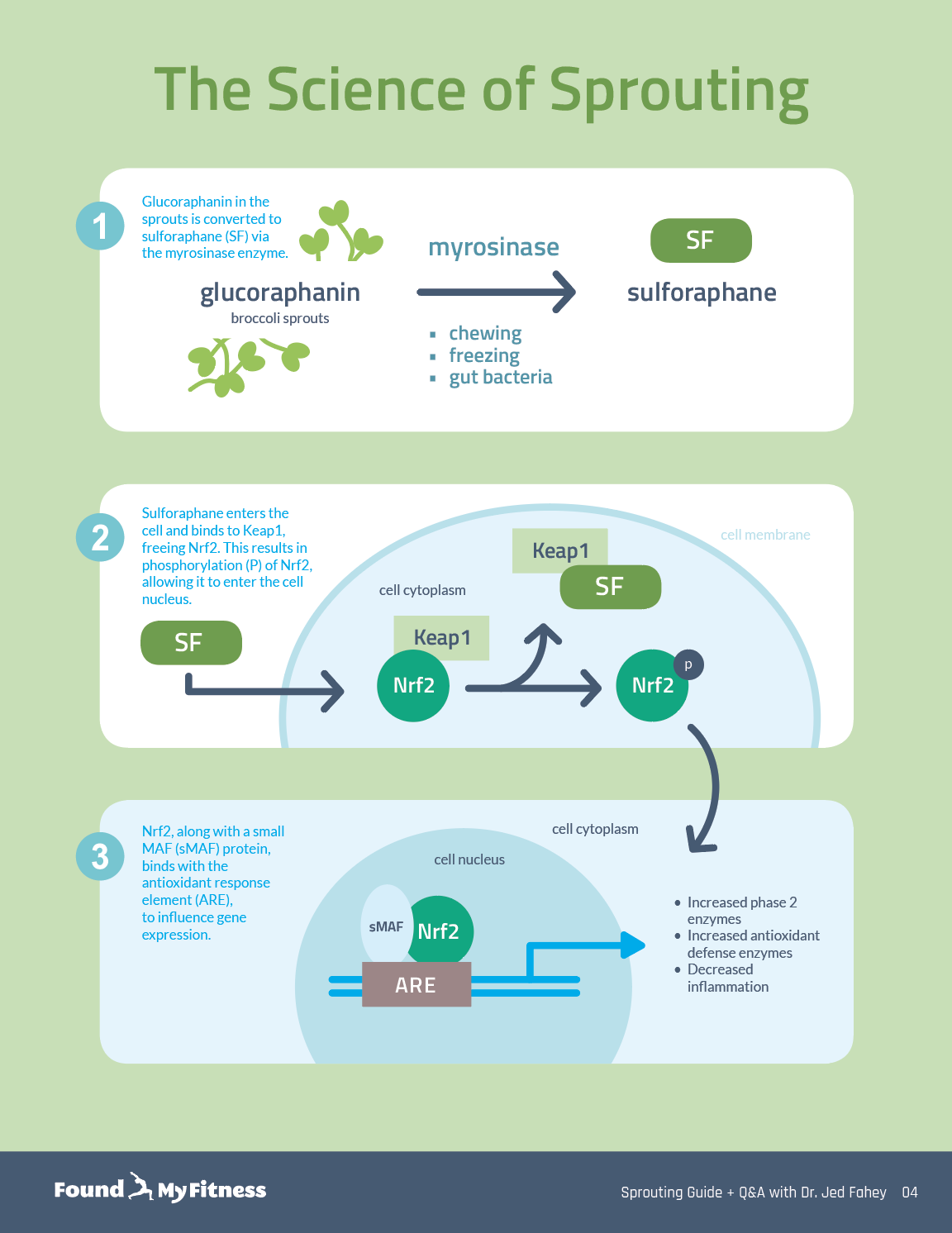
Broccoli sprouts are concentrated sources of sulforaphane, a type of isothiocyanate. Damaging broccoli sprouts – when chewing, chopping, or freezing – triggers an enzymatic reaction in the tiny plants that produces sulforaphane.
Get the full length version of this episode as a podcast.
This episode will make a great companion for a long drive.
Whereas several interventional human trials have revealed that people who obtained sulforaphane from Brussels sprouts experienced increases in the body's antioxidant systems and reductions in oxidative DNA damage, an in vitro study showed that high concentrations of sulforaphane added to cells in a petri dish increased DNA damage. However, taken in context with the literature as a whole, the in vitro results are not physiologically relevant. In this clip, Dr. Rhonda Patrick discusses the current sulforaphane research as it pertains to DNA damage, and highlights the importance of considering the different forms of studies.
Yeah. And there's been tons of other interventions trials. For example, eating like 300 grams of Brussels sprouts a day increases glutathione levels also in the plasma and also decreases oxidative DNA damage by like 30%. So it's like literally decreasing the amount of DNA damage, which is, you know, I should probably mention that there has been like an in vitro study that I've seen where sulforaphane at a very, very high concentration was dumped on cells and it caused DNA damage. It's one of those instances again where it's like In vitro studies, when you're dumping things on cells in a petri dish, has very little relevance unless you're looking at, you know, the broader literature, right?
You've got to look at what happens at the level of the organism, something that's even physiologically relevant. And so, it's actually doing the opposite. It's not only increasing the antioxidant systems, it's decreasing DNA damage quite significantly by 30%. And this is in humans, okay? This is not animals. Certainly not in Petri cells in a dish, it's in humans. Very important. So how are they measuring that with the DNA damage? They— are they taking samples at 2 separate times or what's the deal there? Yeah, they do baseline and then after treatment. What was the duration? In this study? Oh darn, I don't know. Usually it's like a month or so. I don't know if this study was, was a week or not. I just can't remember.
Get email updates with the latest curated healthspan research
Support our work
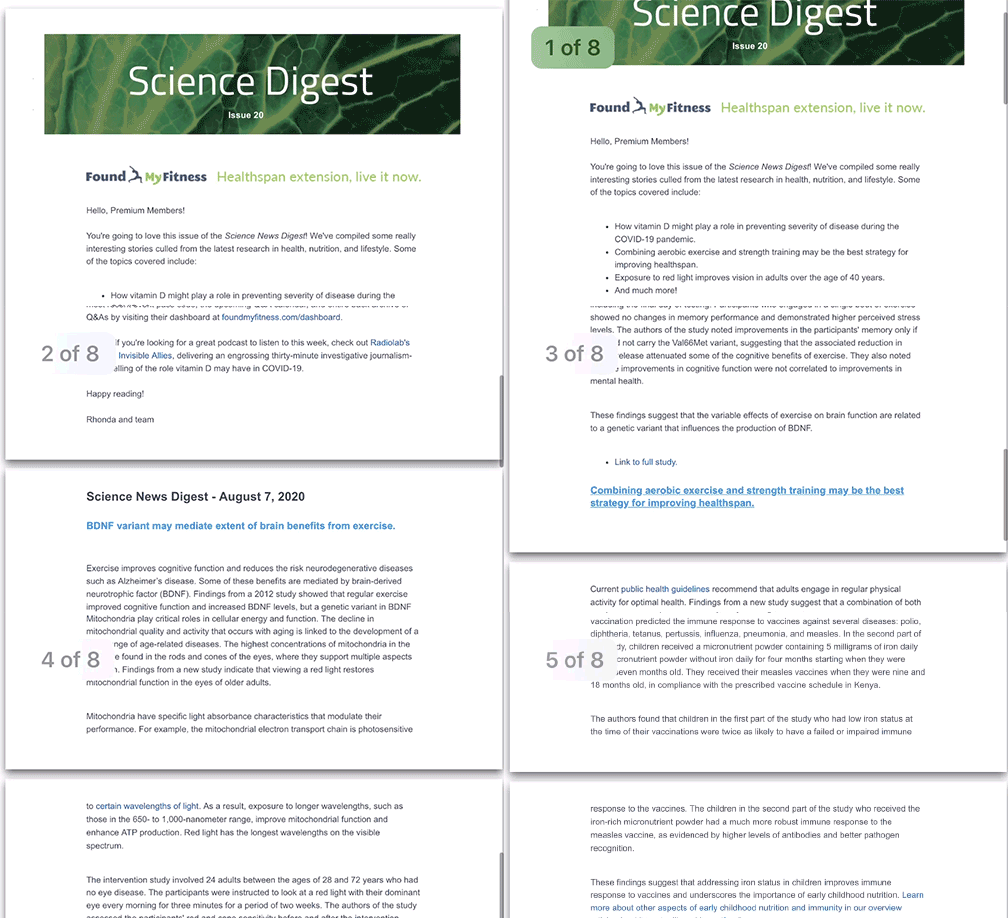
Every other week premium members receive a special edition newsletter that summarizes all of the latest healthspan research.
Sulforaphane News
- Another pilot clinical study finds sulforaphane increased blood glutathione levels and increased levels in brain.
- Sulforaphane (beneficial compound in broccoli) found to help with symptoms of autism. Improvements in various dimensions like social interaction.
- Sulforaphane extends lifespan and healthspan in worms via insulin and insulin-like growth factor-1 signaling.
- Consumption of broccoli sprouts during late gestation & lactation confers protection against developmental delay induced by maternal inflammation.
- Every 1 percent drop in body weight slows brain aging by nearly nine months, highlighting the substantial, and often overlooked, neuroprotective benef