Foods That Support Brain Health With Age
The Omega-3 Supplementation Guide
A blueprint for choosing the right fish oil supplement — filled with specific recommendations, guidelines for interpreting testing data, and dosage protocols.
You'll also receive updates from Rhonda & FoundMyFitness
In this clip from Dr. Rhonda Patrick's appearance on The Diary of a CEO, she names leafy greens, blueberries, and fatty fish as foods she tries to eat regularly. Leafy greens provide magnesium and other micronutrients, while blueberries contain anthocyanins and other polyphenols. In a 90-day randomized trial, daily freeze-dried blueberry powder improved selected executive-function measures in adults ages 60 to 75. [1]
Dr. Patrick also explains how the marine omega-3 fatty acids EPA and DHA become part of cell membranes and influence inflammatory signaling. A meta-analysis of 26 double-blind randomized trials found that EPA-predominant formulations reduced depressive symptoms in clinical populations, with results that varied by formulation and dose. [2]
Omega-3 status may also reflect longer-term health. In 2,240 Framingham Offspring participants followed for 11 years, the omega-3 index was one of four red-blood-cell fatty-acid measures that helped predict all-cause mortality. Together, these findings support a food-first pattern built around nutrient-dense plants and seafood, with supplements individualized to dietary intake and health needs. [3]
Her food list also includes cruciferous vegetables such as kale and broccoli. Chewing or chopping them helps form sulforaphane, a compound that activates cellular defense pathways and can increase glutathione-related detoxification activity. For omega-3s, salmon provides EPA and DHA in a whole-food matrix, but fish can also contain mercury and microplastics; well-characterized purified products may reduce exposure to some contaminants but are not nutritionally identical to fish. Dr. Patrick describes the red-blood-cell omega-3 index as a longer-term status marker. The practical choice depends on seafood intake, product form and purity, measured status, and personal health needs.
This clip is excerpted, with permission, from Dr. Rhonda Patrick's appearance on The Diary of a CEO. Thank you to The Diary of a CEO for allowing us to share it.
- ^ Miller MG; Hamilton DA; Joseph JA; Shukitt-Hale B (2018). Dietary blueberry improves cognition among older adults in a randomized, double-blind, placebo-controlled trial. Eur J Nutr 57, 3.
- ^ Liao, Yuhua; Xie, Bo; Zhang, Huimin; He, Qian; Guo, Lan; Subramanieapillai, Mehala, et al. (2019). Efficacy Of Omega-3 PUFAs In Depression: A Meta-Analysis Translational Psychiatry 9, 1.
- ^ Tintle, Nathan; Harris, William; Vasan, Ramachandran S; Sala-Vila, Aleix; McBurney, M I (2021). Using An Erythrocyte Fatty Acid Fingerprint To Predict Risk Of All-Cause Mortality: The Framingham Offspring Cohort The American Journal Of Clinical Nutrition 114, 4.
Steven Bartlett: What are your superfoods? There must be foods of yours. Um, olive oil has become one of my superfoods. Just a food that I love to just put on as many things as I can because everybody tells me about these polyphenols which are apparently amazing for you. But what are some of the your sort of favorite superfoods that you try and consume that most people might not think of? So, we talked about leafy greens. I guess that's one of them.
Dr. Rhonda Patrick: It is leafy greens. Um, they have they're high in magnesium and you know magnesium is at the center of a chlorophyll molecule. Chlorophyll give plants their green color. Magnesium is very important for preventing damage to DNA, DNA and cancer and you know half half the US population doesn't get enough of it. They're high in a lot of different compounds. I mean they're folate, vitamin K1. So you're getting a lot of these micronutrients that are important. So I do like dark leafy greens. I particularly like kale and broccoli because of something called sulforaphane which is sulforaphane itself is not in them but a precursor when you break the plant or you chew it um it makes sulforaphane. So there's an enzyme that gets activated that converts a precursor in these plants called glucoraphanin into sulforaphane. Sulforaphane is also increases glutathione in the brain. It helps detoxify pollutants like benzene, um, bisphenol A, BPA as well. So, I do like dark leafy greens of the cruciferous family of vegetables. Again, that would be kale, broccoli. Um, those are those are the cruciferous family. I also like blueberries. Blueberries are a source of polyphenols. You mentioned olive oil as a polyphenol. If you're on a ketogenic diet, olive oil is like the great, right? Because you need fat. And olive oil is so great because it also has those polyphenols that are beneficial. has been shown even in studies to improve cognition and memory and uh lower even marker markers of um bad cardiovascular disease like ApoB for example lower that. So blueberries I like because blueberries have also been shown even a cup of blueberries a day has been shown to improve cognition. So I like the polyphenols. It increases blood flow to the brain. I also like salmon and I think that would be something that most people would think is healthy. I like it because it's high in the omega-3 fatty acids which I'm very very it's I think it's very very important to get enough omega-3 fatty acids. I also supplement with them because there's a lot of research out there and if you want to get into that we can. But um the superfood would be the the salmon because it is a fatty source of fish that is high in omega-3 fatty acids, EPA and DHA, which are found in marine sources, not plant sources of omega-3.
Steven Bartlett: I found it really interesting when I was looking at omega-3 that it has an impact on mental health and depression and things like that.
Dr. Rhonda Patrick: Yeah, it does. It's it's it resolves inflammation. It's sort of an anti-inflammatory and inflammation plays a role in depression. Big role. In fact, we we know that um people that are injected with inflammatory molecules like something that's made in our gut from the bacteria in our gut called lipopolyaccharide, if you inject them with that, it or a placebo control, which is saline, it causes depression. But if you give them an omega-3 fatty acid supplement, EPA, it blunts the depressive symptoms. So, in other words, if you're causing the inflammation by injecting something that causes inflammation in people, it causes depression. But if you give those same people something that blunts that inflammation, omega-3 fatty acids, it doesn't cause the depression, which is kind of amazing. And there's a ton of other evidence out there. But, um, omega-3 fatty acids are they're so important. And what's interesting was there's a study out of Harvard that identified the marine source. So, I talked about salmon, EPA, DHA, and then there's the plant source, ALA. And I say marine source because it's really those are the important ones that you really want
Steven Bartlett: from the ocean
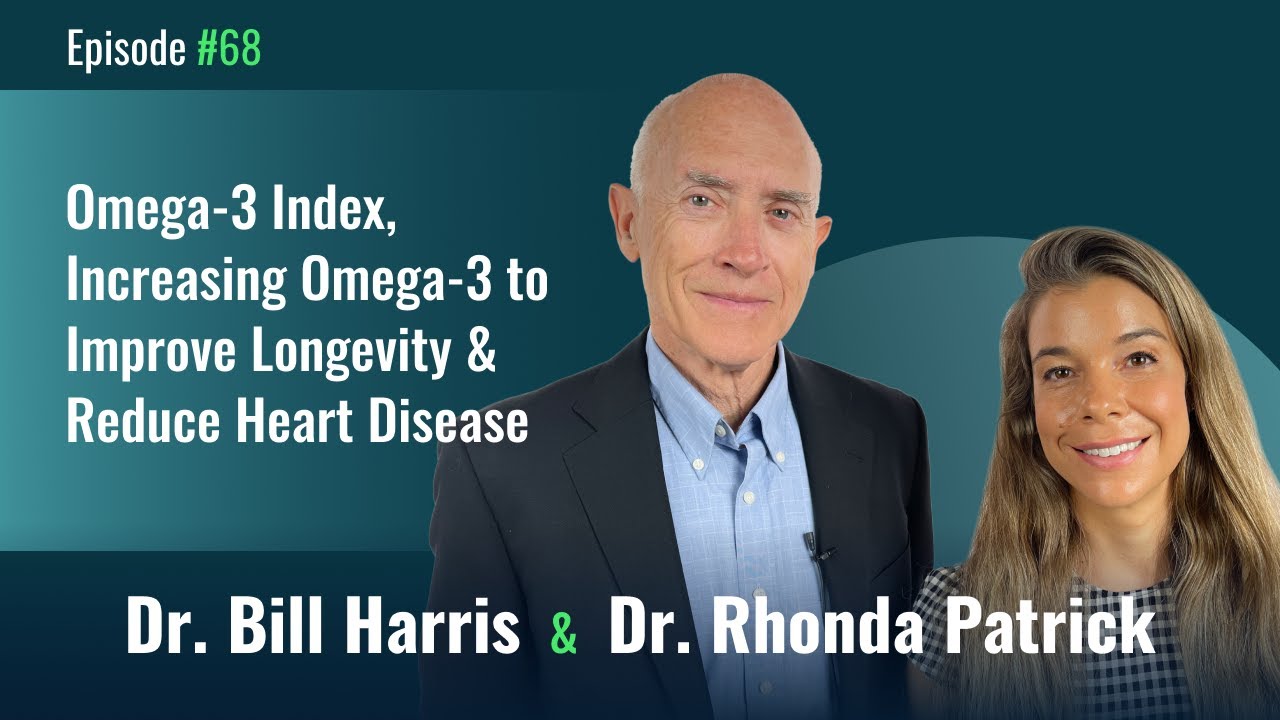
Dr. Rhonda Patrick: from fish, seafood. So this Harvard study identified not eating enough seafood as one of the top six preventable causes of death up there with not having hypertension, not smoking. So essentially not getting enough omega-3 from seafood was so important for preventing early death that it was comparable to people having high blood pressure, having cardiovascular disease, for example. And again, it's one of those things where people just don't think about what they're not eating, what they're not getting. And um there's so much research that have been done even since that that study that was published in like 2009 looking at omega-3 fatty acid levels in our blood cells, red blood cells. This is called the omega-3 index. O it's really an important marker of our long-term omega-3 because our our red blood cells stay around in our system for like 120 days. So it's a long-term marker of your omega-3 intake. And there's been a variety of studies um done from Dr. Bill Harris out of the fatty acid research institute. So I'm an associate a scientist there showing that people with what's called a high omega-3 index
Steven Bartlett: which is a lot of omega-3
Dr. Rhonda Patrick: a lot of omega-3 their omega-3 index would be 8% or higher that's considered high compared to a low omega-3 index. That would be 4% or lower. The average omega-3 index in the United States is about 5%. So, it's on the low low range. People that had the high omega-3 index, in other words, they were either eating a lot of fish like salmon and or supplementing with fish oil or microalgae oil, which is another a marine source of these omega-3 fatty acids. They had a five-year increased life expectancy compared to people with a low omega-3 index. Pretty big difference there. All all you have to do is essentially either eat enough seafood and or supplement with a fish oil supplement. But what was so fascinating about this study was that Bill and his colleagues not only looked at the omega-3 index, they looked at people that also smoked and they said, "Okay, we know smoking is terrible for your heart. We know it's causes early mortality, cancer, and all that, right? What about people that smoke and their omega-3 index? So, there was four groups that were looked at. Smokers that have either a high omega-3 index, so these smokers were either supplementing or they were eating a lot of seafood. And then there was smokers with a low omega-3 index. And they compared them to non-smokers with a high omega-3 index versus a low omega-3 index. And what was so fascinating about this study was that smoking was like as bad for you in terms of mortality as having a low omega-3 index. So the smokers with a high omega-3 index had the same mortality risk as non-smokers with a low omega-3 index, which is fascinating because everybody knows to avoid smoking. Smoking, if you want to take years off your life, if you want to decrease the quality of your life, start smoking right now. But the same mortality risk was found in non-smokers who did not have a high omega-3 index. Right now, I say this, I'll talk about this and smokers will say, "Oh, great. Now all I have to do is take fish oil and I'll have the same life expectancy as a non-smoker with, you know, a low omega-3 index." But of course, the the take-home here is that for those of us that are not smoking, but we're not getting enough omega-3 from our diet, that's like smoking in terms of mortality risk. So, super important, and I like talking about this because it really makes it again really clear that not getting these essential nutrients can be very detrimental to our health. And it's easy to fix. You can take a fish oil supplement. You can increase the amount of salmon that you're eating. And there have been studies from Bill's group that have shown people that supplement with between 1 to two grams of fish oil per day can go from a low omega-3 index to a high omega-3 index, which is not hard to do.
Steven Bartlett: So, I guess two questions, which is, is having these little omega capsules the same as eating the salmon in terms of the omega3 that I'm getting? And how long do I have to take these little omega capsules for to move from having a low index to a high omega-3 index?
Dr. Rhonda Patrick: Well, these are great questions, Stephen. So, essentially, this little capsule here is not the same as eating salmon. And there's a few reasons why. So, for one, when you're eating a fish that's high in omega-3, like salmon, you have this omega-3 in what's called triglyceride form. So the omega-3 is is is bound to a glycerol backbone and that's really important for the way you absorb it. Some fish oil supplements don't have that. They're they're aster they're basically they're molecular distilled and then they're put they have an ethanol back backbone. So it's not quite as bioavailable. But I think more importantly is that these fish oil supplements are purified. So you're not getting mercury or microplastics or things that are also found in the whole fish.
Steven Bartlett: So these are better.
Dr. Rhonda Patrick: Unfortunately, I think so. I do. Um as much as I think it's it's better, you know, for the longest time I always I was always a whole foods first approach. Um but we do have this environmental pollution problem and fish have been contaminated with heavy metals. They've been contaminated with microplastics. I would say that salmon is one of the lowest fish that has the lowest amount of mercury compared to other fish. So on a on a per gram basis, you're getting less mercury per gram with salmon than you would be with, you know, something like swordfish, for example. But but you also have microplastics, unfortunately, that are now in fish. And it is something that enters our body when we eat the fish. And so I do think the fish oil supplements are a good alternative because you're getting those omega-3 fatty acids and you're not you're you're not getting some of the other bad things that are in the
[Source clip ends mid-sentence.]
Supporting our work
If you enjoy the fruits of
 , you can participate in helping us to keep improving it. Creating a premium subscription does just that! Plus, we throw in occasional member perks and, more importantly, churn out the best possible content without concerning ourselves with the wishes of any dark overlords.
Omega-3 News
- Omega-3 fatty acid supplementation benefits people with depression.
- Adding omega-3s to statin therapy significantly reduces the residual risk of major cardiovascular events.
- Omega-3s show promise in easing oral mucositis symptoms during head and neck cancer radiation therapy.
- Omega-3 fatty acids protect the brain from the harms of air pollution.