How Creatine Supports Muscle and Cognitive Health
Get the full length version of this episode as a podcast.
This episode will make a great companion for a long drive.
The Omega-3 Supplementation Guide
A blueprint for choosing the right fish oil supplement — filled with specific recommendations, guidelines for interpreting testing data, and dosage protocols.
You'll also receive updates from Rhonda & FoundMyFitness
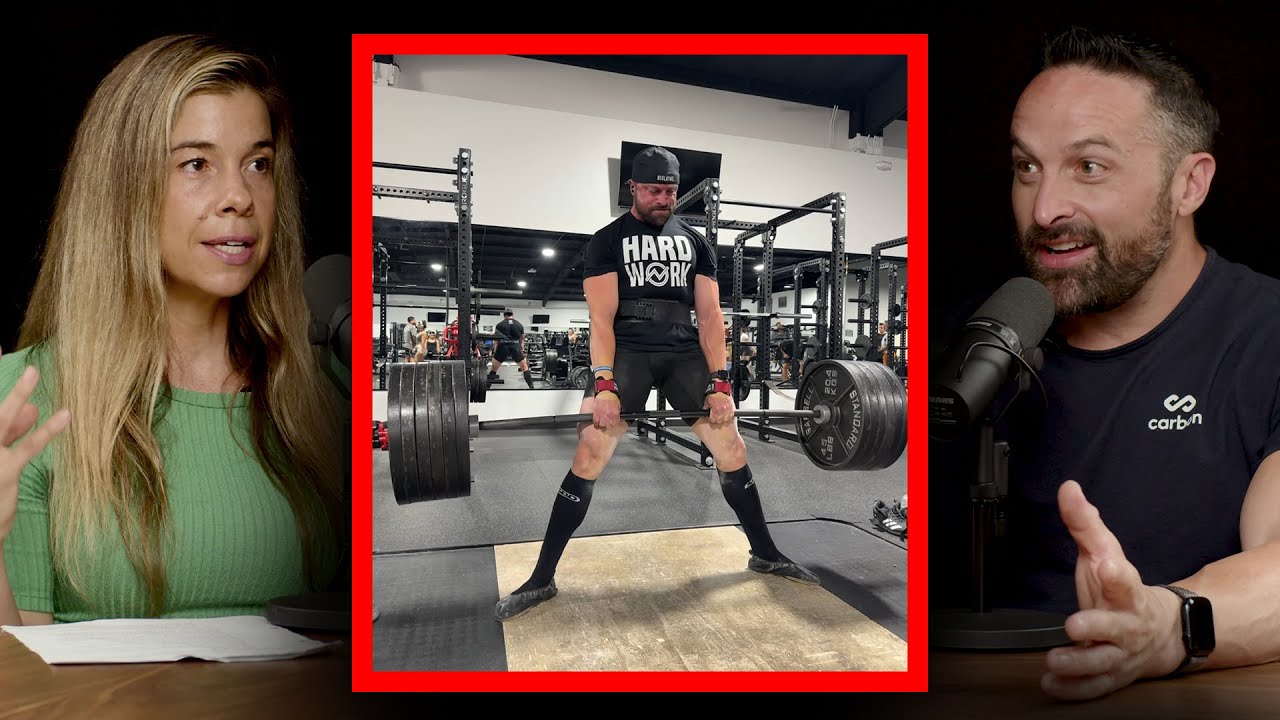
In this FoundMyFitness interview clip, Dr. Rhonda Patrick asks Dr. Stuart Phillips how creatine monohydrate fits into muscle and brain health. Dr. Phillips describes it as a well-studied supplement with modest but durable effects, a long safety record in healthy adults, and a growing role in healthy-aging conversations.
Creatine works especially well when paired with resistance training. A meta-analysis in older adults found greater gains in lean mass and strength when creatine accompanied training, while a systematic review found the most consistent benefits after at least 12 weeks of combined use. [1] [2]
Dr. Phillips also highlights emerging cognitive evidence. A meta-analysis of 16 randomized trials found small improvements in memory and selected measures of attention and processing speed. He recommends ordinary creatine monohydrate, gradual daily use rather than a required loading phase, and clinical guidance for people with kidney disease or other relevant conditions. [3]
- ^ Devries MC; Phillips SM (2014). Creatine supplementation during resistance training in older adults-a meta-analysis. Med Sci Sports Exerc 46, 6.
- ^ Stares A; Bains M (2020). The Additive Effects of Creatine Supplementation and Exercise Training in an Aging Population: A Systematic Review of Randomized Controlled Trials. J Geriatr Phys Ther 43, 2.
- ^ Xu, Chen; Bi, Siyuan; Zhang, Wenxin; Luo, Lin (2024). The Effects Of Creatine Supplementation On Cognitive Function In Adults: A Systematic Review And Meta-Analysis Frontiers In Nutrition 11, .
Dr. Rhonda Patrick: And then my last supplement to ask you about, creatine monohydrate. Is that, like, is that something— I mean, there's evidence that it seems to be beneficial for muscle growth, for brain health, but, like, is there side effects? Is there worry? Like, is it— what are your thoughts on it?
Dr. Stuart Phillips: Yeah, yeah. So, again, short supplement shelf, that's on there for me. I don't take it all the time. I have periods where I'm doing a lot of work. I try and sort of, you know, ramp up the volume of work that I'm doing. And I will add creatine at that time. Now, I know a lot of— I've got friends who will say, why aren't you taking it all the time? And I get it. Probably about 40 years old now. So, as supplements go, it came and stayed, which makes it one of the number 3 categories.
It sounds too good to be true. Its effects are pretty mild on muscle, but they're there. They're potent. They last. Now, the brain and the cognitive side of things is, you know, the evidence is growing in that area too. If there were a danger with it, you know, that it was having— there was a lot of talk about it's damaging your kidneys, it's doing, you know, this, you shouldn't, you know, it's a guanidino compound, etc., etc. We've got 40 years' worth of data with people on the supplement now, and we're not seeing some sort of... Right. ...rife wave of people who used it getting various forms of cancer, etc., etc., which you would expect. 40 years is enough to see the effect. All the data reviewing it from a safety standpoint has given it 2 thumbs up.
The adverse events are rare, usually in combination because people are taking not only that supplement,
Dr. Rhonda Patrick: Yeah.
Dr. Stuart Phillips: Several others. So, you know, pinning it on creatine per se hasn't shown any credence. So it definitely gets an A grade from the effectiveness standpoint. I think it's good for younger and older people. I'm good with the health or the safety side of things as well. I do think people, if they're going to try it, should do it sort of gradually. It used to be you'd take these big loading doses. I think most people now— a good friend of mine, Dr. Mark Tarnopolsky, neuromuscular physician, has all of his neuromuscular patients on it. So I think that that's a fairly robust endorsement of what it can do for people with compromised muscle function.
And he recommends that these people just start with a dose of about, you know, 4 to 5 grams of creatine a day.
Dr. Rhonda Patrick: What is he using it, like, exactly for? Well, I mean, all these people have is one of their overriding symptoms, no matter what they have, whether it's a mitochondrial myopathy or some sort of dystrophy condition is muscle weakness. So people do get a little bit of a boost. It may not be, you know, something that you or I would consider worthy, but if you're somebody who's close to that line where, you know, disability is here and ability is here, then creatine could be what it is that pushes you over that line. So he's, you know, I think one— and again, you can go and read his papers, they're pretty robust. Studies done in all kinds of populations.
Dr. Stuart Phillips: And so, yeah, try it, see what you think. Most people tolerate it very well. You don't need a fancy brand of it. The stuff they sell at Costco or whatever is just as good as anything else. The monohydrate form is the one to aim for. Don't be fooled by creatine, insert your favorite derivative. Monohydrate is the one that's been most studied, and so probably the one you want to go for, for sure.
Dr. Rhonda Patrick: And it's good to know, so you don't actually have to be physically active to reap any benefits from it. And that was the question I had because, I mean, again, thinking of parents and grandparents, right? I mean, that's the issue with the ones that are not physically active. Or that, I mean, there's people that walk their dogs and stuff, which is good.
That at least gives them some physical activity. But you don't have to be pumping iron and stuff to—
Dr. Stuart Phillips: No, you don't. Because I always thought about it that way. I'm like, well, I'm not like a gym rat, so do I need it? I mean— Yeah, yeah, yeah. No, I mean, I think the stuff now with creatine that they're uncovering that makes me think maybe this should be part of my regular routine actually has less to do with the muscle and more to do with the brain and the cognitive performance that it, you know, it's come back several times now, improves. And, you know, you mentioned I'm the director of PACE. It has a special place in my heart. And the truth is, is that you talk to people in PACE— our oldest participant is 104, so I consider him to be the icon of wisdom.
And people talk about when they get older, from a health standpoint, they don't want to be a burden. And that always, when you unpack it, is around, I don't want for somebody to have to take care of me because my physical capacity has gone down. Or that my mental capacity has gone down. They all fear that. So it's dementia, and then it's physical inability to do things. And so I say, well, you're here working on the physical ability, but you're working on the dementia too. And they say, well, what else can I do? I said, well, here's a list of sort of things. And I'm by no means a dementia expert, but creatine might be something that older people might want to talk about for sure.
Supporting our work
If you enjoy the fruits of
 , you can participate in helping us to keep improving it. Creating a premium subscription does just that! Plus, we throw in occasional member perks and, more importantly, churn out the best possible content without concerning ourselves with the wishes of any dark overlords.
Creatine News
- Gut bacteria may help creatine reach the brain and support its antidepressant effects.
- Creatine supplementation does not influence hair growth or hormone levels even after three months of usage, undermining theories of its potential link to hair loss.
- Creatine improved bench-press strength and increased lean mass even without structured exercise in middle-aged adults.
- Creatine strengthened cancer-fighting immune cell activity and reduced tumor growth in a mouse melanoma model.