The Most Effective Ways to Reduce Visceral Fat
The Omega-3 Supplementation Guide
A blueprint for choosing the right fish oil supplement — filled with specific recommendations, guidelines for interpreting testing data, and dosage protocols.
You'll also receive updates from Rhonda & FoundMyFitness
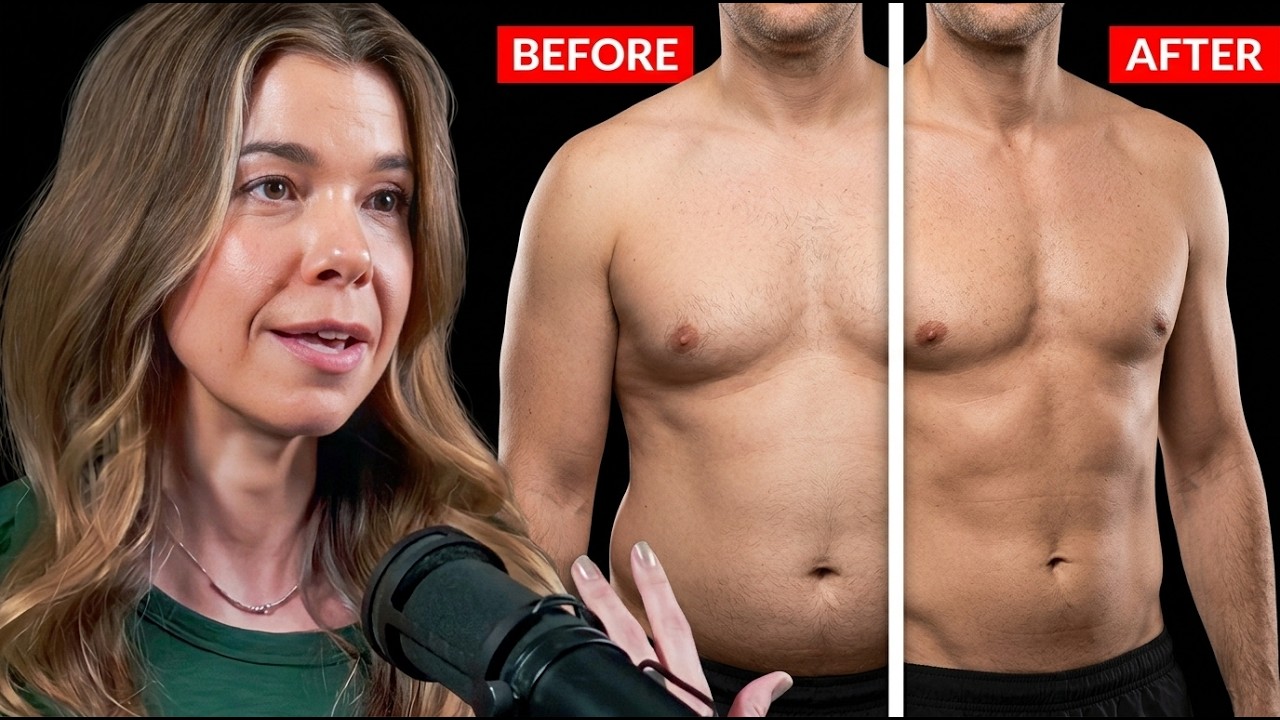
Visceral fat is stored around internal organs and contributes to insulin resistance and cardiometabolic risk through fatty-acid delivery, inflammatory signaling, and adipokines. In this clip from Dr. Rhonda Patrick's appearance on The Diary Of A CEO, she explains that sustained weight loss and regular exercise can reduce this metabolically active fat. A network meta-analysis of 84 randomized trials found reductions with aerobic, resistance, combined, and interval training. [1]
Sleep also affects appetite, insulin sensitivity, and fat distribution. In a small inpatient crossover study, 12 healthy adults received four-hour or nine-hour sleep opportunities for two weeks while food was freely available. Sleep restriction increased calorie intake, body weight, and visceral fat, showing how sleep and energy balance can interact. Menopause can also shift fat toward the abdomen as hormonal changes combine with age, activity, diet, sleep, and total fat gain. [2] [3]
Time-restricted eating can help some people reduce eating opportunities, but controlled trials have not found a consistent visceral-fat advantage over matched dietary counseling or calorie restriction. Fasted aerobic exercise increases fat oxidation during the workout, while pre-exercise feeding can support prolonged performance. The practical foundation is a sustainable eating pattern, aerobic and resistance exercise, adequate protein, sufficient sleep, and enough energy to protect reproductive, bone, and training health. [4] [5] [6] [7] [8]
This clip is excerpted, with permission, from Dr. Rhonda Patrick's appearance on The Diary Of A CEO. Thank you to The Diary Of A CEO for allowing us to share it.
- ^ Chen X; He H; Xie K; Zhang L; Cao C (2024). Effects of various exercise types on visceral adipose tissue in individuals with overweight and obesity: A systematic review and network meta-analysis of 84 randomized controlled trials. Obes Rev 25, 3.
- ^ Covassin N; Singh P; McCrady-Spitzer SK; St Louis EK; Calvin AD; Levine JA, et al. (2022). Effects of Experimental Sleep Restriction on Energy Intake, Energy Expenditure, and Visceral Obesity. J Am Coll Cardiol 79, 13.
- ^ Samargandy S; Matthews KA; Brooks MM; Barinas-Mitchell E; Magnani JW; Janssen I, et al. (2021). Abdominal visceral adipose tissue over the menopause transition and carotid atherosclerosis: the SWAN heart study. Menopause 28, 6.
- ^ Dote-Montero M; Clavero-Jimeno A; Merchán-Ramírez E; Oses M; Echarte J; Camacho-Cardenosa A, et al. (2025). Effects of early, late and self-selected time-restricted eating on visceral adipose tissue and cardiometabolic health in participants with overweight or obesity: a randomized controlled trial. Nat Med 31, 2.
- ^ Liu D; Huang Y; Huang C; Yang S; Wei X; Zhang P, et al. (2022). Calorie Restriction with or without Time-Restricted Eating in Weight Loss. N Engl J Med 386, 16.
- ^ Vieira AF; Costa RR; Macedo RC; Coconcelli L; Kruel LF (2016). Effects of aerobic exercise performed in fasted v. fed state on fat and carbohydrate metabolism in adults: a systematic review and meta-analysis. Br J Nutr 116, 7.
- ^ Aird TP; Davies RW; Carson BP (2018). Effects of fasted vs fed-state exercise on performance and post-exercise metabolism: A systematic review and meta-analysis. Scand J Med Sci Sports 28, 5.
- ^ De Souza, Mary Jane; Mallinson, Rebecca J; Strock, Nicole Ca; Koltun, Kristen J; Olmsted, Marion P; Ricker, Emily A, et al. (2021). Randomised Controlled Trial Of The Effects Of Increased Energy Intake On Menstrual Recovery In Exercising Women With Menstrual Disturbances: The ‘REFUEL’ Study Human Reproduction 36, 8.
Dr. Rhonda Patrick: Visceral fat is linked to insulin resistance and cardiometabolic risk. It often responds to sustained weight loss and exercise, but the speed and amount vary by person.
Experimental sleep restriction can impair insulin sensitivity and increase visceral fat. In a small inpatient crossover study, 14 days of four-hour sleep opportunities increased calorie intake and visceral fat. That does not prove that ordinary parenting-related sleep disruption produces the same effect or that exercise cancels sleep loss.
Insulin resistance means that tissues require more insulin for a given glucose-lowering effect. Visceral fat can contribute through fatty-acid flux, inflammation, and adipokines. It is not the only cause. Genetics, liver and muscle fat, inactivity, diet, sleep, medication, and beta-cell function also matter.
Exercise improves muscle glucose uptake and insulin sensitivity. Aerobic exercise has consistent evidence for reducing visceral fat. Resistance, combined, and interval training can also help. HIIT is time-efficient, but more intensity is not always better when adherence, recovery, injury risk, or postpartum status is considered.
Visceral fat often falls disproportionately during weight loss. It is not guaranteed to be the first depot lost or easy for everyone.
Steven Bartlett: Is intermittent fasting a useful way to reduce visceral fat?
Dr. Rhonda Patrick: A restricted eating window can help some people reduce calories without counting them. Controlled trials do not show that it is consistently better than matched calorie restriction for visceral-fat loss. Earlier eating may have small metabolic advantages over concentrating food late in the day.
Fuel use changes gradually during fasting. Liver glycogen is not predictably empty at 10 to 12 hours, and a morning fast does not selectively release visceral fat. Ketones can serve as fuel and signaling molecules, but ordinary 16:8 fasting has not been shown to reliably increase brain GABA, reduce anxiety, or sharpen cognition in healthy adults.
Human studies do not identify a universal hour when autophagy or a repair state switches on. Eating is not inherently damaging. Feeding supports protein synthesis, immune function, recovery, pregnancy, and lactation.
Fasted aerobic exercise increases fat oxidation during the session. It has not consistently produced more long-term fat loss, better mitochondrial adaptation, or superior performance. Pre-exercise feeding often helps prolonged aerobic work.
Chronic under-fueling can suppress reproductive hormones, disrupt menstruation, and harm bone and other systems. This can affect recreational exercisers as well as elite athletes. Missed periods require clinical evaluation.
Menopause can shift fat toward the abdomen, but age, activity, sleep, diet, genetics, and total fat also matter. Hormone therapy or testosterone should not be presented as a visceral-fat treatment from this discussion.
The best-supported plan combines sustainable energy balance, aerobic and resistance exercise, adequate protein, and sufficient sleep. Fasting is one optional adherence tool, not a required metabolic switch.
Get email updates with the latest curated healthspan research
Support our work

Every other week premium members receive a special edition newsletter that summarizes all of the latest healthspan research.