Which Types of Exercise Reduce Visceral Fat?
The BDNF Protocol Guide
An essential checklist for cognitive longevity — filled with specific exercise, heat stress, and omega-3 protocols for boosting BDNF. Enter your email, and we'll deliver it straight to your inbox.
You'll also receive updates from Rhonda & FoundMyFitness
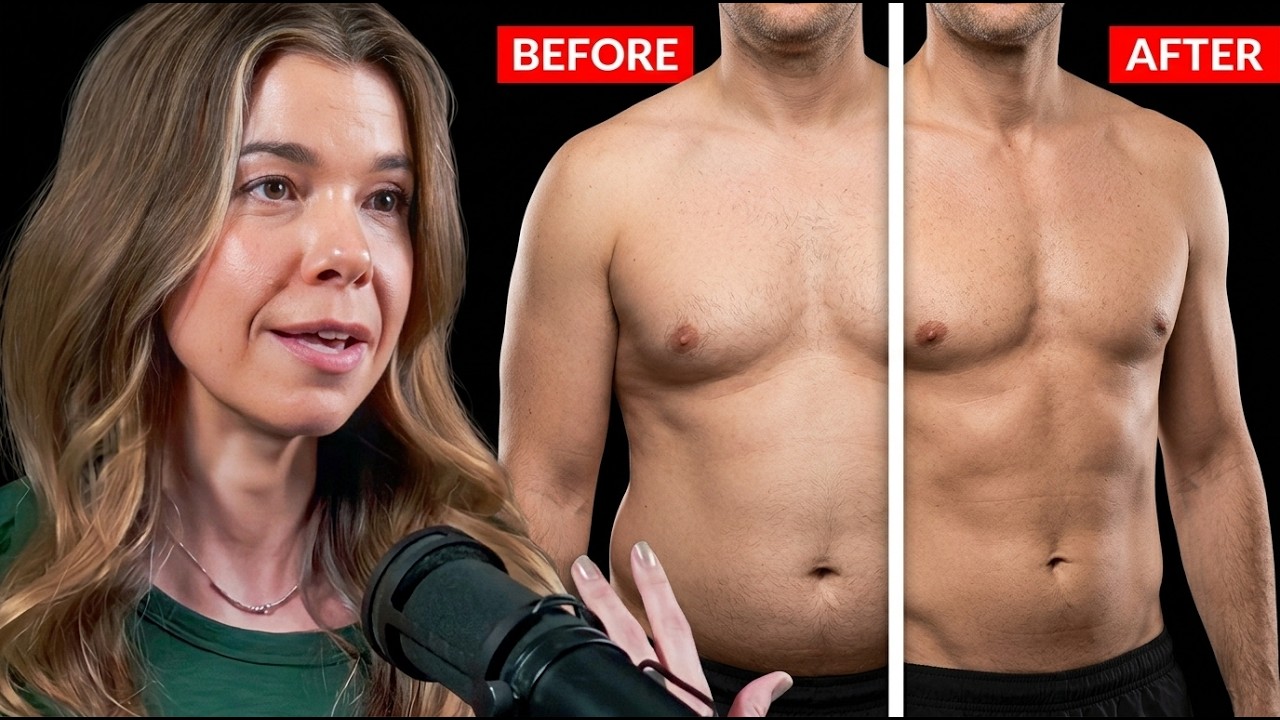
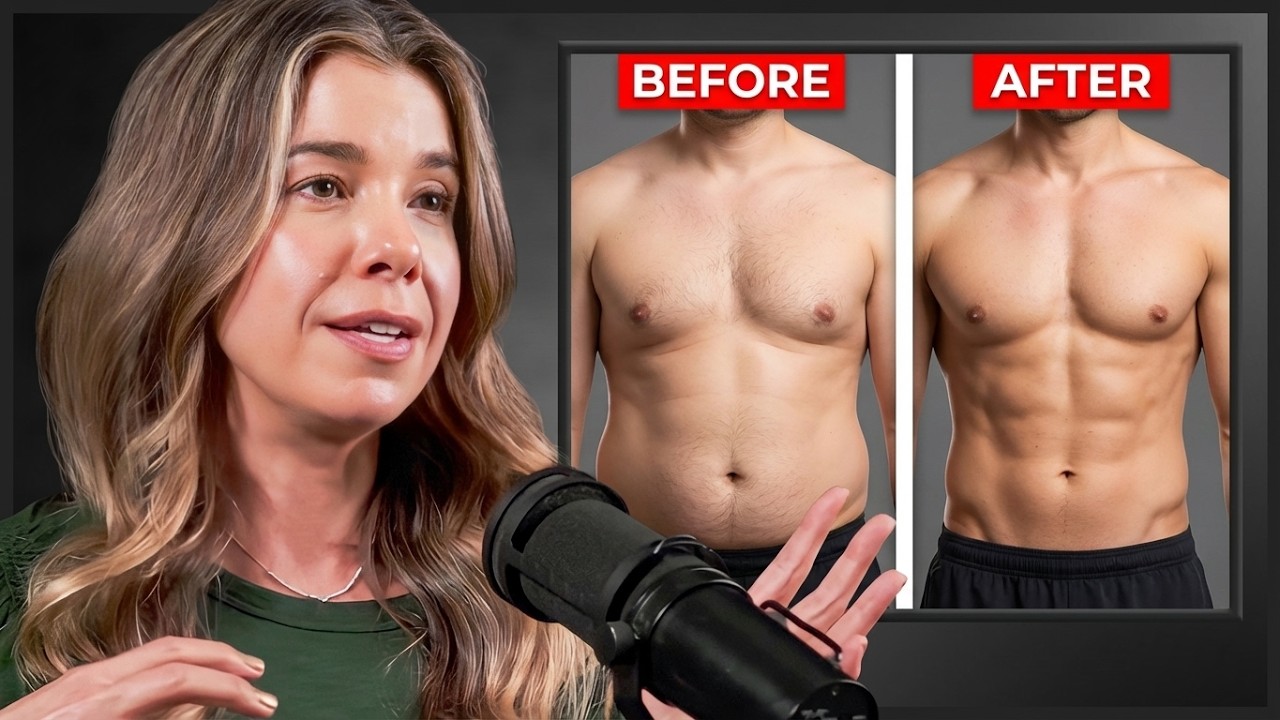
Exercise can reduce visceral fat and improve metabolic health even when scale weight changes little. In this clip from Dr. Rhonda Patrick's appearance on Thomas DeLauer's podcast, she explains that aerobic exercise has the most consistent evidence and can also reduce liver fat. In a 12-week trial involving people with fatty liver disease, exercise reduced liver triglyceride content and visceral-fat area, showing that changes in fat distribution can occur without large changes in body weight. [1] [2]
High-intensity interval training offers a time-efficient option, while continuous aerobic exercise can produce similar visceral-fat reductions when workload is comparable. Protocols vary, so the best format depends on fitness, safety, preferences, and adherence. A practical goal is to build toward 150 to 300 minutes of moderate activity or 75 to 150 minutes of vigorous activity per week, while recognizing that benefits can begin below those amounts. [3] [4] [5]
Resistance training adds benefits for muscle, strength, glucose handling, bone, and healthy aging. A network meta-analysis of 84 randomized trials found that aerobic exercise, HIIT, combined training, and resistance training alone all reduced visceral fat, while a separate meta-analysis found a modest reduction from resistance training across 34 studies. Combining aerobic and resistance exercise provides a broad approach to body composition and metabolic function, including during and after the menopause-related shift toward greater abdominal fat storage. [6] [7] [8] [9]
This clip is excerpted, with permission, from Dr. Rhonda Patrick's appearance on Thomas DeLauer's podcast. Thank you to Thomas DeLauer for allowing us to share it.
- ^ Slentz CA; Aiken LB; Houmard JA; Bales CW; Johnson JL; Tanner CJ, et al. (2005). Inactivity, exercise, and visceral fat. STRRIDE: a randomized, controlled study of exercise intensity and amount. J Appl Physiol (1985) 99, 4.
- ^ Houghton D; Thoma C; Hallsworth K; Cassidy S; Hardy T; Burt AD, et al. (2017). Exercise Reduces Liver Lipids and Visceral Adiposity in Patients With Nonalcoholic Steatohepatitis in a Randomized Controlled Trial. Clin Gastroenterol Hepatol 15, 1.
- ^ Andreato LV; Esteves JV; Coimbra DR; Moraes AJP; de Carvalho T (2019). The influence of high-intensity interval training on anthropometric variables of adults with overweight or obesity: a systematic review and network meta-analysis. Obes Rev 20, 1.
- ^ Kramer AM; Martins JB; de Oliveira PC; Lehnen AM; Waclawovsky G (2023). High-intensity interval training is not superior to continuous aerobic training in reducing body fat: A systematic review and meta-analysis of randomized clinical trials. J Exerc Sci Fit 21, 4.
- ^ Keating SE; Johnson NA; Mielke GI; Coombes JS (2017). A systematic review and meta-analysis of interval training versus moderate-intensity continuous training on body adiposity. Obes Rev 18, 8.
- ^ Chen X; He H; Xie K; Zhang L; Cao C (2024). Effects of various exercise types on visceral adipose tissue in individuals with overweight and obesity: A systematic review and network meta-analysis of 84 randomized controlled trials. Obes Rev 25, 3.
- ^ Khalafi M; Malandish A; Rosenkranz SK; Ravasi AA (2021). Effect of resistance training with and without caloric restriction on visceral fat: A systemic review and meta-analysis. Obes Rev 22, 9.
- ^ Franklin RM; Ploutz-Snyder L; Kanaley JA (2009). Longitudinal changes in abdominal fat distribution with menopause. Metabolism 58, 3.
- ^ Khalafi M; Habibi Maleki A; Sakhaei MH; Rosenkranz SK; Pourvaghar MJ; Ehsanifar M, et al. (2023). The effects of exercise training on body composition in postmenopausal women: a systematic review and meta-analysis. Front Endocrinol (Lausanne) 14, .
Dr. Rhonda Patrick: Visceral fat is modifiable. Exercise can reduce visceral fat, improve whole-body insulin sensitivity, and reduce liver fat, sometimes even when scale weight changes little. Effects on “brain insulin resistance” are still a research question, and exercise does not guarantee reversal of fatty-liver inflammation or fibrosis.
Aerobic exercise has the most consistent evidence. A practical goal is to build toward 150 to 300 minutes per week of moderate activity, 75 to 150 minutes of vigorous activity, or an equivalent combination. Benefits can start below those amounts, and more activity can produce more fat loss for some people.
High-intensity interval training can also reduce visceral fat. Protocols differ, and “Tabata,” sprint intervals, circuit training, and CrossFit are not interchangeable. Direct trials generally find similar visceral-fat loss from HIIT and continuous aerobic training when workload is comparable. HIIT can save time, but it is not the universal best option.
Consistency matters. A safe program that a person can continue is more useful than an aggressive plan that is abandoned.
Resistance training is important for muscle, strength, insulin sensitivity, bone, and healthy aging. Aerobic exercise tends to reduce visceral fat more consistently, but pooled trials also show modest reductions from resistance training alone. Combining resistance and aerobic exercise gives broad metabolic and functional benefits, although a special synergistic visceral-fat effect is not proven.
Menopause can shift fat storage toward the abdomen. Resistance training can improve body composition in postmenopausal women, but the mechanism is not proven to be an exercise-induced testosterone increase. Sex hormones, age, sleep, activity, muscle loss, diet, and genetics all contribute.
Thomas DeLauer: Muscle also acts as a major site for glucose disposal. Preserving muscle may help limit some downstream metabolic effects, although muscular people can still develop substantial visceral fat.
Dr. Rhonda Patrick: Resistance training improves muscle glucose uptake and insulin sensitivity. It complements aerobic exercise and fat loss, but it does not neutralize visceral-fat risk.
Exercise is one of the best tools for reducing visceral fat. For the largest and most durable change, combine aerobic and resistance training with an eating pattern that supports a sustainable energy balance, adequate sleep, and clinical treatment when indicated. Vigorous intervals are not the right starting point for everyone, especially people with cardiovascular disease, uncontrolled hypertension, major joint limitations, or severe deconditioning.
Attend Monthly Q&As with Rhonda
Support our work

The FoundMyFitness Q&A happens monthly for premium members. Attend live or listen in our exclusive member-only podcast The Aliquot.