How Exercise and Energy Balance Reduce Visceral Fat
The Omega-3 Supplementation Guide
A blueprint for choosing the right fish oil supplement — filled with specific recommendations, guidelines for interpreting testing data, and dosage protocols.
You'll also receive updates from Rhonda & FoundMyFitness
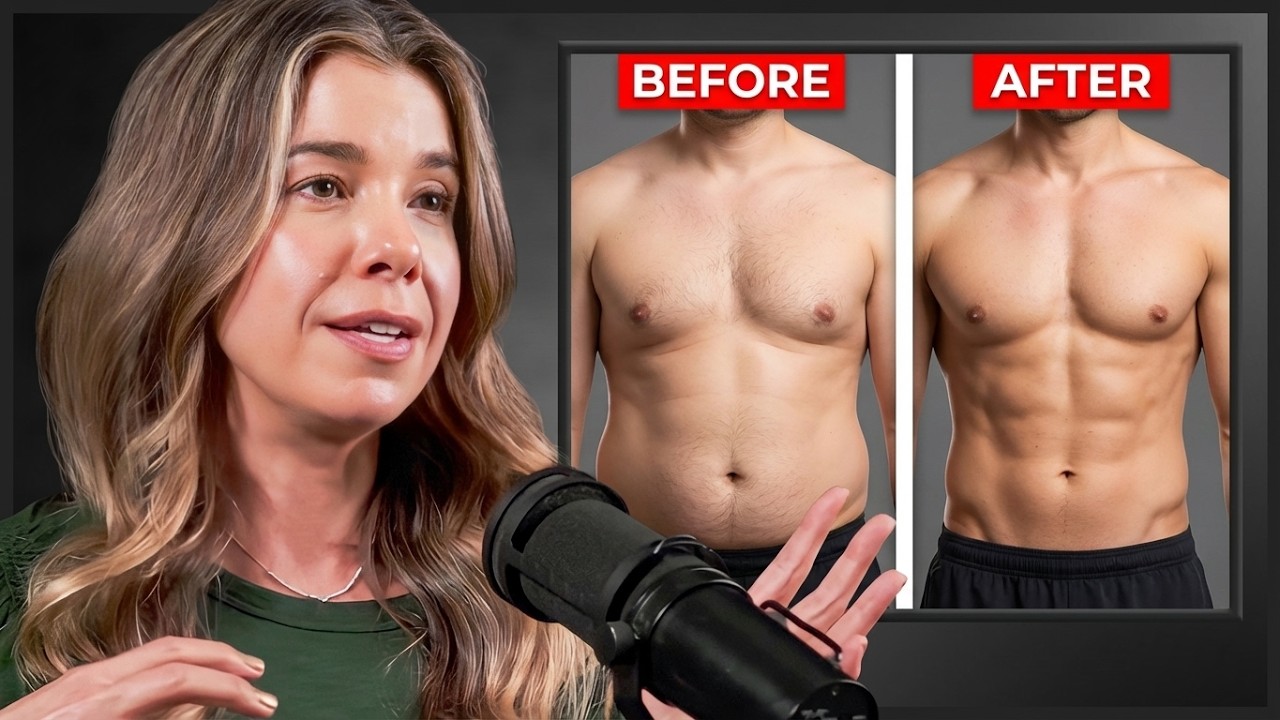
Visceral fat is stored deep in the abdomen around internal organs and is closely associated with insulin resistance, type 2 diabetes, fatty liver, cardiovascular disease, and some cancers. In this clip from Dr. Rhonda Patrick's appearance on Huberman Lab, she explains that body weight alone can miss changes in fat distribution. Waist circumference provides a practical central-adiposity screen, while CT and MRI are reference measurement methods. Visceral fat also tends to rise during the menopause transition as hormonal changes interact with age, activity, sleep, diet, and total fat gain. [1]
Regular exercise and sustainable energy balance provide the strongest foundation for reducing visceral fat. A network meta-analysis of 84 randomized trials found reductions with moderate and vigorous aerobic exercise, resistance training, combined training, and high-intensity interval training. Fasted exercise can increase fat oxidation during a workout, but it is an optional strategy. The best training approach is one that fits the person's goals, fitness, recovery, and health. [2] [3]
Time-restricted eating can help some people reduce eating opportunities, although a 12-month trial found no additional weight or body-fat benefit when an eight-hour eating window was added to calorie restriction. Sleep also affects appetite and fat distribution. In a small randomized crossover study, two weeks with four-hour sleep opportunities increased calorie intake, body weight, and visceral fat compared with nine-hour opportunities. Together, these findings support a practical plan built around consistent exercise, adequate sleep, sufficient protein, and a sustainable dietary pattern. [4] [5]
This clip is excerpted, with permission, from Dr. Rhonda Patrick's appearance on Huberman Lab. Thank you to Huberman Lab for allowing us to share it.
- ^ Greendale GA; Han W; Finkelstein JS; Burnett-Bowie SM; Huang M; Martin D, et al. (2021). Changes in Regional Fat Distribution and Anthropometric Measures Across the Menopause Transition. J Clin Endocrinol Metab 106, 9.
- ^ Chen X; He H; Xie K; Zhang L; Cao C (2024). Effects of various exercise types on visceral adipose tissue in individuals with overweight and obesity: A systematic review and network meta-analysis of 84 randomized controlled trials. Obes Rev 25, 3.
- ^ Chang YH; Yang HY; Shun SC (2021). Effect of exercise intervention dosage on reducing visceral adipose tissue: a systematic review and network meta-analysis of randomized controlled trials. Int J Obes (Lond) 45, 5.
- ^ Liu D; Huang Y; Huang C; Yang S; Wei X; Zhang P, et al. (2022). Calorie Restriction with or without Time-Restricted Eating in Weight Loss. N Engl J Med 386, 16.
- ^ Covassin N; Singh P; McCrady-Spitzer SK; St Louis EK; Calvin AD; Levine JA, et al. (2022). Effects of Experimental Sleep Restriction on Energy Intake, Energy Expenditure, and Visceral Obesity. J Am Coll Cardiol 79, 13.
Dr. Andrew Huberman: It sounds like you sometimes train fasted.
Dr. Rhonda Patrick: I use how I feel and the demands of the workout. I sometimes eat first. I often train before breakfast because time-restricted eating helps me control calories and because I prefer how I feel in the morning.
Fasted exercise increases fat oxidation during that session, but this does not prove greater long-term fat or visceral-fat loss when calories and training are matched. Feeding can improve prolonged aerobic performance. The practical choice depends on goals, workout length, intensity, symptoms, and adherence.
Visceral adipose tissue is deep abdominal fat around organs. It is metabolically active and is associated with insulin resistance, type 2 diabetes, fatty liver, cardiovascular disease, and some cancers. The exact claims that it universally doubles early-death risk or raises cancer risk by 44 percent depend on the cohort and comparison and should not be generalized.
Waist circumference is a practical central-adiposity risk screen, not a diagnosis of visceral fat. The common U.S. action thresholds are 35 inches for women and 40 inches for non-Asian men, with lower thresholds used for some Asian populations. CT and MRI are reference imaging methods. DXA provides an estimate.
Visceral fat often rises during the menopause transition. Falling estradiol is one contributor, but age, total fat gain, activity, sleep, diet, and genetics also matter.
The strongest tools for reducing visceral fat are regular aerobic activity, resistance training, vigorous intervals when appropriate, and a sustainable energy deficit when excess adiposity is present. Fasted training and intermittent fasting are optional strategies, not required methods.
Visceral fat is relatively resistant to insulin's suppression of lipolysis, not completely unresponsive to insulin. Portal free-fatty-acid and adipokine delivery may contribute to liver and systemic insulin resistance. Fatigue, cravings, and post-meal sleepiness are nonspecific and do not diagnose insulin resistance or reactive hypoglycemia.
Normal-weight people can have excess visceral fat, and the scale can miss changes in distribution. Waist trends, blood pressure, lipids, glucose, and clinical context are more useful than appearance alone.
One five-day study enrolled healthy-weight men who added 1,500 calories per day of high-fat, high-sugar snack foods. It altered indirect measures of brain insulin action and increased liver fat before a large visible weight change. The study did not demonstrate meaningful visceral-fat gain, and body weight rose modestly. It cannot isolate ultra-processing, sugar, saturated fat, or calories because all changed together.
Severe sleep restriction can also affect abdominal fat. In a randomized crossover study of only 12 healthy adults, two weeks with four-hour sleep opportunities increased calorie intake, body weight, and visceral fat compared with nine-hour opportunities. The study cannot separate the sleep effect fully from the extra intake.
Dr. Andrew Huberman: What does intermittent fasting look like for you?
Dr. Rhonda Patrick: I usually try to stop eating about three hours before bed and often eat between approximately 11 a.m. and 7 p.m. The schedule changes when hunger, family, social obligations, or training require it. This is my routine, not a universal prescription.
Time-restricted eating can reduce eating opportunities and help some people maintain an energy deficit. Controlled trials do not show a consistent visceral-fat advantage over matched calorie restriction. Early eating windows may have some weight-independent metabolic effects, but the evidence is still small and population specific.
The “metabolic switch” is gradual. Liver glycogen use, fat oxidation, and ketone production overlap and vary with the prior meal, activity, metabolic health, and sex. The liver is not necessarily depleted of glycogen at 11 or 12 hours.
Ketones are fuels and signaling metabolites. Claims that an overnight fast universally raises brain GABA or BDNF enough to improve focus remain mechanistic and personal. My report of morning clarity is an anecdote.
Fasting is not appropriate for everyone. Pregnancy or breastfeeding, eating-disorder history, underweight or frailty, adolescence, diabetes treated with insulin or sulfonylureas, and high training loads require individualized guidance. Resistance training, adequate protein and energy, sleep, and a non-extreme deficit help preserve lean mass.
Supporting our work
If you enjoy the fruits of
 , you can participate in helping us to keep improving it. Creating a premium subscription does just that! Plus, we throw in occasional member perks and, more importantly, churn out the best possible content without concerning ourselves with the wishes of any dark overlords.