How Ultra-Processed Foods Drive Overeating and Weight Gain
The Omega-3 Supplementation Guide
A blueprint for choosing the right fish oil supplement — filled with specific recommendations, guidelines for interpreting testing data, and dosage protocols.
You'll also receive updates from Rhonda & FoundMyFitness
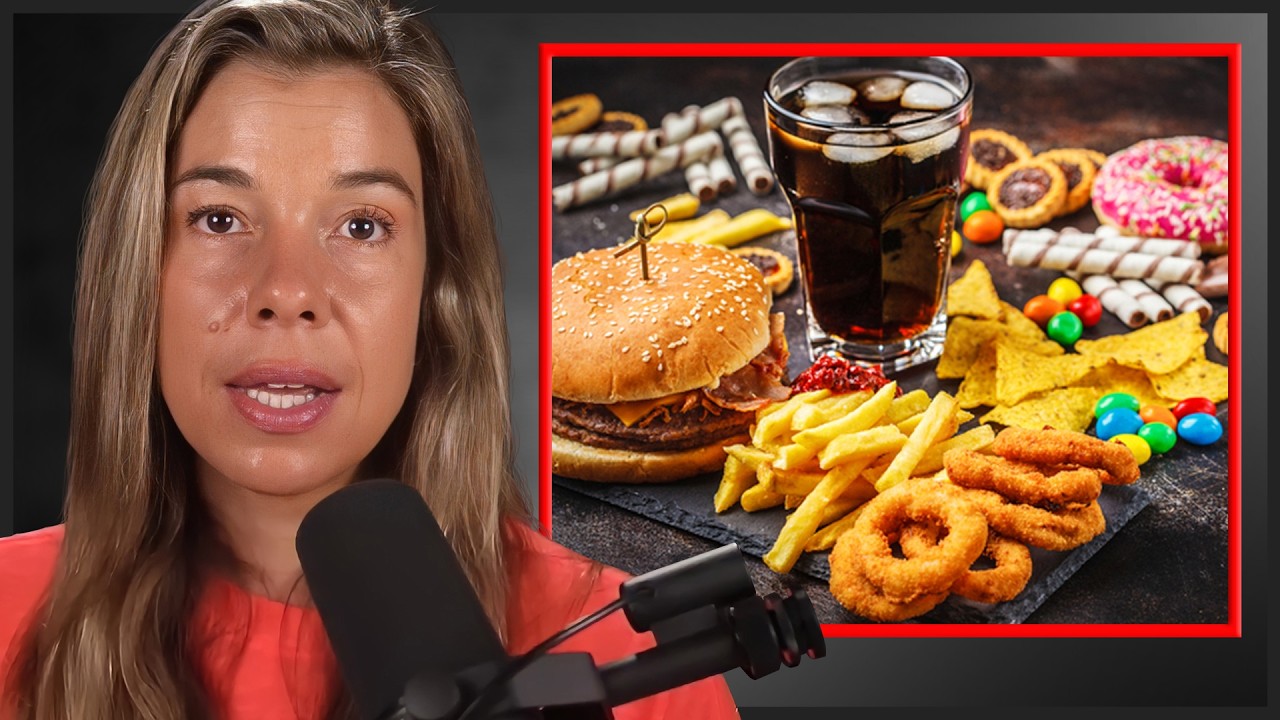
In this clip from Dr. Rhonda Patrick's appearance on The Dr. Hyman Show, she and Dr. Mark Hyman discuss why ultra-processed foods can promote passive overeating. These products are often easy to eat quickly and combine refined carbohydrates, added fats, and low fiber in forms that can weaken normal satiety cues. Dr. Patrick and Dr. Hyman also discuss protein leverage as one possible explanation for continued eating when a diet supplies a lower proportion of protein.
A randomized inpatient crossover trial tested this question directly. Twenty adults received an ultra-processed diet and an unprocessed diet for two weeks each. The menus were matched for presented calories, energy density, total sugar, sodium, and fiber, but not added sugar: much more of the ultra-processed diet's sugar was added rather than contained in fruit. Protein was also only approximately matched, at about 14% versus 15.6% of calories. Participants ate about 500 more calories per day and gained about 0.9 kilograms during the ultra-processed phase, while they lost a similar amount during the unprocessed phase. [1]
The trial shows that food processing and meal structure can change intake even when menu-level nutrients appear similar. Dr. Patrick and Dr. Hyman connect this result with a practical way to build meals: prioritize minimally processed protein sources, fruits, vegetables, legumes, nuts, seeds, and intact grains. This pattern supplies protein, fiber, and micronutrients that help meals feel satisfying and support metabolic health.
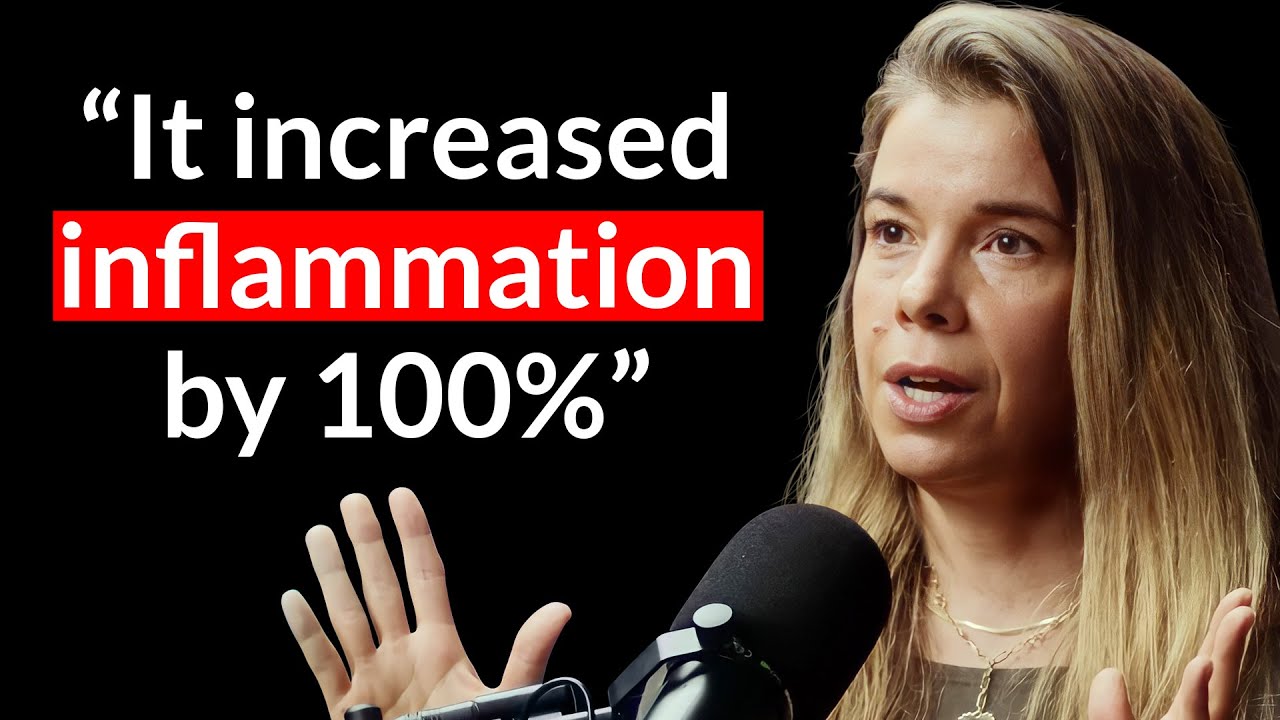
They also discuss a short feeding study in healthy young men in which a daily 20-ounce sugar-sweetened beverage increased inflammatory and atherogenic lipoprotein biomarkers after three weeks. [2] That biomarker experiment does not show that one drink causes clinical disease, but it illustrates how quickly metabolic markers can move. Regular physical activity provides an additional practical tool; it does not cancel the dietary exposure.
This clip is excerpted, with permission, from Dr. Rhonda Patrick's appearance on The Dr. Hyman Show. Thank you to Dr. Mark Hyman for allowing us to share it.
- ^ Ahmed M. Gharib; Alexis Ayuketah; Amber B. Courville; Ciarán G. Forde; Elise Costa; Hongyi Cai, et al. (2019). Ultra-Processed Diets Cause Excess Calorie Intake And Weight Gain: An Inpatient Randomized Controlled Trial Of Ad Libitum Food Intake Cell Metabolism 30, 1.
- ^ Aeberli I; Gerber PA; Hochuli M; Kohler S; Haile SR; Gouni-Berthold I, et al. (2011). Low to moderate sugar-sweetened beverage consumption impairs glucose and lipid metabolism and promotes inflammation in healthy young men: a randomized controlled trial. Am J Clin Nutr 94, 2.
Dr. Mark Hyman: Have you heard of the protein leverage hypothesis?
Dr. Rhonda Patrick: Yes. Yeah, so it's kind of the same thing where your body needs a certain amount of protein to run optimally. And if you're eating, there's been a couple of randomized controlled trials on this. I think it's like Stephen Simpson is one of the proponents of it. It was like 2000s or something. And that essentially, if you're eating ultra-processed foods, which are high in a lot of refined carbohydrates, low in protein, that you overeat to sort of try to get enough protein.
Dr. Mark Hyman: Exactly. It does make sense if your body's looking for more of micronutrients, more vitamins, more minerals, more protein, that you start to overeat. And are you familiar with Kevin Hall's study that he published a couple of years ago?
Dr. Rhonda Patrick: You mean the ultra-processed food, where they ate 500 calories more?
Dr. Mark Hyman: They ate 500, yeah, so for people listening, I mean—
Dr. Rhonda Patrick: Ultra-processed food, yeah.
Dr. Mark Hyman: Exactly, they had 2 diets. They had a whole foods diet, which was essentially mostly they were getting salads, and they were getting poultry, and lean meats, some fish, oatmeal. And then there was the ultra-processed foods diet. And they were trying to match them for macronutrients. So they were, yeah.
Dr. Rhonda Patrick: So they were matched for calories. They were matched for total sugar, although the refined, the added sugar in the ultra-processed foods group was, it was like a huge difference. I mean, it was like something like 70 or 80% versus 1%. So the sugars in the whole foods diet were coming from fruit. which has a fiber matrix, right?
Dr. Rhonda Patrick: So, they were matched for that.
Dr. Mark Hyman: Exactly.
Dr. Rhonda Patrick: So, the added sugar was not matched, although total sugar was, right? And then, protein was somewhat matched. The whole foods had a little bit more protein. It was like something like 15.6% in whole foods diet versus 14% in the ultra-processed foods diet. And they were given— so, a lot of things were matched, and they were given these foods, you know, in a sort of metabolic ward where they came in and eat, and they had 60 minutes to eat the meal. ad libitum, right?
Dr. Mark Hyman: So they could eat as much or as little as they want. Yeah. So you got a big, as much like giant buffet, eat as much as you want.
Dr. Rhonda Patrick: Like you got 60 minutes.
Dr. Mark Hyman: Right.
Dr. Rhonda Patrick: And then they did it.
Dr. Rhonda Patrick: And then the group that eat the ultra-processed food ate 500 calories more a day.
Dr. Mark Hyman: And I just do the math on that. 500 calories times 7 is 3,500 calories. That's 1 pound of weight gain. So you add that up, that's 52 pounds of weight gain in a year. No wonder America's overweight.
Dr. Rhonda Patrick: Yeah. I didn't do that math. I know that I just read the results, which was they gained 2 pounds in 2 weeks, whereas the whole foods diet lost 2 pounds in 2 weeks.
Dr. Mark Hyman: Well, let's say it's 2 pounds, right? 2 weeks, 20. It's like you do the math. It's like, but you add that up over a year and then you add up year over year. It's like, that's why we're seeing this sort of just incredible level of severe obesity and diabetes.
Dr. Mark Hyman: And I mean, it's just, you know, the latest data I saw was sort of shocking was that 38% of teenagers have prediabetes. Wow. It's like, what? I mean, it didn't even exist when I graduated. I'm old, but it didn't exist when I graduated from medical school. Like, we didn't have it. We never saw a kid.
Dr. Rhonda Patrick: There's been studies that have looked at, like, healthy individuals, and they've given them— they're actually young men. They gave them a 20-ounce sugar-sweetened beverage, sort of akin to, like, a soda, Coke or something. And they did this for 3 weeks. And after that 3-week mark, Their C-reactive protein biomarker for inflammation went up 100%. Their small dense LDL, so these are lipoproteins that are transporting—
Dr. Mark Hyman: The bad ones.
Dr. Rhonda Patrick: Yeah, they're bad ones.
Dr. Mark Hyman: The ones that are causing more heart disease.
Dr. Rhonda Patrick: Exactly, causing more atherosclerosis. They went up as well. This was just after 3 weeks, you know, and of a sugar-sweetened beverage, which is the ultimate, right? That's the ultimate.
Dr. Mark Hyman: Yeah, ultra-processed food.
Dr. Rhonda Patrick: But the reality is, is that—
Dr. Mark Hyman: But it's gluten-free.
Dr. Rhonda Patrick: It's gluten-free, yes, but it's definitely, it's causing inflammation, massive inflammation at the level of the gut. And so you can take healthy people and dramatically change their profile within a matter of weeks of having, you know, this ultra-processed foods, these sugar-sweetened beverages, you know, which again, like—
Dr. Mark Hyman: And they deplete nutrients, 'cause I think people don't realize that, one, you're not getting them, but two, you actually need nutrients to actually run your biochemistry.
Dr. Mark Hyman: And so you're trying to burn these calories and burn the food, but you're actually depleted in the very nutrients required to run the metabolic pathways to actually metabolize the food. So you're kind of getting it from both sides. Like a two-hit.
Dr. Mark Hyman: Yeah. Like a two-hit. Yeah.
Dr. Rhonda Patrick: Yeah. So again, it comes down to, I think, thinking about why you need to eat is so important because then it's like, I need to get micronutrients, I need to get my fiber, I need to get protein. When I say fiber, carbohydrates, right? But it needs to be carbohydrates in the form of fruits and vegetables,
Dr. Mark Hyman: which have the micronutrients and the fiber, right?
Dr. Rhonda Patrick: And nuts and seeds.
Dr. Mark Hyman: And nuts and seeds, yeah, and oats.
Dr. Rhonda Patrick: And then avoiding ultra-processed foods. I think if people were to do that and think about eating that way, and then you have to move, right? You have to be physically active. Being sedentary is a disease.
Supporting our work
If you enjoy the fruits of
 , you can participate in helping us to keep improving it. Creating a premium subscription does just that! Plus, we throw in occasional member perks and, more importantly, churn out the best possible content without concerning ourselves with the wishes of any dark overlords.