Blueberries, Cognition, and the Banana Smoothie Question
The Omega-3 Supplementation Guide
A blueprint for choosing the right fish oil supplement — filled with specific recommendations, guidelines for interpreting testing data, and dosage protocols.
You'll also receive updates from Rhonda & FoundMyFitness
Blueberries provide fiber and polyphenols, including anthocyanins, within a nutrient-rich whole food. In this clip from Dr. Rhonda Patrick's appearance on the Jack Neel Podcast, she discusses research connecting blueberry intake with cognition. Small trials in older adults and people with mild cognitive concerns have reported improvements in selected memory, processing-speed, or task-switching measures, although the response varies by study, product, population, and outcome. [1] [2] [3] [4]
Food preparation can affect the amount of some polyphenols that reaches circulation. In a crossover study of eight healthy men, adding high-polyphenol-oxidase banana to a smoothie reduced peak blood metabolites from cocoa-derived flavan-3-ols by about 84 percent. Polyphenol oxidase is released when plant tissue is blended or damaged and can react with selected compounds before absorption. Bananas remain nutritious, but people who want to maximize flavan-3-ol exposure can place high-PPO banana in a different meal. [5]
Plant foods also contain fibers and phytochemicals that act through different pathways. Some fibers support stool bulk, transit, fermentation, and satiety. Compounds such as sulforaphane and selected polyphenols can influence cellular stress-response signaling, while BDNF supports neuronal survival and synaptic plasticity. A varied diet containing berries, other fruits, vegetables, nuts, seeds, and fiber-rich foods provides a broader foundation than relying on one fruit, powder, extract, or smoothie combination.
This clip is excerpted, with permission, from Dr. Rhonda Patrick's appearance on the Jack Neel Podcast. Thank you to Jack Neel for allowing us to share it.
- ^ Travica N; D'Cunha NM; Naumovski N; Kent K; Mellor DD; Firth J, et al. (2020). The effect of blueberry interventions on cognitive performance and mood: A systematic review of randomized controlled trials. Brain Behav Immun 85, .
- ^ Miller MG; Hamilton DA; Joseph JA; Shukitt-Hale B (2018). Dietary blueberry improves cognition among older adults in a randomized, double-blind, placebo-controlled trial. Eur J Nutr 57, 3.
- ^ Cheatham CL; Canipe LG 3rd; Millsap G; Stegall JM; Chai SC; Sheppard KW, et al. (2023). Six-month intervention with wild blueberries improved speed of processing in mild cognitive decline: a double-blind, placebo-controlled, randomized clinical trial. Nutr Neurosci 26, 10.
- ^ Abhayaratne, Nimaya; Bell, Lynne; Fernandes, Filipe; Hein, Sabine; Mesnage, Robin; Rodriguez-Mateos, Ana, et al. (2023). Wild Blueberry (Poly)Phenols Can Improve Vascular Function And Cognitive Performance In Healthy Older Individuals: A Double-Blind Randomized Controlled Trial The American Journal Of Clinical Nutrition 117, 6.
- ^ Ottaviani JI; Ensunsa JL; Fong RY; Kimball J; Medici V; Kuhnle GGC, et al. (2023). Impact of polyphenol oxidase on the bioavailability of flavan-3-ols in fruit smoothies: a controlled, single blinded, cross-over study. Food Funct 14, 18.
Dr. Rhonda Patrick: Fiber does more than support bowel regularity. Different fibers affect stool bulk, transit, fermentation, and sometimes satiety. Solubility, viscosity, and fermentability are separate properties. Human studies have not shown that ordinary dietary fiber blocks microplastic or broad chemical absorption.
Jack Neel: Fiber can also help you feel full, right?
Dr. Rhonda Patrick: Some fibers and fiber-rich foods can support satiety, but the effect depends on the fiber type, dose, viscosity, and food form.
Fruits and vegetables also contain many phytochemicals. Compounds such as sulforaphane and some polyphenols can affect cellular stress-response pathways, including NRF2 and antioxidant response elements. The human evidence varies by compound, dose, tissue, and outcome. It does not establish that every phytochemical activates stem-cell production, autophagy, or every resilience pathway.
Small randomized trials suggest that blueberry interventions may improve selected cognitive measures in some people, especially older adults or people with mild cognitive concerns. Results are mixed, and the studies do not show that one cup makes everyone smarter, raises general intelligence, prevents dementia, or consistently improves mood.
Blueberries provide fiber and polyphenols and have a relatively favorable glycemic profile. Whole blueberries are a reasonable food choice. Powder or extract studies are not always equivalent to eating whole fruit.
One small study tested polyphenol oxidase, or PPO, in smoothies. Eight healthy men consumed cocoa-derived flavan-3-ols with different preparations. A high-PPO banana smoothie sharply reduced measured flavan-3-ol metabolites compared with control. The study did not test blueberry cognition, BDNF, all polyphenols, or clinical outcomes.
Jack Neel: Do bananas cancel the blueberries?
Dr. Rhonda Patrick: No. Bananas remain nutritious and do not make people cognitively worse. If the goal is to maximize absorption of certain flavan-3-ols, separating high-PPO banana from a flavan-3-ol-rich smoothie is a cautious option. Whether that changes health or cognitive outcomes is unknown.
BDNF supports neuronal survival, synaptic plasticity, and learning-related processes. Exercise evidence for transient changes in peripheral BDNF is stronger than blueberry evidence. Human trials have not shown that one cup of blueberries raises brain BDNF or grows new hippocampal neurons.
Get email updates with the latest curated healthspan research
Support our work
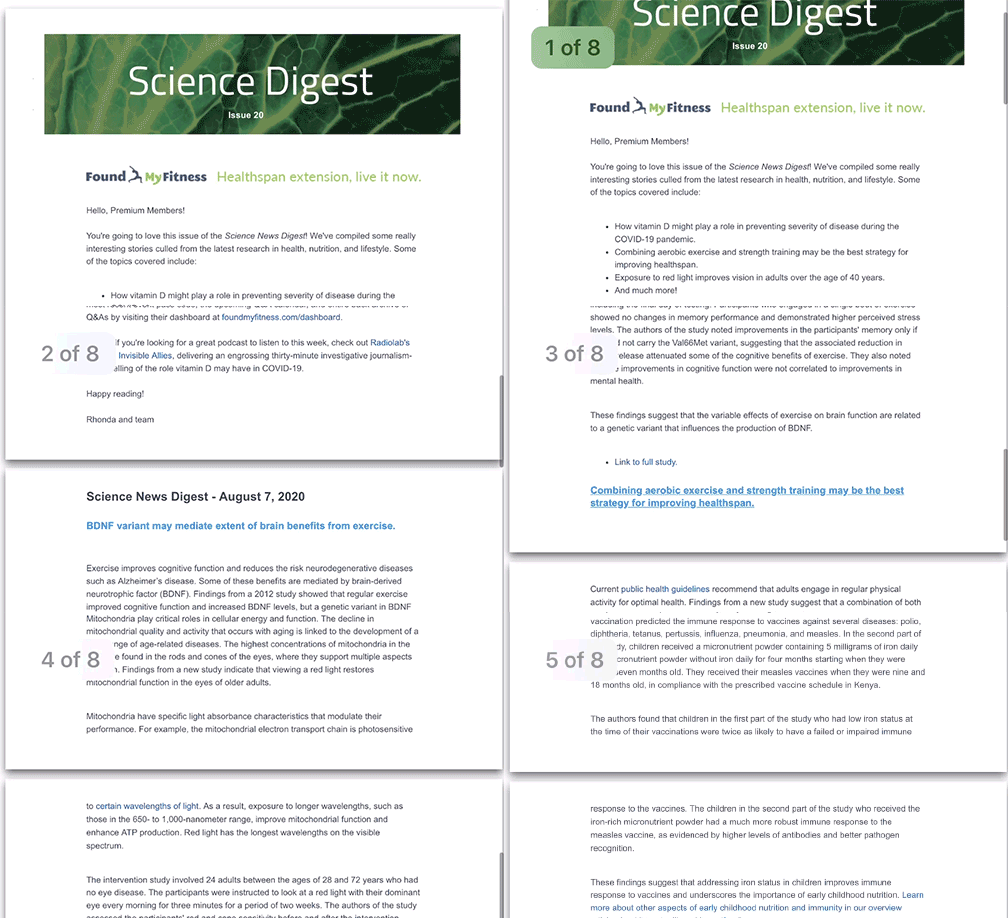
Every other week premium members receive a special edition newsletter that summarizes all of the latest healthspan research.
Polyphenol News
- Regular green tea consumption correlates with fewer cerebral white matter lesions, potentially reducing the risk of stroke, dementia, and disability.
- A green tea polyphenol (EGCG) attenuated the progression of abdominal aortic aneurysm in a rat model. (2016)
- Polyphenols in tea may reduce symptoms and progression of Parkinson's disease.
- A single 8-ounce serving of 100 percent fruit juice daily promotes weight gain in children.