Why Bananas Can Reduce Flavanol Absorption in Smoothies
The Omega-3 Supplementation Guide
A blueprint for choosing the right fish oil supplement — filled with specific recommendations, guidelines for interpreting testing data, and dosage protocols.
You'll also receive updates from Rhonda & FoundMyFitness
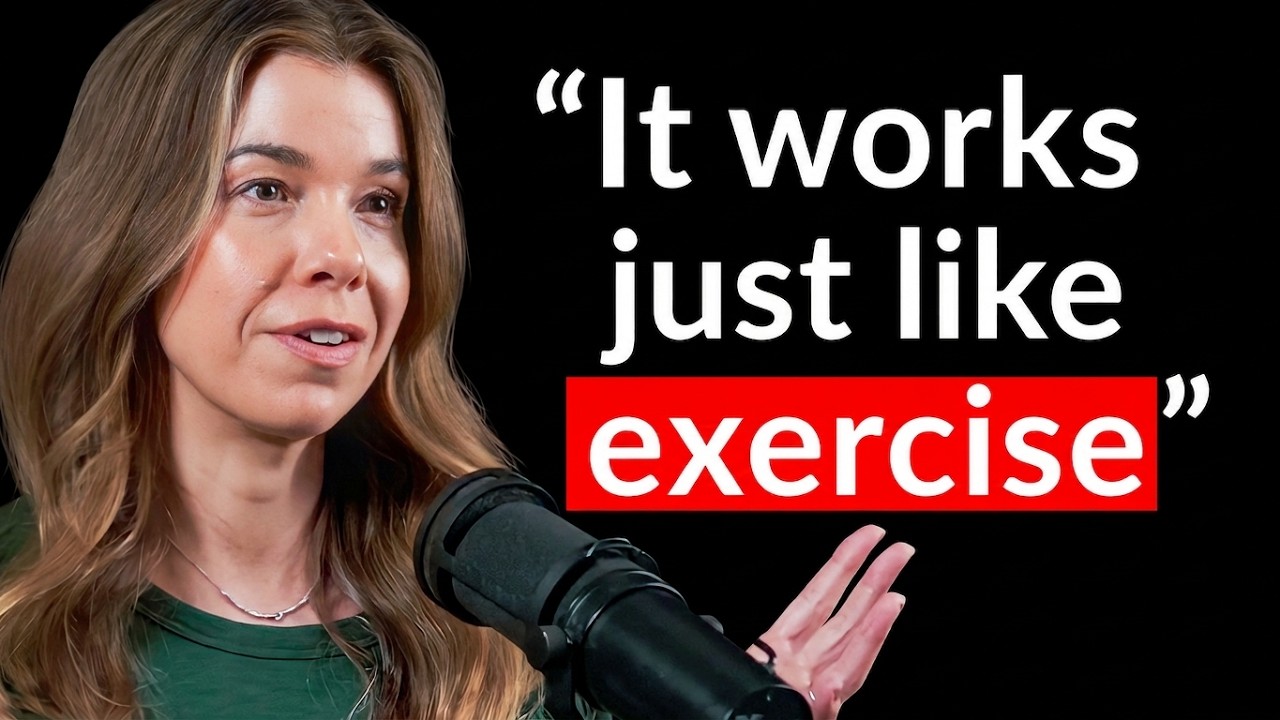
In this clip from Dr. Rhonda Patrick's appearance on Thomas DeLauer's podcast, she explains why polyphenol oxidase, or PPO, changed how she builds a berry smoothie. In a controlled crossover study, eight healthy men consumed flavan-3-ols in a high-PPO banana smoothie, a low-PPO mixed-berry smoothie, or capsule control. Peak plasma flavan-3-ol metabolites after the banana smoothie were 84 percent lower than after the capsule, while the low-PPO berry smoothie produced levels similar to the capsule. [1]
PPO is released when plant tissue is cut, bruised, or blended and can react with selected polyphenols before they reach circulation. A follow-up experiment in 11 men found lower flavan-3-ol levels even when the high-PPO banana drink and flavan-3-ols were kept apart until ingestion. People who want to maximize flavan-3-ol exposure can separate banana from a flavan-3-ol-rich smoothie, while still enjoying banana as a source of potassium, fiber, and other nutrients in a different meal. [1]
Dr. Patrick suggests avocado as a creamy alternative that also supplies dietary fat. In small human crossover studies, adding avocado to salsa or salad increased absorption of lycopene, beta-carotene, alpha-carotene, and lutein. Those meals were not smoothies, but the results support pairing carotenoid-rich greens with a lipid-containing food such as avocado. [2]
This clip is excerpted, with permission, from Dr. Rhonda Patrick's appearance on Thomas DeLauer's podcast. Thank you to Thomas DeLauer for allowing us to share it.
- ^ a b Ottaviani JI; Ensunsa JL; Fong RY; Kimball J; Medici V; Kuhnle GGC, et al. (2023). Impact of polyphenol oxidase on the bioavailability of flavan-3-ols in fruit smoothies: a controlled, single blinded, cross-over study. Food Funct 14, 18.
- ^ Unlu NZ; Bohn T; Clinton SK; Schwartz SJ (2005). Carotenoid absorption from salad and salsa by humans is enhanced by the addition of avocado or avocado oil. J Nutr 135, 3.
Thomas DeLauer: All right, next.
Dr. Rhonda Patrick: Okay. Another thing that I've changed my mind on, and this is actually very, very recent, is adding bananas to my smoothie. I did stop adding bananas a long time ago, but now I really have to avoid it. I know you're looking at me like, "Please do tell."
Thomas DeLauer: This is interesting. Yeah.
Dr. Rhonda Patrick: Yeah. There are a couple of important reasons I like to make smoothies. In most of my smoothies, I get a big dose of greens. A lot of times it ends up being kale. Then I add a lot of berries, such as blueberries. Blueberries have polyphenols, flavonoids, and anthocyanins. All of these things have been shown to improve blood flow in human studies. Giving people berries, or even freeze-dried extracts of blueberries, increases brain-derived neurotrophic factor. BDNF is essential for growing new neurons, which is called neurogenesis. That's very important for cognition and for staving off brain aging. I always feel really good after doing the berries, so I love doing this in my smoothies.
I used to add a banana. I'd get some potassium from it, and it would make the smoothie a little creamier. It turns out bananas have an enzyme called polyphenol oxidase. As the name implies, it degrades polyphenols. A recent human study added bananas to berry smoothies. The metabolites of polyphenols were significantly lower in the plasma of people who had a smoothie with banana added compared with one without banana. I know. It was kind of like, "Oh my goodness." One of the goals of drinking the smoothie is to get a high concentration of polyphenols from blueberries. Other foods that are high in polyphenol oxidase include collard greens and chard.
I used to add Swiss chard to my smoothies because it's a great source of magnesium, potassium, and lutein. I no longer add chard to my smoothies. Beets are also high. I never really added beets to my smoothie in the first place, but I did use bananas and chard.
Thomas DeLauer: Interesting.
Dr. Rhonda Patrick: None of the other foods I've looked at have quantities that have been shown to be relevant at all. These foods are exceedingly high. Anthocyanins, polyphenols, and flavonoids, which are a type of polyphenol, are found in berries such as blueberries and strawberries. They have been shown to be beneficial in a variety of human randomized controlled trials. The reported benefits include cognition, cardiovascular health, blood flow to the brain in both young and older people, and brain-derived neurotrophic factor. Exercise, omega-3s, and other things can also increase BDNF, but this is something you want from the berries.
If you go to any smoothie place and want to get a smoothie, there's a banana in it. I think that needs to change. The banana needs to be taken out. If you want a creamy consistency, avocado is the way to go. Avocado gives you that, and its polyphenol oxidase levels are negligible.
Thomas DeLauer: Yeah.
Dr. Rhonda Patrick: It's also high in potassium, so you're getting what you wanted from the banana, and it has less sugar. It's a win-win. It has a little bit of fat, so it increases the bioavailability of some carotenoids in the smoothie, such as lutein and zeaxanthin, by up to fourfold. These are not just good for eye health. They've been found to accumulate in the brain, and they're associated with improved cognition. There have been studies where supplementation improves cognition, so that's cause and effect. There is also observational data showing that people with higher circulating levels of these carotenoids, lutein and zeaxanthin, have higher crystallized intelligence when they're older. They're really high in leafy greens. Because they're fat-soluble, adding avocado increases their bioavailability.
I think adding avocado is a really good substitute for a banana. It might be a little more expensive. Maybe that's why smoothie places don't do it. It's something important to keep in mind. If you get a green smoothie with a little banana, you're still going to get magnesium, lutein and zeaxanthin, calcium, and other important micronutrients. But if you have berries in there, or if you're mixing cacao with banana, the cocoa has high amounts of flavonoids. Those flavonoids improve blood flow to the brain and increase brain-derived neurotrophic factor. Avoid adding banana to that because it degrades those polyphenols. It's like not having any.
That's another thing I've really changed my mind on. I've mentioned BDNF a lot, so I just came out with a free BDNF guide. People can learn a variety of protocols that can increase BDNF, including the berry drinks and cocoa doses I just mentioned, as well as exercise protocols and intensities. You can find the free guide at bdnfprotocols.com if you're interested in learning more about protocols for increasing BDNF.
Thomas DeLauer: Sweet. I'll link that down below as well. Do you happen to know whether heating chard could break down this enzyme? I don't know a lot of people who would eat Swiss chard raw. They might put it in a smoothie, which would be practical for this conversation, but when I've had it, it was usually sauteed with a little olive oil or something.
Dr. Rhonda Patrick: I think it does. It is a heat-sensitive enzyme, as far as I remember. I don't know to what degree, but no one's cooking their banana. Banana is the major smoothie source. Most people who eat chard are cooking it. It's only a problem if you're eating your chard and then drinking your cocoa flavanol drink, or if you're eating blueberries and trying to get those flavanols.
Thomas DeLauer: It's just inhibiting the absorption. It's not a lasting effect.
Dr. Rhonda Patrick: It's degrading them. It's like having a big cup of blueberries that's high in polyphenols and then mixing in a banana. It chops up and degrades the polyphenols as if they're not there.
Thomas DeLauer: Polyphenols also act similarly to a prebiotic. They kind of are a prebiotic. I'd imagine that when you degrade them, you're not getting any of the gut-flora effects either, such as short-chain fatty acid benefits.
Dr. Rhonda Patrick: Not necessarily. Other components in berries, such as the skin, are also fermented by the gut. But a large part of the health benefits of berries comes from polyphenols, for sure. For me, it was compelling. It was just one study, and it was very new, about five months old. There need to be follow-up studies, but it was pretty compelling, and it was in humans too.
Thomas DeLauer: Yeah. That's awesome. I don't know that it's awesome, but usually when you have these almost esoteric-seeming things, like this enzyme, people might sensationalize them online. This is actually from a legitimate human study. It's not like saying, "Don't eat apples because pectin is going to make your hair fall out," or something.
Dr. Rhonda Patrick: No, it's not just connecting the dots. But I will say that the study did not look at functional endpoints. There have been studies where people were given fresh berry mixtures or freeze-dried blueberries with a very high polyphenol content, and it improved one outcome or another. For example, one outcome might be cognition. This study did not show that if you gave people blueberries plus banana, the cognition benefits they usually get from blueberries were gone. It just showed the polyphenol levels. Certain metabolites can be measured in plasma after drinking a high-polyphenol berry mixture. Those metabolites were dramatically reduced.
Thomas DeLauer: Dang.
Dr. Rhonda Patrick: Speaking about biomarkers, the biomarkers of polyphenols that you would normally see in plasma were really, really, really low.
Thomas DeLauer: All right. Get your potassium from an avocado.
Supporting our work
If you enjoy the fruits of
 , you can participate in helping us to keep improving it. Creating a premium subscription does just that! Plus, we throw in occasional member perks and, more importantly, churn out the best possible content without concerning ourselves with the wishes of any dark overlords.
Polyphenol News
- Regular green tea consumption correlates with fewer cerebral white matter lesions, potentially reducing the risk of stroke, dementia, and disability.
- A green tea polyphenol (EGCG) attenuated the progression of abdominal aortic aneurysm in a rat model. (2016)
- Polyphenols in tea may reduce symptoms and progression of Parkinson's disease.
- A single 8-ounce serving of 100 percent fruit juice daily promotes weight gain in children.