Do hormonal responses to exercise predict gain? | Dr. Stuart Phillips
Get the full length version of this episode as a podcast.
This episode will make a great companion for a long drive.
The Omega-3 Supplementation Guide
A blueprint for choosing the right fish oil supplement — filled with specific recommendations, guidelines for interpreting testing data, and dosage protocols.
You'll also receive updates from Rhonda & FoundMyFitness
Evidence suggests that normal diurnal variations in testosterone and growth hormone do not play a significant role in muscle protein synthesis. A meta-analysis showed that men and women achieved similar increases in muscle with resistance training, despite men having higher testosterone levels.
While daily fluctuations in testosterone do not drive muscle protein synthesis, supraphysiological steroid doses are anabolic. Testosterone boosters come and go, but Dr. Phillips states they are ineffective, and it's better to focus on resistance exercise.
Growth hormone stimulates stature and collagenous tissue synthesis allowing tendons to become stronger. Dr. Phillips contends that excessive growth hormone may increase cancer risk, and one should exert caution. In this clip, Dr. Stuart Phillips discusses the implications of hormones in muscle mass growth and compares physiological to supraphysiological doses.
This transcript is reserved for members.
FoundMyFitness Members get access to exclusive content not available anywhere else, including a transcript of this episode.
You wouldn't believe how cool being a premium member of the world's best cross-disciplinary science-focused website and podcast really is.
Get email updates with the latest curated healthspan research
Support our work
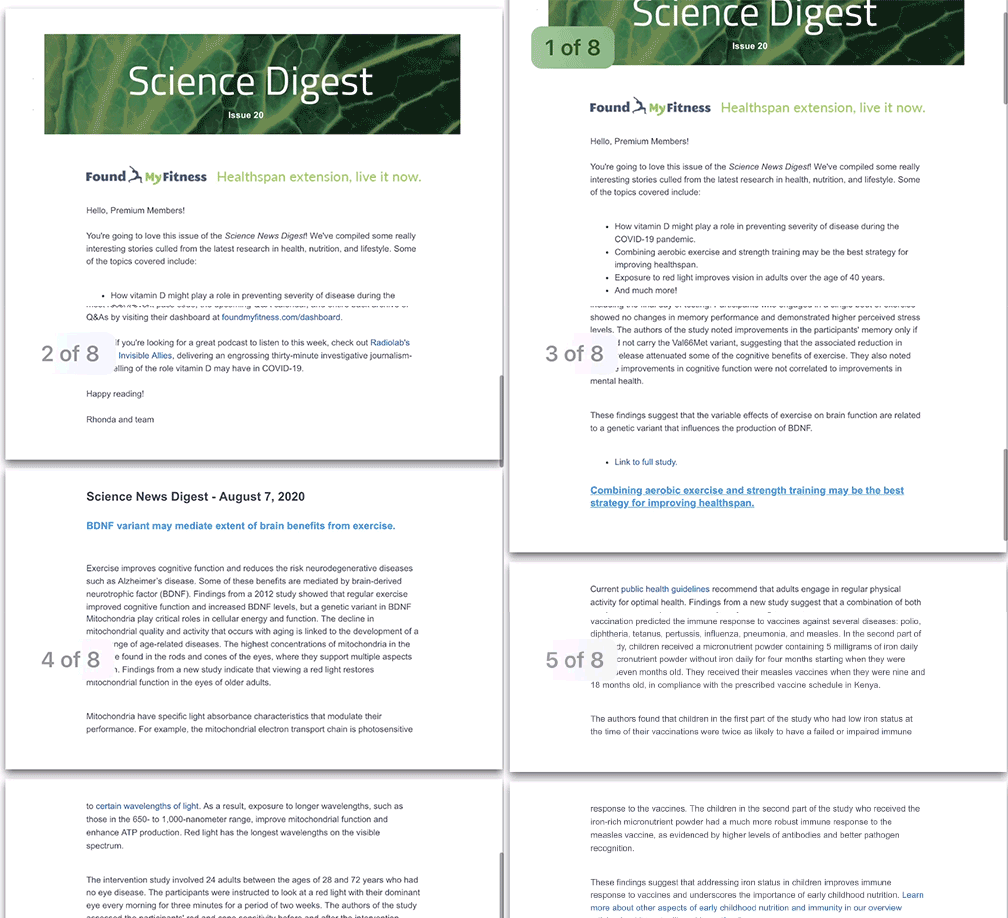
Every other week premium members receive a special edition newsletter that summarizes all of the latest healthspan research.
Muscle News
- Different forms of vitamin D have distinct impacts on muscle mass and strength.
- Study shows that high protein does not affect kidney function across a wide variety of metrics.
- Higher muscular strength and cardiorespiratory fitness can help reduce the risk of premature death in cancer patients by up to 46%.
- The effect of acute sleep deprivation on skeletal muscle protein synthesis and the hormonal environment